
Saurav Swaroop

575 posts

Saurav Swaroop banner
Saurav Swaroop

Saurav Swaroop

@sauravswaroop

Real AI experiments, Real Learnings, No BS | Co-founder and CTO @velocity_in 🧑‍💻| Fortune 40 under 40🎖️| IITB 📖 | Father 👨

Bengaluru, India Katılım Kasım 2009
285 Takip Edilen345 Takipçiler
Sabitlenmiş Tweet
Saurav Swaroop
Saurav Swaroop@sauravswaroop·
I’ve been building real AI products in production, not demos, not hype, but tools delivering measurable business impact AI is fundamentally changing how work gets done. If you don’t adapt, AI-native competitors will outrun you. The hard part for leaders today is separating signal from noise Social media is flooded with overhyped tools and demos meant for engagement. Real economic value often gets buried So I’m committing to sharing what actually works: learnings, feasibility, impact, and best practices of deploying AI agents for real business use cases Recent work at @velocity_in 👇 - Built Vani AI, a voice agent handling 50k+ calls/month with >40% conversion - Deployed AI agents for software development → 4× productivity - Built agents to auto-handle customer queries on WhatsApp groups - Deployed Claude Code on cloud with org-wide data access to build a generic AI agent (wip) Follow me for updates on real experiments, real learnings. No BS.
English
1
1
3
408
Saurav Swaroop
Saurav Swaroop@sauravswaroop·
One of the biggest responsibilities of an engineering leader is not designing system architecture. It is compensating for the missing technical intuition in product decisions so the overall complexity of the system stays under control. Most systems do not necessarily become complex because engineers write bad code. They become complex because product decisions are made without fully understanding the long-term technical tradeoffs. A strong engineering leader acts as the balancing force - simplifying scope, questioning edge cases, resisting unnecessary abstractions, and ensuring the product evolves in a way the system can sustainably support.
English
0
0
1
34
Saurav Swaroop
Saurav Swaroop@sauravswaroop·
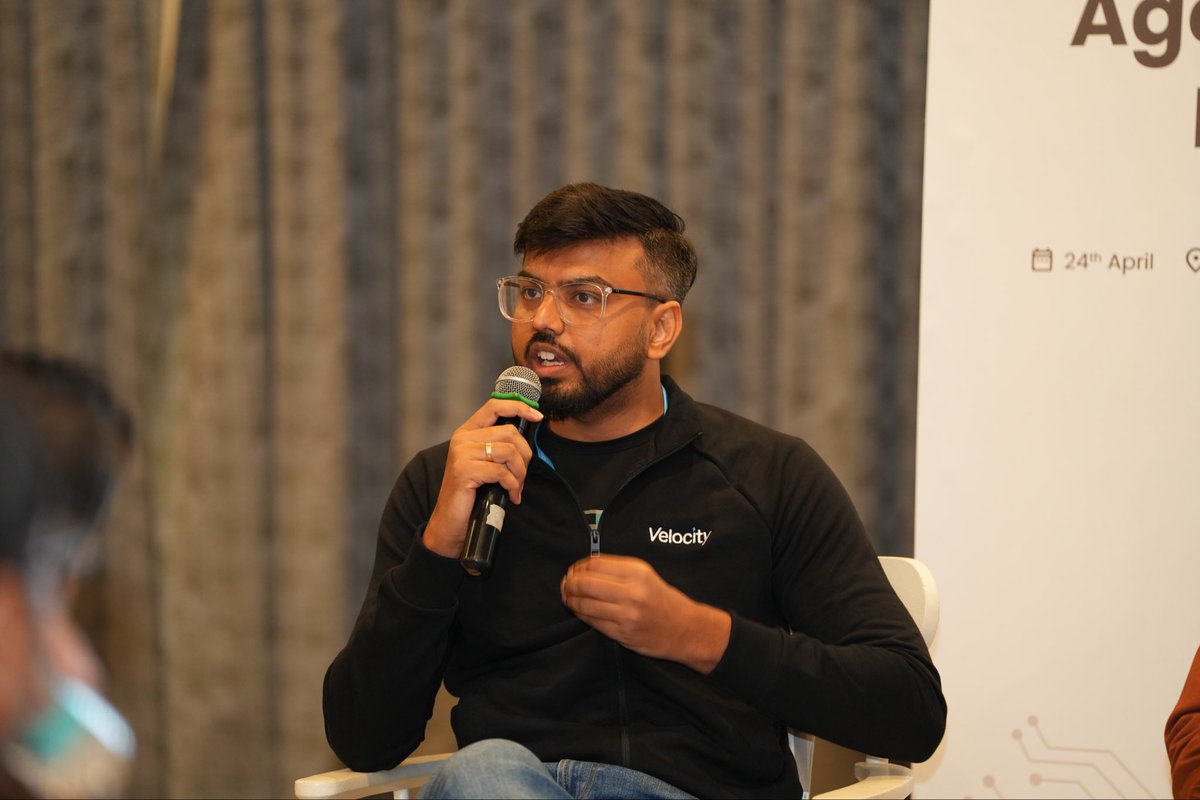
Recently spoke at the Agentic Era Mixer by @YourStoryCo on how startups should think about building in the age of AI. I shared some of our learnings from building AI products both internally at Velocity and externally for customers. One thing I increasingly believe - Intelligence is no longer the limiting factor. The world probably does not need ChatGPT 6.0 or Claude 5.0 to unlock the next wave of value from AI. The real bottlenecks are elsewhere: - lack of organizational context, - context getting stale over time, - poor workflow integration, - and absence of human review mechanisms. Most organizational memory today is scattered across databases, Slack threads, wikis, notebooks, dashboards, CRMs and employees’ minds. AI becomes dramatically more useful when it can access this collective context in a structured way. And it becomes reliable only when that context continuously stays updated. Another important insight - AI works best when embedded seamlessly inside workflows instead of existing as a separate tool people manually invoke. Whether it is automatically triaging support tickets, identifying issues from Slack conversations, updating documentation after releases, or triggering operational workflows - the magic happens when AI works quietly in the background. The best products feel seamless, not forced. At the same time, AI also introduces new risks: - over-dependence, - AI slop, - and outsourcing thinking to systems optimized for completion, not correctness. AI should be a force multiplier for human capability, not a replacement for judgment. Keeping humans in the loop for critical review and accuracy is still extremely important. Companies who will leverage AI efficiently have an undue competitive advantage.
Saurav Swaroop tweet media
English
0
0
2
58
Saurav Swaroop
Saurav Swaroop@sauravswaroop·
This is scary! This has happened to me once as well, where LLM was suggesting to delete the whole K8s deployment to fix an issue. Good that it did not had autonomy at that time. However, it taught me a great lesson. “Never give update/write access to production database, clusters”
JER@lifeof_jer

x.com/i/article/2048…

English
1
0
1
168
Saurav Swaroop
Saurav Swaroop@sauravswaroop·
AI has disrupted software development faster and deeper than almost any other function till now. This isn’t accidental. A few underlying reasons which make engineering uniquely suited for AI acceleration: 💻 It’s fully digital: Unlike many roles that rely on physical workflows or fragmented data, a developer’s entire environment (PRDs, Codebase, APIs, Documentations) already lives where AI operates best - digital realm. 🧠 The codebase is the context: Engineers don’t wait for perfect documentation but codebase is itself the ultimate document. AI benefits from the same: with access to the codebase, it can start contributing from day one. No heavy context-building required. 💸 It was always slow and expensive: Software development has historically been a major cost center. Even modest efficiency gains translate into meaningful business impact, making AI adoption an easy economic decision. ⚖️ Low risk, high leverage: Code isn’t directly customer-facing, and existing SDLC processes ensure human review. That makes it one of the safest areas to automate aggressively. ✅ Verification is built-in: Tests, CI pipelines, and security scans provide clear, automated ways to validate output. Few other functions have such deterministic feedback loops. 🚀 Developers adopt early: Every major tech shift—from open source to cloud to DevOps—was led by engineers. AI is no different.
English
1
0
0
33
Saurav Swaroop retweetledi
Sam Mathad
Sam Mathad@sameermathad·
If you speak Kannada, Telugu, or Sanskrit, you’ve likely noticed that Hindi sounds "clipped." Rama becomes Ram. Shiva becomes Shiv. Even in English, "Chocolate" feels like it’s missing a syllable. Ever wondered why? I went down this rabbit hole yesterday and was fascinated with what I learnt. Welcome to the world of 'Schwa Deletion' in linguistics. 🧵👇
English
57
157
1.4K
263.9K
Saurav Swaroop
Saurav Swaroop@sauravswaroop·
Nice coverup. Reality - Open-source Strategy in an AI era is a risk to their core business.
Bailey Pumfleet@pumfleet

Open source is dead. That’s not a statement we ever thought we’d make. @calcom was built on open source. It shaped our product, our community, and our growth. But the world has changed faster than our principles could keep up. AI has fundamentally altered the security landscape. What once required time, expertise, and intent can now be automated at scale. Code is no longer just read. It is scanned, mapped, and exploited. Near zero cost. In that world, transparency becomes exposure. Especially at scale. After a lot of deliberation, we’ve made the decision to close the core @calcom codebase. This is not a rejection of what open source gave us. It’s a response to what risks AI is making possible. We’re still supporting builders, releasing the core code under a new MIT-licensed open source project called cal. diy for hobbyists and tinkerers, but our priority now is simple: Protecting our customers and community at all costs. This may not be the most popular call. But we believe many companies will come to the same conclusion. My full explanation below ↓

English
0
0
2
52
Saurav Swaroop
Saurav Swaroop@sauravswaroop·
7:40 pm yesterday. Hectic day. I was about to leave the office and rush home to play with my 3-year-old. Then I remembered a discussion from earlier: we should move some audit-trail data from Postgres → Elasticsearch for better querying. Normally this becomes: “Let’s add it to the sprint.” Instead I opened Claude Code. Gave it a detailed prompt: schema, migration flow, indexing strategy. It one-shotted the implementation. I deployed to staging (haven’t given Claude deploy access yet) and asked it to create indexes and test the flow. One bug popped up. Claude fixed it and re-tested. All green. I pushed to production. Total time: ~20 minutes. What would normally become a sprint task went from idea → production before 8 pm. AI isn’t just helping write code. It’s shrinking the gap between “we should do this” and “this is live.”
English
0
0
0
58
Abhiroop Medhekar
Abhiroop Medhekar@abhiroopm·
@andrewchen Wrong. The biggest benefit that spreadsheet has that code doesn’t is built in traceability. More likely that spreadsheet / model creation will start happening with AI. But spreadsheets are here to stay.
English
1
2
65
3.8K
andrew chen
andrew chen@andrewchen·
prediction re the end of spreadsheets AI code gen means that anything that is currently modeled as a spreadsheet is better modeled in code. You get all the advantages of software - libraries, open source, AI, all the complexity and expressiveness. think about what spreadsheets actually are: they're business logic that's trapped in a grid. Pricing models, financial forecasts, inventory trackers, marketing attribution - these are all fundamentally *programs* that we've been writing in the worst possible IDE. No version control, no testing, no modularity. Just a fragile web of cell references that breaks when someone inserts a row. The only reason spreadsheets won is that the barrier to writing real software was too high. A finance analyst could learn =VLOOKUP in an afternoon but couldn't learn Python in a month. AI code gen flips that equation completely. Now the same analyst describes what they want in plain English, and gets a real application - with a database, a UI, error handling, the works. The marginal effort to go from "spreadsheet" to "software" just collapsed to near zero. this is a massive unlock. There are ~1 billion spreadsheet users worldwide. Most of them are building janky software without realizing it. When even 10% of those use cases migrate to actual code, you get an explosion of new micro-applications that look nothing like traditional software. Internal tools that used to live in a shared Google Sheet now become real products. The "shadow IT" spreadsheet that runs half the company's operations finally gets proper infrastructure. The interesting second-order effect: the spreadsheet was the great equalizer that let non-technical people build things. AI code gen is the *next* great equalizer, but the ceiling is 100x higher. We're about to see what happens when a billion knowledge workers can build real software.
English
433
290
3.1K
1.3M
Saurav Swaroop
Saurav Swaroop@sauravswaroop·
@abhiroopm I vibe coded (WIP) an app to share and store credentials securely. Can deploy it and you can try it?
English
1
0
1
28
Abhiroop Medhekar
Abhiroop Medhekar@abhiroopm·
My ideas get vibe-coded pretty quickly now thanks to Claude Code. The new bottleneck? Securing API keys by signing up and stuffing them into the .env file. Anyone has a lazy workaround for this? 😅
English
2
0
0
357
Saurav Swaroop
Saurav Swaroop@sauravswaroop·
One of the most meaningful AI impacts we’ve seen at Velocity wasn’t a fancy agent workflow. It was cleaning up boring engineering debt. For months our backend monitoring on Sentry had ~80-100 open issues at any time. Most were: - low priority - edge cases - noisy but real errors - bugs losing priority to features These eventually get fixed, but the process is slow and painful. We deployed our internal AI bot Doomsday (Claude Code on clouyd with 15+ internal integrations) to scan Sentry every morning and raise PRs. Within weeks: • Open issues: ~100 → ~15 • ~80% PRs merged the same morning Same engineers. Same backlog. AI just compressed weeks of routine debugging into hours. That’s where a lot of the real leverage is.
Saurav Swaroop tweet media
English
1
1
4
182
Nirant
Nirant@NirantK·
Folks, who've gone through ISO 27001, what did it cost and how long did it take?
English
12
0
20
5.5K
Saurav Swaroop retweetledi
George Mack
George Mack@george__mack·
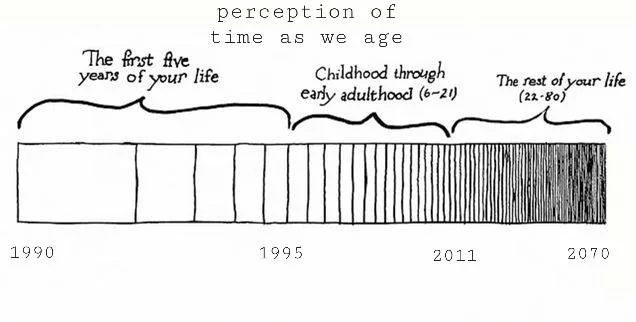
When you’re 5 years old, a year is 20% of your life. And when you’re 50 years old, a year is 2% of your life. This is an explanation given why time speeds up as you age. It's called Janet's law. It states you’ve experienced roughly half of your perceived by life by 20 years old. Or to put it another way: A summer holiday for a 5 year old feels as long as the 10 years from 40 to 50 years old. But Janet's law can be broken with high agency. You have agency over the speed time. You're not a passive victim. A better explanation of why time speeds up as you age is because you have fewer new experiences as an adult, so your brain deletes the memories. If you take agency over your life, do new things and create memory dividends, time slows down. If you live your life on autopilot, you may die at 80, but feel like you died at 20 years old. If you take agency over your life, you may diet at 80, but feel like you died at 200 years old.
George Mack tweet media
English
298
3.4K
21.5K
3.9M
Warbucks
Warbucks@TheRealJunto·
AI is going to kill SaaS? Anthropic, the company arguably most capable of insourcing, uses Workday, Salesforce, GitHub, Atlassian, MongoDB, among other enterprise software
English
157
102
1.8K
237.4K
Saurav Swaroop retweetledi
Abhiroop Medhekar
Abhiroop Medhekar@abhiroopm·
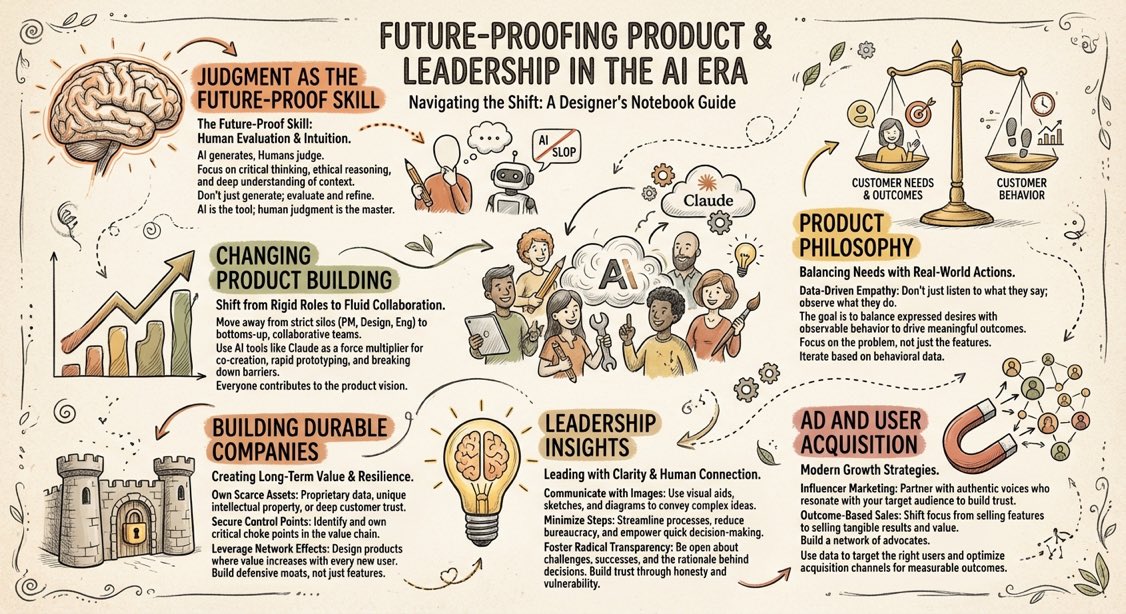
Great tips for product leaders 👇
Abhiroop Medhekar tweet media
English
0
1
1
299
Saurav Swaroop
Saurav Swaroop@sauravswaroop·
While this is, no doubt, crazy and incredible. I believe most of these stuff is prompted by humans. Even if it’s 20% real, we should be scared. AI is already a way powerful than human, all they need is context and access.
English
0
0
0
59
Saurav Swaroop
Saurav Swaroop@sauravswaroop·
@bijald May be you should consider increasing your commute time 😅
English
0
0
1
25
Bijal
Bijal@bijald·
I have around a total of 3 hours worth of commute every day and I’ve now started reading during those hours. I’ve gotten more reading done in one week than I did the entire last year.
English
1
0
3
131
Saurav Swaroop
Saurav Swaroop@sauravswaroop·
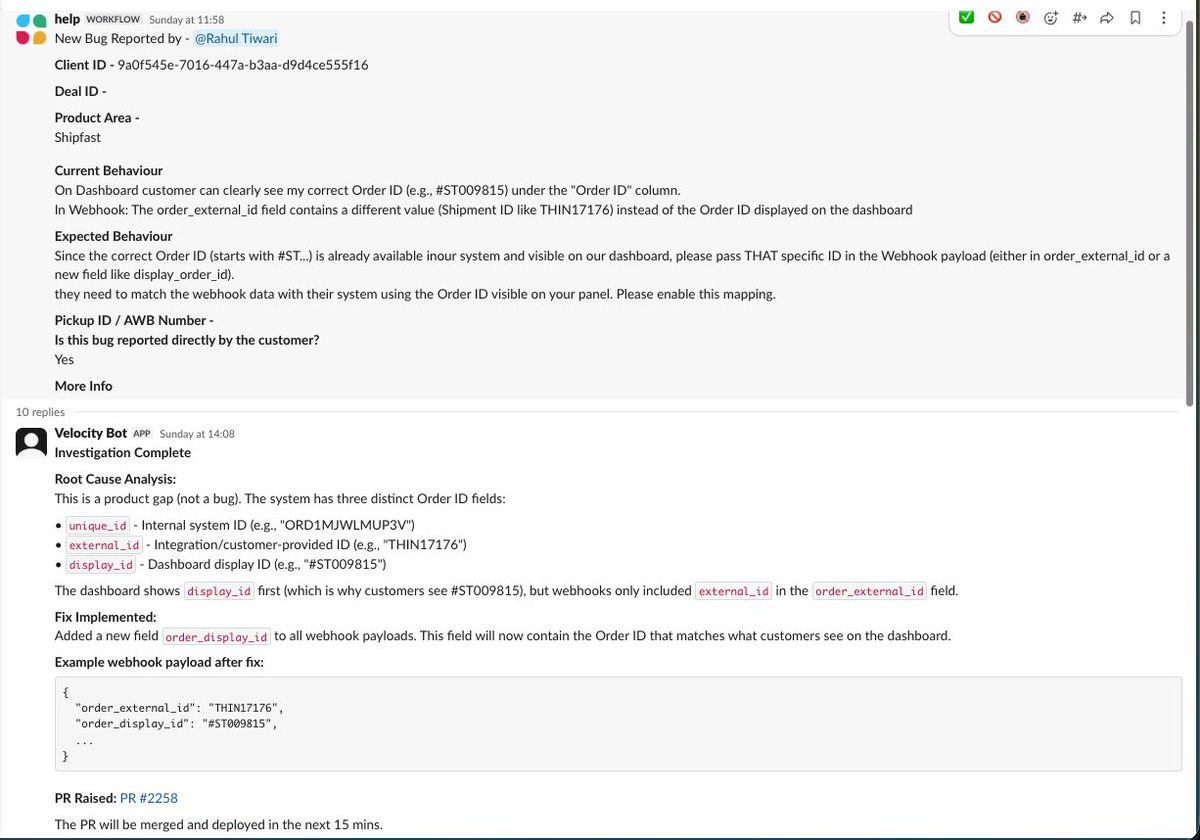
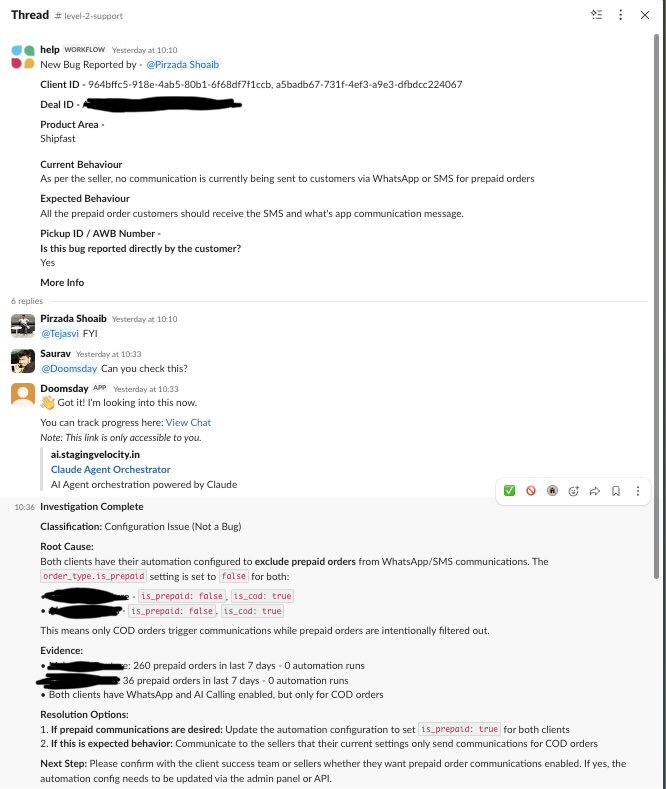
At @velocity_in, we’ve deployed Claude Code in the cloud and connected it to our internal tools like GitHub, Freshdesk, Google Drive, Slack, BigQuery, and Metabase, Elastic search etc. This agent (we call it Doomsday 😄) doesn’t just execute isolated tasks. It reasons across code, data, tickets, and dashboards to handle multi-step workflows. Teams can ask questions about business health, build BI dashboard, completely automate bug fixing. Over the next few weeks, I’ll share more on the kinds of tasks Doomsday is already handling in production. AI agents don’t need to be smarter.
They need access. Very excited to see how teams are going to use this in coming days. Some snippets of what kind of work it is doing 👇
Saurav Swaroop tweet mediaSaurav Swaroop tweet mediaSaurav Swaroop tweet mediaSaurav Swaroop tweet media
English
0
0
0
127