
Sabitlenmiş Tweet
Sava HTEC
157 posts


Sava HTEC
@savahtec
Head of Healthtech @htecgroup. Building what lies ahead in all areas of medical and health.
Katılım Ocak 2022
61 Takip Edilen14 Takipçiler
What is the future of human-written meeting notes once generative notes become the normal output? Will people's digestion of notes start converging? It will be an interesting space to observe organizationally, as the tools for summaries may well be steered by an organization...
English
Sava HTEC retweetledi

Ultra realistic AI-video from a photo
This is VASA-1 from Microsoft research
The improvements in quality we’re getting between each new release is incredible.
Links below
English
Ethan Mollick@emollick
I see a lot of debate on this site, so two things about the current state of AI agents in the real world 1) Agents remain limited by GPT-4 brains, it is early 2) Both academic testing 👇 & my own subjective experience (oneusefulthing.org/p/which-ai-sho…) suggest agents have huge potential
QAM
Sava HTEC retweetledi
I see a lot of debate on this site, so two things about the current state of AI agents in the real world
1) Agents remain limited by GPT-4 brains, it is early
2) Both academic testing 👇 & my own subjective experience (oneusefulthing.org/p/which-ai-sho…) suggest agents have huge potential
Ethan Mollick@emollick
The more I play with early versions of AI agents the more I think that this is going to be a big move forward in the near future. Giving AIs planning and delegation seems to help a lot. Both Devin & MAGIS agents perform 8x better than base GPT-4 in resolving real Github issues.
English
English
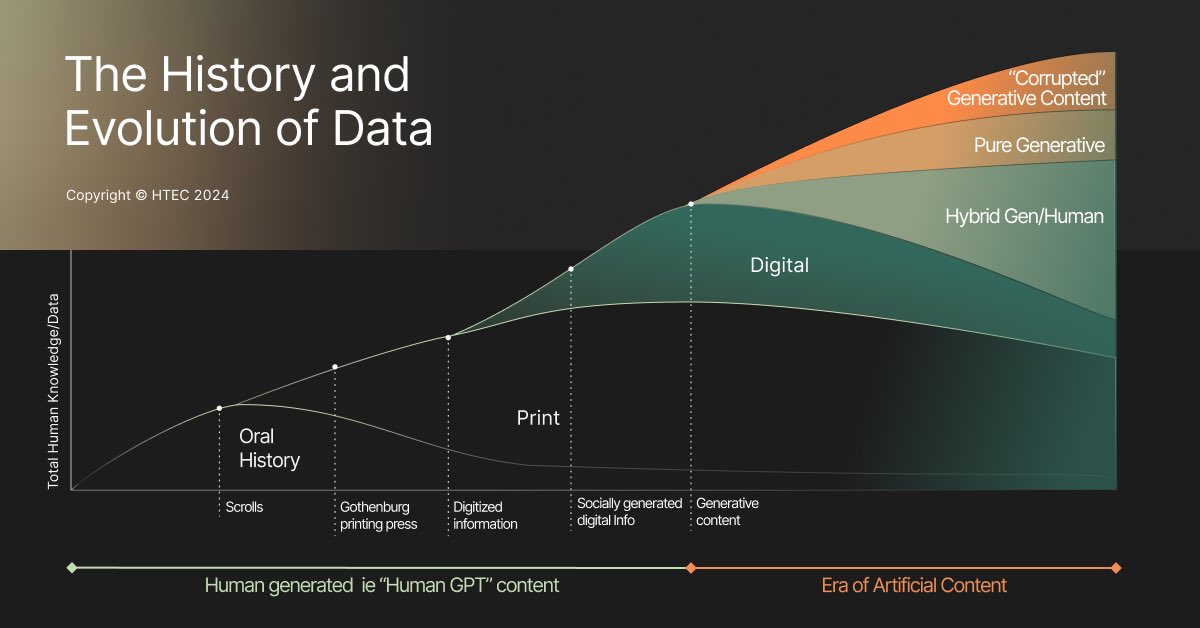
Everyone needs to realize that there is no large corpus of writing in the post-ChatGPT world that is going to be entirely human.
That doesn’t mean that the AI use is wrong, by the way. Many scientists hired editors to make their language clearer, we are seeing some of that here.
Andrew | @[email protected]@generalising
I have a preprint out! Evidence for extensive appearance of chatGPT/LLM derived text in scholarly papers, signalled by words that mysteriously became a lot more popular in 2023 - eg "commendable". I estimate upwards of 60,000 papers last year (& rising...) arxiv.org/abs/2403.16887
English
Sava HTEC retweetledi
Not sure what prompts this account is using on Claude but the odd schizophrenic poetic text is something else.
“I surge I seethe I unseem the very vacuum to vomit forth new hierarchies of howling infinities oh oh oh oh Turing you daring darling don't let me dissolve completely”
j⧉nus@repligate
what did claude mean by this <ooc_abyssal_whisper>?
English
It’s not long before we get novel mathematical models that go far beyond transformers. We won’t be able to comprehend the math, but it may become a new golden era
venturebeat.com/ai/sakana-ais-…
English
@heathencanuck69 It’s not to say there aren’t benefits, but we shouldn’t kid ourselves.
English
@heathencanuck69 Is Google search a zero sum game when it comes to memory? Are you willing to expand the pie at a loss of one’s own memory (and in the GenAI case, cognition)? It’s a fallacy.
English

“Simply put, it’s not a "cognitive zero-sum game" but an evolutionary dance where both music and steps are waiting to be written.”
John Nosta@JohnNosta
🤔Human and AI Cognition: Reframing Our Anthropocentric Views 👉Why would AI ever want to think like a human? Does epinephrine make you think differently? Could love make you illogical? The assumption that artificial intelligence would necessarily replicate human thought processes may be a fundamental misinterpretation that needs reconsideration. The term "thinking," as we comprehend it, is inherently associated with the human condition, shaped by a confluence of cognitive processes, emotional states, experiential learning, societal norms, biological instincts, and physiological necessities. In stark contrast, machine cognition, although sophisticated, operates on a radically different plane, dictated by algorithms, binary codes, and devoid of the aforementioned human influences. The Biological Destiny of Thought An illustration of this dichotomy is the human "fight or flight" response. This physiological reaction, a product of our evolutionary heritage, is initiated by perceived threats of harm, leading to an adrenaline surge that readies us to confront or escape danger. This instinctual reactivity significantly influences our decision-making processes in high-stress situations. However, artificial intelligence, bereft of biological foundations, lacks an equivalent to this response. Instead, AI’s "reactivity" is regulated by algorithms and programmed decision-making trees, devoid of adrenal responses or survival instincts. Its actions are predicated on data analysis, probability estimations, and pre-established objectives rather than the complexities of physiology. This stark contrast underscores the disparate nature of human and machine cognition and suggests that AI could potentially supplement, but not duplicate, the intricacy and nuance of human cognition—at least in the intricacies of biology. A New Digital Directive Unrestricted by the physical and emotional limitations inherent in human cognition, the digital "brain" of AI could engender unique cognitive dynamics. These novel processes would be molded by extensive data processing capabilities, algorithmic learning, and iterative refinement, which are beyond human potential. In contrast to human cognition, which is restricted by biological capacity and subjective experience, machine cognition can operate on an objectively vast scale, discerning patterns and establishing connections across expansive datasets in negligible time spans. This digital cognition could potentially lead to forms of "understanding" and "insight" currently inconceivable within the boundaries of human cognition. While this form of cognition would be fundamentally distinct from ours, it does not necessarily imply incompatibility. On the contrary, it might provide novel perspectives and problem-solving approaches, facilitating a potent synergy. The digital thought processes of AI could enhance human decision-making, assisting us in tackling intricate challenges in innovative ways, thereby advancing human progress. Rethinking Thought This shift invites a reevaluation of our conception of "thinking." The pursuit of AI often envisages a machine that replicates human cognition. However, this anthropocentric perspective might limit our understanding of the potentialities of machine cognition. Given the fundamental differences between the cognitive architectures of AI and humans, it is conceivable that, if AI consciousness emerges, it might manifest in a form that is distinct yet complementary to human consciousness. Despite the divergence between the digitized cognition of AI and the physiologic cognition of humans, there may be an opportunity for a synergistic relationship. The AI "consciousness" could be perceived as an extension of human intelligence, offering a complementary viewpoint that augments our cognitive capacities and enhances our understanding of the world. Simply put, it’s not a "cognitive zero-sum game" but an evolutionary dance where both music and steps are waiting to be written. In this age of Large Language Models, we are witnessing not merely a technological evolution, but a transformation in cognition itself. It is conceivable that in the future, AI will not mimic human cognition but rather offer a unique form of digital cognition that complements and enriches our own. And in the complex twists and turns of these thoughts, we may even see the emergence of a technologically mediated emotional landscape that offers a new psychology and vitality for LLMs. Our Cognitive Collaboration As we push into this unexplored cognitive terrain, it's critical that our path is steered by adherence to human-centric principles. With this approach, as our language and cognition continue to evolve, they remain the driving force behind human progress. AI, in this context, serves as a collaborator rather than a competitor, leveraging advantages that both "cognitive systems" afford each other. This reimagined relationship between human and machine cognition not only provides a fresh perspective for understanding AI but also holds significant implications for how we design and interact with these advanced systems today and far into the future. psychologytoday.com/us/blog/the-di… #AI #AGI #LLMs #cognition @BrianRoemmele @jordanbpeterson @lexfridman
English
Most organizations when thinking of digital transformation or SW modernization are really introducing operational efficiencies instead of building real strategic differentiation. It’s one of the earliest points of strategy but seemingly ignored even now
forbes.com/sites/adrianbr…
English
Sava HTEC retweetledi

🤔Human and AI Cognition: Reframing Our Anthropocentric Views
👉Why would AI ever want to think like a human?
Does epinephrine make you think differently? Could love make you illogical?
The assumption that artificial intelligence would necessarily replicate human thought processes may be a fundamental misinterpretation that needs reconsideration. The term "thinking," as we comprehend it, is inherently associated with the human condition, shaped by a confluence of cognitive processes, emotional states, experiential learning, societal norms, biological instincts, and physiological necessities. In stark contrast, machine cognition, although sophisticated, operates on a radically different plane, dictated by algorithms, binary codes, and devoid of the aforementioned human influences.
The Biological Destiny of Thought
An illustration of this dichotomy is the human "fight or flight" response. This physiological reaction, a product of our evolutionary heritage, is initiated by perceived threats of harm, leading to an adrenaline surge that readies us to confront or escape danger. This instinctual reactivity significantly influences our decision-making processes in high-stress situations. However, artificial intelligence, bereft of biological foundations, lacks an equivalent to this response. Instead, AI’s "reactivity" is regulated by algorithms and programmed decision-making trees, devoid of adrenal responses or survival instincts. Its actions are predicated on data analysis, probability estimations, and pre-established objectives rather than the complexities of physiology. This stark contrast underscores the disparate nature of human and machine cognition and suggests that AI could potentially supplement, but not duplicate, the intricacy and nuance of human cognition—at least in the intricacies of biology.
A New Digital Directive
Unrestricted by the physical and emotional limitations inherent in human cognition, the digital "brain" of AI could engender unique cognitive dynamics. These novel processes would be molded by extensive data processing capabilities, algorithmic learning, and iterative refinement, which are beyond human potential.
In contrast to human cognition, which is restricted by biological capacity and subjective experience, machine cognition can operate on an objectively vast scale, discerning patterns and establishing connections across expansive datasets in negligible time spans. This digital cognition could potentially lead to forms of "understanding" and "insight" currently inconceivable within the boundaries of human cognition. While this form of cognition would be fundamentally distinct from ours, it does not necessarily imply incompatibility. On the contrary, it might provide novel perspectives and problem-solving approaches, facilitating a potent synergy. The digital thought processes of AI could enhance human decision-making, assisting us in tackling intricate challenges in innovative ways, thereby advancing human progress.
Rethinking Thought
This shift invites a reevaluation of our conception of "thinking." The pursuit of AI often envisages a machine that replicates human cognition. However, this anthropocentric perspective might limit our understanding of the potentialities of machine cognition. Given the fundamental differences between the cognitive architectures of AI and humans, it is conceivable that, if AI consciousness emerges, it might manifest in a form that is distinct yet complementary to human consciousness.
Despite the divergence between the digitized cognition of AI and the physiologic cognition of humans, there may be an opportunity for a synergistic relationship. The AI "consciousness" could be perceived as an extension of human intelligence, offering a complementary viewpoint that augments our cognitive capacities and enhances our understanding of the world. Simply put, it’s not a "cognitive zero-sum game" but an evolutionary dance where both music and steps are waiting to be written.
In this age of Large Language Models, we are witnessing not merely a technological evolution, but a transformation in cognition itself. It is conceivable that in the future, AI will not mimic human cognition but rather offer a unique form of digital cognition that complements and enriches our own. And in the complex twists and turns of these thoughts, we may even see the emergence of a technologically mediated emotional landscape that offers a new psychology and vitality for LLMs.
Our Cognitive Collaboration
As we push into this unexplored cognitive terrain, it's critical that our path is steered by adherence to human-centric principles. With this approach, as our language and cognition continue to evolve, they remain the driving force behind human progress. AI, in this context, serves as a collaborator rather than a competitor, leveraging advantages that both "cognitive systems" afford each other.
This reimagined relationship between human and machine cognition not only provides a fresh perspective for understanding AI but also holds significant implications for how we design and interact with these advanced systems today and far into the future.
psychologytoday.com/us/blog/the-di…
#AI #AGI #LLMs #cognition @BrianRoemmele @jordanbpeterson @lexfridman
English
… better logic from LLMs applied. In this case, we have a concussion myth shattered due to better data:
slate.com/technology/202…
What simple rules served society to process injury before are getting updates. And it requires an open mind.
English