
allow me to show you the world retweetledi
allow me to show you the world
167.1K posts

allow me to show you the world
@scampadversary
🔞 Sophie: she/they, 32, queer AuDHDer, problematique | multiship, 🔄 but w/strong biases | mainly GI + HSR | scampadversary on all socmed
NY Katılım Nisan 2014
1K Takip Edilen352 Takipçiler

allow me to show you the world retweetledi


allow me to show you the world retweetledi

people laughing over this/making it into an rpf related problem while they should be concerned for the lgbtq+ community in russia and how they are prosecuted for existing. fuck you koreaboo, and sorry to everyone who have to live closeted bcs of their govt.
Koreaboo@Koreaboo
Woman Sentenced By Court For Writing Gay Stray Kids Fanfiction koreaboo.com/news/woman-sen…
English
allow me to show you the world retweetledi

#Arlecchino
I saw you like my Arle so imma just sneak it here to remind you of this one i did a while ago ✌️

English
allow me to show you the world retweetledi

Allistic people bond via a part of the brain that uses social autopilot to read the room without conscious effort.
Autistic people bond via a focused-thinking region of the brain used to solve a math problem.
I've... never seen a more perfect explanation of what it's like to be autistic 😭
Anish Moonka@anishmoonka
Scientists ran a debate experiment on 30 four-person groups of strangers, scanning everyone’s brain in real time. The pairs with similar autistic traits clicked together. The brain region powering that connection was completely different from the one the other pairs used. The work came out of Tianjin Normal University and appeared in Biological Psychiatry in September 2025. Researchers used small light-based scalp sensors to capture brain activity as it happened. They put together 30 four-person groups, each with two students scoring high on a standard autism survey and two scoring low. The groups listened to an audio story, then debated which fictional characters to rescue from a deserted island under turn-taking rules. Afterwards, every participant privately rated who they wanted to be friends with. The mutual attraction only showed up when opinions matched during the survival debate. When two students agreed on who to rescue, the one with high autistic traits wanted to be friends with the other high-trait student. The same happened for low-trait students. Matching on personality, like both being extraverts, had no effect. The brain scans revealed the mechanism. Low-trait pairs synced up in a region called the right temporoparietal junction, the social autopilot that reads the room without conscious effort. High-trait pairs lit up elsewhere. Their brains synchronized in the right dorsolateral prefrontal cortex, the focused-thinking region you use to solve a math problem. Both kinds of pairs reached the same level of connection, just through different neural hardware. This finding mirrors a 2020 study from Edinburgh, where researchers passed a story person-to-person through a chain of eight people. Autistic-only chains kept about 13 details out of 30. Non-autistic-only chains kept about 12. Mixed chains, where the two types alternated, dropped to roughly 9 details, a 31% decline. The latest CDC numbers from April 2025 put autism at 1 in 31 US eight-year-olds, up from 1 in 36 just two years earlier. For decades, the standard line in research and clinical practice called this a social skills deficit. School and clinical programs were built around fixing it. The new scans suggest there was nothing to fix in the first place. Those brains were doing the social work all along, just in a different part of the cortex.
English
allow me to show you the world retweetledi
allow me to show you the world retweetledi

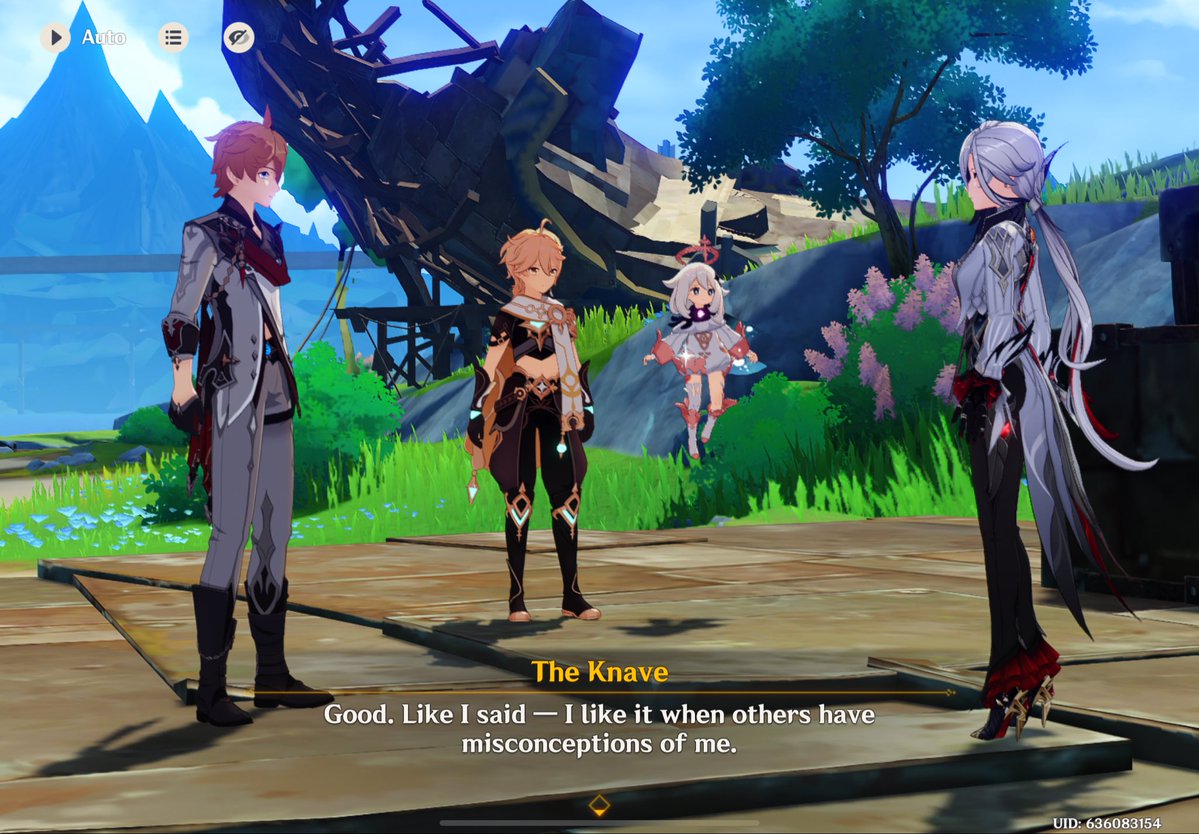
genshin gets an awesome morally gray butch lesbian who is trapped between a rock and the hard place of perpetuating the same oppressive system that she grew up under and literally doesn’t know what to do with her other than rehash old discourse every couple months like clockwork
English
@Genshin_HU_Info I believe in playable Dottore, so I'm saving for him and/or Pantalone
English
allow me to show you the world retweetledi

3 Days UNTIL WELKIN MOON GIVEAWAY winner is announced! 🌙
Make sure to Participate!
✅Follow me @Genshin_HU_Info
✅RT this tweet
✅Comment who you are saving for!
Good luck! 🫶🏻
#GenshinImpact
English
allow me to show you the world retweetledi

Autistic people in my experience are either the most enjoyable people to interact with as another autistic person... Or we are mutually incompatible to the point voluntary disengagement is the only alternative to violence. There is very, very rarely an in-between.
PsyPost.org@PsyPost
A new study shows that individuals with similar levels of autistic traits are naturally drawn to one another. Brain scans reveal they use alternative, highly effective neural strategies to connect, challenging traditional deficit-based models of autism. dlvr.it/TSSN7t
English
allow me to show you the world retweetledi


allow me to show you the world retweetledi


can we please start bothering Visa and MasterCard en masse?
I suspect they're forcing Kickstarter to do this under threat of removing their platforms from the site completely.
“Normal People” Gallery@Normpplgallery
Kickstarter is now officially banning adult content
English
allow me to show you the world retweetledi

So... creators can't actually make adult/mature content. This isn't just banning pornographic works, it's basically banning anything beyond TV-14, despite being under a "mature content" label.
“Normal People” Gallery@Normpplgallery
Kickstarter is now officially banning adult content
English
allow me to show you the world retweetledi

it's dead now so I can't even try a factory reset. Have to mail it in 🙃
English
switch 2 randomly stopped being able to charge yesterday. neither of the two usb ports nor docking works. all basic trouble-shooting has failed. 😕
English
allow me to show you the world retweetledi


allow me to show you the world retweetledi


No, I don't remember doing or saying that, but it sounds like it was meaningful? No, I don't remember when or how we met. AFAIK it's never been held against me bc that would mean they actually cared about getting my attention to begin with lol
Achlys@Lesboyfemme
Why is ableism towards people with short term memory, memory loss, dissociative amnesia or anyone who have trouble recalling memories is so normalized like am i the only one who sees this happen often
English