SCRIPTURE LOGIC retweetledi
SCRIPTURE LOGIC
1.6K posts

SCRIPTURE LOGIC
@scripturelogic
2 CORINTHIANS 5:19 KJV; To wit, that God was in Christ, reconciling the world unto himself, not imputing their trespasses unto them;
THE DISPENSATION OF GRACE Katılım Ağustos 2023
165 Takip Edilen238 Takipçiler

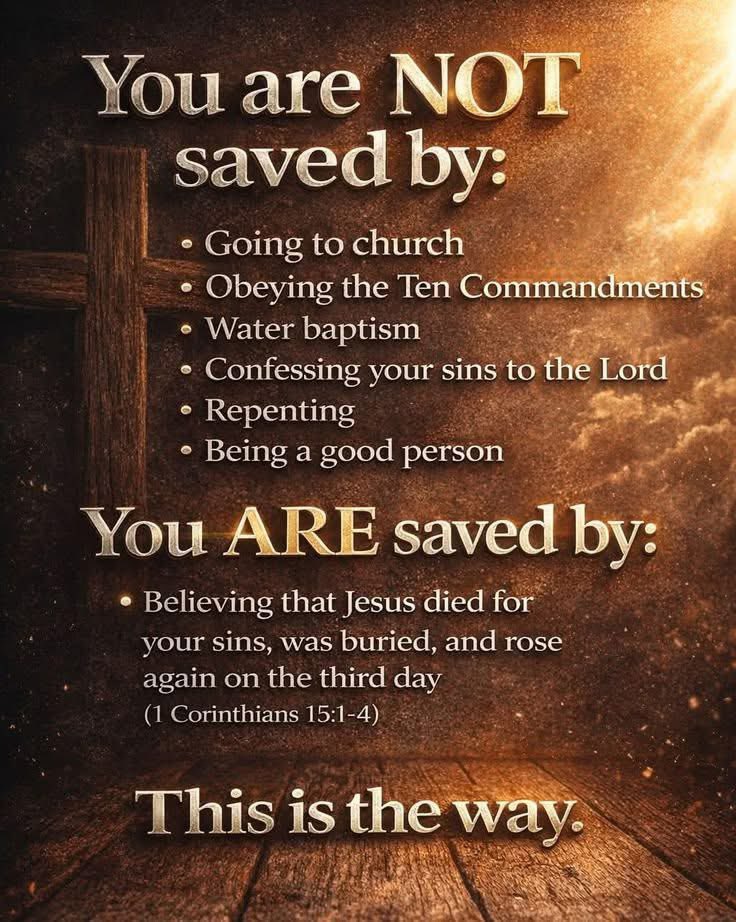
Righteousness has always been imputed without works by faith.
But in time past, that righteousness had to be maintained by works done by faith (James 2:21-24).
In this dispensation of Grace, we are imputed the righteousness of God, and it is maintained by the finished work of Christ alone.
English
@janetticonfeti7 @skreizy_ @apurpleshadow The thief on the cross does not prove that the normal rule for time past was "faith alone", no works ever. It proved that in Time Past, God could save someone by faith when they have no opportunity to do works.
English

English

Proper “Right Division” does not teach that those saved in Israel’s time past program were saved by “faith + works”.
Proper right division includes understanding & appreciating that God’s righteousness & his justice only ever could give man His Life by faith, and faith alone.
This happens when one is established in Romans 1-5 and they understand the mechanics of their redemption.
Some name “right division” & proceed to make this error, claiming that in time past the law was utilized to obtain eternal life.
The fact these unfortunate errors are out there does not negate the absolute necessity of right division & understanding the apostle Paul’s unique ministry to us in this dispensation of Grace in which we find ourselves.
English
Yes, I believe they were justified before God but the question is how and on what basis. Paul is not inventing a brand new idea in Romans 4 (agreed), but he is explaining something specific:
In Romans 4:3 he quotes Genesis 15:6 "Abraham believed God, and it was counted unto him for righteousness."
"It" = Abraham's faith. God counted his faith for righteousness, resulting in Abraham's own righteousness that God recognized. The same chapter says God imputes righteousness without works (Romans 4:6).
But nowhere does Paul say Abraham or David were imputed the Righteousness of God. That specific truth comes with the clear "But now" marker:
"BUT NOW the righteousness of God without the law is manifested…” (Romans 3:21)
"That we might be made the righteousness of God in him" (2 Corinthians 5:21) So yes, Old Testament saints were justified by faith. But the Bible calls it their own righteousness by faith.
English
@scripturelogic @skreizy_ @apurpleshadow Well depends if you believe they were justified before God already, Paul doesn’t insert some new idea about justification by faith alone in Rom 4.. that isn’t mystery info
English
You said the Ezekiel and Psalms passages only refer to "practical righteousness in life," not imputed righteousness. But look at what God actually says:
"Though these three men, Noah, Daniel, and Job, were in it, they should deliver but their own souls by their righteousness." Ezekiel 14:14, 20.
This is not just daily conduct. God directly ties their own righteousness to the deliverance of their own souls in judgment.
If it was only "practical righteousness" with no bearing on their standing before God, why would their souls be delivered by THEIR righteousness?
And also I agree that their rightousness wasn't earned.
English
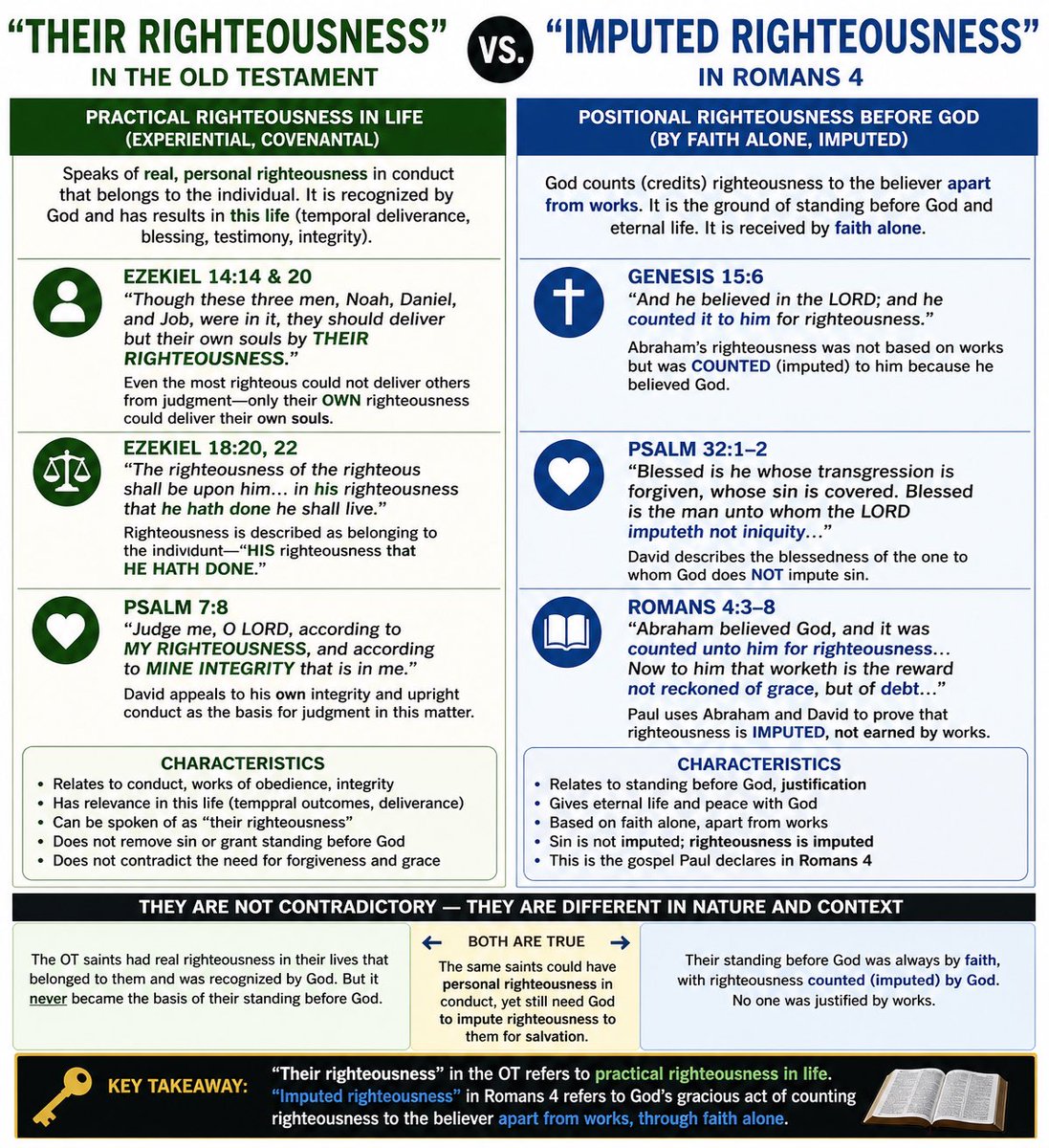
In the Old Testament, believers had real, personal righteousness in their conduct (“their righteousness”), but their standing before God was never based on that. It was always by faith, with righteousness counted (imputed) by God—not earned. The passages in Ezekiel and the Psalms speak of practical righteousness in life, not the imputed righteousness Paul explains in Romans 4.
Old Testament believers had real righteousness in their lives, but never relied on it for their standing before God—just like Abraham and David, they were justified by faith, with righteousness counted to them, not earned by them.
English

@scripturelogic And let's not forget the many future tense promises of having their sins removed, in Hebrews for one.
English
🌟Did David believe he was credited the righteousness of God? No.
David himself said:
"The LORD shall judge the people: judge me, O LORD, according to MY righteousness, and according to MINE integrity that is in me." Psalms 7:8
He also declared that the Lord rewarded him "according to MY righteousness" (Psalm 18:20, 24). David clearly understood his standing before God in terms of his own righteousness; not the Righteousness of God imputed to him. Yet years later, after his sin with Bathsheba, David still had to plead for forgiveness:
"Have mercy upon me, O God… blot out my transgressions. Wash me throughly from mine iniquity, and cleanse me from my sin."
Psalm 51:1-2
If David had been made "the righteousness of God in him" (2 Corinthians 5:21), he would not have needed to beg God to blot out his sins and cleanse him years after being recognized as righteous. The scriptures draw a clear distinction. David stood in his own righteousness by faith; a righteousness God recognized.
English
Yep! Peter James & John and the rest of them did not have God's righteousness imputed to them. Peter said they had to work righteousness to be accepted. It would actually be crazy for anyone to think they can "work" the righteousness of God to be accepted in him lol.
The imputed righteousness of Gid is part of the mystery that was hid in God and later revealed to our Apostle Paul.
English
@scripturelogic @apurpleshadow Very good. Seems too many people ignore the (as you pointed out) possessive nature of those statements. Paul said he was found in Christ, with no righteousness of his own (Phil 3:9; Tit 3:5). Peter said that God accepts those who work righteousness (Acts 10:35). Just one example.
English
In Time Past it was their own righteousness that belonged to them, produced by faith, and recognized/accepted by God. Clear examples from the plain passages:
WATCH
👇
Ezekiel 14:14 & 20 : "Though these three men, Noah, Daniel, and Job, were in it, they should deliver but their own souls by THEIR RIGHTEOUSNESS."
God Himself speaks of "their righteousness" as something personal to these Old Testament saints that could deliver their own souls.
Ezekiel 18:20, 22: "The righteousness of the righteous shall be upon him… in his righteousness that he hath done he shall live."
God describes righteousness as belonging to the individual "HIS righteousness that HE HATH DONE" .
Psalm 7:8 : David prays, "judge me, O LORD, according to MY RIGHTEOUSNESS, and according to MINE INTEGRITY that is in me."
David refers to his OWN righteousness as the basis for judgment.
These are just a few examples. Also, don't confuse own righteousness with self righteousness. Self righteousness is when a person credits themselves as righteous instead of God recognizing and declaring that person righteous.
If you have any more questions do feel free to ask.
English
@scripturelogic @apurpleshadow How could we define this imputed righteousness they had, which is not God's righteousness?
English
@skreizy_ @apurpleshadow My position is that in time past, believers were imputed righteousness, but they were not imputed the righteousness of God. Only members of the body of Christ during this "but now" dispensation are imputed the righteousness of God. Only we are made the righteousness of God.
English
@scripturelogic @apurpleshadow So if I understand your position, it's that their faith was counted for/as their righteousness (not works), but today we receive the righteousness of God himself, also by faith?
English
No, that is a strawman.
I never said God imputes "faith/believing" to anyone. Let's stay with the exact kjv wording, without forcing anything.
Romans 4:3: "Abraham believed God, and it was counted unto him for righteousness."
Here, "it" = Abraham's believing/faith.
The verse says his faith was counted FOR righteousness, not that faith itself was imputed as righteousness or transferred to him.
Romans 4:5: "But to him that worketh not, but believeth…, his faith is counted for righteousness."
Same thing: his faith is counted FOR righteousness.
Romans 4:23-24: "Now it was not written for his sake alone, that it was imputed to him; But for us also, to whom it shall be imputed…"
The "it" here refers to the imputation of righteousness. So as it stands, the "it" in Romans 4:23-24 which is imputation is not the same as "it" in Romans 4:3 & 5.
If you can't see the clear distinction between both "it" then having a further discussion with you about whose righteousness is imputed in time past pointless.
English
The "it" mentioned in Romans 4:23-25 is not referring to the same "it" in verse 3 & 5.
Romans 4:3: "Abraham BELIEVED God, and IT was counted unto him for righteousness."
"It" = Abraham's believing (his faith).
Romans 4:5: "But to him that worketh not, but BELIEVETH on him that justifieth the ungodly, HIS FAITH is counted for righteousness."
Clearly, "his faith" is what is counted for righteousness.
In Romans 4:23-25 the "it" refers to imputation of righteousness.
I'm going to bed Good night bro, Grace.🕊
English
The "it" is what was counted to Abraham in Romans 4:3 "Abraham believed God, and it was counted unto him for righteousness."
"It"= his believing/faith. That does not change. Romans 4:6 says: "Even as David also describeth the blessedness of the man, unto whom God imputeth righteousness without works."
It says righteousness, not "the righteousness of God" or "God’s righteousness". The verse does not say God imputeth His righteousness. It says "God imputeth righteousness without works" the same principle shown with Abraham's faith being counted for righteousness.
Perhaps you can support your position by providing scripture where David said he had the righteousness of God.
English

The "it" that is being imputed is NOT "faith/believing."
What's being imputed is God's righteousness.
Romans 4:6
Even as David also describeth the blessedness of the man, unto whom 👉 God imputeth righteousness without works,
----
For this Scripture you referenced,
Romans 3:21-22
But now the righteousness of God without the law is manifested, being witnessed by the law and the prophets; 👉 even the righteousness of God which is by faith of Jesus Christ unto all and upon all them that believe: for there is no difference:
This verse is not speaking of the righteousness of God first being manifested here. It's referring to the righteousness of God "WITHOUT THE LAW* that is 👉 by faith of Jesus Christ for all who believe.
This is the same righteousness of God without works (by faith before the DBR).
What is being manifested is the same righteousness of God *without the law* AND is by faith of Jesus Christ for all who believe.
The Lord's grace and mercy be with you.
English
The "it" does not change mid-sentence. That is exactly the point. In Romans 4:3 "Abraham believed God, and it was counted unto him for righteousness."
"It" = Abraham's believing/faith. Then in Romans 4:23-24 : "Now it was not written for his sake alone, that it was imputed to him; But for us also, to whom it shall be imputed…" The "It" remains the same: faith/believing.
Paul is saying the same principle of imputation by faith applies "for us also." But the content of what is received is not the same, because the context has already changed:
👇
Romans 3:21 "BUT NOW the righteousness of God without the law is manifested…"
English
@scripturelogic @TheNewM60634676 @apurpleshadow Just the basic flow of language, the "it" that is imputed does not change mid sentence.
English
@khoingo @TheNewM60634676 @apurpleshadow In the passage you cited Paul is showing that the principle of imputation by faith applies to us as well but what is received in this dispensation is God's own righteousness as a gift, not the same as what was counted to Abraham or David in time past.
English
Brother,
Abraham, David, saints in times past, and believers of the gospel today are imputed the righteousness of God.
Romans 4:23-25
Now it was not written for his (Abraham) sake alone,
that 👉 it was imputed to him;
👉 but for us also,
to whom 👉 it shall be imputed,
if we believe on him that raised up Jesus our Lord from the dead; who was delivered for our offences, and was raised again for our justification.
English
David was imputed righteousness but he was NOT imputed the righteousness of God.
Those who are imputed the righteousness of God are not in need of future forgiveness.
Question: After David was imputed righteousness did he still have to get future sins forgiven?
The answer is yes.
The reason why he still needed his sins forgiven even after being imputed righteousness is because it was his OWN righteousness that God recognozed and was credited to him.
For the BOC, believers are imputed the righteousness of God and are not in need of any further forgiveness of sin such as in David's case.
Hope this helps. Grace,
English

David says the same thing as one living under the Mosaic law.
Romans 4:6-14
6 Even as David also describeth the blessedness of the man, unto whom God IMPUTETH righteousness without works,
7 Saying, Blessed are they whose iniquities are forgiven, and whose sins are covered.
8 Blessed is the man to whom the Lord will not IMPUTE sin.
**All believers from Adam and Eve have had the righteousness of Christ imputed to their account**
Sylvan Lake, Alberta 🇨🇦 English
Is not about what kind of righteousness. Its about WHO'S righteousness was imputed.
Abraham’s faith was counted for his own righteousness.
Our faith today is counted for God's righteousness.
Believers today are made the righteousness of God.
No one in time past was made the righteousness of God.
English
@scripturelogic Can I ask you a question?
What kind of righteousness do you think God is imputing to Abraham if not His righteousness?
English
None of those passages say Abraham was imputed the righteousness of God. Is simply says he was imputed righteousness. Be careful not to add to those passages.
And Time Past, it was their own righteousness that God recognized and credited to them. And again this is not to be confused with self righteousness.
English
@scripturelogic No, in Gen 15:6, Rom 4:3, 23 we are told Abraham believed God and it was imputed as righteousness.
English