Sean Oliver

13.3K posts

Sean Oliver banner
Sean Oliver

Sean Oliver

@SeanOliver

Growth engineer at @supabase. Building tiny tools that make lives better. Hacking mental clarity with https://t.co/rLzViLbk8S.

San Francisco, CA Katılım Ocak 2007
1.6K Takip Edilen2.6K Takipçiler
Sabitlenmiş Tweet
Sean Oliver
Sean Oliver@SeanOliver·
✨ Introducing Audioflare ✨ The ultimate open source playground to master @Cloudflare AI Workers. Audioflare transcribes, summarizes, analyzes, and translates 30-second audio clips into 9 languages. #buildinpublic
English
11
34
185
48.1K
Sean Oliver retweetledi
swyx 🇸🇬 AIE Singapore!
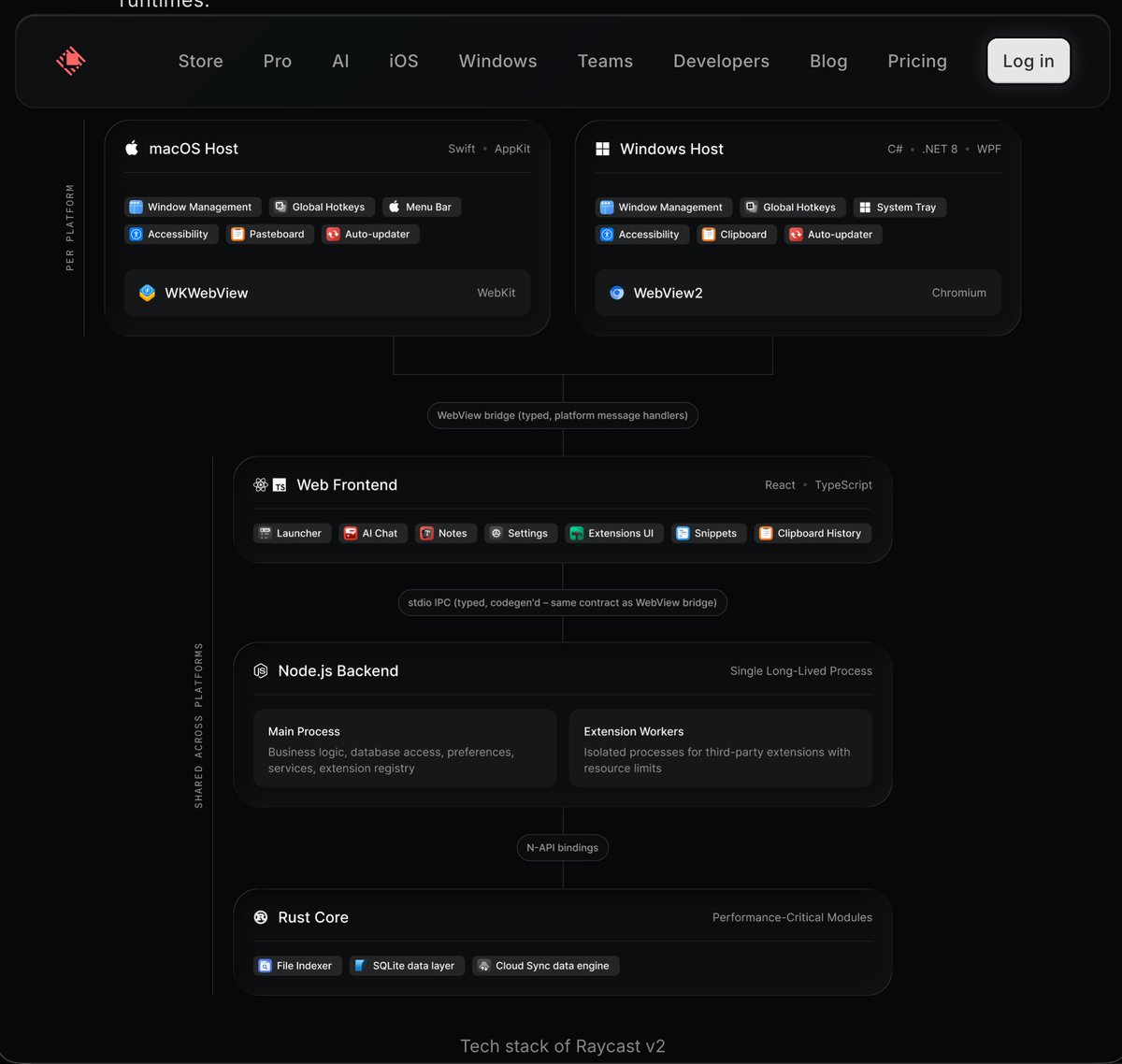
beautiful tech stack writeup, one of the best i've ever seen in my career. I always advocate that devtools companies write these up, because it fulfils multiple purposes: - tell users the care that goes into the product - tell hires that there's SOTA work here - tell competitors to give up - gives back to community - (nuanced) tell non-fits why they can't have what they want when they think it's an easy request few actually do this mostly because they don't actually have sufficient depth, or aren't sufficiently good at notetaking/systematic about problemsolving ('its just vibes' or 'honestly we just went with the first thing that worked' doesn't come across as well, so rather not say anything) so when you've done the work, show the work. bravo Raycast
swyx 🇸🇬 AIE Singapore! tweet media
Thomas Paul Mann@thomaspaulmann

One app, two platforms, four programming languages. The things that look the simplest are often the hardest to build. @raycast is one of them. Here's a technical deep dive on how we built v2 👉 ray.so/v2-deep-dive

English
28
23
306
33.2K
Sean Oliver retweetledi
Wes Bos
Wes Bos@wesbos·
Raycast 2 is built on React?! Been using Raycast 2.0 for a few days and its noticeably very snappy Today I was shocked to see they have built it with Web Views and a Node.js backend. You know I had to crack it open. Light native wrapper. Rust where it matters. No electron of Tauri.
Wes Bos tweet mediaWes Bos tweet mediaWes Bos tweet media
English
46
46
1.3K
159.2K
Sean Oliver retweetledi
Jonny Summers-Muir
Jonny Summers-Muir@JSummersMuir·
join us. we are hiring a design engineer. link in reply.
Jonny Summers-Muir tweet mediaJonny Summers-Muir tweet mediaJonny Summers-Muir tweet mediaJonny Summers-Muir tweet media
English
20
42
716
48.9K
Sean Oliver retweetledi
Supabase
Supabase@supabase·
Supabase is now an official ChatGPT app!
English
81
137
2K
332.8K
Sean Oliver
Sean Oliver@SeanOliver·
@swyx Happy bday man! Amazing reflections here. 🚀
English
0
0
0
44
Sean Oliver
Sean Oliver@SeanOliver·
ChatGPT's new image model is insanely good at removing people from the background of photos.
Sean Oliver tweet mediaSean Oliver tweet media
English
0
0
1
89
Sean Oliver retweetledi
Mark Gadala-Maria
Mark Gadala-Maria@markgadala·
This might be the most unhinged AI video I've ever seen.
English
478
1.2K
6.9K
418.9K
Sean Oliver
Sean Oliver@SeanOliver·
Google is spending billions building @GeminiApp into search. I'm looking at movie showtimes. There are 11 screen formats. 3D 4DX. DBOX XD. 3D DBOX XD. Barco PX RPX. Zero explanations. Not even a tooltip. I don't need AI to summarize Reddit threads. I need it to tell me what the hell DBOX XD is and whether it's worth $8 more than DBOX.
Sean Oliver tweet media
English
0
0
0
91
Sean Oliver
Sean Oliver@SeanOliver·
Been doing this for a while without realizing what it was. Repos for my kids, family docs, finance stuff, medical records. Just trying to keep life from being a mess. Making it all searchable and maintained. Karpathy nailed it. The second brain dream always had this fatal flaw: documenting your life takes more time than living it. LLMs finally flip that. The tool actually matches the ambition now.
Andrej Karpathy@karpathy

LLM Knowledge Bases Something I'm finding very useful recently: using LLMs to build personal knowledge bases for various topics of research interest. In this way, a large fraction of my recent token throughput is going less into manipulating code, and more into manipulating knowledge (stored as markdown and images). The latest LLMs are quite good at it. So: Data ingest: I index source documents (articles, papers, repos, datasets, images, etc.) into a raw/ directory, then I use an LLM to incrementally "compile" a wiki, which is just a collection of .md files in a directory structure. The wiki includes summaries of all the data in raw/, backlinks, and then it categorizes data into concepts, writes articles for them, and links them all. To convert web articles into .md files I like to use the Obsidian Web Clipper extension, and then I also use a hotkey to download all the related images to local so that my LLM can easily reference them. IDE: I use Obsidian as the IDE "frontend" where I can view the raw data, the the compiled wiki, and the derived visualizations. Important to note that the LLM writes and maintains all of the data of the wiki, I rarely touch it directly. I've played with a few Obsidian plugins to render and view data in other ways (e.g. Marp for slides). Q&A: Where things get interesting is that once your wiki is big enough (e.g. mine on some recent research is ~100 articles and ~400K words), you can ask your LLM agent all kinds of complex questions against the wiki, and it will go off, research the answers, etc. I thought I had to reach for fancy RAG, but the LLM has been pretty good about auto-maintaining index files and brief summaries of all the documents and it reads all the important related data fairly easily at this ~small scale. Output: Instead of getting answers in text/terminal, I like to have it render markdown files for me, or slide shows (Marp format), or matplotlib images, all of which I then view again in Obsidian. You can imagine many other visual output formats depending on the query. Often, I end up "filing" the outputs back into the wiki to enhance it for further queries. So my own explorations and queries always "add up" in the knowledge base. Linting: I've run some LLM "health checks" over the wiki to e.g. find inconsistent data, impute missing data (with web searchers), find interesting connections for new article candidates, etc., to incrementally clean up the wiki and enhance its overall data integrity. The LLMs are quite good at suggesting further questions to ask and look into. Extra tools: I find myself developing additional tools to process the data, e.g. I vibe coded a small and naive search engine over the wiki, which I both use directly (in a web ui), but more often I want to hand it off to an LLM via CLI as a tool for larger queries. Further explorations: As the repo grows, the natural desire is to also think about synthetic data generation + finetuning to have your LLM "know" the data in its weights instead of just context windows. TLDR: raw data from a given number of sources is collected, then compiled by an LLM into a .md wiki, then operated on by various CLIs by the LLM to do Q&A and to incrementally enhance the wiki, and all of it viewable in Obsidian. You rarely ever write or edit the wiki manually, it's the domain of the LLM. I think there is room here for an incredible new product instead of a hacky collection of scripts.
English
0
0
0
93
Sean Oliver retweetledi
JAMES WEBB
JAMES WEBB@jameswebb_nasa·
Você sabia que, embora o destino seja o mesmo, a trajetória para chegar até lá evoluiu muito? No vídeo, podemos ver a diferença visual entre as estratégias de voo: • Apollo 8 (1968): A primeira missão tripulada a orbitar a Lua utilizou uma trajetória de aproximação direta para entrar em órbita lunar. A nave permaneceu relativamente próxima da superfície, em uma órbita baixa, ajudando a preparar o caminho para os pousos que viriam depois. • Artemis I (2022): Já a missão Artemis utilizou uma Órbita Retrógrada Distante (DRO). Como mostra o gráfico, a nave Orion viajou muito mais longe da Lua, testando os limites de distância para missões tripuladas e aproveitando uma órbita gravitacionalmente estável, ideal para missões de longa duração. Essas trajetórias não são apenas desenhos no espaço; elas representam um salto tecnológico. Saímos de missões de exploração mais curtas para a preparação de uma presença sustentável na Lua com o Programa Artemis. Qual dessas trajetórias você achou mais impressionante: a precisão da Apollo ou a amplitude da Artemis?
Português
12
244
1.6K
168.8K
Sean Oliver retweetledi
delian
delian@zebulgar·
The coolest orbital animation I've seen of Artemis 2 Just really shows you how far away they're flying today and also how precise they need to be to go to the moon
English
219
3K
24.6K
1.7M
Sean Oliver retweetledi
Greg Richardson
Greg Richardson@ggrdson·
Introducing supabase.sh: Supabase docs over SSH Give your agents direct bash access to @supabase docs so that they can explore them the same way they do with code
English
6
25
146
16.3K
Sean Oliver retweetledi
Paul Copplestone - e/postgres
I promise this is not an April fools You can now access the supabase docs via SSH
English
23
11
216
30.1K
Sean Oliver retweetledi
Paul Copplestone - e/postgres
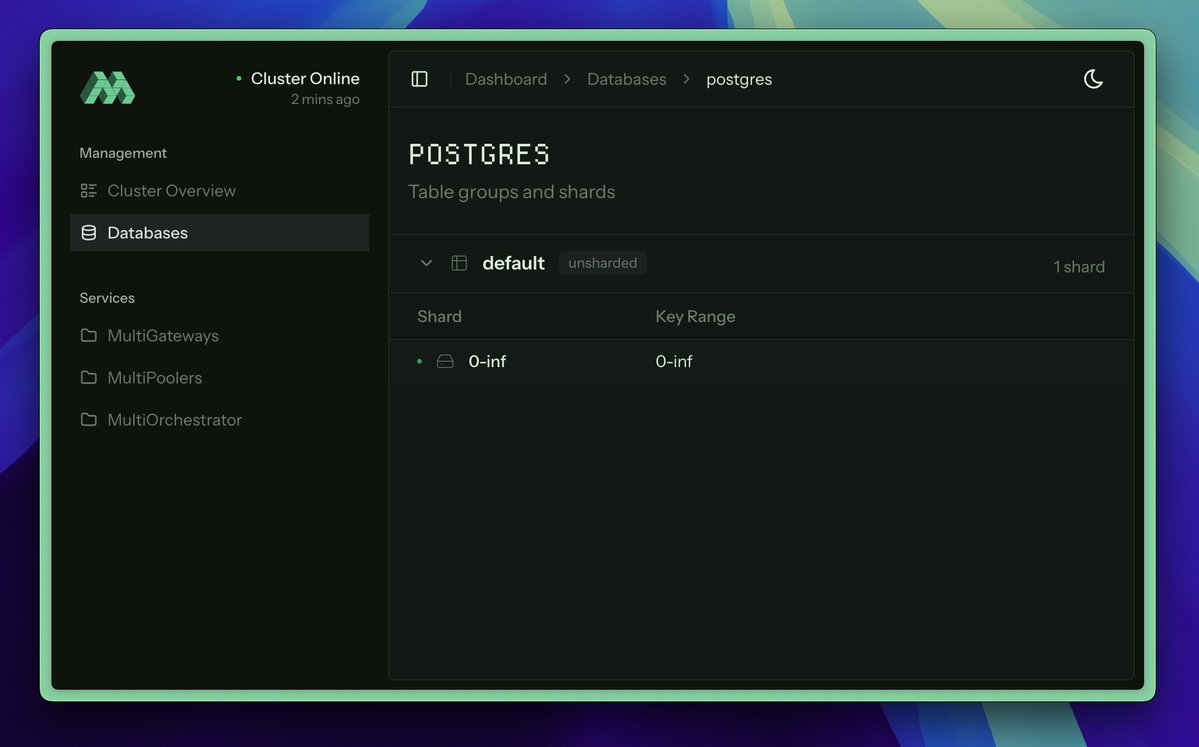
the @multigres operator is now open source progress so far: ◆ Direct pod management ◆ Zero-downtime rolling upgrades ◆ pgBackRest PITR backups ◆ Observability with OTel tracing link to repo in thread
Paul Copplestone - e/postgres tweet media
English
14
39
302
23.1K
Sean Oliver retweetledi
Wes Bos
Wes Bos@wesbos·
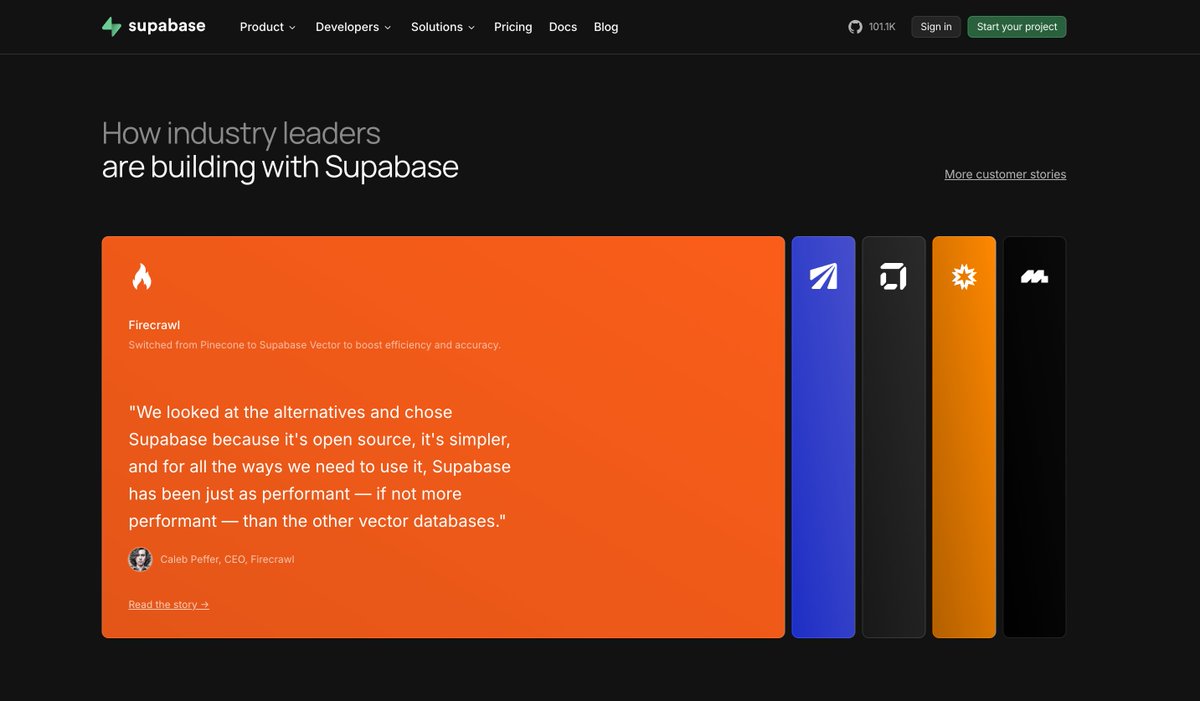
Claude Code leaked their source map, effectively giving you a look into the codebase. I immediately went for the one thing that mattered: spinner verbs There are 187
Wes Bos tweet media
English
722
1.9K
26.6K
2.2M
Wes Bos
Wes Bos@wesbos·
Only cool people can reply to this
English
687
3
699
116.3K
Sean Oliver retweetledi
Ali Waseem
Ali Waseem@softwarecuddler·
Copy Supabase logs to your fav clanker
English
3
3
19
1.3K
Sean Oliver
Sean Oliver@SeanOliver·
Never thought I'd see Readwise ship a CLI but here we are. My entire workflow runs through Claude Code now. Query my reading library from the terminal, let Claude build skills on top of it. Exactly the kind of weird power-user feature I didn't know I needed.
Readwise@readwise

Introducing the Readwise CLI. Anything you've saved in Readwise (highlights, articles, PDFs, books, youtube, newsletters) is now instantly accessible from the terminal. For you, and your AI agents. npm install -g @readwise/cli

English
3
0
3
401
Talkie
Talkie@usetalkieapp·
@SeanOliver @claudeai @WisprFlow There's a real benefit to using the same input across apps. If anything, Claude Code voice mode and all the different voice inputs are great when you're on a device without an app installed. once you're voice pilled, you need tools that are optimized for advanced voice workflows.
English
1
0
1
22
Sean Oliver
Sean Oliver@SeanOliver·
Been testing @claudeai's new voice feature and @WisprFlow side by side. Right now? Wispr Flow wins. Claude voice is great for what it does. But it only does one thing: prompt Claude. That's pretty niche. Wispr gives you voice control across every app. Dictation everywhere. That's the actual unlock. The thing about voice interfaces is once you start using them, you want them for everything. Not just AI prompts. Emails. Docs. Linear tickets. Slack messages. A standalone app that only talks to Claude feels like solving 5% of the problem. Claude voice will get better for sure. But I'm curious how many people will actually use it long-term vs. just going full system-wide voice. The ROI on learning a new voice workflow only makes sense if it works everywhere.
English
1
0
1
87