selwynf

4.7K posts

selwynf

selwynf

@selwynf

Gibraltar Katılım Kasım 2008
697 Takip Edilen1.2K Takipçiler
selwynf
selwynf@selwynf·
In 1980, 11% of MotoGP's premier-class grid was Italian or Spanish. In 2026 it's 68%. Christian Horner is reportedly on Liberty Media's shortlist for the CEO role. The picture he'd inherit, in 28 seconds. 🏍️ #motogp #LibertyMedia
English
0
0
0
81
selwynf retweetledi
PBS News
PBS News@NewsHour·
Artificial intelligence-generated content is everywhere these days, making it increasingly difficult to separate fact from fiction, particularly when it comes to breaking news. Here are some tips for distinguishing AI-generated content from reality. to.pbs.org/47FCvVP
English
3
16
34
5.8K
selwynf
selwynf@selwynf·
@paulg Paul Graham reckons the law is the one territory you can defend against the frontier AI companies. I think he's half right. My take on where the defensible ground actually sits, as well as the actual hill we can all go die on if we get it wrong. linkedin.com/pulse/where-la…
English
0
0
0
604
Paul Graham
Paul Graham@paulg·
Just went to visit Legora. Most impressive startup I've been to visit in years. They're going to surpass Harvey in 2027. After that their only potential rivals will be the model companies. And if ever there was a territory you could defend against the model companies, law is it.
English
194
138
3.1K
536.1K
selwynf retweetledi
HM Govt of Gibraltar
HM Govt of Gibraltar@GibraltarGov·
New video series published today to help Gibraltar businesses prepare for Treaty implementation. First video is live now. Topics ahead include customs, taxation of goods, product standards and transitional arrangements.
English
1
8
7
1.8K
selwynf retweetledi
David Yelland
David Yelland@davidyelland·
Don’t know her, but she made me cry.
English
196
728
5.6K
425.4K
selwynf
selwynf@selwynf·
@guilleflorvs The regulatory perimeter makes these currently unachievable... Currently.
English
0
0
0
398
Guillermo Flor
Guillermo Flor@guilleflorvs·
Sequoia's thesis that the next $1T company will sell work, not software, is the most important reframe in AI right now. The argument: if you sell a copilot, you're competing with every new model release. But if you sell the outcome — books closed, contracts reviewed, claims handled — every AI improvement makes your margins better, not your product obsolete. The key insight most people miss: for every $1 spent on software, ~$6 is spent on services. The entire SaaS playbook was about capturing the software dollar. The AI playbook is about capturing the services dollar — at software margins. Not "AI for accountants." The AI accounting firm. Not "AI for lawyers." The AI law firm. The companies that figure this out won't look like SaaS companies. They'll look like services firms rebuilt on software infrastructure. That's a fundamentally different company to build, fund, and scale. And most founders are still building copilots.
Guillermo Flor tweet media
English
227
542
5.6K
2.1M
selwynf retweetledi
JNS
JNS@_devJNS·
Vibe coders after realizing they'll still have to dance on TikTok to market their SaaS.
English
290
620
8.8K
485K
selwynf
selwynf@selwynf·
@FabianPicardo @Daily_Express This publication epitomises all the modern arguments about the ‘legacy media’. Utter nonsense. Utterly embarrassing.
English
1
0
9
1.3K
selwynf retweetledi
Fabian Picardo
Fabian Picardo@FabianPicardo·
Dear @Daily_Express this is undoubtedly the stupidest, most misleading and WRONG headline in the history of British press reporting of #Gibraltar. Despite that, I set it out here to reflect the ridiculous nature of it as an example of scaremongering at its best. Do yourselves and your credibility a favour and remove it: express.co.uk/news/world/217…
English
38
255
775
66.7K
selwynf
selwynf@selwynf·
@aakashgupta It’s about cognitive load. Is anyone caught up in this ridiculous hype loop ever going take like a mere moment to consider that while 10x-ing your 9 hour day sounds cool, you’re also 10x-ing your cognitive demand by the mere completion of more work. Remember the HITL is human?
English
1
0
0
141
Aakash Gupta
Aakash Gupta@aakashgupta·
The headline says AI intensifies work. What the study actually found is more interesting than that. Berkeley researchers tracked 200 employees for 8 months. AI made every single one of them more capable. They wrote code they couldn’t write before. They took on tasks they used to outsource. They moved faster on work that would have sat in a backlog for months. And then they burned out. Because the company changed nothing else. The org handed people a tool that 10x’d their ability to start new work, then kept the org chart, meeting cadence, review processes, and scope boundaries completely identical. Zero workflow redesign. This is like giving everyone a car and keeping the speed limit signs from the horse-and-buggy era. People drove faster because they could, crashed because nobody updated the roads. The self-reinforcing cycle the researchers found is worth sitting with: AI accelerated tasks → raised speed expectations → workers leaned harder on AI → scope expanded → wider scope created more work → more work demanded more AI. That loop has no natural stopping point. The company never installed one. Meanwhile, a separate NBER study across thousands of workplaces found productivity gains of just 3%. And an Upwork survey found 77% of employees say AI tools actually decreased their productivity. The pattern across all of this research is identical: individual capability goes up, organizational design stays frozen, and the gap between the two creates burnout. The study literally recommends companies build an “AI practice” with structured reflection intervals and scope limits. The researchers aren’t saying AI failed. They’re saying management failed to adapt to AI. Every CEO reading this headline as validation for slowing AI adoption is making exactly the wrong bet. The companies that win will be the ones that redesign the operating system around the intensity, not the ones that avoid it.
Rohan Paul@rohanpaul_ai

Powerful new Harvard Business Review study. "AI does not reduce work. It intensifies it. " A 8-month field study at a US tech company with about 200 employees found that AI use did not shrink work, it intensified it, and made employees busier. Task expansion happened because AI filled in gaps in knowledge, so people started doing work that used to belong to other roles or would have been outsourced or deferred. That shift created extra coordination and review work for specialists, including fixing AI-assisted drafts and coaching colleagues whose work was only partly correct or complete. Boundaries blurred because starting became as easy as writing a prompt, so work slipped into lunch, meetings, and the minutes right before stepping away. Multitasking rose because people ran multiple AI threads at once and kept checking outputs, which increased attention switching and mental load. Over time, this faster rhythm raised expectations for speed through what became visible and normal, even without explicit pressure from managers.


English
50
134
1K
185.9K
ClarksonsFarm
ClarksonsFarm@ClarksonsFarm1·
Giving away Chagos and Gibraltar was not in Labours manifesto. No one voted for this.
ClarksonsFarm tweet media
English
361
1.7K
8K
131.6K
selwynf
selwynf@selwynf·
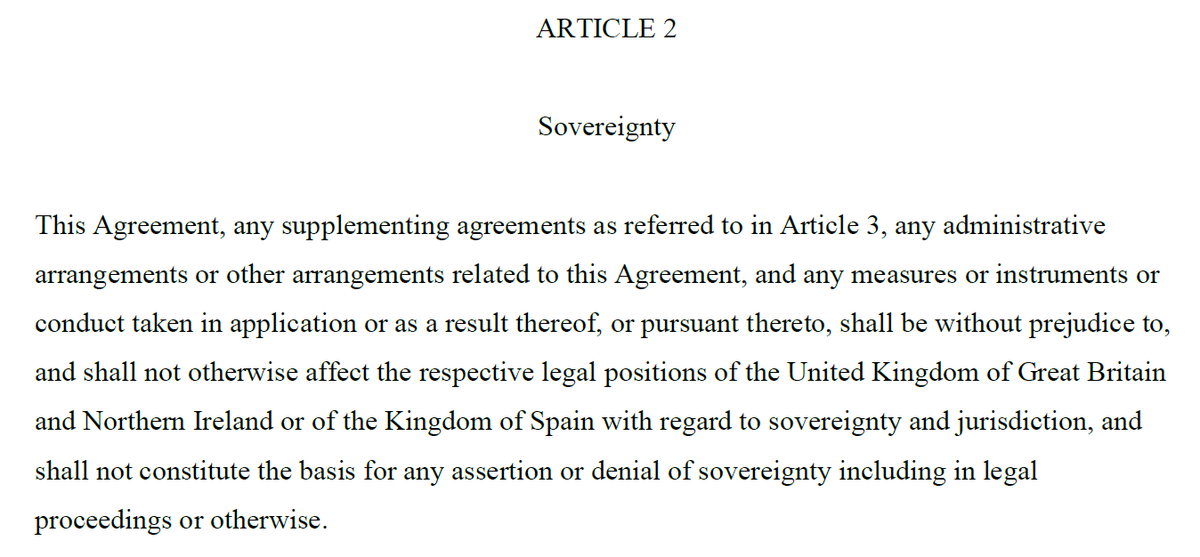
@JamesMelville Article 3 of the yet to be published treaty, as reported by gbc.gi/news/spanish-n… states the position as agreed from the very start of negotiations - Sovereignty issue parked by mutual agreement and excluded from Treaty entirely.
English
0
0
0
12
James Melville 🚜
James Melville 🚜@JamesMelville·
“First Chagos, now Gibraltar. Fury at the Labour government’s deal to hand Rock over to Spain. A Treaty draft has been agreed, but Labour ministers are not bringing it to Parliament yet." express.co.uk/news/politics/…
English
278
1K
2.5K
41.9K
selwynf
selwynf@selwynf·
@johnredwood Article 3 of the yet to be published treaty, as reported by gbc.gi/news/spanish-n… states the position as agreed from the very start of negotiations - Sovereignty issue parked by mutual agreement and excluded from Treaty entirely.
English
0
0
1
12
John Redwood
John Redwood@johnredwood·
Is the government so ashamed of its draft Treaty with the EU on Gibraltar that it will not publish it?
English
52
457
1.7K
14.2K
selwynf
selwynf@selwynf·
@felixhhaas Built this for professional services. The constraint: a lawyer can't just "let you use it" if using it means advice. So the agent delivers real value while holding a hard line around judgement. That boundary is what makes it trustworthy. experteely.com/try
English
0
0
0
4
Felix Haas
Felix Haas@felixhhaas·
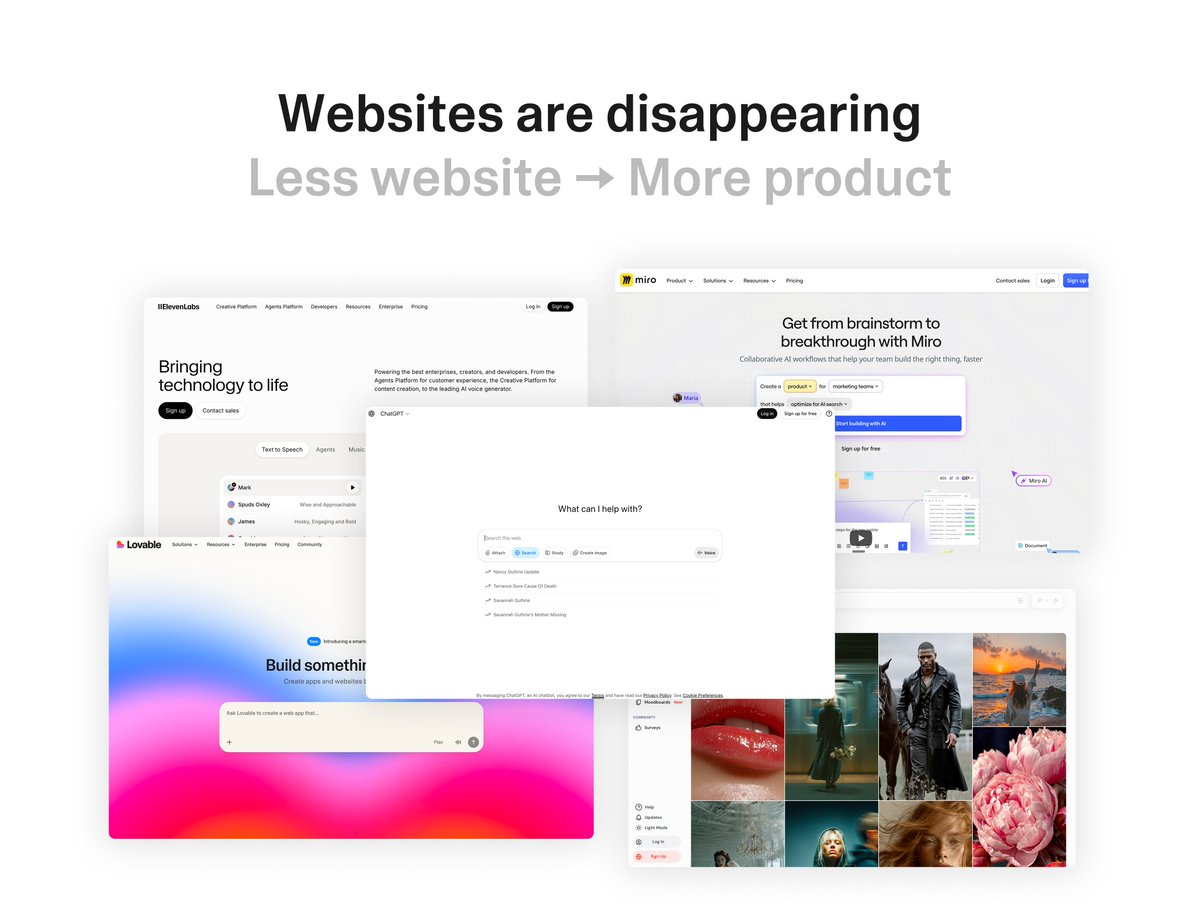
𝗣𝗿𝗲𝗱𝗶𝗰𝘁𝗶𝗼𝗻: 𝗪𝗲𝗯𝘀𝗶𝘁𝗲𝘀 𝗮𝗿𝗲 𝗱𝗶𝘀𝗮𝗽𝗽𝗲𝗮𝗿𝗶𝗻𝗴 🔥 I see a lot of founders still building websites the same way they did ten years ago. But if they don't adapt, they'll loose customers. Here's why: The best converting websites in the age of AI aren't websites at all. They're the product. Historically, websites were marketing billboards. Hero sections, feature lists, testimonials, pricing tables. You'd scroll for minutes just to understand what a product does. That made sense when attention was cheap and patience was abundant. But in the age of AI, that's no longer good enough. People are crazy impatient these days. If they don't see value in the first five seconds, they're gone. They don't want to read about what your product can do, they want to experience it. That's the new default. And it has massive implications for how we design landing pages and conversion flows. Take most SaaS websites as an example. Landing on a typical site today means reading walls of text, watching explainer videos, filling out demo request forms. A lot of friction... Now, imagine an AI-native flow: You land on the page with a specific problem. The product is right there, live and interactive. You start using it immediately and see real value in seconds. Sure, you still need to sign up to save your work, but everything else just happens. I'm pretty sure the traditional marketing website is becoming obsolete. Once people expect instant interaction, they won't tolerate passive content. Letting users explore your product immediately builds infinitely more trust than any hero section ever could. And once they've experienced the value, upselling becomes so much easier. People are no longer buying a promise but something they've already used. I think one of the early growth factors for Lovable was exactly this. We doubled down on the "instant value" approach. You land on the site and just start building. The product teaches you how to use it by using it. And most AI companies are doing it this way now btw: Midjourney, ChatGPT, Google. Even ElevenLabs does it. Shows instant value by demonstrating the product. My prediction is that every company will eventually transform their website into an "agent hub." You'll land on a page with a specific problem. An AI agent greets you and asks what you need. The agent starts working immediately, generating your design, analyzing your data, writing your content. You see real results in seconds. Then, to save or export, you sign up. If I were to start a company today and design a new website, here's what I would do: I'd think about the single biggest pain point and why users are coming to me. Then, I wouldn't try to sell them a solution, but show them one. Let them interact with one. Make them fall in love with it. The best websites won't explain what they do. They'll just do it. What's your take on this?
Felix Haas tweet media
English
123
49
820
98.9K
selwynf
selwynf@selwynf·
@aakashgupta Possibly the most direct, breakthrough and clear tweet I may have ever seen. On a machine, you can CTRL-ALT-DEL, find and kill the process sucking resources. Humans can't. You can switch off a computer to kill the process. We can't switch brains off. #getitdone
English
0
1
9
1.2K
Aakash Gupta
Aakash Gupta@aakashgupta·
The reason this feels so good is because your brain was taxing you for a week straight and you didn’t even notice. Every time that undone task crossed your mind, your anterior cingulate cortex fired a conflict signal. Small. Subtle. But metabolically expensive. Your brain was running a background process on that 5-minute task 24/7 for 7 days, burning glucose and generating low-grade cortisol each time it surfaced. Neuroscientists call this the Zeigarnik Effect. Incomplete tasks occupy more mental RAM than completed ones. Your brain literally cannot let go of open loops. So that “5 minute task” was never 5 minutes. It was 5 minutes of execution plus 168 hours of ambient cognitive load. That relief you feel when you finally do it? That’s a dopamine spike from closing the loop combined with a cortisol drop from removing the threat signal. Your body just stopped paying a week-long neurochemical tax on a debt of 300 seconds. This tells you everything about how procrastination actually works. The loop runs like this: task feels slightly aversive → amygdala flags it → you avoid it → avoidance provides immediate relief → brain learns avoidance = reward → task stays open → background stress accumulates → task feels MORE aversive than it originally was. The fix is stupidly simple and Huberman talks about this constantly. You don’t need motivation. You need a forcing function that bypasses the amygdala’s threat assessment. Set a timer for 90 seconds. Tell yourself you’ll stop after 90 seconds. Your prefrontal cortex can override 90 seconds of discomfort. Once you start, the dopamine system switches from avoidance to pursuit, and the task completes itself. The 5-minute task was never hard. The starting was hard. And every hour you waited made starting harder.
bridget@pacinocrave

just finished a 5 minute long task I could have done a week ago

English
74
2.2K
16.5K
635K
Alfie Carter
Alfie Carter@AlfieJCarter·
I just personalized 1 million emails with Claude Code. I didn’t use any enrichment platforms. Here’s my 14-step workflow: 1. Install Python 3.11+ 2. Create a GitHub account 3. Install Claude Code 4. Create API keys: → Anthropic (Claude) → Proxy (IPRoyal or Bright Data) → Company data (Clearbit, Apollo, Crunchbase) → Email verification (NeverBounce or Reoon) → Storage (AWS S3 or GCS) → Database (Neon, Supabase, Railway) → Outreach tool (Instantly, Smartlead, etc.) → CRM (Attio, HubSpot, etc.) 5. Create a new GitHub repo (“Enrichment”) and clone locally 6. Open terminal in the repo and launch Claude Code 7. Tell Claude your constraints: → Respect robots.txt → Rate limit requests → Make it resumable 8. Paste this prompt: “Build a Python project that: – Takes input.csv with linkedin_url, website_url, or company_name – Fetches website, careers, blog, pricing – Extracts: hiring signals, pain signals, and 1-sentence personalization hook – Outputs output.csv – Supports concurrency, retries, logging, resume-from-last-row” 9. Test locally: pip install -r requirements.txt python main.py --input input.csv --limit 10 10. Review output.csv and confirm hooks look good 11. Tell Claude to productionize it: → Env vars → Backoff + retries → Caching → Timeouts → do_not_contact flag → Unit tests 12. Deploy on Railway → connect repo → add API keys → deploy worker 13. Upload lead CSV → process in chunks → download enriched output.csv 14. Push enriched leads directly into your outreach tool You now have fully personalized leads at scale. No enrichment platforms required. Found it helpful? I run a GTM community where we share free playbooks and workflows like this weekly. Reply “JOIN” and I’ll send you an invite.
English
119
10
146
14.8K