j

273 posts

j

j

@sensitibMEow

a mess

Katılım Ocak 2025
18 Takip Edilen5 Takipçiler
j retweetledi
weeee♡ P(x) 🦾🦿
weeee♡ P(x) 🦾🦿@dapretty_taurus·
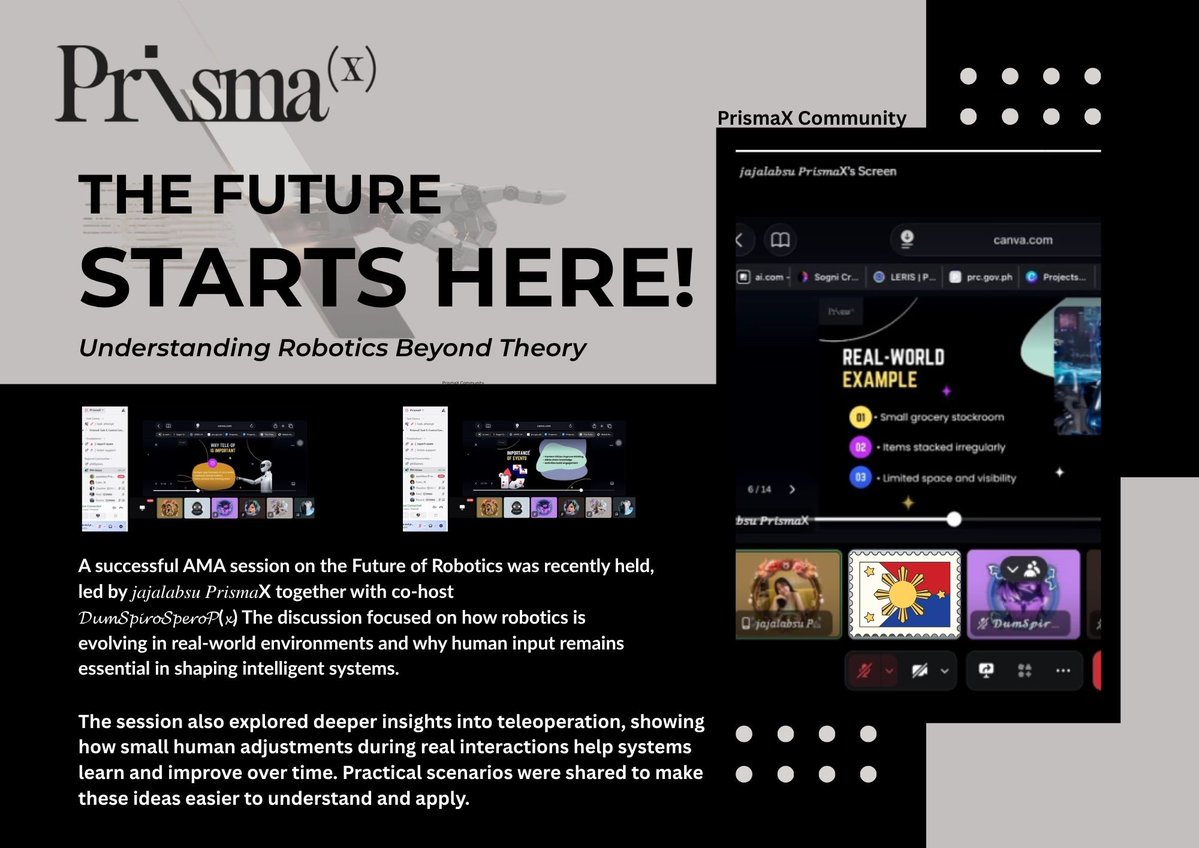
We successfully held our AMA #6: The Future of Robotics, in @PrismaXai Discord PH channel and I just want to sincerely thank everyone who joined and stayed with us from start to finish. Your time, attention, and engagement made the session meaningful. Special thanks as well to @fredorosario_06 for co-hosting and helping guide the discussion smoothly. It was a great way to end the session on a lighter note and keep the community energy going. This AMA focused on understanding where robotics is really heading, not just in theory, but in real-world application. One of the key points we discussed is that the future of robotics is not just about automation, but about adaptability. Systems today struggle because they are trained in controlled environments, while the real world is constantly changing. We also went deeper into teleoperation and why it plays such an important role. Teleoperation allows human input to guide systems in situations where they are not yet capable on their own. Every movement, adjustment, and decision made during tele-op becomes valuable data. Over time, these repeated actions help systems learn how to operate in unpredictable environments. To make it clearer, we also shared real-world scenarios where structured systems would fail, but human-guided interaction makes a difference. These examples showed how small decisions, like adjusting grip, repositioning objects, or reacting to unexpected changes, carry real context that machines need to learn from. These discussions matter because they help the community understand that progress in robotics is not instant. It is built through continuous interaction, shared knowledge, and real experience. The more we engage, the more we contribute to something that grows beyond individual effort. Again, thank you to everyone who participated and made the session successful.
English
6
7
41
177
j retweetledi
Jillian
Jillian@JTrinidad2001·
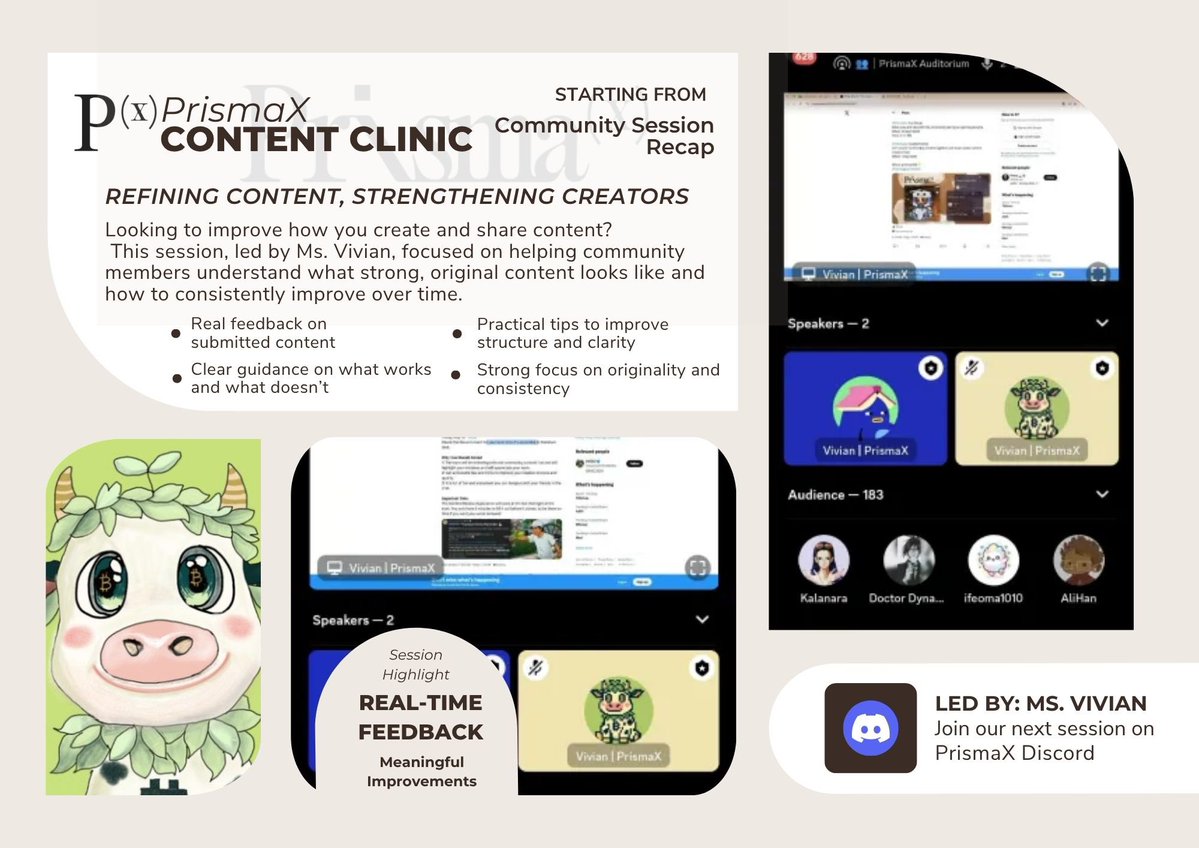
Went to another @PrismaXai Content Clinic led by Ms. @vivianrobotics, and it was one of those sessions that really showed how important proper guidance is when it comes to creating content. 👇🏼✨
Jillian tweet media
English
6
1
26
114
j retweetledi
Claudine
Claudine@claudinereyes26·
A lot of conversations about robotics still revolve around the idea that everything will soon run on its own, with little to no human involvement. It sounds appealing, but when you look at how systems actually function today, the picture is very different.
Claudine tweet media
English
4
1
13
46
j retweetledi
ᴅᴜᴍꜱᴘɪʀᴏꜱᴘᴇʀᴏ_28 PrismaX 🤖
It’s easy to focus on the robots when you first look at @PrismaXai. That’s what stands out. But the longer you stay around it, the more your attention shifts to something less obvious, the person behind the controls. Teleoperation can look simple on the surface. A task gets done, the robot moves, and that’s it. But that is only the visible layer. What really happens is a stream of decisions unfolding in real time. Not just movement, but judgment. When to slow down, when to adjust, when to stop and rethink. These are subtle, often unnoticed, but they carry meaning. And that meaning gets captured. A steady approach shows control. A missed attempt reveals limitation. A correction shows awareness and adaptation. Nothing is wasted. This is where teleoperation becomes more than control. It becomes a way to translate human thinking into something a system can learn from. Not from perfect setups, but from real conditions where things are off, unpredictable, and constantly changing. That is why the operator matters. They are not just completing tasks. They are exposing the system to real-world behavior, including the mistakes, the recoveries, and the small adjustments that cannot be predefined. On PrismaX, this builds a continuous loop. Human input becomes experience, experience becomes data, and that data shapes how systems improve over time. The more you understand it, the more it stands out. Operators are not just part of the process. They are part of the progress.
ᴅᴜᴍꜱᴘɪʀᴏꜱᴘᴇʀᴏ_28 PrismaX 🤖 tweet media
English
5
1
32
162
j retweetledi
Lea Nicole
Lea Nicole@LeaNicoleRosar1·
My brother recently held another AMA at @PrismaXai regarding the Future of Robotics led by @dapretty_taurus and it turned into a very grounded discussion on how systems actually improve outside controlled environments. One point that stood out is that progress in robotics is not limited by hardware alone. It is limited by experience. Most systems are trained in clean, predictable setups, but the real world is rarely like that. Spaces are tight, objects are placed unevenly, and conditions change constantly. This is where teleoperation becomes necessary. Teleoperation allows a person to guide a system through situations it does not yet understand. What matters is not just completing the task, but how it is done. Every movement carries context. The way you approach an object, how you adjust when something shifts, or when you decide to pause and reposition. These are small decisions, but they reflect real understanding. They shared a practical example of a small neighborhood pharmacy during restocking hours. Medicine boxes are stacked in mixed sizes, some slightly damaged, some tightly packed in narrow shelves. A system trained in structured layouts may struggle to retrieve one box without disturbing others. Through teleoperation, a human operator would first create space, gently loosen the surrounding items, and adjust grip depending on how stable the stack is. These actions are subtle, but they show awareness of the situation. Another example discussed was a cluttered home workspace where tools, cables, and small devices are scattered across a desk. A robot may not recognize which object to prioritize or how to safely pick something without tangling wires. A human operator, through teleoperation, naturally observes the layout, clears a path, and chooses a safer sequence of actions. Over time, these repeated patterns become something the system can learn from. This is where teleoperation goes deeper. It is not just remote control. It is a way of turning human judgment into structured learning. Each session captures vision, motion, timing, and correction. When this happens across many users and environments, the system gains exposure to real-world complexity that cannot be simulated fully. The AMA also highlighted why discussions like this matter. It helps the community understand that robotics is not about instant automation. It is about building systems that can adapt. And that process depends on continuous interaction, shared knowledge, and people willing to contribute through real use. Appreciation to @fredorosario_06 and @dapretty_taurus for always creating such wonderful AMA sessions. Conversations like this bring clarity and direction, and they help move the community closer to understanding how real progress is built.
Lea Nicole tweet media
English
5
4
26
123
j retweetledi
Deserie
Deserie@Deserielodor·
Created something special with @PrismaXai Not just a design, but a glimpse of how human creativity and intelligent systems come together Holding the future in both hands ✨ @vivianrobotics @MaxC16134 @shayebackus ✨🫶🏼
Deserie tweet media
English
6
2
35
101
j retweetledi
ᴅᴜᴍꜱᴘɪʀᴏꜱᴘᴇʀᴏ_28 PrismaX 🤖
See you tomorrow PH fam! 🫡
weeee♡ P(x) 🦾🦿@dapretty_taurus

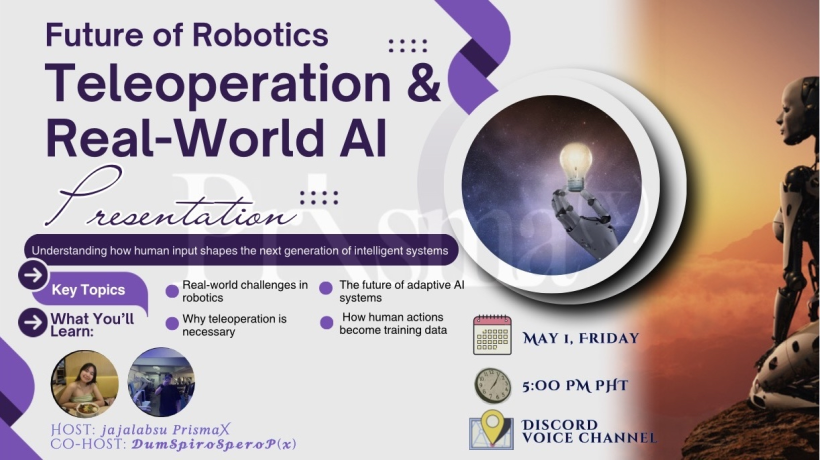
We’re hosting our next AMA #6 focused on a topic that sits at the center of where everything is heading. "Future of Robotics" This session will take place on May 1, 2026, at 5:00 PM PHT in our @PrismaXai in our Philippines Discord voice channel. This is not just a general discussion about robots. It is a closer look at how systems are actually evolving and what is required for them to function outside controlled environments. Most people see robotics as something that should already be fully automated. But the reality is different. The biggest limitation today is not intelligence, it is exposure. Systems are often trained in clean, predictable setups. When placed in real environments, where objects shift, spaces are tight, and conditions change, performance drops. This is where teleoperation becomes necessary. Teleoperation allows a human to guide the system through situations it does not yet understand. But more importantly, it captures how those situations are handled. The way you approach an object, the adjustments you make when something feels off, the decision to slow down or reposition. These are not simple commands. They are context. And that context becomes data. Over time, repeated human actions across different environments create patterns. Those patterns are what allow systems to move from basic execution to real-world capability. Imagine a small repair workspace where tools are scattered, some partially hidden, some placed too close to each other. A robot trained in structured layouts might fail to pick the correct tool without disturbing others. Through teleoperation, a human naturally adjusts. You move surrounding objects slightly before reaching, change your grip depending on the tool, and act based on what you see in the moment. These actions are small, but they reflect real understanding. When captured and repeated, they become something the system can learn from. That is why this topic matters. The future of robotics is not just about building smarter machines. It is about building systems that can adapt to reality. And that starts with understanding how humans handle it. Join us in this AMA as we break down these ideas, share insights, and explore where this direction is heading. Join us tomorrow: Discord: discord.gg/QJpUdbha @vivianrobotics @MaxC16134 @shayebackus @castorhat @chynaqqq @PrismaXai 🩵
English
2
1
23
113
j retweetledi
weeee♡ P(x) 🦾🦿
weeee♡ P(x) 🦾🦿@dapretty_taurus·
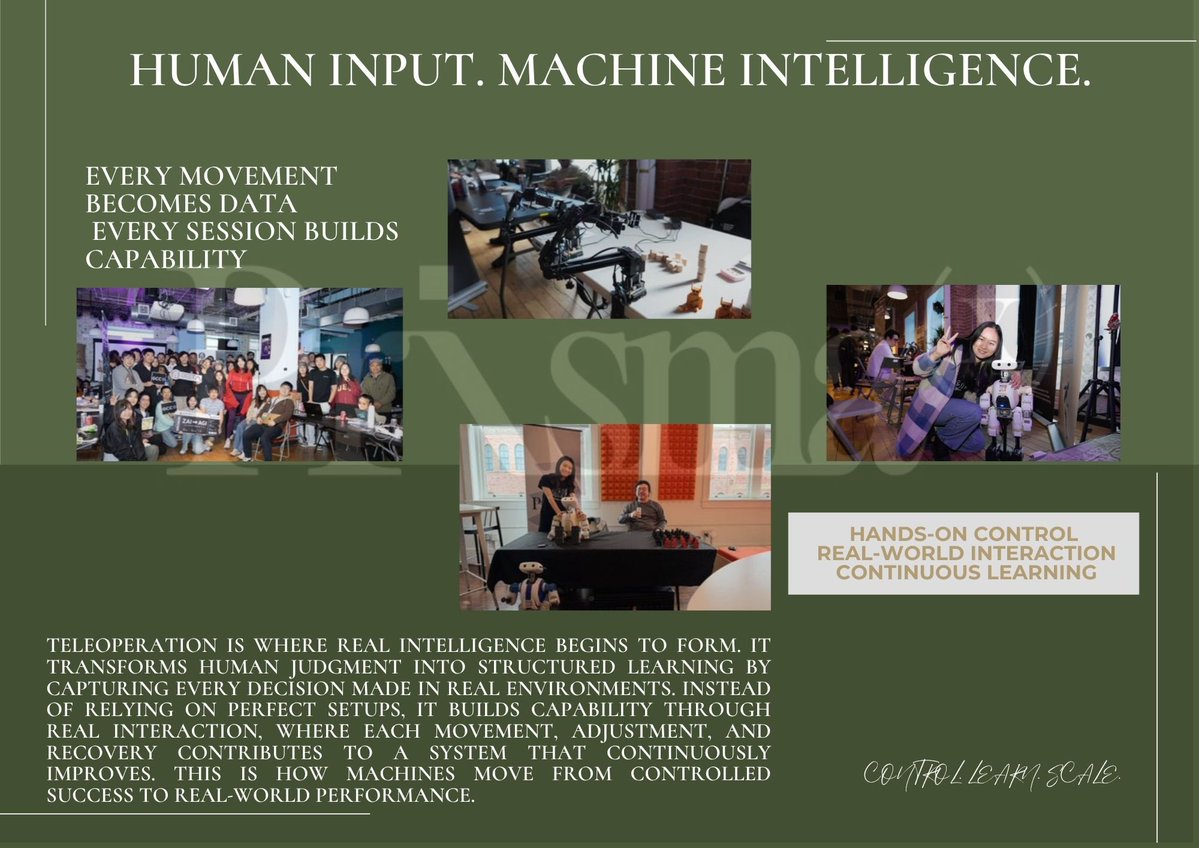
We’re hosting our next AMA #6 focused on a topic that sits at the center of where everything is heading. "Future of Robotics" This session will take place on May 1, 2026, at 5:00 PM PHT in our @PrismaXai in our Philippines Discord voice channel. This is not just a general discussion about robots. It is a closer look at how systems are actually evolving and what is required for them to function outside controlled environments. Most people see robotics as something that should already be fully automated. But the reality is different. The biggest limitation today is not intelligence, it is exposure. Systems are often trained in clean, predictable setups. When placed in real environments, where objects shift, spaces are tight, and conditions change, performance drops. This is where teleoperation becomes necessary. Teleoperation allows a human to guide the system through situations it does not yet understand. But more importantly, it captures how those situations are handled. The way you approach an object, the adjustments you make when something feels off, the decision to slow down or reposition. These are not simple commands. They are context. And that context becomes data. Over time, repeated human actions across different environments create patterns. Those patterns are what allow systems to move from basic execution to real-world capability. Imagine a small repair workspace where tools are scattered, some partially hidden, some placed too close to each other. A robot trained in structured layouts might fail to pick the correct tool without disturbing others. Through teleoperation, a human naturally adjusts. You move surrounding objects slightly before reaching, change your grip depending on the tool, and act based on what you see in the moment. These actions are small, but they reflect real understanding. When captured and repeated, they become something the system can learn from. That is why this topic matters. The future of robotics is not just about building smarter machines. It is about building systems that can adapt to reality. And that starts with understanding how humans handle it. Join us in this AMA as we break down these ideas, share insights, and explore where this direction is heading. Join us tomorrow: Discord: discord.gg/QJpUdbha @vivianrobotics @MaxC16134 @shayebackus @castorhat @chynaqqq @PrismaXai 🩵
weeee♡ P(x) 🦾🦿 tweet media
English
11
10
49
1.9K
j retweetledi
Deserie
Deserie@Deserielodor·
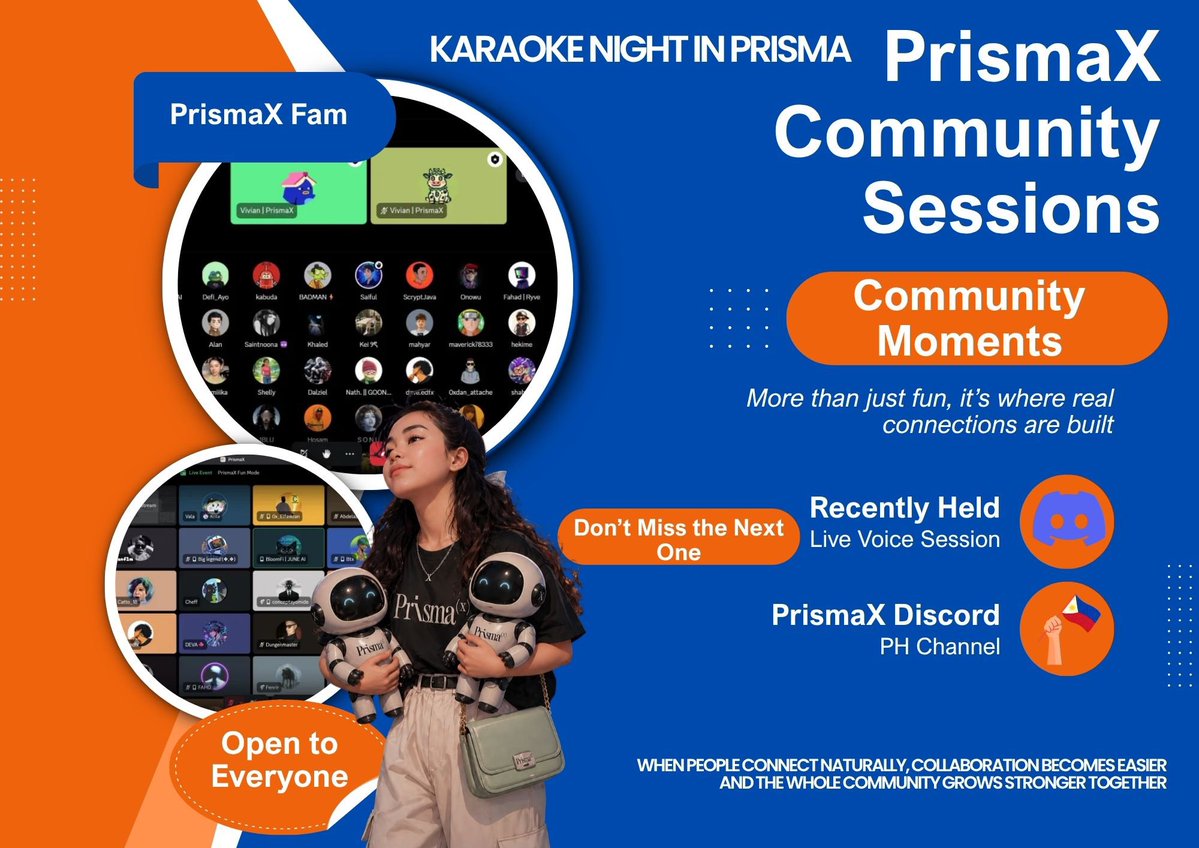
Yesterday I joined the karaoke session hosted by one of our wonderful MOD @vivianrobotics@PrismaXai, and it turned out to be more than just a fun event. It was a space where people could relax, share moments, and connect in a way that goes beyond the usual conversations. 🧵
Deserie tweet media
English
6
2
32
98
j retweetledi
Jillian
Jillian@JTrinidad2001·
A lot of AI progress today looks impressive on the surface, but if you look closer, much of it is on recycled outputs. Models learning from other models, answers into more answers. It starts to blur where real knowledge ends, generated patterns begin That approach has a ceiling
Jillian tweet media
English
7
2
23
117
j retweetledi
Claudine
Claudine@claudinereyes26·
Teleoperation exists because the real world refuses to stay consistent. Objects are not placed the same way twice. Lighting changes. Surfaces shift. Things break, move, and interfere with each other. 🧵
Claudine tweet media
English
6
1
13
59
j retweetledi
Lea Nicole
Lea Nicole@LeaNicoleRosar1·
Most people approach teleoperation as if it’s just about finishing a task. Pick, move, place, done. But that’s not where the real value comes from. Every session is actually part of a learning loop. The system is not just observing outcomes, it’s learning from how you move. The way you approach an object, how steady your positioning is, how you recover when something goes wrong. All of that becomes training data. That’s why smooth control matters more than speed. If movements are rushed or inconsistent, the data becomes noisy. But when movements are controlled and intentional, the system starts to recognize patterns that can be repeated and improved. Even preparation plays a role. A stable connection, a clear view, and understanding the task before starting can completely change how clean your session becomes. A messy start usually leads to messy execution, and that reflects in the data as well. Mistakes are not something to avoid. They are part of the process. When you recover properly from a failed grip or a dropped object, you’re teaching the system how to handle failure in real conditions. That kind of data is often more valuable than a perfect run. Think about a small packaging station where items vary in size and shape. Some are fragile, some are tightly packed, and space is limited. A robot trained only on ideal conditions would struggle to handle this. Through teleoperation, a human operator naturally adjusts. You align carefully before lifting, apply just enough force, and create space before moving items out. These decisions are subtle, but they carry real understanding of the environment. Over time, those actions become repeatable patterns. And those patterns are what make systems more capable. Teleoperation is not just remote control. It’s how human precision becomes something machines can learn from and build on. Bullish on @PrismaXai and for what’s coming next! Want to learn more? you can visit: Discord: discord.gg/prismaxai Website: prismax.ai X (Twitter): x.com/prismaxai YouTube: @PrismaX-AI" target="_blank" rel="nofollow noopener">youtube.com/@PrismaX-AI Telegram: t.me/PrismaX_News
English
3
3
25
94
j retweetledi
Rosé
Rosé@roe_row_rose·
There’s a difference between building something that works in a demo and building something that holds up in the real world. That’s what stood out to me about this hackathon in @PrismaXai. Thread: 🧵
Rosé tweet media
English
6
1
21
70
j retweetledi
Deserie
Deserie@deserielodor28·
Robotics doesn’t struggle because machines are weak. It struggles because the world is unpredictable. Real environments don’t follow clean rules. Objects are misplaced, lighting shifts, spaces are tight, and things rarely stay consistent. Most systems are trained in controlled setups, so when they face this kind of variability, they break down. That’s where @PrismaXai starts to make sense. Instead of trying to perfect simulations, it focuses on real interaction. Teleoperation becomes the bridge. When a person controls a robot, they are not just completing a task, they are applying judgment in real time. They adjust angles, correct mistakes, slow down when needed, and react to things that weren’t expected. Those actions are not random. They carry context. And that context is what gets captured. Over time, repeated human decisions form patterns. Those patterns become data. And that data becomes behavior the system can rely on. Think about a small storage room in a local hardware shop. Items are stacked without a fixed layout. Boxes are partially open, tools are mixed in tight spaces, and some objects are heavier than they look. A robot trained in ideal conditions might try to lift directly and fail, either dropping the item or disturbing everything around it. With teleoperation, a person handles it differently. You test the weight before lifting. You adjust your grip based on shape. You create space before pulling something out. You move slower when precision matters more than speed. None of that is pre-scripted. It comes from experience. When those interactions are repeated across many users and environments, the system begins to understand how to handle complexity, not just execute instructions. That’s what makes this approach different. It’s not chasing perfect demos. It’s building a foundation where machines learn from real work, in real conditions. And when learning is grounded in reality, improvement becomes continuous, not occasional. Come join us! Learn more: Discord link: discord.gg/prismaxai @vivianrobotics @MaxC16134
English
4
1
26
58
j retweetledi
ᴅᴜᴍꜱᴘɪʀᴏꜱᴘᴇʀᴏ_28 PrismaX 🤖
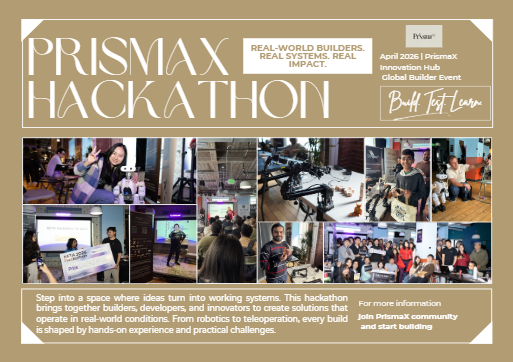
The 2026 Berkeley Hackathon brought together more than 200 builders for an 8-hour sprint backed by a prize pool of over 60K. Students, developers, and frontier tech enthusiasts came in with different ideas, but what stood out in the end was clear. The top prize went to a robotics team. They built a system designed to assist seniors with daily tasks, including something as critical as delivering medicine on time. Alongside the recognition, they earned a share of the prize pool, including 1,000 in cash and 25,000 in AWS credits. The work was supported through collaboration with mentors and sponsors across the ecosystem, showing how aligned efforts can turn ideas into something meaningful. What makes this result important is not just that robotics won, but what kind of problem it focused on. It chose a real need. Helping seniors manage daily routines is not a controlled problem. It happens in homes where layouts change, lighting varies, and objects are not placed consistently. These are the exact kinds of environments where traditional robotics struggles. This is where teleoperation becomes essential. Instead of relying only on predefined behavior, teleoperation allows a human to guide the system through those unpredictable situations. When assisting with something like medicine delivery, it is not just about moving from point A to point B. It involves navigating around obstacles, adjusting to changes in the environment, and handling objects carefully depending on their placement. For example, imagine a bedside table with multiple items placed closely together. A pill organizer might be partially hidden behind a glass of water, or placed near the edge. A robot trained in ideal conditions might misjudge spacing or knock something over. With teleoperation, a human operator naturally adapts. You reposition slightly before reaching, adjust your grip depending on the object, and move carefully to avoid disturbing nearby items. These small decisions carry context. When repeated across many interactions, those actions become patterns. And those patterns become something the system can learn from. That is what turns a working demo into something that can eventually operate in real homes. Events like this matter because they shift the focus away from surface-level innovation and toward practical impact. It shows that progress in robotics is not just about building advanced systems, but about building systems that can function where it actually counts. This is where the direction is heading. Not just smarter machines, but machines that learn from real work, in real environments, solving real problems. Know more about @PrismaXai: Discord: discord.gg/RJqwb4fd Website: prismax.ai X (Twitter): x.com/prismaxai YouTube: @PrismaX-AI" target="_blank" rel="nofollow noopener">youtube.com/@PrismaX-AI Telegram: t.me/PrismaX_News
ᴅᴜᴍꜱᴘɪʀᴏꜱᴘᴇʀᴏ_28 PrismaX 🤖 tweet media
English
4
2
36
100
j retweetledi
ᴅᴜᴍꜱᴘɪʀᴏꜱᴘᴇʀᴏ_28 PrismaX 🤖
The Weekly Content Clinic has slowly become one of the most important spaces in @PrismaXai. It’s not just a session where content gets reviewed. It’s a place where you start to understand what makes something valuable, not just visually appealing, but meaningful. One of the respectable MODs @vivianrobotics takes time to break down selected works, pointing out what’s strong, what’s missing, and what can be improved moving forward. What makes this different is the kind of feedback you receive. It’s not surface-level. It pushes you to think about why you’re creating, not just what you’re posting. And that connects deeply with teleoperation. Because in teleoperation, you’re not just moving a robot to complete a task. You’re making decisions in real time. You adjust based on what you see, you correct when something feels off, and you learn from every small mistake. That same mindset applies to content. You don’t just post and move on. You refine. You adjust. You improve based on feedback. I was also thinking about this while working on this video presentation. It looks simple, but behind it is a process of observing, correcting, and refining until it feels right. That process is very similar to how teleoperation works. Take a situation like a small fish market early in the morning. The surfaces are wet, the items are slippery, and everything is moving fast. Fish are placed in irregular positions, some overlapping, some partially hidden under others. A robot trained in clean environments might fail here, either gripping too hard or missing the object entirely. Through teleoperation, a human operator handles it differently. You adjust your grip based on how slippery the surface is. You angle your movement to avoid disturbing nearby items. You slow down because speed can cause mistakes in that kind of environment. Those adjustments are not programmed beforehand. They come from awareness. And when repeated, they become patterns the system can learn from. This is why sessions like Content Clinic matter more than people think. It’s not just about improving posts. It’s about developing the ability to think, adjust, and create with intention. Because whether it’s content or teleoperation, the goal is the same. To turn experience into something that improves over time. If you want to learn more, you can visit: Discord: discord.gg/prismaxai Website: prismax.ai X (Twitter): x.com/prismaxai YouTube: @PrismaX-AI" target="_blank" rel="nofollow noopener">youtube.com/@PrismaX-AI Telegram: t.me/PrismaX_News @shayebackus @castorhat @chynaqqq @MaxC16134
English
13
6
56
1.3K
j retweetledi
weeee♡ P(x) 🦾🦿
weeee♡ P(x) 🦾🦿@dapretty_taurus·
We recently held another AMA in the PH channel April 19, 2026, and this time focused on the Edition 3 Update, and it honestly gave a clearer view of how @PrismaXai is evolving not just in features, but in actual usability. We walked through the new structure of the robot arms, the improvements in queue experience, and the overall system changes. What stood out is how these updates are not just cosmetic. They directly affect how people interact with the robots and how efficiently they can contribute. But what made the discussion more meaningful was going deeper into teleoperation. Teleoperation is often described as “controlling a robot,” but that explanation barely scratches the surface. What is really happening is that human decision-making is being translated into something a machine can learn from. Every adjustment, every hesitation, every correction becomes part of a learning signal. Take a situation like a small community pharmacy where items are stored in tight shelves and not always arranged properly. Some boxes are slightly tilted, some are partially hidden, and some are placed too close to each other. A robot trained only in clean and perfect conditions would struggle here. It might misjudge spacing or knock over nearby items. Through teleoperation, a human operator steps in and guides the robot with intention. You slow down when space is tight, you adjust your angle before picking, and you avoid unnecessary movement to prevent disruption. These are small actions, but they carry real understanding of the environment. Over time, those actions become patterns. And those patterns become capability. This is where Edition 3 updates start to matter more. With a clearer system, better queue flow, and more structured access to robot arms, it becomes easier for more people to contribute consistently. And when more people contribute, the system gathers more diverse real-world experience. That is how improvement compounds. The AMA was not just about explaining features. It helped connect the system updates to actual impact. It made it easier to see that what we are doing here is not just interacting with robots, but helping build systems that can operate in environments that are far from perfect. Appreciate everyone who joined and stayed throughout the session. It is always a good sign when discussions move beyond surface-level explanations and into how things actually work in the real world. Looking forward to building more around this and going even deeper in the next sessions. Gprisma @vivianrobotics @MaxC16134 @castorhat @shayebackus @chynaqqq 🩵 Check them out here: 🪩 Discord: discord.gg/prismaxai 🌐 Website: prismax.ai 🐦 X (Twitter): x.com/prismaxai 📺 YouTube: @PrismaX-AI" target="_blank" rel="nofollow noopener">youtube.com/@PrismaX-AI 💬 Telegram: t.me/PrismaX_News
English
8
6
44
285
j retweetledi
weeee♡ P(x) 🦾🦿
weeee♡ P(x) 🦾🦿@dapretty_taurus·
Our First AMA: Progressing Roles in Prisma Discord April 15, 2026, we held our very first AMA session in the Prisma Philippines channel, Hosted by @fredorosario_06 and I co-hosted the event as well and it was honestly a meaningful experience for all of us. The session focused on “How to Progress Roles in Prisma Discord”, especially for new members who are still exploring how everything works. We wanted to create something simple, clear, and helpful so people can understand how to grow inside the community step by step. We talked about the different ways to progress: • Creating meaningful and original content about Prisma • Sharing updates and explaining them in your own words • Doing teleoperation and posting real experiences • Creating artworks related to robotics and Prisma • Joining community activities like Trivia Tango, PFP drawing sessions, Fun Mode, and Content Clinic We also explained why consistency and discipline matter. Showing up, learning, improving, and accepting feedback from MODS and WATCHERS play a big role in growth here. One important point we highlighted is that it’s not just about posting a lot. It’s about creating value. When your content helps others understand Prisma better, that’s when it really counts. We also reminded everyone to: • Avoid using AI-generated or copied content • Always stay aligned with Prisma’s vision • Use proper branding when possible • Add clear calls to action so others can explore Prisma too This session showed how strong the community can be when people are willing to share knowledge and help each other grow. For me, as someone still learning, this AMA meant a lot. It made things clearer, more structured, and more motivating. And this is just the beginning. Looking forward to more sessions like this and to seeing more members grow, create, and contribute to @PrismaXai . gPrisma! @vivianrobotics @shayebackus @chynaqqq @castorhat @maxC16134 🫶🏼✨
English
8
4
20
361
j retweetledi
ᴅᴜᴍꜱᴘɪʀᴏꜱᴘᴇʀᴏ_28 PrismaX 🤖
Hi Everyone! We’ll be hosting another session later today, April 19, 2026, focused on the latest Release Notes – Edition 3. Originally scheduled at 3PM Manila time based on the banner, we’ve adjusted it to 4PM Manila time to give more members a chance to join and participate. 📍 Where: Prisma PH Voice Channel 🕓 Time: 4PM Manila (PHT) Today, @dapretty_taurus will be hosting the session, and I’ll be co-hosting alongside her. This will also be a video presentation with a voice-over explanation, so all you need to do is listen and take notes. We’ll make sure everything is explained clearly and step by step. We’ll also be sharing the video after the session, so you can replay it anytime if you want to review or double-check anything about the update. Since we’re seeing more Filipino members joining @PrismaXai daily, we wanted to create a space where everything can be explained in a simple and beginner-friendly way. We’ll go through the updates, including the new robot arms, queue improvements, and overall system changes. This session is open to everyone who wants to understand Prisma better and get more comfortable navigating the platform. Hope to see you there! ✨
English
4
4
28
1.2K