Sergi

19.8K posts

Sergi banner
Sergi

Sergi

@sergi_sc97

Esquerrà biodegradable | Economista aplicat @UPFBarcelona @erasmusese | Brutalisme, Balcans i @SanremoRai | Lagom är bäst

Vic, Osona, Catalunya Katılım Nisan 2011
1.4K Takip Edilen533 Takipçiler
Sergi retweetledi
Elisenda Paluzie
Elisenda Paluzie@epaluzie·
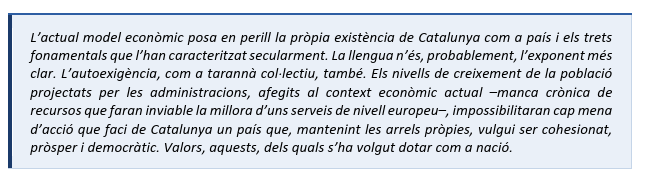
A la presentació de l'informe Fènix: Catalunya ha tingut un menor creixement en PIB per càpita que la mitjana europea i se n'ha allunyat. Avui està 6 punts per sota de la mitjana europea i fa 25 anys estava 6 punts per sobre. El creixement del PIB total ha estat poblacional.
Elisenda Paluzie tweet mediaElisenda Paluzie tweet media
Català
19
385
458
26.9K
Sergi retweetledi
pablo
pablo@pablogguz_·
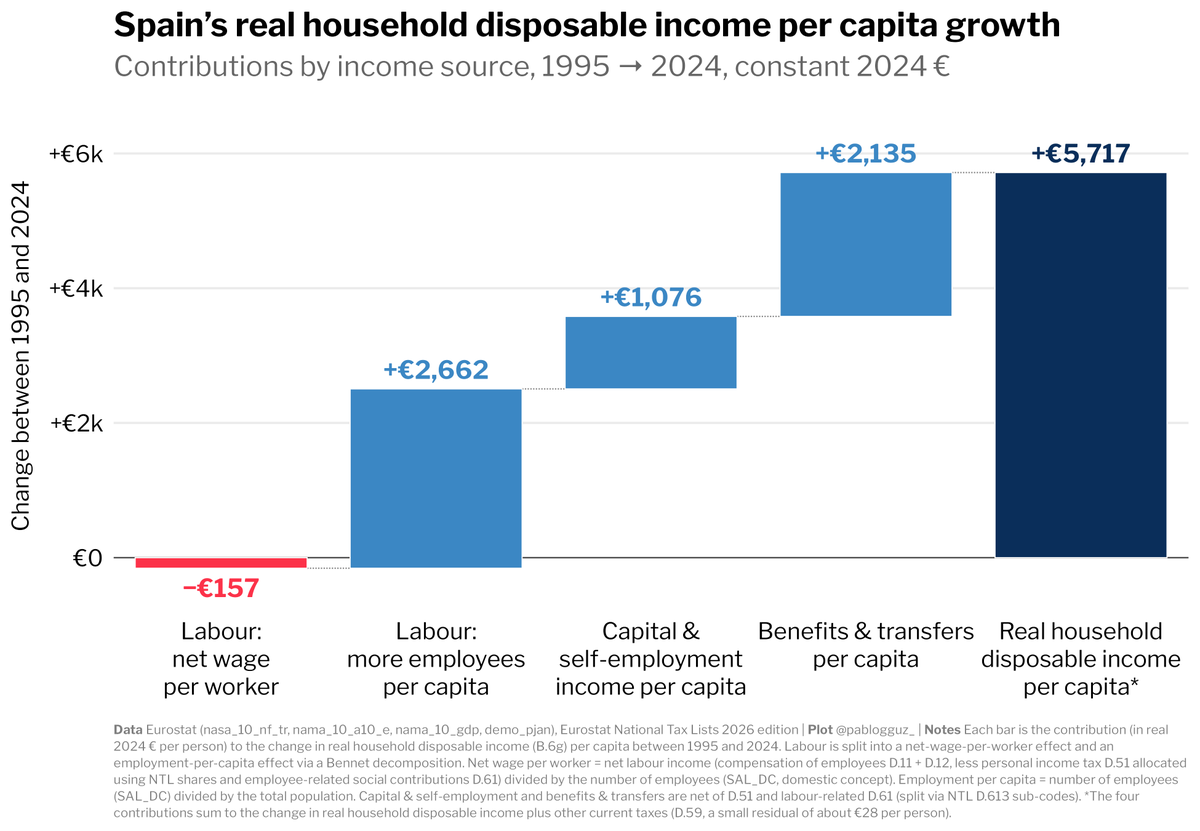
spain needs a different growth model. in the last 30 years, real household disposable income per capita has grown by roughly 38% in real terms (around €5.7k per person at 2024 prices). this can be decomposed into growth in net labour income per capita (+16.7 pp), cash benefits such as pensions (+14.2 pp), and capital and self-employment income per capita (+7.2 pp). however, the labour contribution came entirely from the extensive margin (pulling more people into employment) rather than from higher real wages per worker. in fact, the average spanish employee takes home slightly less in real terms today than in 1995! going forward, this model is unlikely to keep working. the extensive-margin gains came from two channels, both of which leaned on favourable conditions that are (most likely) not going to repeat. the first is that the working-age population grew faster than the total population during the 90s and 2000s, mainly because of the favourable age structure left behind by spain's baby boom (the large cohorts born in the 1960s and 1970s moved into prime working age while the cohorts behind them were smaller), but also because of immigration waves that were disproportionately working-age. this is what demographers often call a demographic dividend, which lifts the employment-to-population ratio purely by composition (even with no change in how much any given working-age person works). the second channel is that, within the working-age population, the employment rate rose substantially, from below 50% in the mid-1990s to around two-thirds today. of course, none of this is bad, but there is only so much further either channel can go. the demographic dividend is already reversing: the baby boom cohorts are now moving into retirement, the cohorts replacing them are much smaller, and ageing will push the working-age share of the population down. the employment rate itself is approaching a natural ceiling -- there is still a gap relative to the average advanced european economy but it is not large, and closing it would only buy spain a few more years of compositional growth. immigration, often raised as the way out, cannot realistically offset the demographic drag ahead. the scale of net inflows required to offset ageing on a sustained basis is multiples of any plausible figure consistent with social and political constraints in european countries, and even if such flows materialised, immigrants themselves age and accrue the same retirement pension entitlements as natives. in other words, sustaining the current demographic structure would require a permanent inflow large enough to offset both the ageing of the native population and that of past migrant cohorts, indefinitely. fertility, however, is now falling across virtually every region of the world, and the global working-age population is projected to peak within a few decades and then decline. there is simply no migrant pool waiting to be drawn from on the scale spain would need. this is also why cash benefits cannot keep doing what they have been doing. it is worth being explicit about why retirement pensions, specifically, are at the centre of all this. spain runs a defined-benefit, pay-as-you-go public pension system: pensions are not the actuarial outcome of what each worker contributed, but a function of years contributed and final wages, paid out of the contributions of those currently working. the current system promises retirees an internal rate of return on their contributions that is significantly higher than anything the payments into the system can plausibly grow at. and because the payments into the system are, mechanically, the number of contributors times the average wage on which they contribute, a gap of that kind is sustainable only as long as the contributing base keeps expanding fast enough relative to the receiving one. the same demographic dynamics that enabled the extensive-margin growth of the last three decades are what allowed this to (sort of) work, but these are now reversing. on top of that, the system already runs a structural deficit: only about three-quarters of contributory pension expenditure is covered by social contributions, and the rest is financed out of general taxation paid by the entire population. and pensions are not an independent source of household income. they are funded by taxes, and taxes have to be levied on income generated somewhere in the economy. in spain, as in any developed country, that income is overwhelmingly the wage bill: personal income tax and social contributions on labour. so the real question is whether labour income per worker is growing. gross compensation per worker (including social security contributions) has in fact risen slightly in real terms since 1995, by around 5%. but the entire gain (and a little more) has been absorbed by a widening fiscal wedge, so that the take-home wage is marginally lower today than it was thirty years ago. in other words, the modest productivity gains the spanish economy has managed to deliver have not reached workers. they have been routed, in their entirety, into financing the rising weight of transfers. one could argue, of course, that if wages eventually start growing, the additional income can simply be taxed away to keep financing rising benefits. but that is just another way of saying that the take-home pay of the average spanish worker is supposed to stay flat for the foreseeable future, and that whatever productivity gains eventually arrive will be routed straight through to retirees. i will leave it to the reader to judge what kind of social contract that describes. thirty years of stagnant wages is already a long experiment in that direction. either policymakers start taking productivity growth seriously or the bill comes due on a model that was always going to run out of room.
pablo tweet media
English
28
240
752
139.8K
Sergi retweetledi
Un Sr de Barcelona
Un Sr de Barcelona@UnSrdeBarcelona·
No saben ni escriure correctament… No és Stantford, sino Stanford. … i Berkley és Berkeley. Per flipar el nivell d’incompetència.
Català
6
104
242
6.7K
Sergi retweetledi
Tirso Virgós
Tirso Virgós@Thaliontil·
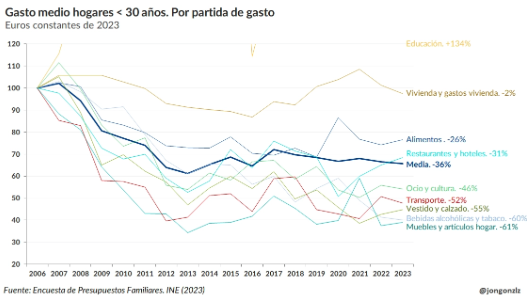
Parece bastante obvio que lo que señala el gráfico es que la Ley de Vivienda no ha logrado frenar un proceso de desacople que venía de antaño, que es lo que ha ido diciendo Jon en sus intervenciones. Que alguien así se presuma científico es una vergüenza para la academia
Javier Gil@Gil_JavierGil

1. Este es el gráfico que más me gusta de Jon. El gráfico intenta mostrar que la desconexión entre los precios de la vivienda y los salarios de los jóvenes es por culpa de la Ley de Vivienda. ¿En serio? Un ejemplo claro de propaganda ideológica disfrazada de datos.

Español
9
15
107
4.5K
Sergi retweetledi
Jorge Galindo
Jorge Galindo@JorgeGalindo·
"Es que se lo gastan todo en Netflix" (este acabó en el libro, de hecho).
Jorge Galindo tweet media
Español
3
77
274
15.8K
Sergi retweetledi
AQuAS
AQuAS@AQuAScat·
👩‍💼 Presentem la nova eina de la #CentraldeBalanços: una plataforma interactiva per l’anàlisi de la informació econòmica del sistema sanitari de Catalunya ⤵️
AQuAS tweet media
Català
1
3
2
310
Sergi retweetledi
Emilio Montilla
Emilio Montilla@EmilioMontilla_·
Pongámosle nombre y apellidos a la infamia: acuso a @EconoCabreado de instigar el acoso personal y laboral contra Jon González porque no le gustaba lo que decía. Como no podían refutar sus argumentos sobre fiscalidad, vivienda y pensiones, han ido a por la persona. Y yendo a donde más duele: poniendo en peligro su forma de ganarse la vida. Como ellos son unos paniaguados que viven de ser adeptos al régimen, usan esa ventaja para tumbar a quienes son incómodos. ¿Hasta cuándo hemos de soportar tanta ignominia?
Emilio Montilla tweet media
Emilio Montilla@EmilioMontilla_

Jon González, el divulgador sobre el problema de las pensiones, acaba de borrarse la cuenta. Los mamporreros del régimen lo han acosado yendo a por su trabajo en la actividad privada hasta que ya no habrá podido más. Qué pena de país.

Español

79
971
3K
94K
Sergi retweetledi
Mepassistant (Quentin)
Mepassistant (Quentin)@mepassistants·
The Commission sends an "influencer kit" to a content creator (still waiting for mine, jk, as if the institutions would send me stuff)... which includes a mic with a lightning plug despite the fact that USB-C is now mandatory in the EU. You could not make this up.
Audrey Vuetaz@audrey_vuetaz

Il y a quelques jours, j’ai reçu de la part de la Commission européenne, un kit d’influenceurs pour promouvoir leur campagne #protectwhatmatters Le problème c’est que le micro envoyé est en lightning… quand l’UE impose le chargeur universel en … USB-C

English
5
20
135
14.3K
Sergi retweetledi
Santiago Calvo
Santiago Calvo@SantiCalvo_Eco·
Pues al final han conseguido lo que querían: que Jon González se fuese de Twitter. No les gusta el debate porque no tienen argumentos. No supieron rebatir ni un solo dato sobre pensiones, vivienda o fiscalidad. No corrigieron una serie, no impugnaron una metodología, no presentaron un cálculo alternativo. Se limitaron a hurgar en la biografía hasta encontrar la palabra mágica con la que ahorrarse el trabajo intelectual de pensar. Y cuando la encontraron, en lugar de discutir las cifras, organizaron el linchamiento del autor. Lo grave no es que se hayan llevado a Jon por delante. Lo grave es lo que el episodio deja claro. Cada profesional que trae números al espacio público sabe ahora cuál es el peaje: si lo que dices incomoda, se rastreará tu vida laboral, se reconstruirá tu trayectoria, se publicará lo que haga falta para que tus datos queden manchados por asociación. El argumento de fondo seguirá intacto, pero ya no importará. La tribu correspondiente habrá decidido que puede ignorarlo en paz. El resultado es un debate público progresivamente vaciado de quienes manejan datos y rebosante de quienes manejan eslóganes. Quien tenga algo serio que aportar se lo guardará para una sala de seminarios donde nadie le hurgue en el contrato. Y los problemas reales (pensiones, vivienda, productividad, demografía) seguirán donde estaban, esperando a que vuelva a haber alguien dispuesto a pagar el peaje. Suerte, Jon. Y gracias por todo el trabajo. Ojalá vuelvas pronto.
Español
38
277
806
16.6K
Sergi retweetledi
Sergi retweetledi
ESC Discord
ESC Discord@ESCdiscord·
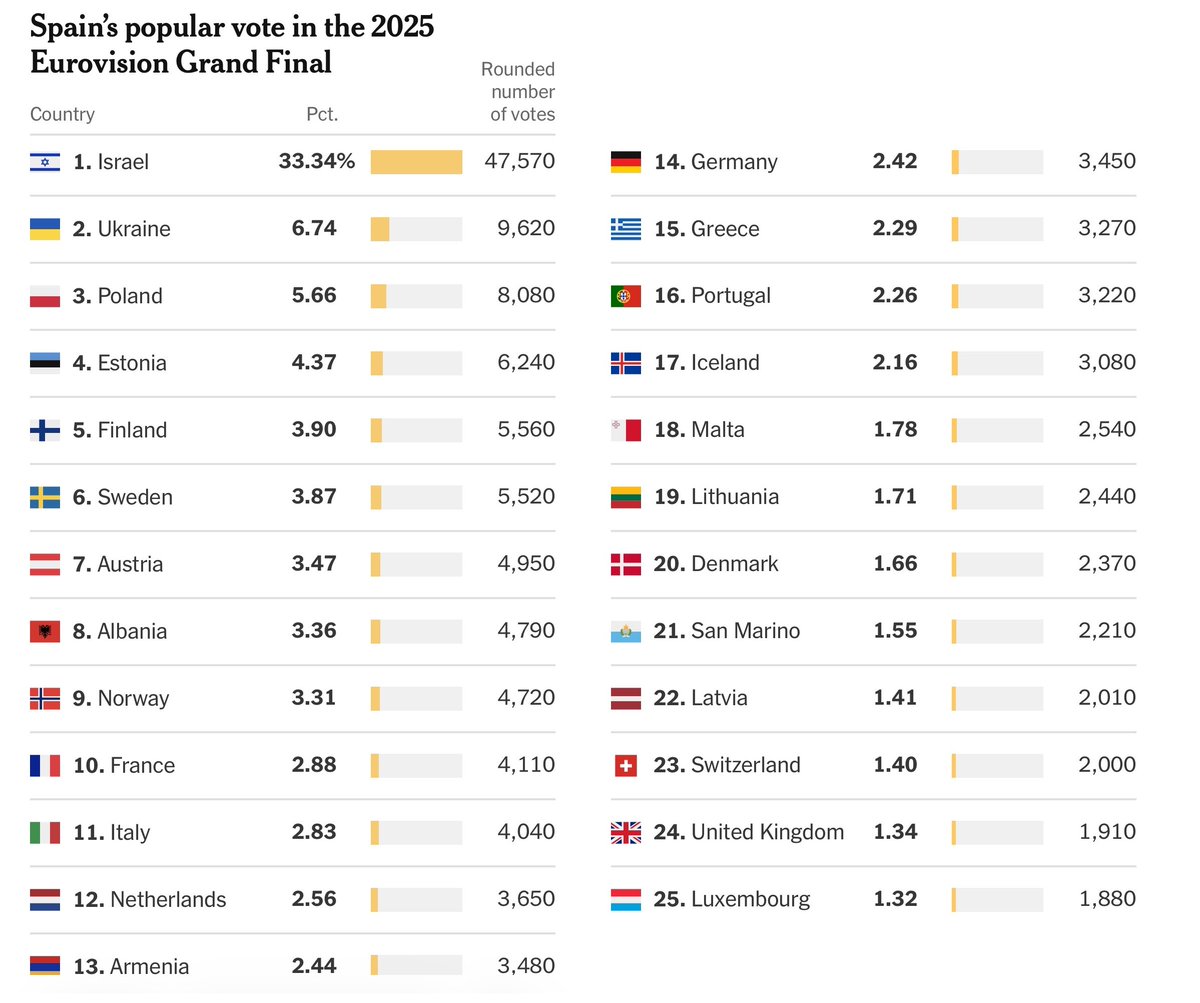
🇪🇸 The New York Times has obtained the Spanish televoting percentages from the Eurovision 2025 Grand Final. Israel received roughly one-third of the televote. According to the NYT, "It would have taken just a few hundred people, voting en masse, to secure [Israel]’s victory."
ESC Discord tweet media
English
236
710
5.8K
2.2M
Sergi retweetledi
errordesconocido
errordesconocido@errordesconocid·
Actitud de subcampeones 1945.
errordesconocido tweet media
Español
2
13
81
1.4K
Sergi retweetledi
Francisco Nunes
Francisco Nunes@FranNunesEcon·
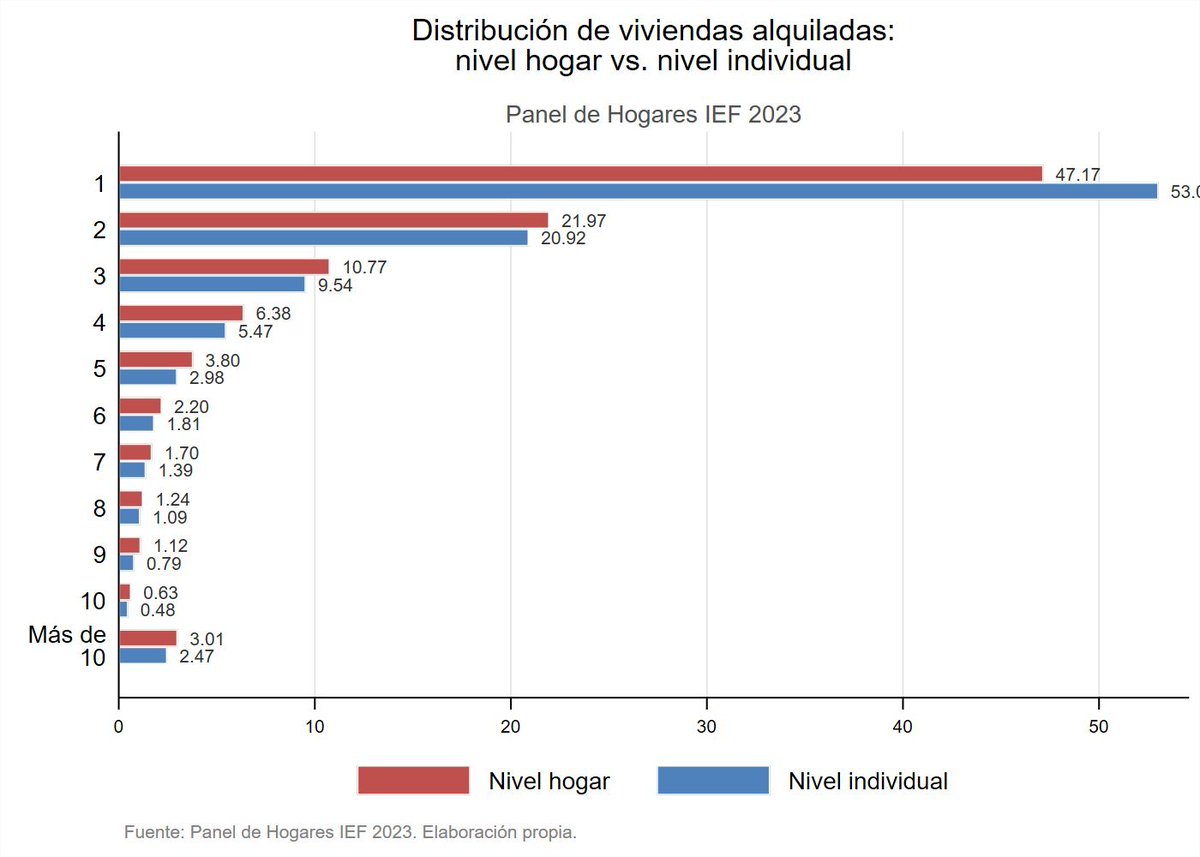
“Hoy reconoce que, metodológicamente, lo habíamos hecho bien”. Javier, Ángel literalmente ha hecho un hilo cuestionando las conclusiones del “informe” sobre los malvados “caseros” al desagregar los datos por el número de viviendas, algo que vosotros habéis omitido hacer, a pesar de tener los datos para hacerlo. La imagen que transmite vuestro “informe” de “mayoría de multipropietarios”, metiendo en la misma categoría a quienes alquilan 2 viviendas que 10, no se sostiene. Y es vuestra responsabilidad como investigadores aclarar correctamente vuestra metodología y los motivos detrás de uno u otro enfoque. Os dejo aquí los gráficos de @amjorge15 para que que quienes leáis este post juzguéis vosotros mismos las conclusiones del “informe” vs las de los datos desagregados.
Francisco Nunes tweet mediaFrancisco Nunes tweet mediaFrancisco Nunes tweet mediaFrancisco Nunes tweet media
Javier Gil@Gil_JavierGil

Ángel lleva toda la semana escribiendo hilos y mensajes acusándonos de mentir con los informes, atacando la metodología y contribuyendo activamente a la campaña que hemos vivido estos días. Hoy reconoce que, metodológicamente, lo habíamos hecho bien. Hago hilo 🧵

Español
2
12
57
5.1K
Sergi retweetledi
Ángel Martínez
Ángel Martínez@amjorge15·
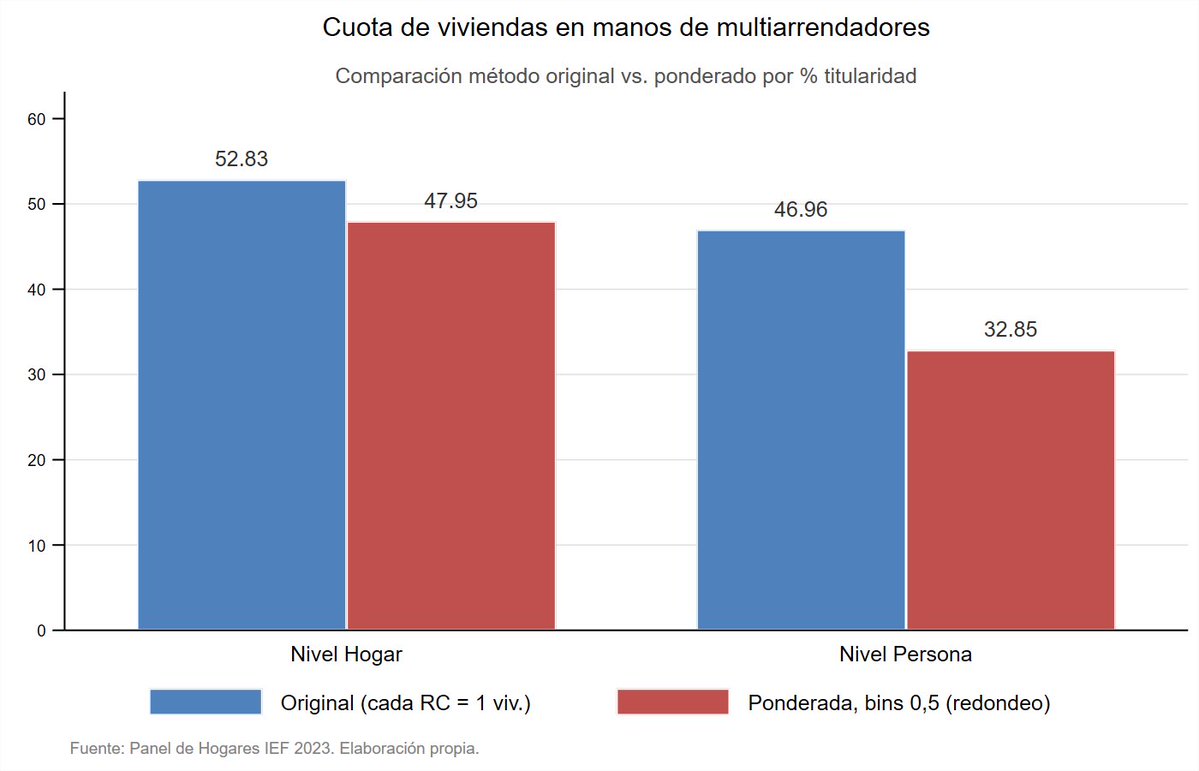
Respecto a las dos decisiones metodológicas que comento. Respecto a la primera, se que ya vamos de perdidos al rio, pero en un informe cuya finalidad es medir la concentración del mercado del alquiler NADIE te iba a criticar por tomar nivel de individuo en vez de nivel de hogar porque el nivel de hogar es la opción que da un mayor nivel de concentración. Teniendo en cuenta como está escrito el informe, siempre hablando de caseros individuales, no veo como se justifica luego hacerlo con hogares caseros en vez de con caseros. El resultado, que dices que no cambia tanto, básicamente no te permitiría mantener el titulo que le habéis dado al informe, y supone una variación relativa de 11pp.
Ángel Martínez tweet media
Español
1
12
46
2.5K