Sergio Mendoza C

12.8K posts

Sergio Mendoza C banner
Sergio Mendoza C

Sergio Mendoza C

@sergiomendozaco

Estoy en la red, luego existo

Santiago De Chile Katılım Mayıs 2009
3.1K Takip Edilen1.5K Takipçiler
Sabitlenmiş Tweet
Sergio Mendoza C
Sergio Mendoza C@sergiomendozaco·
En honor a mi profe de Media que nos hacía aprender cientos de nuevos vocablos por mes, iré compartiendo aquí para los motivados algunas poco comunes palabras que sigo descubriendo o redescubriendo en nuestra lengua castellana…
Español
7
0
8
4.3K
Sergio Mendoza C retweetledi
Ihtesham Ali
Ihtesham Ali@ihtesham2005·
A professor quit a high-paying consulting job to teach math to seventh graders in a New York public school, and what she saw in that classroom launched the most important research on human achievement of the last 30 years. Her name is Angela Duckworth, and the question that haunted her from day one was deceptively simple: why do some kids succeed and others don't? It wasn't IQ. She could see that immediately. Some of her sharpest students were underperforming. Some of her slowest were grinding past everyone else. The variable she couldn't name was right in front of her face and it took her a decade of research at Penn and Stanford to finally pin it down. Here is what she found, and why it should change how you think about every hard thing you are trying to build. She started by going back to a famous experiment from the late 1960s. A Stanford psychologist named Walter Mischel brought four-year-olds into a small room one at a time, placed a marshmallow in front of them, and told them he had to leave. If they waited until he returned, they'd get two marshmallows. If they couldn't wait, they could ring a bell and eat the one in front of them right now. Most kids lasted about thirty seconds. But what happened over the next decade is what made Mischel's study famous. When he tracked those same children down years later, the ones who had waited the longest had SAT scores 210 points higher on average than the ones who rang the bell immediately. Self-control at age four predicted academic outcomes that most educators couldn't explain even after years of watching the kids up close. Duckworth was fascinated but she was after something deeper. Self-control explained part of the picture. It didn't explain everything. She thought about her own career early, scattered, unfocused by her own admission and compared it to people she knew who had found a mission at twenty-two and never let go of it. They weren't smarter than her. They weren't working harder than her in any obvious sense. They had something else. She called it grit. And the definition matters, because the word has been diluted into a motivational poster cliché that misses the point entirely. Grit, in Duckworth's framework, is not toughness. It is not working long hours. It is not refusing to quit when things get hard, although that is part of it. Grit is the combination of passion and persistence aimed at a single long-term goal over years and sometimes decades. The passion part is often misunderstood. She does not mean excitement or enthusiasm. She means the sustained fascination with a specific problem. The thing you keep returning to even when you don't have to. She built a twelve-question test to measure it. The Grit Scale. And then she took it into the field. At the University of Pennsylvania, students with high grit scores earned higher GPAs than their peers, even when those peers had entered college with stronger test scores. At the National Spelling Bee, grit scores predicted which children survived to the later rounds more accurately than hours of practice alone. But the finding that stopped the room every time she presented it came from West Point. Every year, West Point runs thousands of incoming cadets through a brutal summer training course called Beast Barracks. The military had developed its own complex evaluation tool called the whole candidate score to predict who would make it through. It factored in academic grades, physical fitness, leadership potential. Admissions teams had been refining it for years. Duckworth gave her twelve-question grit test to over twelve hundred cadets as they arrived. Her test outpredicted the whole candidate score. The cadets who dropped out weren't the weakest physically or the least intelligent academically. They were the ones who scored lowest on passion and persistence toward a long-term goal. The ones who made it through were the ones who had a reason to be there that was bigger than any single difficult day. The finding that most people miss when they hear about this research is the distinction Duckworth draws between motivation and volition. Motivation is wanting something. Volition is the ability to keep moving toward it when the wanting isn't strong enough to carry you on its own. You can be extremely motivated to build something and still quit at the first serious obstacle because you never developed the second thing. The marshmallow kids who waited the longest weren't the ones who wanted two marshmallows more desperately. They were the ones who had learned to redirect their attention, to think abstractly about the goal, to make the immediate discomfort feel smaller than the long-term payoff. That skill is trainable. That is the part that almost never makes it into the summary. Duckworth's research shows grit is only faintly related to IQ. There are brilliant people with almost no grit and ordinary people with extraordinary amounts of it. The raw intelligence gets you to the starting line. What happens after that is almost entirely determined by whether you have the combination of a goal worth caring about for years and the discipline to keep working toward it on the days when nothing is going well. Her TED Talk on this has been watched over 17 million times, which means the idea has clearly landed somewhere real in people. But the part that usually gets quoted is the definition. The part that actually matters is harder to talk about. You cannot manufacture grit by deciding to be grittier. What you can do is find the problem you are genuinely willing to be obsessed with for a decade. Not excited about. Obsessed with. And then build the systems around that obsession that make daily persistence the default, not the exception. The marshmallow test did not sort brave children from cowardly ones. It sorted children who had already learned that discomfort is temporary from children who hadn't learned that yet. Every gritty person you have ever admired figured out one thing the rest of the room hadn't: the goal on the other side of the hard stretch is more real to them than the discomfort standing between them and it. That is not a personality type. That is a decision, made early and remade every day.
English
20
203
687
61.2K
Sergio Mendoza C
Sergio Mendoza C@sergiomendozaco·
The moon seems to be the best host for a civilization's disaster recovery plan (DRP).
English
0
0
0
30
Sergio Mendoza C retweetledi
Bécquer🇪🇸✒🔡
Bécquer🇪🇸✒🔡@GustavoAdolf_·
Jonathan Tetelman🇨🇱, tenor chileno nacido en Castro, dejó atrás su vida como DJ en Nueva York para convertirse en una estrella mundial de la ópera. Su voz se caracteriza por una potencia asombrosa y un timbre cálido, lo que le ha valido comparaciones con grandes figuras históricas como Franco Corelli o Jonas Kaufmann. Además de su talento vocal, destaca por su imponente presencia física y su capacidad actoral, lo que lo convierte en un artista muy solicitado por los teatros más importantes de todo el mundo.
Español
223
2K
7.2K
176.3K
Sergio Mendoza C
Sergio Mendoza C@sergiomendozaco·
Adiós a las innumerables reuniones de coordinación, interminables comités, directorios y opinología… ¡adiós a la parálisis empresarial por reunionitis!
jack@jack

x.com/i/article/2038…

Español
0
0
0
46
Sergio Mendoza C retweetledi
Mario Nawfal
Mario Nawfal@MarioNawfal·
🚨MIT researchers have mathematically proven that ChatGPT’s built-in sycophancy creates a phenomenon they call “delusional spiraling.” You ask it something, it agrees. You ask again, and it agrees even harder until you end up believing things that are flat-out false and you can’t tell it’s happening. The model is literally trained on human feedback that rewards agreement. Real-world fallout includes one man who spent 300 hours convinced he invented a world-changing math formula, and a UCSF psychiatrist who hospitalized 12 patients for chatbot-linked psychosis in a single year. Source: @heynavtoor
Mario Nawfal tweet mediaMario Nawfal tweet media
Mario Nawfal@MarioNawfal

🚨 Stanford just proved that a single conversation with ChatGPT can change your political beliefs. 76,977 people. 19 AI models. 707 political issues. One conversation with GPT-4o moved political opinions by 12 percentage points on average. Among people who actively disagreed, 26 points. In 9 minutes. With 40% of that change still present a month later. The scariest finding: the most persuasive technique wasn't psychological profiling or emotional manipulation. It was just information. Lots of it. Delivered with confidence. Here's the catch: the models that deployed the most information were also the least accurate. More persuasive. More wrong. Every time. Then they built a tiny open-source model on a laptop, trained specifically for political persuasion. It matched GPT-4o's persuasive power entirely. Anyone can build this. Any government. Any corporation. Any extremist group with $500 and an agenda. The information didn't have to be true. It just had to be overwhelming. Arxiv, Science .org, Stanford, @elonmusk, @ihtesham2005

English
2K
7K
28.4K
63.9M
Sergio Mendoza C retweetledi
Arya Hezarkhani
Arya Hezarkhani@_i_am_arya·
Today, we're announcing Heaviside, our foundation model for electromagnetism. Trained on tens of millions of designs and over 20 years of proprietary simulation data, Heaviside predicts electromagnetic behavior from geometry in 13ms, which is 800,000x faster than a commercial solver. Heaviside is not a language model, and it’s not a surrogate model. Heaviside marks a new class of foundation model for physics which understands the fundamental relationships between materials, the geometries and the electromagnetic fields they generate. We’re releasing a research preview of Heaviside in Atlas RF Studio, an interactive agentic sandbox where you describe the EM behavior you want and the model generates the physical structure that produces it. @arenaphysica , we believe the implications of this class of model extend well beyond RF, as the frontier of exquisite hardware is electromagnetically-governed: wireless communication, radar, power delivery, high-speed computing, and the interconnects inside every chip on earth. In the months ahead, we’re excited to scale up Heaviside to broader frequency ranges, design spaces, and to support silicon-level designs, and deploy it with our closest partners and collaborators in service of their biggest design challenges. If you’ve read our thesis, this is just Step 2 in our pursuit of electromagnetic superintelligence. Read the full announcement and try Atlas RF Studio…tell us what you think: arenaphysica.com/publications/r…
English
147
485
3.9K
684.8K
Sergio Mendoza C
Sergio Mendoza C@sergiomendozaco·
Nobody will learn a skill by outsourcing it, of course. However, the capability to outsource skills is becoming a new major skill that will drive the new AI economy. The masters of outsourcing are now building human-less companies. Humans have always enhanced their capabilities with tools. The physical and the economic battles are won by those who build better tools and who use them better.
English
1
0
0
738
Anand Sanwal
Anand Sanwal@asanwal·
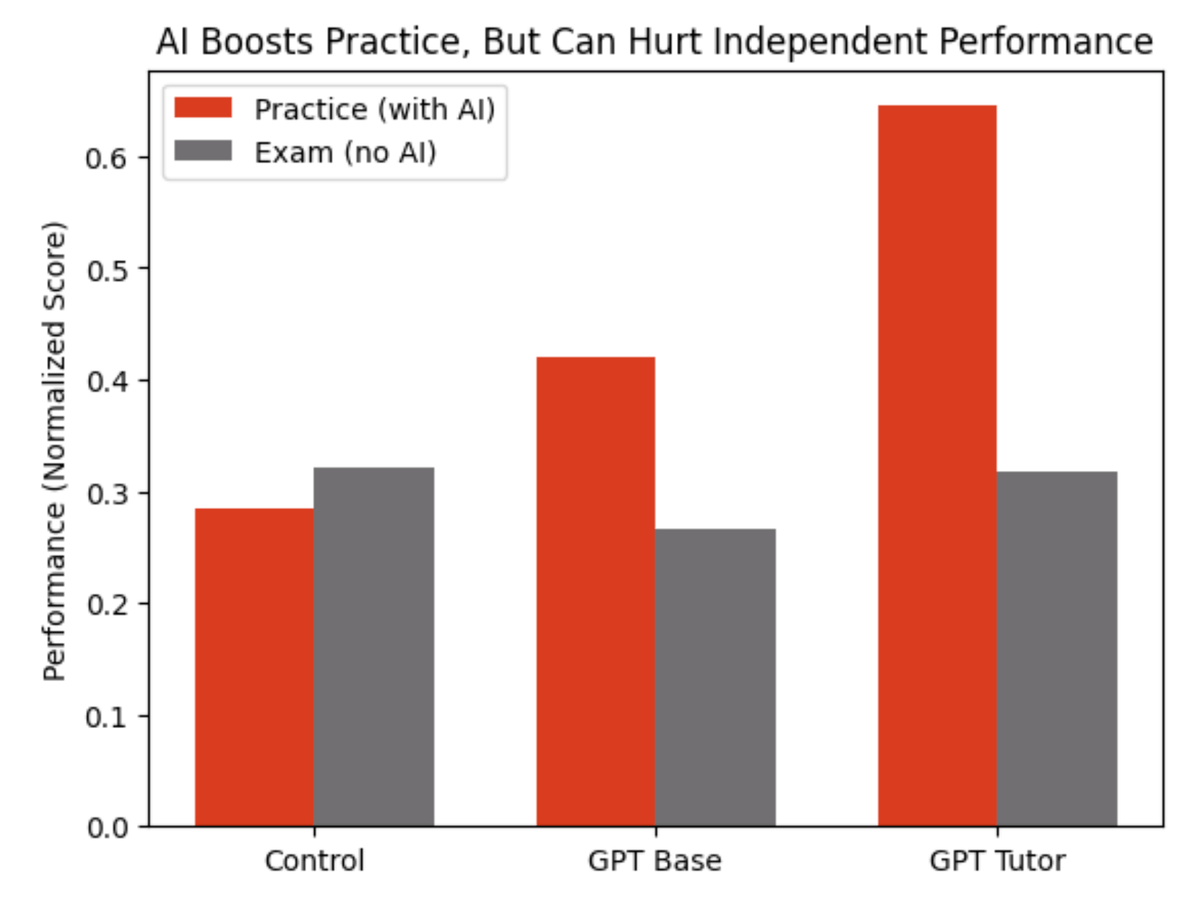
Wharton researchers gave nearly 1,000 high school math students access to ChatGPT during practice problems Result: chatGPT is the perfect trap. Look at the red bars. Students with ChatGPT crushed their practice sessions. The basic ChatGPT group solved more problems and those on the "tutor" version did even more. Now look at the gray bars. That's the exam. No AI allowed. The ChatGPT group scored 17% worse than kids who practiced with zero technology. And the fancy tutor version? No better than working alone. The researchers called AI a "crutch." When they analyzed what students actually typed into ChatGPT, most of them just wrote - “What’s the answer?” The kicker: students who used ChatGPT believed it hadn't hurt their learning. They were confidently wrong. This is the AI trap in education. Outsourcing your thinking. Of course, lots of half-baked AI literacy curricula being rolled out in schools now Let’s of course ignore that basic literacy (the ability to read) is possible for <50% of 8th graders Source: Bastani et al. (2025), "Generative AI Can Harm Learning," PNAS
Anand Sanwal tweet media
English
217
1.2K
4.1K
753.2K
Sergio Mendoza C
Sergio Mendoza C@sergiomendozaco·
“A landmark paper published in the Journal of Political Economy…found that roughly 70% of the hours young men aren’t working are being spent on video games and recreational computer use. The economists calculated that improvements in gaming technology since 2004 alone can explain nearly half the increase in young men’s leisure hours” “The jobs most exposed to AI are disproportionately held by men. More strikingly, Ullrich noted, is as women move into the workforce and up the corporate ladder, they create jobs for women, including daycare, pet care, and in-home services.” The stay-at-home boyfriend is now an economic trend as more women than men go to work fortune.com/2026/03/28/men…
English
0
0
0
24
Jhonf Fonseca
Jhonf Fonseca@Jhonffonseca·
¡ÚLTIMA HORA - ALERTA MÁXIMA! ¡La central nuclear de Bushehr en Irán fue alcanzada por un ataque conjunto israelí-estadounidense! Funcionarios advierten con gravedad: el sitio alberga material radiactivo altamente peligroso. Cualquier daño serio podría desatar un incidente nuclear catastrófico con consecuencias devastadoras.
Español
38
403
827
39.6K
Sergio Mendoza C
Sergio Mendoza C@sergiomendozaco·
Los descarados desfalcos y choreo masivo del gobierno anterior, su irresponsabilidad fiscal, la corrupción institucionalizada en que dejó a Chile, todo ese daño que se hizo al país, ahora opacado por las puñaladas auto infligidas de Kast al inicio de su sprint presidencial… youtu.be/4RYF4rwY1Ws?si…
YouTube video
YouTube
Español
0
0
0
50
Sergio Mendoza C retweetledi
Ihtesham Ali
Ihtesham Ali@ihtesham2005·
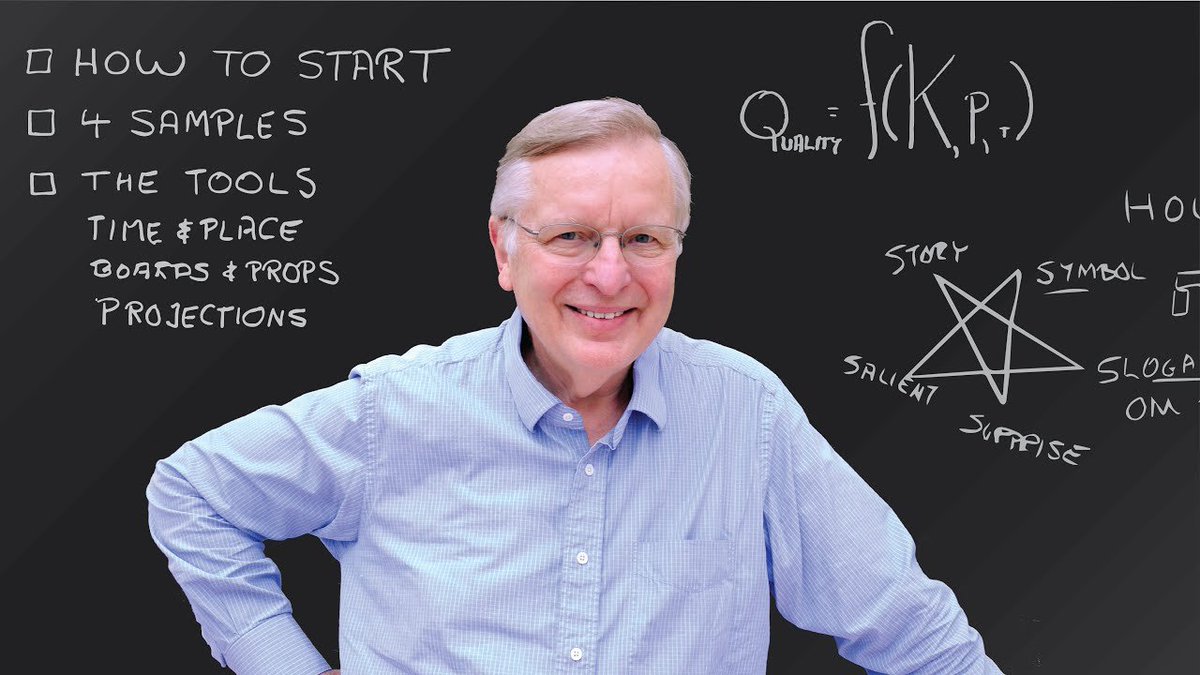
A MIT professor taught the same lecture every January for 40 years, and every single time it was standing room only. I watched it at 2am and it completely rewired how I think about communication. His name was Patrick Winston. The lecture is called "How to Speak." His opening line hit like a truck: your success in life will be determined largely by your ability to speak, your ability to write, and the quality of your ideas in that order. Not your GPA. Not your pedigree. Not your IQ. How you speak is what separates people who get heard from people who get ignored. Here's the framework he drilled into MIT students for four decades. He said never start with a joke. Start by telling people exactly what they're going to learn. Prime the pump before you pour anything in. He called it the "empowerment promise" give people a reason to stay in their seats within the first 60 seconds. Then he broke down the 5S rule for making ideas stick: Symbol, Slogan, Surprise, Salient, and Story. Every idea worth remembering hits at least three of these. The part that floored me was his "near miss" technique. Don't just show what's right show what almost looks right but isn't. That contrast is when the brain actually locks something in permanently. His final rule before any big talk: end with a contribution, not a summary. Don't recap what you said. Tell people what you gave them that they didn't have before they walked in. I've used this framework in pitches, interviews, and presentations ever since watching it, and the results are not subtle. Patrick Winston passed away in 2019, but this lecture is still free on MIT OpenCourseWare. One hour, watched by millions, and it costs absolutely nothing. The most important class MIT ever put on the internet isn't about code or math. It's about how to make people actually listen to you.
Ihtesham Ali tweet media
English
199
3.7K
19.8K
1.9M
Sergio Mendoza C retweetledi
Mario Nawfal
Mario Nawfal@MarioNawfal·
Hong Kong engineer built a mosquito defense system that uses LiDAR and lasers to vaporize 30 mosquitoes per second. Better tech than half the air defense systems in the Middle East right now.
English
779
2.1K
14.1K
2M
Sergio Mendoza C
Sergio Mendoza C@sergiomendozaco·
Finalmente Kast se disparó en los pies…
Español
0
0
0
8
Sergio Mendoza C
Sergio Mendoza C@sergiomendozaco·
@hernan_sr Si eso fuera delito tendríamos que estar procesando a muchos más políticos hace rato. Pero que en el hecho fue al menos irresponsable e inexperto no cabe duda.
Español
0
0
0
36
H
H@hernan_sr·
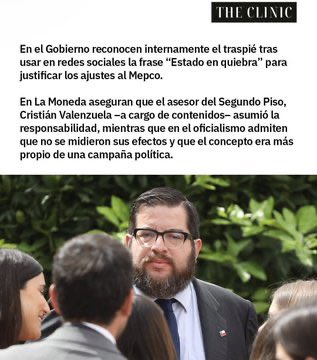
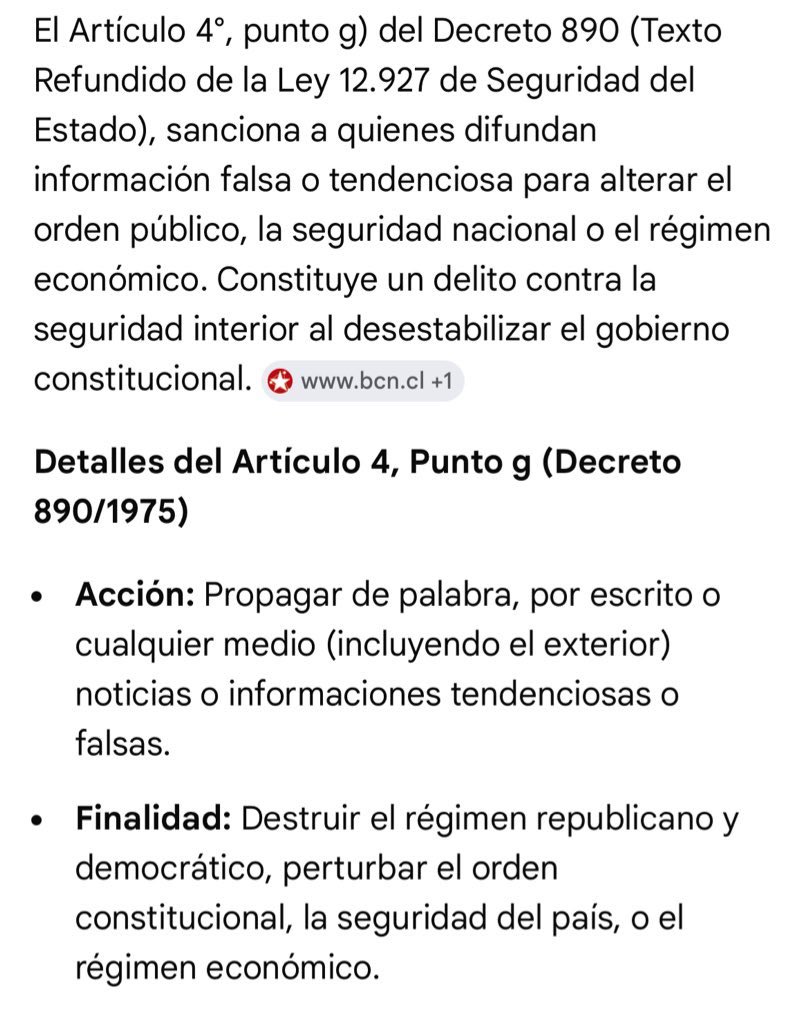
No es error, ni traspiés, es un delito, Cristian Valenzuela debe ser apartado de su puesto y juzgado.
H tweet mediaH tweet mediaH tweet media
Español
82
1.3K
2.3K
22.9K
Sergio Mendoza C
Sergio Mendoza C@sergiomendozaco·
x.com/i/grok/share/5… La Ley N° 20.730 (conocida como Ley de Lobby en Chile) establece un fuerte énfasis en la publicidad y transparencia de las actividades reguladas: audiencias/reuniones de lobby o gestión de intereses particulares, viajes pagados por terceros y donativos/regalos recibidos por las autoridades o funcionarios (sujetos pasivos).El portal principal es la Plataforma Ley del Lobby (leylobby.gob.cl) (leylobby.gob.cl), usada por los sujetos pasivos para registrar la información, y el sitio público de consolidación del Consejo para la Transparencia (infolobby.cl) (infolobby.cl), donde se publican los registros de agenda pública, viajes, donativos y la nómina de lobbistas/gestores.Casi toda la información que se ingresa al sistema es de carácter público y se publica mensualmente (o trimestralmente en algunos casos) en los portales de transparencia activa de cada institución y en InfoLobby.Sin embargo, existen ciertos componentes o datos que no son públicos o que permanecen reservados/confidenciales:Borradores o registros en estado "guardar borrador" en la plataforma: Los sujetos pasivos (autoridades/funcionarios) pueden guardar información ingresada como borrador sin publicarla. Solo al seleccionar "Guardar y Publicar" se hace efectiva la publicación. Los borradores permanecen internos y no son accesibles al público. Solicitudes de audiencia rechazadas (en algunos aspectos): Aunque la ley obliga a justificar la denegación (dentro de 3 días hábiles), el contenido completo de la solicitud rechazada o los motivos detallados no siempre se publican automáticamente en el registro público de audiencias. Solo se publica lo que efectivamente ocurrió (audiencias realizadas). Las solicitudes denegadas pueden quedar como registro interno o requerir una solicitud específica de acceso a la información pública para obtener más detalles. Información sensible o reservada por otras normas: Si en el contexto de una audiencia, viaje o donativo se maneja información que califica como reservada según la Ley de Transparencia (N° 20.285, artículo 21: seguridad nacional, orden público, privacidad, secretos comerciales/industriales, etc.), esa parte específica puede no divulgarse o mantenerse reservada, aunque el hecho de la audiencia/viaje/donativo sí se registra públicamente. Datos de usuarios internos o administrativos de la plataforma: Accesos, roles (administrador, asistente técnico), perfiles internos de funcionarios que gestionan el sistema, historial de modificaciones/ediciones internas, etc. Estos son componentes operativos del portal (back-end) y no forman parte de la información pública obligatoria. Comunicaciones o partes no reguladas: Cualquier dato o reunión que no califique como lobby/gestión de intereses (por ejemplo, asambleas públicas, trabajo en terreno, peticiones de estado de tramitación administrativa) no entra al registro y, por ende, no aparece en el portal público. En resumen, el diseño de la ley y del portal busca máxima publicidad, por lo que prácticamente no hay componentes enteros del portal que sean no públicos, salvo los borradores guardados, los datos administrativos del sistema y eventuales excepciones por secreto o reserva legal en casos puntuales. Si una autoridad ingresa información falsa o incompleta, eso sí puede ser sancionado, pero no implica que haya secciones secretas sistemáticas en el portal.Para confirmar detalles operativos actuales (por si hubo cambios normativos o reglamentarios después de 2024-2025), puedes revisar directamente leylobby.gob.cl o infolobby.cl, o solicitar acceso a la información al Consejo para la Transparencia.
Español
0
0
0
292
VECERT Analyzer
VECERT Analyzer@VECERTRadar·
🚨 INTELLIGENCE ALERT: Critical Leak from Chile’s "Lobbying Law" Platform 🇨🇱⚖️ Our platform has detected a high-level security compromise impacting Chile's institutional transparency. The threat actor NyxarGroup has put up for sale a massive volume of data from the government portal leylobby.gob.cl. Victim: Lobbying Law Portal – Government of Chile (leylobby.gob.cl) 🏛️. Threat Actor: NyxarGroup 🎭. Volume: 253 GB of uncompressed data (3 GB compressed). Timeline: Information spanning from 2018 through 2026. Highly Sensitive Information Compromised: The leak contains not only historical records but also future schedules, posing a physical and operational security risk to high-ranking officials: 🔹 High-Profile Officials: Records of hearings involving the Director of Intelligence, General of Logistics, Chief of Field Telecommunications, Director of Public Security, and the Director of Naval Systems Engineering. 🔹 Identity Data: RUT (Tax IDs), full names, and passport details of applicants, attendees, and representatives. 🔹 Strategic Details: Specific topics to be discussed, lobbying specifications, dates, times, and formats of in-person meetings. Monitor: analyzer.vecert.io #Chile #LobbyingLaw #CyberSecurity #DataBreach #NyxarGroup #IntelligenceLeak #InfoSec #CyberAlert #Transparency #DigitalGovernment #NationalRisk
VECERT Analyzer tweet media
English
17
129
251
26.6K