Shankar K Shakya Ph.D.

462 posts

Shankar K Shakya Ph.D. banner
Shankar K Shakya Ph.D.

Shankar K Shakya Ph.D.

@shakya

Bioinformatics Scientist @BallHort #USAIDfellow #Rstats. Ph.D. from @PhytophthoraLab. Alumni @OregonState @UF #firstgen from🇳🇵

Greater Chicago area Katılım Temmuz 2011
601 Takip Edilen598 Takipçiler
Shankar K Shakya Ph.D.
Shankar K Shakya Ph.D.@shakya·
Abstract done for #PAG32. If you are interested working in ornamental industry, come find me at the trees and shrubs session on day1.
English
0
0
3
105
Shankar K Shakya Ph.D. retweetledi
Matt Dancho (Business Science)
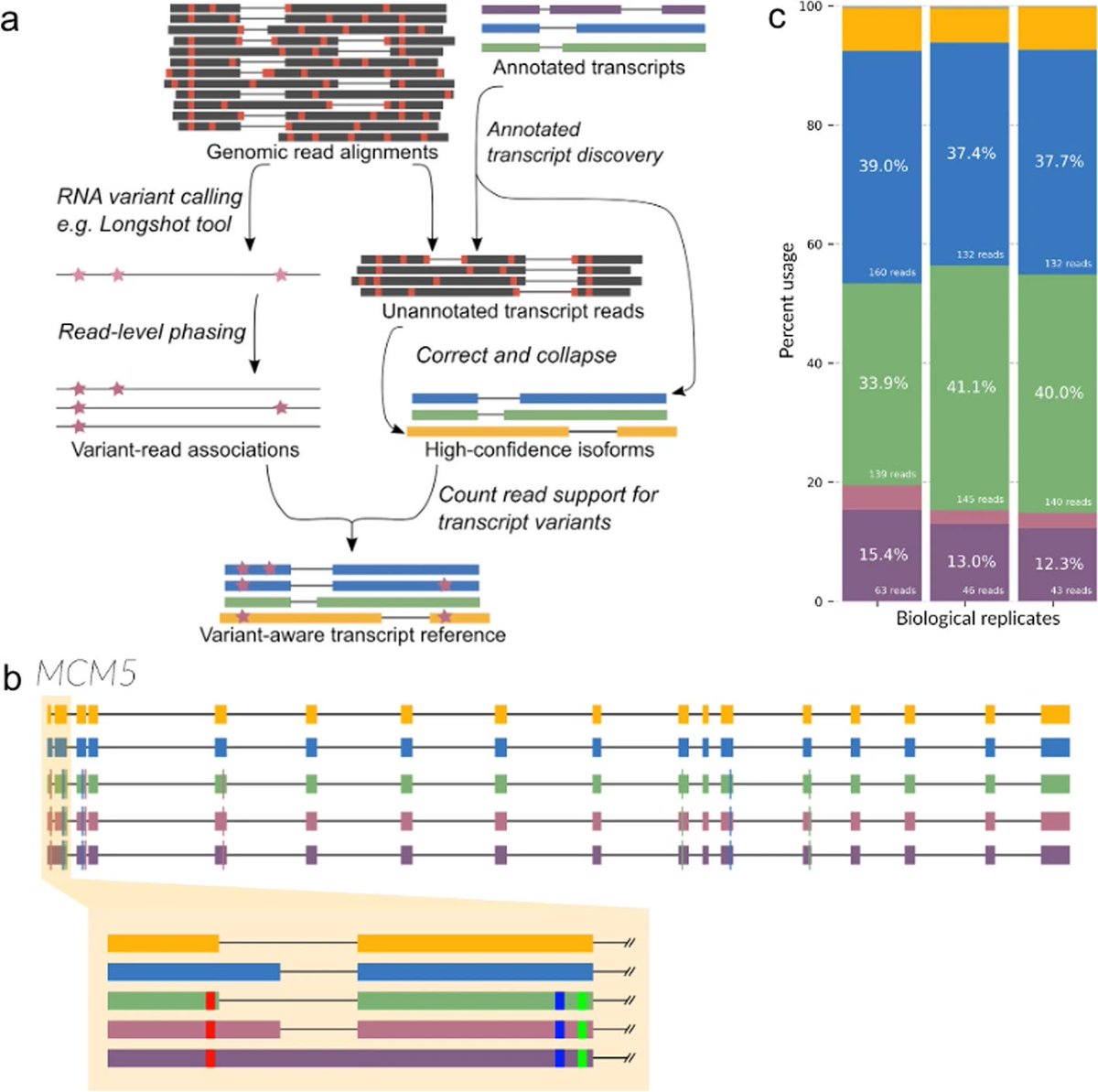
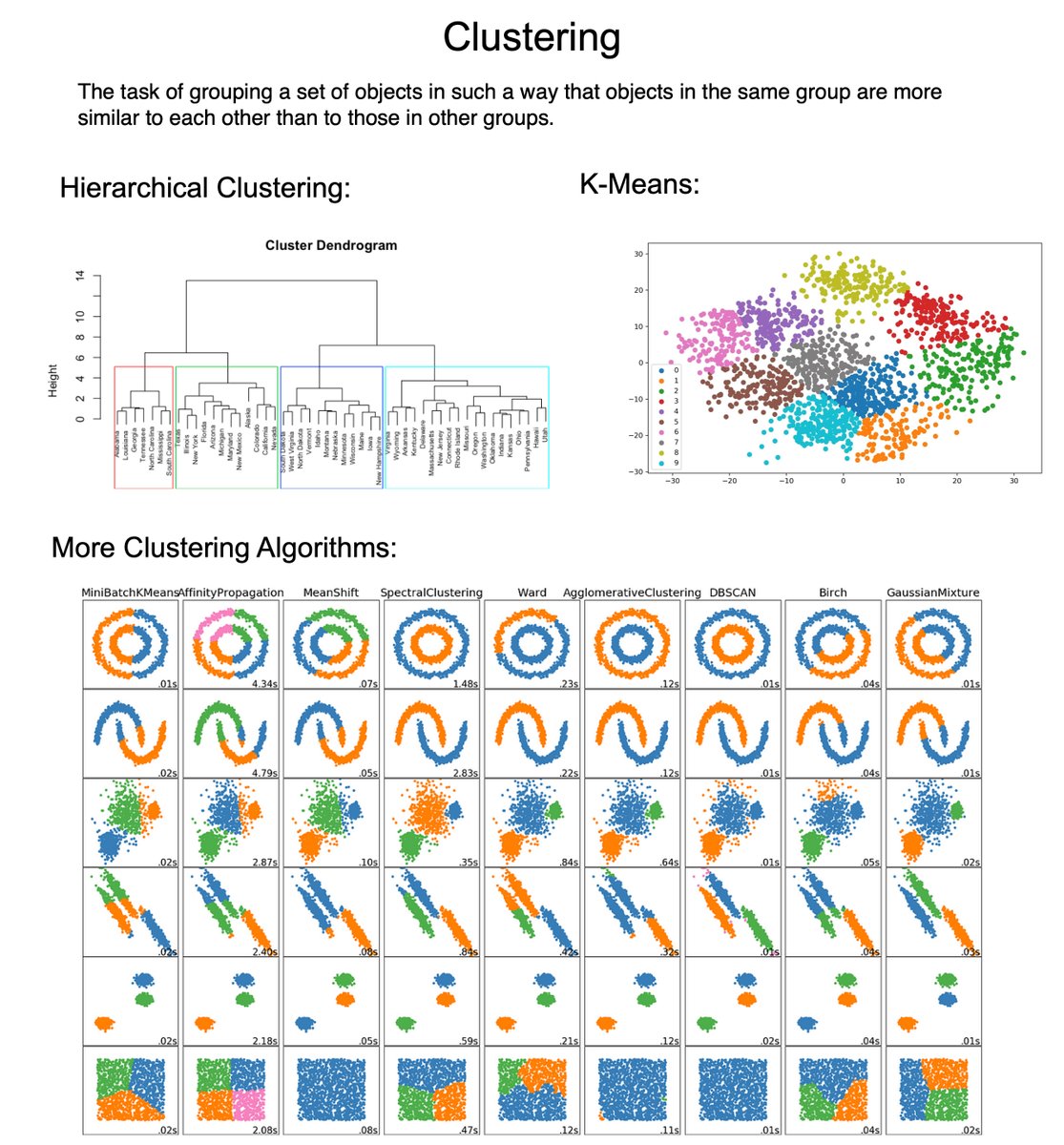
The 10 types of clustering that all data scientists need to know. Let's dive in: 1. K-Means Clustering: This is a centroid-based algorithm, where the goal is to minimize the sum of distances between points and their respective cluster centroid. 2. Hierarchical Clustering: This method creates a tree of clusters. It is subdivided into Agglomerative (bottom-up approach) and Divisive (top-down approach). 3. DBSCAN (Density-Based Spatial Clustering of Applications with Noise): This algorithm defines clusters as areas of high density separated by areas of low density. 4. Mean Shift Clustering: It is a centroid-based algorithm, which updates candidates for centroids to be the mean of points within a given region. 5. Gaussian Mixture Models (GMM): This method uses a probabilistic model to represent the presence of subpopulations within an overall population without requiring to assign each data point to a cluster. 6. Spectral Clustering: It uses the eigenvalues of a similarity matrix to reduce dimensionality before applying a clustering algorithm, typically K-means. 7. OPTICS (Ordering Points To Identify the Clustering Structure): Similar to DBSCAN, but creates a reachability plot to determine clustering structure. 8. Affinity Propagation: It sends messages between pairs of samples until a set of exemplars and corresponding clusters gradually emerges. 9. BIRCH (Balanced Iterative Reducing and Clustering using Hierarchies): Designed for large datasets, it incrementally and dynamically clusters incoming multi-dimensional metric data points. 10. CURE (Clustering Using Representatives): It identifies clusters by shrinking each cluster to a certain number of representative points rather than the centroid. There you have it- my top 10 types of clustering every data scientist needs to know. The next problem you'll face is how to apply them to data science to business. I'd like to help. I’ve spent 100 hours consolidating my learnings into a free 5-day course, How to Solve Business Problems with Data Science. It comes with: 300+ lines of R and Python code 5 bonus trainings 2 systematic frameworks 1 complete roadmap to avoid mistakes and start solving business problems with data science, TODAY. 👉 Here it is for free: learn.business-science.io/free-solve-bus…
Matt Dancho (Business Science) tweet media
English
3
334
1.4K
92.4K
Shankar K Shakya Ph.D. retweetledi
Nature Portfolio
Nature Portfolio@NaturePortfolio·
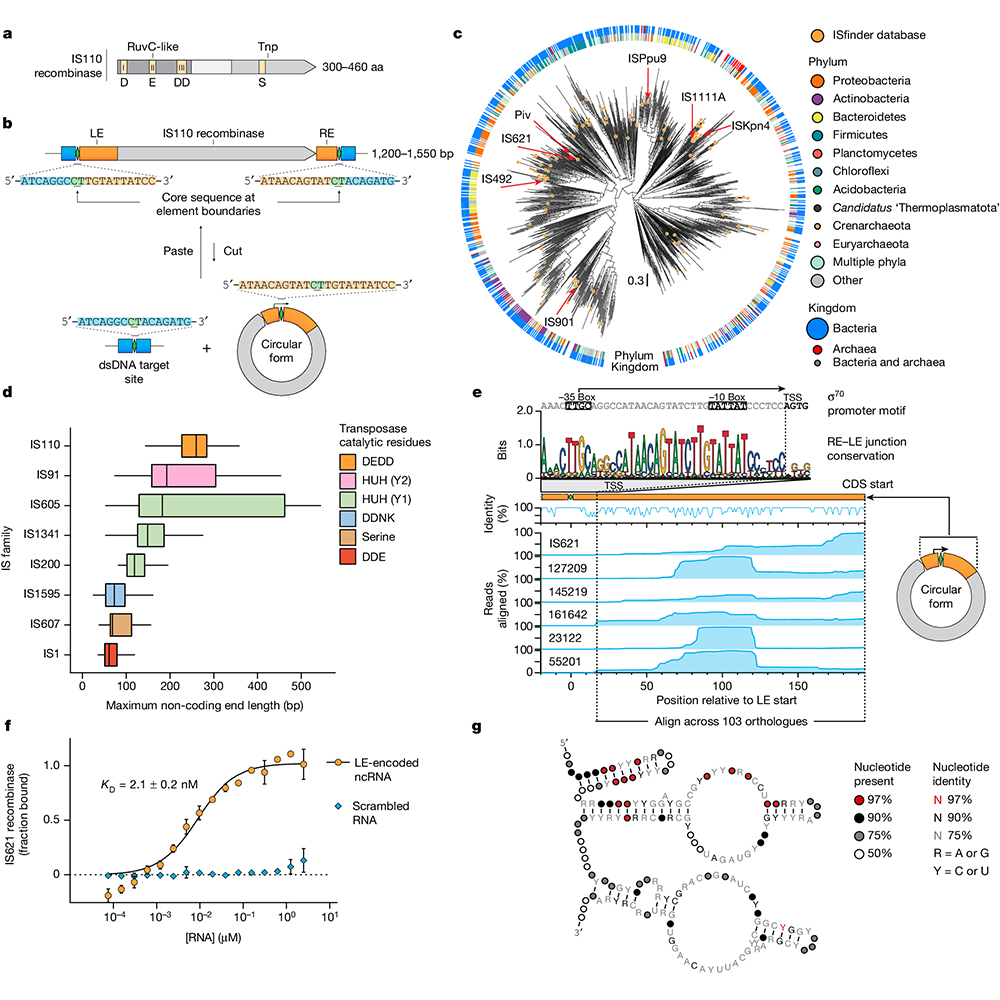
Two papers in @Nature present a new genome editing technique that enables the insertion, inversion and deletion of long DNA sequences at user-specified genome positions. The approach may provide an easier method of genome editing. go.nature.com/3RGkI8M go.nature.com/3RHBvIs
Nature Portfolio tweet media
English
2
287
844
120.5K
Shankar K Shakya Ph.D. retweetledi
Larry Madden
Larry Madden@TheLarryMadden·
Generalized linear mixed models (GLMMs) are critically important for the analysis of non-normal data. Check out our recent review article to learn more. frontiersin.org/journals/horti…
English
0
11
28
2.2K
Shankar K Shakya Ph.D. retweetledi
Bioinformatics Coach
Bioinformatics Coach@informatician3·
Genome assembly Tutorials with SPades- Paired-end Illumina Reads
Bioinformatics Coach tweet media
English
0
14
62
6K
Shankar K Shakya Ph.D. retweetledi
NCBI
NCBI@NCBI·
We are excited to announce cleaner nucleotide (nt) and protein (nr) BLAST databases with more accurate results! We now use NCBI quality assurance tools to systematically remove misleading sequences. Learn more: ow.ly/CEk950RlpoM #NCBICGR
NCBI tweet media
English
1
69
174
16.7K
Shankar K Shakya Ph.D.
Shankar K Shakya Ph.D.@shakya·
@aeharkess Thank you @aeharkess. Do you think producing 5 gfa files (one per each flowcell of data) and merging them to produce 1 gfa and then converting to 1 assembly file will work if I dont want to use 1tb of RAM. Thoughts??
English
1
0
0
51
Alex Harkess
Alex Harkess@aeharkess·
@shakya if it’s anything like octoploid dahlia, the easiest solution then would be to spin up an AWS node with 1tb of ram.
English
1
0
0
62
Shankar K Shakya Ph.D.
Shankar K Shakya Ph.D.@shakya·
HiFi assembler folks, if you have tons of raw fasta (total 700Gb) files as input but limited by the RAM whats the path you have taken to perform an assembly. Asking for a friend.
English
1
0
0
366
Alex Harkess
Alex Harkess@aeharkess·
@shakya what’s the genome size and ploidy and hifi coverage?
English
1
0
0
218
Shankar K Shakya Ph.D. retweetledi
The Plant Cell
The Plant Cell@ThePlantCell·
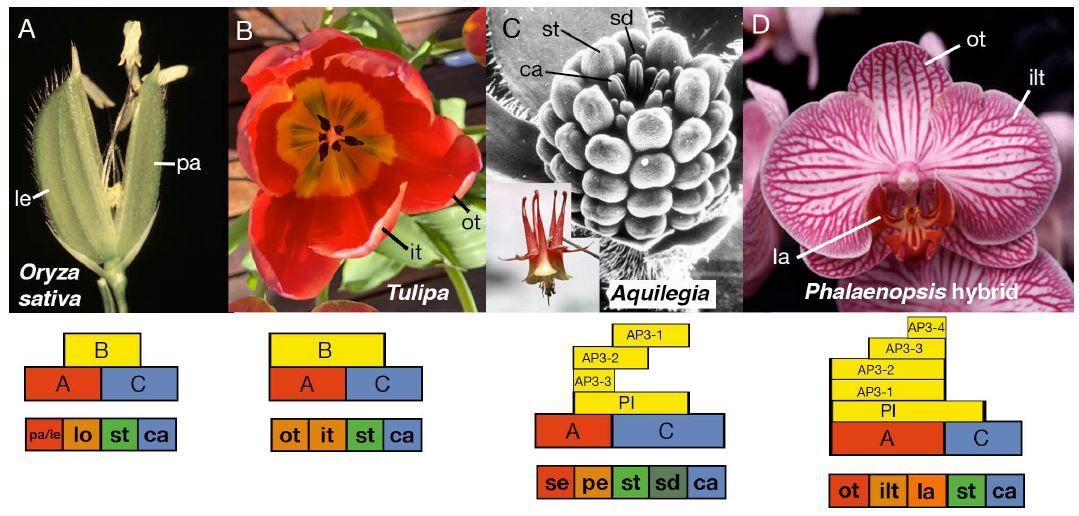
REVIEW: Reflections on the ABC model of flower development (John L Bowman, Edwige Moyroud) buff.ly/3OIDlHM @ASPB #PlantSci
The Plant Cell tweet media
English
2
84
225
23.1K
Shankar K Shakya Ph.D. retweetledi
Ensembl
Ensembl@ensembl·
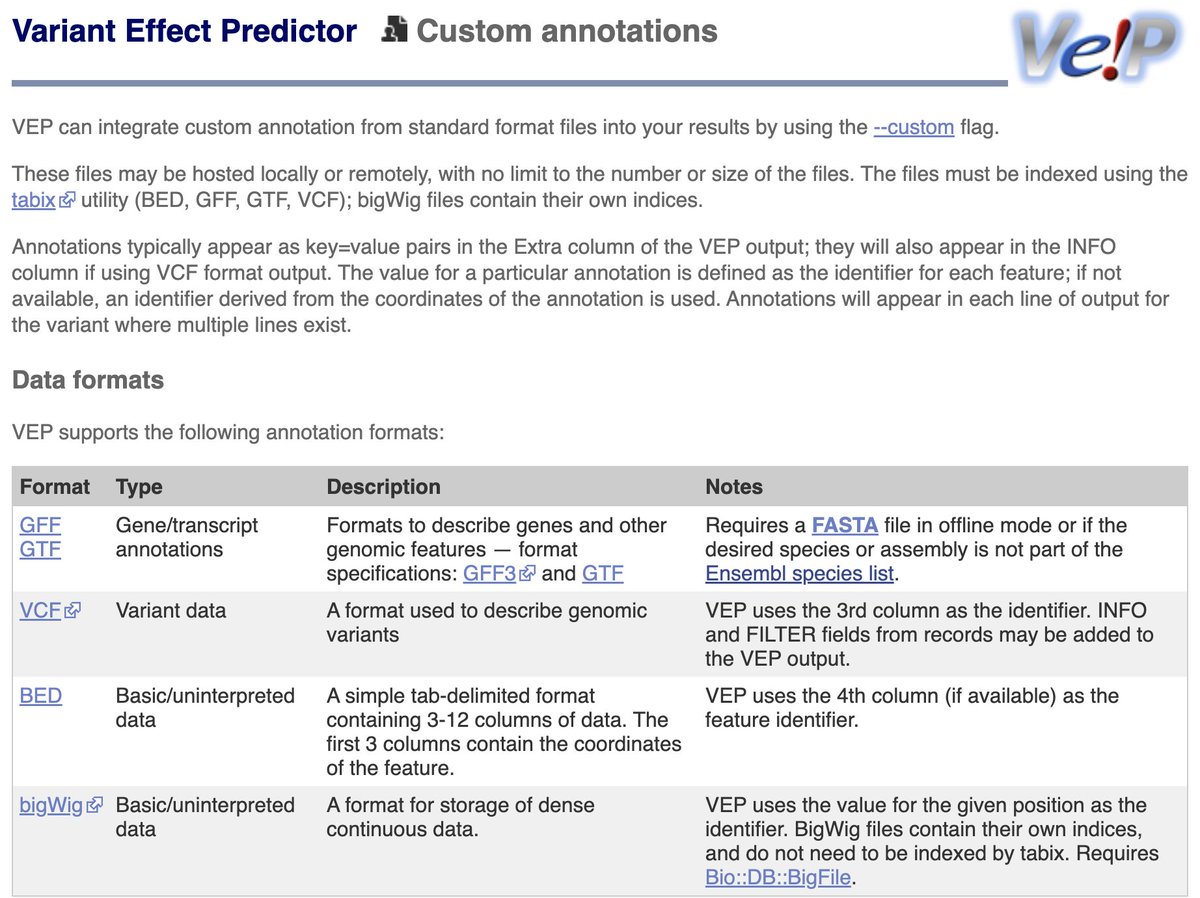
Want to learn about the latest updates we've made to enhance the options available when you're using the custom annotation option in the Variant Effect Predictor? Read more in our latest blog post: 👉 ensembl.info/2024/01/26/coo… #genomics #bioinformatics #VEP 🧬
Ensembl tweet media
English
0
10
39
3.6K
Tools for Polyploids
Tools for Polyploids@polyploidtools·
That's the end of day one for this year's polyploid meeting! Thank you and everyone who participated or presented. We'll see you again at 8:30 tomorrow morning!
Tools for Polyploids tweet media
English
1
0
4
223
krishna bhattarai
krishna bhattarai@krishnabhatarai·
I am happy to share that I have joined Department of Horticultural Sciences, Texas A&M University and Texas A&M AgriLife Research and Extension Center - Dallas as Assistant Professor, Controlled Environment Breeder @TAMU @AgriLife @tamuhort
English
13
1
57
2.6K
Shankar K Shakya Ph.D. retweetledi
Robert Aboukhalil
Robert Aboukhalil@RobAboukhalil·
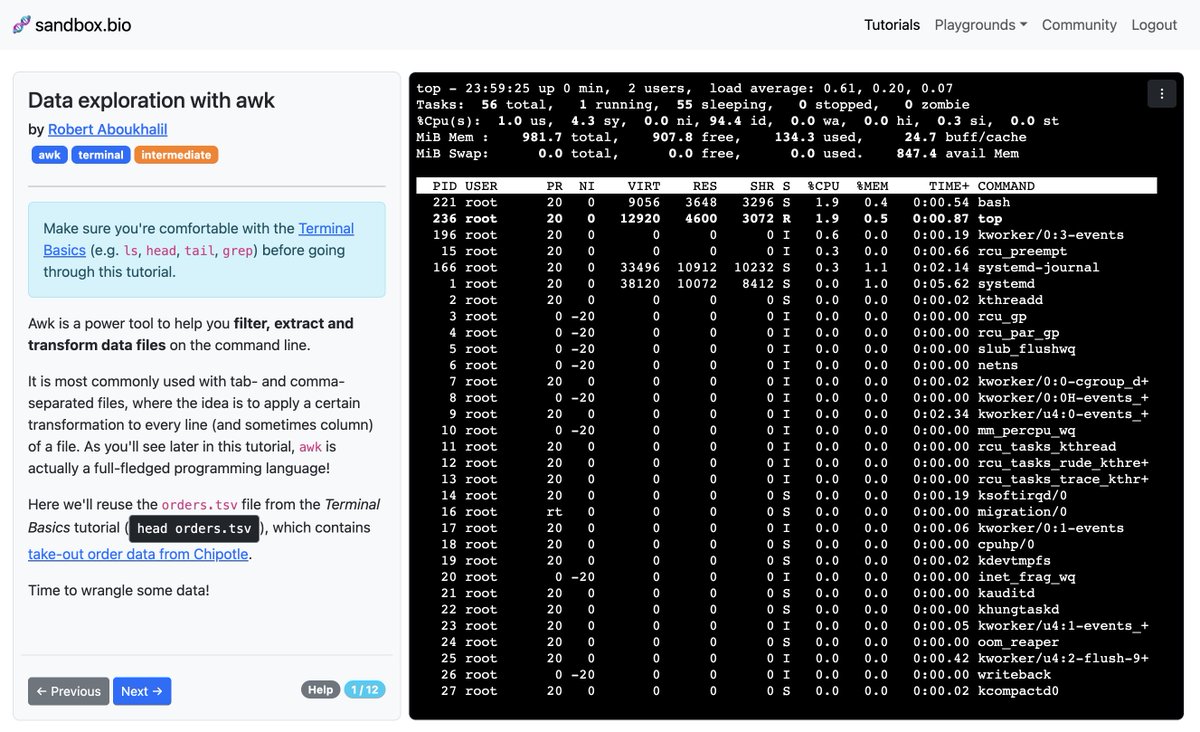
🧑‍💻 Happy to announce that sandbox.bio v2 has been released! Same bioinformatics tutorials, but now powered by Linux running in your browser. Stay tuned, we'll be adding lots more tutorials this year.
Robert Aboukhalil tweet media
English
3
73
257
29.4K