

Princess
2.9K posts
Princess
@shanson88
I love my Packers! Nurse/wife/mom/rocker
Wisconsin Katılım Haziran 2011
1.1K Takip Edilen457 Takipçiler
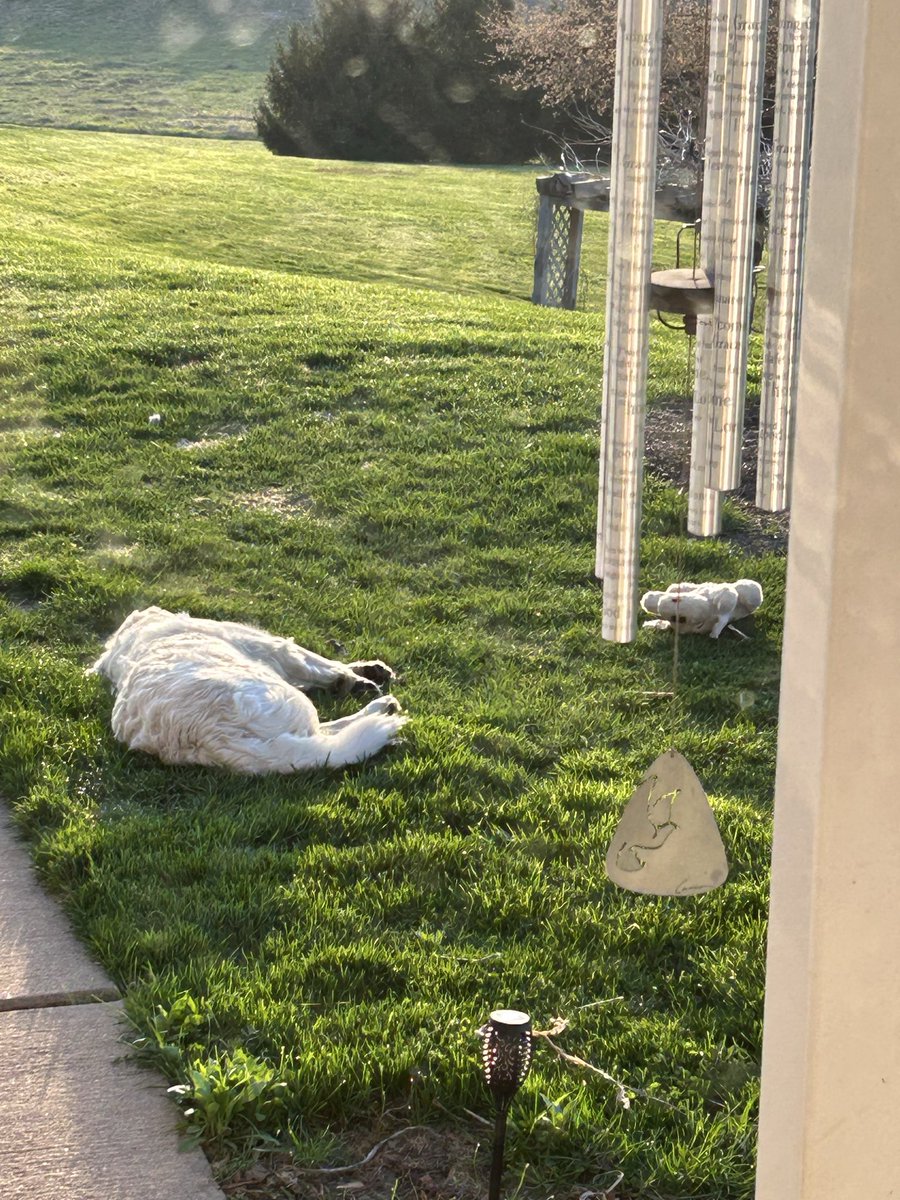

I heard the algorithm wants more dog pics. Even if it’s not true, who doesn’t want to see dog pics? Add yours here!

English

3 years, 10 months, 21 days sober today.
My anxiety has been crippling lately.
Some days, even leaving the house feels impossible.
Everything feels harder than it should… but I’m still trying.
And sometimes, the bravest thing you can do is simply try.
One day at a time. 💙

English


I know many won’t care, but it matters to me, 1,409 days sober today.
Days I shouldn’t have made it through.
And even now… it’s not easy.
Some days still feel heavy.
Some days my head still tries to pull me back.

English

When my mother posted her first quilt on Facebook, none of her friends commented. It really upset her, even though the quilt is beautiful. I’m not sure why it happened, but I hope she doesn’t feel discouraged. Please remind her not to be sad and to keep going—she truly has talent.

English



Every day, I see numerous posts about people’s pets passing away and how painful it is. I “like” each post because I feel each pet deserves it.
Today it’s my turn. After three weeks, our adopted rescue dog, Max, passed away today. It was the hardest decision we’ve ever had to make, but we know he’s now pain-free and running happily.
He was the sweetest, kindest boy. My posts never get many views, but if you could look at the pics of our sweet guy, I’d really appreciate it.

English





This was the old girl’s last job.
As usual, she nailed it ❤️
English



Ye, formerly known as Kanye West, admits to a sexual relationship with his cousin in his new song ‘COUSIN,’ the tweet states:
‘My name is Ye and I sucked my cousin’s d*** till I was 14.’ 😳


English

space nerd here. (well, technically an aerospace engineer and professional suborbital astronaut, but nerd is ok too 😂).
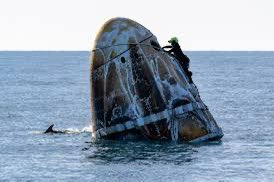
you hit the nail on the head in your question, it’s a trajectory thing as others have explained in the replies. blue’s New Shepard is suborbital (straight up, straight back down, ~Mach3 max) whereas Dragon is orbital (around the Earth and back into the atmosphere at ~Mach25). in both cases, there is a lot of friction and thus heating as the vehicle encounters the molecules in the atmosphere, first just a few but then many more as the atmosphere gets thicker closer to Earth. but the velocity of an object coming back from orbit is much higher than a suborbital object, as is the heating.
also, with respect to you and the authenticity of your question, be aware you may have confused people a bit with your use of the words “re-entry burns”. i suspect you were asking about the dark marks typically visible on orbital capsules, like your Dragon photo. the Blue capsule also must heat up as it comes back through the atmosphere and it likely has an ablative bottom surface, i.e. a heat shield, just like Mercury capsules did in decades past. (i don’t actually know since I’ve never worked for Blue, but it stands to reason.) i imagine you’d see evidence of ablation and dark streaks if you could see the underside of the Blue capsule. but the term “re-entry burn” typically refers to the firing of propulsive engines of an orbital object to slow it down enough that it falls back to Earth, and the choice and placement of materials keeps it intact as it heats up.
in my case, I came back to Earth at Mach3 a few times inside a different suborbital vehicle, VSS Unity, a spaceplane which did not have ablative materials or a capsule shape but it did have adequate insulation. (obviously - I’m alive and typing this 😂 ). and in a fun “on the shoulders of giants” way, the insulation on Unity’s leading edges was literally leftover from the space shuttle program! it was the white Felt Reusable Surface Insulation you can see on the top of the Orbiter fuselage and wings.
that’s probably more information than you wanted but hey, you asked for the nerd answer. :)
English

Can any space nerds help me understand how the Blue Origin capsule came back down without any re-entry burns?
Was this a trajectory thing or some kind of superior material used?
Falcon crew capsule for comparison

English


I just ordered 10 rose gold Teslas.
I will be giving all of these away to followers tonight at 8pm PST!
Like and comment to be entered into the raffle!

English
