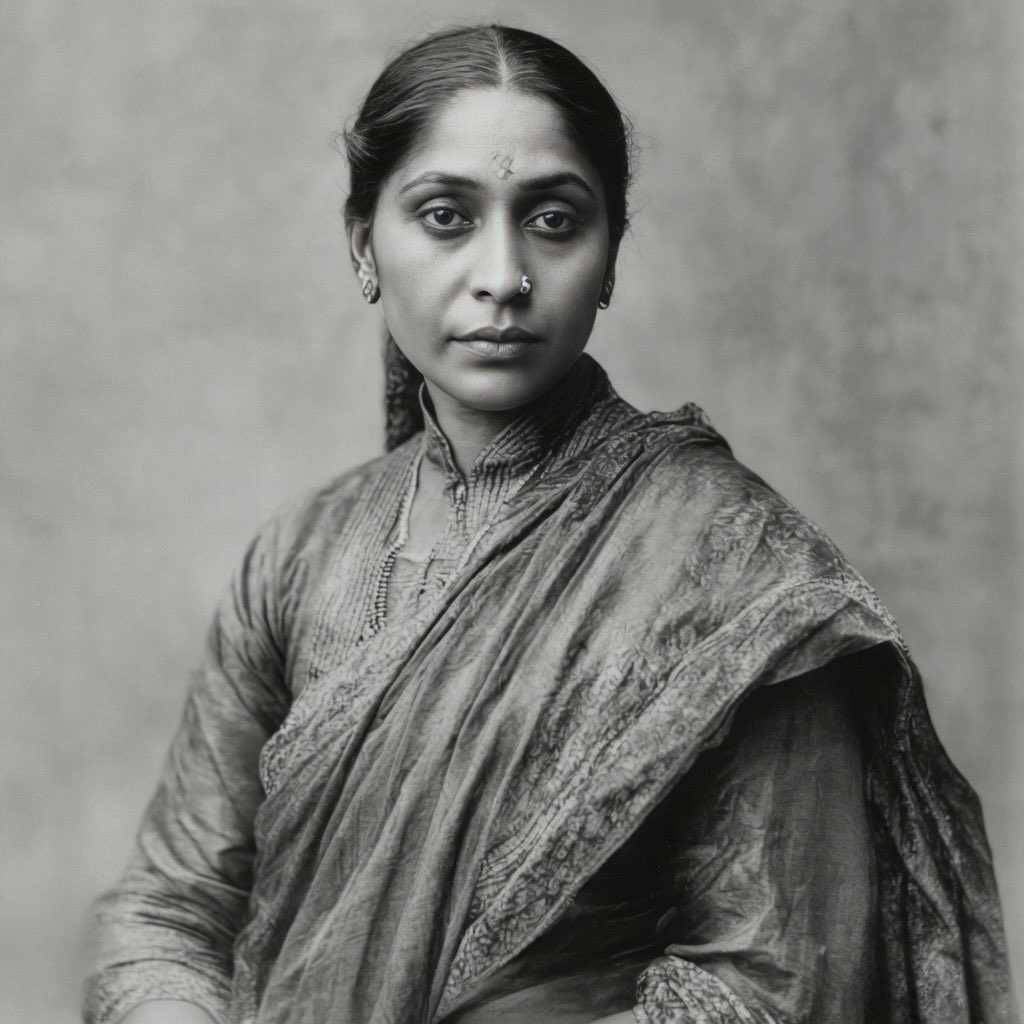
Her name was Rukhmabai Raut. She was born on November 22 1864 in Bombay. Her father, Janardhan Pandurang, died when she was very young. Her mother, Jayantibai, later married Dr Sakharam Arjun, an eminent physician and social reformer in Bombay. When Rukhmabai was 11 years old she was married to Dadaji Bhikaji, a 19 year old cousin of her stepfather. It was agreed that Dadaji would live in the household and be provided for while he pursued his education. He showed no interest in either. He fell into debt, moved to his uncle’s house and eventually demanded that Rukhmabai join him. She refused. She continued living with her mother and stepfather. She studied on her own using books borrowed from a church library. She attended social reform meetings. She had no intention of living with a man she had been given to as a child. In 1884 Dadaji sent a legal notice demanding she join him. The case went to court in 1885. During the hearings Rukhmabai wrote two letters to the Times of India under the pseudonym “A Hindu Lady.” She argued that a child cannot consent to marriage. She argued that no court should force a woman to live with a husband she was given to before she could understand what marriage meant. The first judgment went in her favour. The judge said he could not compel a young lady married in her “helpless infancy.” Dadaji appealed. The second judge ruled against her in 1887. He gave her one month to go to her husband. If she refused the punishment was six months in jail. She said she would rather go to jail. The case created a political storm across India and Britain. Indian reformers and British feminists petitioned Queen Victoria. Dadaji eventually accepted a payment of two thousand rupees and dissolved the marriage in 1888. The prolonged public battle around her case directly contributed to the Age of Consent Act of 1891, which raised the minimum age of consent for marriage from ten to twelve years. It was a small step. But it was the first time the law moved at all. Rukhmabai then left for England. She completed her medical degree at the London School of Medicine for Women. She returned to India in 1894 and joined the Women’s Hospital in Surat. She became India’s first practising woman doctor. She retired in Bombay and spent her later years writing against the practice of purdah and advocating for widows’ rights. She died on September 25 1955. She was 90 years old. Most Indians have never heard her name. Follow for stories India deserves to remember.