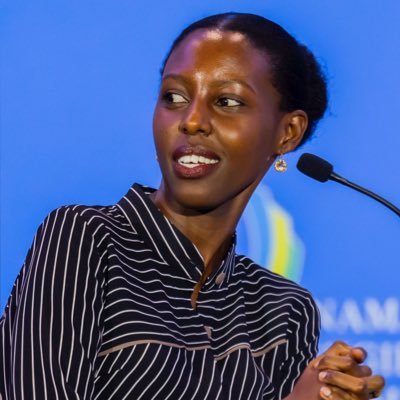
Hello, I’m Kayesu Allen.
After my own journey with loss, I learned that grief asks for a space- not to be fixed, but to be held. That’s why I’m starting Bloom After: a community where we can navigate grief together, without judgment.
#LifeAfterLoss#HealingInCommunity
1/2
Our very own Bâtonnier @Moisenkunda calls on every member to show up for YOUR AGM — where your presence matters and your voice counts.
This is your AGM.
Your voice.
Your Bar.
#RBAAGM2025
A newly admitted advocate?
Counting down to your very first AGM?
Welcome to the circle.
This is where voices meet vision, where careers take root, and where your journey at the Bar truly begins.
Step into the room.
Claim your voice.
Be part of the story.
@shiff__
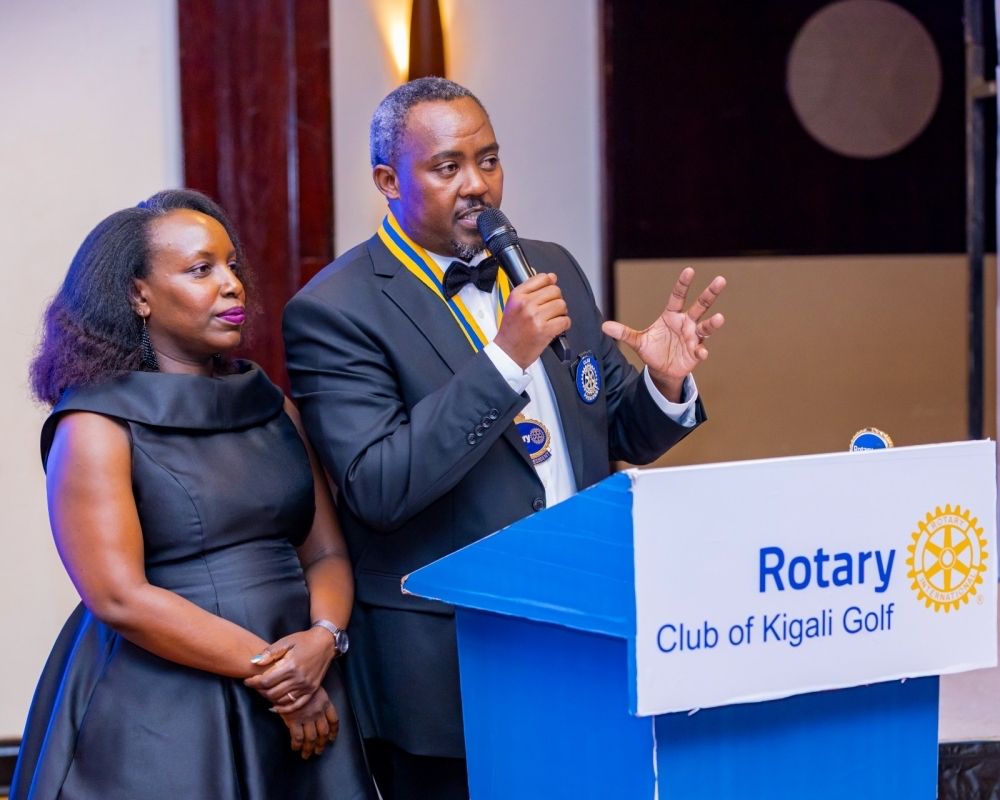
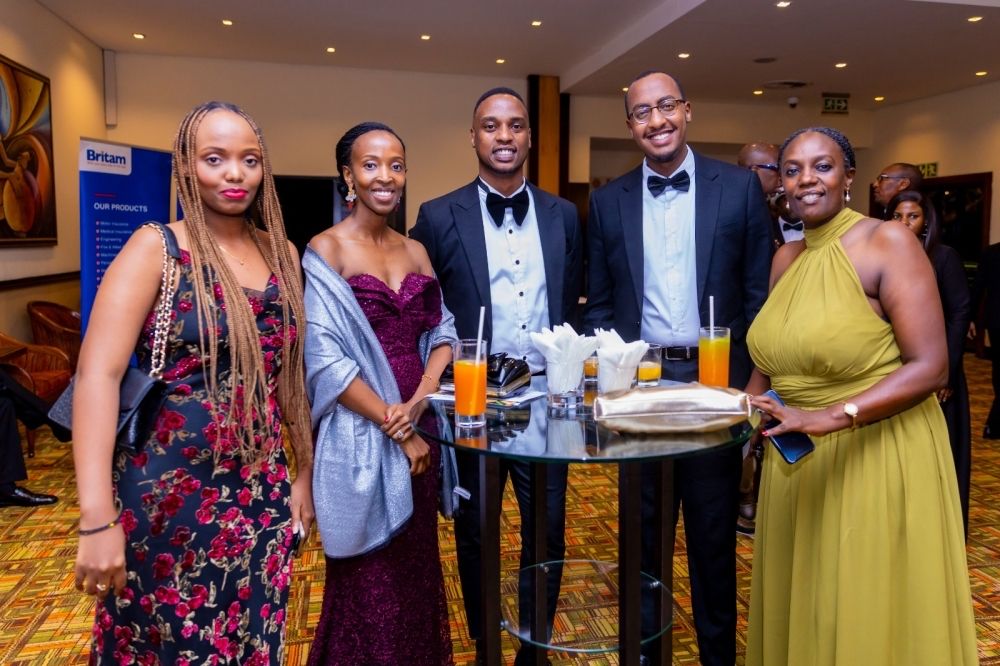
PHOTOS: The Rotary Club of Kigali Golf officially installed Andrew Kulayige as its second president on Saturday, succeeding Charter President Apollo Nkunda.
READ: newtimes.co.rw/article/27448/…
May 13, 1994
A sad day for the thousands of Tutsi who had sought refuge in the Bisesero hills. Interahamwe Militia from Bugarama, Rusizi, Ruhengeri, and Gisenyi who had finished the "work" (Genocide) in their respective regions came to support and camped near Bisesero.
The mobilization of militia in different parts of the country to kill Tutsi in Bisesero was a cabinet decision after being tabled by Minister Edouard Karemera.
Lt. Col. Anatole Nsengiyumva was tasked with finishing off Tutsi in Bisesero. They used heavy and small arms while Tutsi resisted with stones and spears.
Everyone gave their support: Women and children were in charge of stone collection. The men extended the lines down the hills to meet the Interahamwe and soldiers in order to protect their wives and children who were on the top of the hills.
On 13 May 1994, they went to block the militia, and heavy guns were placed on the hilltops surrounding Bisesero, resulting in the killing of women and children in large numbers.
Since then, it became "sauve qui peut."
Unlike other regions in Rwanda, where most genocide survivors are women and children, the majority of survivors in Bisesero are men and boys who were able to flee and hide in the hills. It is rare to find female survivors from Bisesero.
#Kwibuka31
#Kwibuka31
BAZIGA Germain (imyaka 10) na mushiki we BAZIGA Antoinette (imyaka 5) bene BAZIGA Eli w' i Nyanza. Muri génocide yakorewe Abatutsi
Nyina yabahunganye iwabo i Gitwe, abahutu b'abahezanguni niho babatsinze ku ya 25/04/1994,
BAHE IZINA N'ISURA BATAZAZIMA TURIHO!
Before you sleep read Isaiah 41:10, God says to us “Don't panic. I'm with you. There's no need to fear for I'm your God. I'll give you strength. I'll help you. I'll hold you steady, keep a firm grip on you” May God be protect, keep & shield us. May we wake up safe tomorrow.
On 11 April 1994, the Belgian contingent of UNAMIR withdrew from ETO Kicukiro, abandoning thousands of Tutsi to
slaughter by the killers surrounding them.
The Rwandan government soldiers and interahamwe then forcibly marched the Tutsi to Nyanza in Kicukiro, where they were systematically massacred using firearms, grenades, and machetes.
About 400 of them were children. #Kwibuka31
"You see, when you are talking about Rwanda, ganging up together against Rwanda, you think it's some country that is… And then I remember is, the facts about it. I just imagine the world has gone amok. But in the midst of all that, we have to live, we have to live our lives, we have to fight for that, we have to live the way we want. And I tell anybody to his face, to go to hell." - President Kagame
#Kwibuka31#RBANews
Editorial: gateteviews.rw
DEATH OF FOREIGN AID TO RWANDA:
Over all: Western Aid to Rwanda - including unaccounted money given to NGOs - does not exceed $500 Million.
Of it, only a third (30%), at best, trickles down to Rwandans, the rest lost in transactional costs, creating jobs for its “Administrators”, “Technical Advisors”, and western product manufacturers.
1. The “Agaciro” (Dignity), Our Sovereign Fund initiated in December 2011 to mitigate these types of situations, is today capitalized at over $1Billion. That’s MORE THAN DOUBLE of all the AID that Rwanda receives.
2. Our Bond too still has leeway to restructuring: meaning we can access more cash anytime we need it.
3. Rwanda’s GDP is $14B. Foreign Aid represents about 3.5% of that.
Rwanda has been consistently cutting foreign aid, and I predict this year was the last tranche of it that we received.
THE ONLY IMPACT OF AID IS NOISE!
- Rwanda also gives foreign aid to other countries and institutions:
When Canada cut aid to the Francophonie because they were bitter that our candidate had beaten theirs, we told “Mushikiwacu: Icecekere mama”, and mitigated that.
We do so in many other instances, (including giving aid to DRCongo when our relations are good) but you’ll never hear us cry out about it due to our culture.
RWANDA 2025 is “AID’s DEATH” and I invite every Western donor to its funeral.
On the agenda
- Phase out foreign young interns calling themselves: “technical advisors”;
- Phase out of unemployable Western laborers called “expats”;
- Phase out of imports of superfluous Western products to Rwanda
- Readjusting house rent in Kigali to benefit of Rwandas;
- Rwanda’s pursuit of its National goals without concessions and compromise;
Next, there should be two signs at the airport in bold letters that read:
1. “NO FOREIGN AID OR ASSISTANCE ALLOWED IN RWANDA”;
2. ONLY TRADE & INVESTMENTS ALLOWED
3. And MOST IMPORTANTLY: No one can ever, ever, ever call us “darling of the West” again!!
In the last month, Rwanda has shown you:
🔹The FDLR
🔹The European Mercenaries
🔹The offensive foreign forces
🔹The stockpiles of weaponry at our border.
Yet the world still downplays the gravity of the security threats we face. Why? Is it racism? Is it disdain? Is it a calculated geopolitical choice?
The only irrefutable proof left of the danger we face is our destruction. And it seems this is an acceptable outcome for many international actors. They will swoop in with something as truly useless as MONUSCO or another UNAMIR, then spend the next 20 years giving our people biscuits and cardboard.
One thing is certain: The Government of Rwanda will protect its people and everyone who lives here—resolutely and decisively. The question is not whether Rwanda will defend itself, but what must happen to prevent further escalation.
The answer is obvious. The root of this crisis lies in the DRC’s continued collusion with genocidal forces and its deliberate fueling of regional instability.
International actors must demand an immediate end to Kinshasa’s support for FDLR and associated extremist elements. The presence of offensive foreign forces in the region, operating under the guise of ‘peacekeeping,’ must be removed. Permanent security guarantees must also be established along our shared border.
Regarding the inter-Congolese conflict, dialogue between the DRC government and M23 is not only the most pragmatic approach but the only one that offers the prospect of lasting peace.
Anything short of this is a meaningless delay, a refusal to confront reality, and a failure to learn from history.