
Sabitlenmiş Tweet
ST
465.7K posts


ST
@shobz
MDX & QMUL Alum, DS extraordinaire, Serena Superfan, Music Lover.
Earth Katılım Mayıs 2007
1.2K Takip Edilen27.3K Takipçiler
ST retweetledi

Sure, sure, sure. It’s definitely about saving Christians and not about Nigeria becoming fuel-sovereign, producing 70 million liters a day, and expanding Dangote’s refinery capacity to 1.4 million barrels per day.
Got it.


Pete Hegseth@PeteHegseth
Yes sir. The killing of innocent Christians in Nigeria — and anywhere — must end immediately. The Department of War is preparing for action. Either the Nigerian Government protects Christians, or we will kill the Islamic Terrorists who are committing these horrible atrocities.
English
I remember when I first arrived, there was black mold in my bathroom, and the landlord tried to gaslight me, blaming me for it.
danny@d4nnytye
my landlord in final year of uni left us without a working fridge-freezer for a month because she was on holiday, put wallpaper over black mould, then tried to take £1000 off our deposit because of dust on the skirting boards. i don’t care what any tenant does
English

I want to write something so of course I have to restyle my blog before doing so. Please vote, left or right?
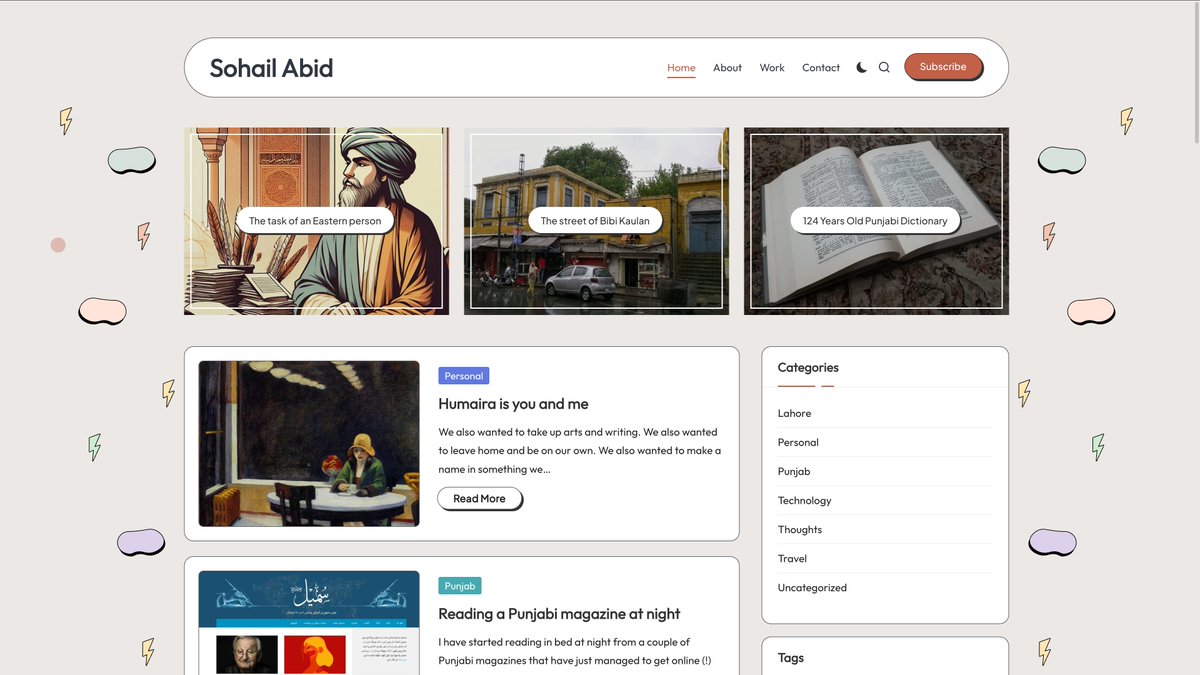

English
Reminds me of the time I caught a late train from Cambridge to London and some guys were fighting. It was a very stressful journey.
Mohammed Shafiq@mshafiquk
BREAKING NEWS: Cambridgeshire Police have said multiple people have been stabbed in an incident on a LNER train which was stopped at Huntingdon Station in Cambridgeshire and two arrests have been made.
English
ST retweetledi

The “vaccine enlarged my cousin’s balls” tweet wasn’t a give away?
Pop Fusion HQ@PopFusionHQ
Nicki Minaj has officially come out as a Donald Trump supporter. In a new tweet, she continues to express her support and gratitude toward him. Was Nicki Minaj a MAGA supporter all along — and if so, why were her fans accusing others of being MAGA?
English
ST retweetledi
I was actually wrong in my post below on the new tariffs on China after the Trump-Xi deal, because it looks like Trump lied with his "47% overall tariffs" figure.
The White House factsheet that was just released confirms that the "reciprocal tariff" (i.e. meaning the "Liberation Day" tariff) applied to China is now just 10%, the lowest applicable rate that I think only Singapore and the UK benefited from to date.
And when you pair this with the reduction of 10% of the so-called "fentanyl tariff", it effectively means that China's overall tariff rate is back to EXACTLY where things stood before Liberation Day (which I had calculated at 40.7%, see post below), which is pretty incredible when you think about it.
So Trump went through all that drama just to end up right where he was in late March.

Arnaud Bertrand@RnaudBertrand
Perhaps unsurprisingly, I haven’t seen many media outlets report accurately on the “deal” reached between Trump and Xi today, most forgetting to mention crucial aspects of it and almost all failing to contextualize the “47%” tariff figure quoted by Trump. Let me try to detail the deal as accurately as I can, drawing from sources from both sides (on the Chinese side I mostly used a China Ministry of Commerce statement issued today at 3pm Beijing time, so roughly 1 hour and a half after the “deal” was concluded: mofcom.gov.cn/xwfb/xwfyrth/a… and on the U.S. side I used statements by Trump himself and others present in the meeting). The key terms: 1. The U.S. will remove the so-called “50% rule” that it implemented in September for one year, in exchange of which China will suspend its rare earths export controls for one year The removal of the “50% rule” is absolutely key, yet almost no media reported it, only mentioning that China had agreed to suspend its rare earths export controls for one year. Worth mentioning that the removal of the “50% rule” has been confirmed by Bessent himself as of a couple of hours ago (reuters.com/world/china/us…) As a reminder the “50% rule” was THE main reason why China retaliated with the rare earths export controls. It was a huge escalation by the U.S. as it effectively increased the number of Chinese companies on the "Entity List" by 14 times (!), from 1,400 companies to 20,000 (x.com/RnaudBertrand/…). Meaning 14 times more Chinese companies cut off from the Western financial system, forbidden to use USD, etc. It was also the key trigger for the Nexperia debacle that’s currently occurring in Europe. The “50% rule” would have put Nexperia on the Entity List, and the U.S. told the Dutch that the only way Nexperia could escape U.S. sanctions was to get rid the Chinese ownership in the company (ft.com/content/db0198…), hence the Dutch’s move to seize the company away from its Chinese ownership almost simultaneously with the introduction of the “50% rule”. Unclear what will happen in this case now that the 50% rule has been dropped but logic would dictate that the company be given back to its rightful owners. Although, admittedly, expecting European legislators to act based upon logic is a tall order… 2. The US will drop its OVERALL tariffs on China to 47%, meaning that China now benefits from 16% tariffs as part of the "Liberation Day" tariff policy Of course Trump would mention the OVERALL number to make it sound like he didn’t cave on his liberation day tariffs but when one looks into the details, China actually negotiated him down to approximately 16% on his "Liberation Day" tariffs (down from the initial 34% and WAY down from the 125% peak), AND they got the so-called “fentanyl tariff” cut by half on top of that. How so? First of all, before Trump 2.0 even got inaugurated, tariffs on Chinese goods were already standing at a weighted average of 20.7% (source: piie.com/research/piie-…). Soon after taking office, in February and March (so before “Liberation Day”), Trump added 20% on top of that in the form of his so-called “fentanyl tariff.” So BEFORE “Liberation Day” the OVERALL tariffs on China were already 40.7%. Then on Liberation Day Trump added a 34% reciprocal tariff on top of that (so 74.7% overall tariffs), which he again escalated to 125% by April 10th after China retaliated. This brought the peak to 145% just from Liberation Day and fentanyl tariffs alone (or 165.7% including the pre-existing tariffs). The fact that the OVERALL rate is now down to 47%, given the fact that the deal includes a 50% reduction on the fentanyl tariff (from 20% down to 10%), means that China has now negotiated the Liberation Day down from 125% to about 16% since 20.7% + 10% fentanyl + 16% Liberation Day is approximately equal to 47% overall tariffs (well, 46.7% to be exactly precise). This means that when it comes to Liberation Day tariffs, China will stand roughly on par with the EU (who are at 15%: policy.trade.ec.europa.eu/news/joint-sta…) or South Korea (who also will likely be around 15%: bbc.com/news/articles/… ). 3. The US will suspend its hostile actions on China’s ships and shipbuilding industry, in exchange of which China will also suspend its retaliatory measures The US has agreed to suspend implementation of its so-called “301 investigation” measures against China's maritime, logistics and shipbuilding industry for one year, which was going to lead to massive port fees in the U.S. for Chinese-built and Chinese-operated vessels. In exchange China will also correspondingly suspend implementation of countermeasures against the US for one year: they had announced that, as retaliation, they too would start charging U.S. ships for docking at Chinese ports (reuters.com/business/autos… ) 4. Other parts of the deal TikTok: China mentions they agreed to "properly resolve" the TikTok issue which is probably diplomatic speak to say that it’s not resolved yet. Soybeans: China mentioned that “both sides reached consensus on expanding agricultural product trade” while Trump mentioned that China will buy 'tremendous' amount of soybeans, which all in all probably means that China agreed to resume buying U.S. soybeans (which they had stopped as retaliatory measures as leverage in the trade war). Fentanyl: Both sides agree on "anti-drug cooperation" regarding fentanyl - which is language that’s pretty boilerplate in US-China discussions, so probably nothing new there. “Handling of individual enterprise cases”: there is a pretty opaque language that suggests both sides discussed how to handle specific companies’ issues (Nvidia? Huawei? Nexperia?) and that they “reached consensus” on this. Future Summitry: Trump commits to visiting China in April 2026, with mutual support pledged for China's 2026 APEC hosting and America's G20 summit. This signals both sides expect the relationship to stabilize enough for Xi and Trump to meet several times in person in 2026. All in all, I would say that the key feature of this “deal” is the reciprocity and almost religious balance in every aspect: each concession matched by the other, each suspension mirrored. It shows we're now dealing with peer competitors who can effectively keep each other in check. You can see how immensely things have changed if you contrast this deal with Trump's so-called “Phase 1” agreement from his first term (ustr.gov/phase-one) with its unilateral Chinese commitments to buy American products and enact structural reforms to "rebalance" trade, with the U.S. warning it would “vigilantly monitor” Chinese compliance. All from an era when the US could still essentially dictate terms. None of that unequal framework survives here: instead of Washington trying to reform China based on its interests; all it can now do is learn to coexist with it. It’s still early days though, for instance the deal doesn’t mention fundamental issues such as Taiwan. This is clearly not a grand strategic reset but rather both powers trying to figure out the rules of engagement of our new multipolar reality. Xi Jinping mentioned in his introductory statement in the meeting that the U.S.-China relations was a “giant ship” going through “winds, waves and challenges” that needed to be “steadily sailed forward” by both leaders. That’s pretty much what this meeting was: the winds and waves are still there but at least both sides seem to acknowledge that they're now on the same ship.
English
Some late thoughts on the new US-India defense framework deal, which seems to have surprised some folks. Worth noting there’s been continued US-India cooperation (including joint mil exercises) even amid the serious tensions of recent months. Also, it didn’t come out of nowhere-
English
ST retweetledi

It’s so much deeper than anyone understands. Here is Robert Maxwell, Ghislaine’s father with Prince Charles and Prince William in the early 80s. Robert was outed as a Mossad/KGB double agent and mysteriously died off his yacht, the Lady Ghislaine a week later.
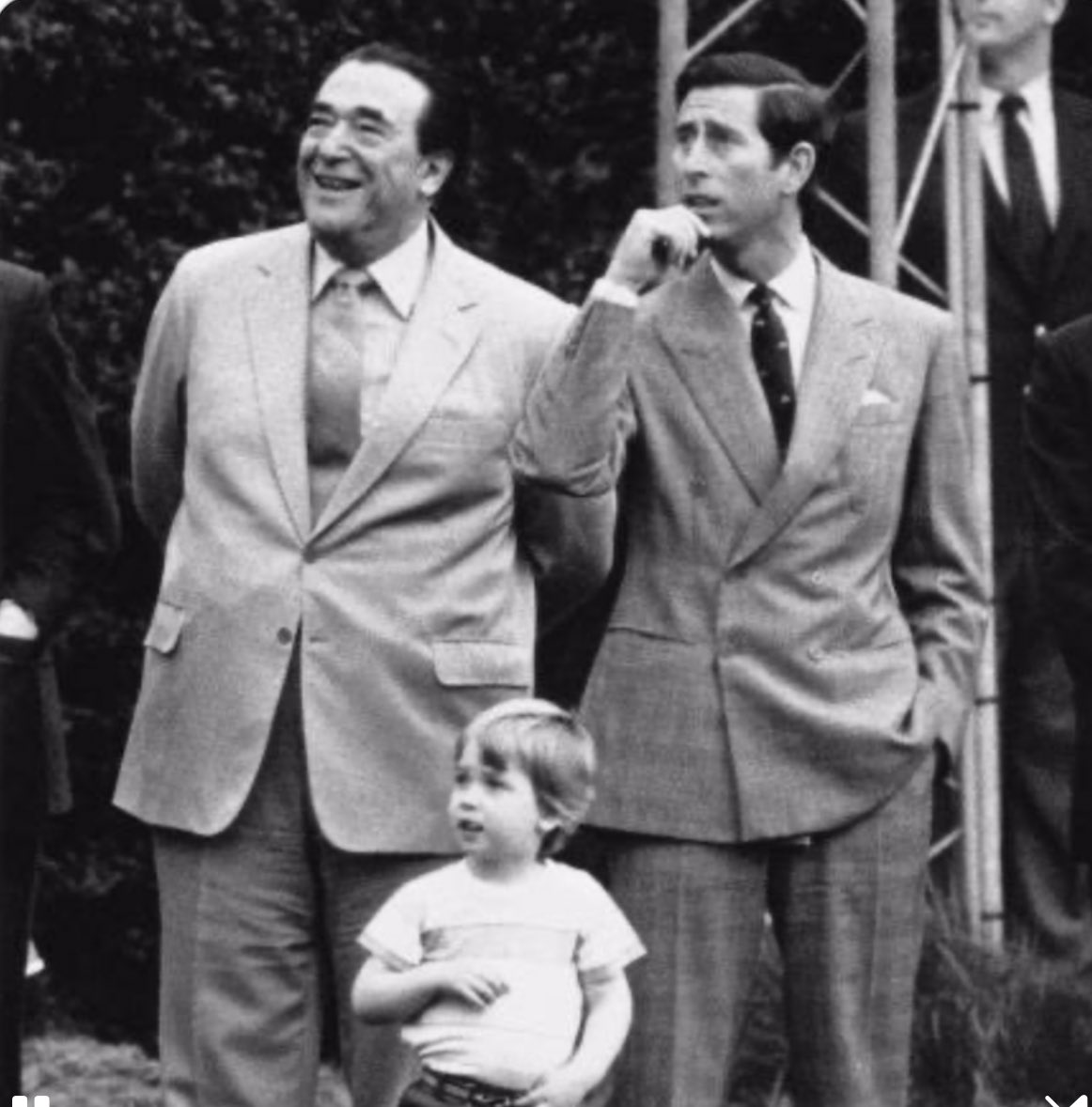
Amber Woods @ Amber Speaks Up@AmberWoods100
Stripping a Prince of his title is not justice — it’s PR. Call him Andrew whatever you want now. I’m more interested in hearing: “The investigation is now criminal.”
English
ST retweetledi

Bill Maher: A number of the members of the administration are now living on a military base. Stephen Miller just moved there. Kristi Noem lives on a military base. Rubio. Pete Hegseth. For people who love America so much, they seem to be scared of it.
Marjorie Taylor Greene: I'm one of those people they call a conspiracy theorist. When I hear things like that, I'm like, what do they know that I don't know?
English
Reminds me so much of Julia Fox in that grief influencer episode
TMZ@TMZ
Erika Kirk Breaks Down in Tears While Watching Video of Charlie in New Interview tmz.me/jt47IhP
English