Sabitlenmiş Tweet
Siddhesh Lokare | Social Impact & Empowerment
788 posts

Siddhesh Lokare | Social Impact & Empowerment
@sidiously_
I build schools for a living :)
Mumbai Katılım Nisan 2020
137 Takip Edilen500 Takipçiler

I made a video of a farmer using ChatGPT. Two months later… ChatGPT invited him to speak on a panel.
A few days ago, I met Wable Kaka.
I visited his farm.
And what I saw stayed with me.
He uses AI for:
• Harvesting decisions
• Understanding crops
• Weather forecasting
• Even branding his farm
A 10th fail farmer…
using prompt engineering in Marathi, voice commands, and asking better questions than most of us.
What started as a simple brand collaboration…Turned into something else.
That video reached 20 lakh+ people.
It brought him recognition. Connected him to farmers across the country.
And somewhere… it changed how people saw him.
Then something unexpected happened.
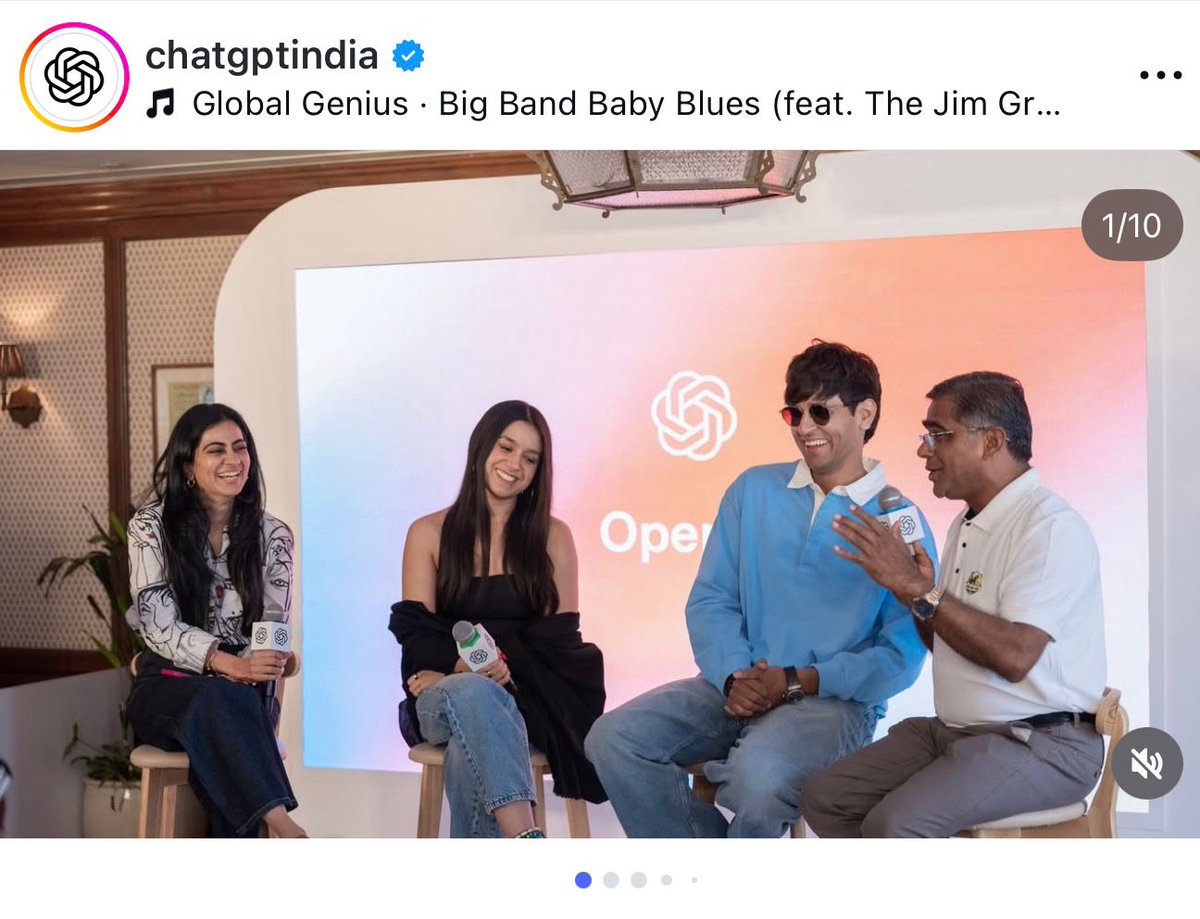
I got a call from the ChatGPT team.
They wanted to host both of us at Soho House, Juhu, for an exclusive event with creators like AevyTV, Larissa, Ishan Sharma and more.
Wable Kaka got on stage. And within minutes… He owned the room.
With his humour, his honesty, and his stories with AI.
And his dream of becoming India’s AI-powered farmer.
The room didn’t just listen. It felt proud.
And then, in the most Wable Kaka way possible…
He fed everyone, OpenAI team, creators, everyone, fresh guavas from his farm.
That’s when it hit me.
Content doesn’t just reach people.
It changes how people are seen.
It takes a story that was invisible…
And puts it on a stage it always deserved.

English

I want to retire a phrase - "Giving back to society."
Every second corporate CSR presentation. Every influencer campaign. Every celebrity fundraiser.
"We believe in giving back."
Giving back implies you took something first.
Most people who say this, haven't.
They were born into whatever circumstances they were born into.
They worked. They built something. They have money now.
That's not taking. That's living.
The phrase creates a guilt-charity cycle that produces donations but not systems change.
Real social impact is not about giving back.
It's about paying forward to a system that exists beyond your individual life.
It's about recognizing that your success exists in a context where others had no access to the same opportunities.
And deciding to do something about that context. Not just drop money into it.
I'm not being pedantic about language.
I'm saying the way we frame this determines what we're willing to build.
"Giving back" builds checkbooks.
"Paying forward" builds institutions.
India needs more of the second.
English

I’ve raised crores for causes. And I’ve also seen crores… disappear into silence.
That’s the part nobody talks about.
The hardest part isn’t the work.
It’s the messages that come after:
“I donated to that NGO you shared.”
“Where did my money go?”
And I didn’t have an answer.
That destroyed me.
Because I had put my face, my credibility, my community’s trust on it.
And somewhere… accountability broke.
India spends over ₹25,000+ crore every year in CSR alone.
Add crowdfunding and individual giving…
We’re talking about tens of thousands of crores flowing annually.
But there’s still no standard way to track where your ₹100 actually goes.
No real-time visibility. No clear closure.
At the same time, campaigns with storytelling raise 2–4x more funds.
So we’ve become very good at raising money.
But not equally good at showing impact.
And over 70% of donors today say trust and transparency decide whether they give.
Which means the real gap is not awareness.
It’s accountability.
That gap is why I built Kindly.club .
India’s first influencer-led fundraising platform where:
• Your donation has a traceable journey
• You get real-time updates
• There is zero ambiguity
Because whether it’s ₹100 or ₹1 lakh…
You deserve to know what changed.
The question I kept asking myself was simple:
“What would make ‘me’ donate without hesitation?”
The answer wasn’t emotion.
It was clarity.
So I built that.
English

The children came back to school… but the school wasn’t there anymore.
I visited this school in Kawadgaon, Beed.
The village had just faced its worst flood in nearly 20 years.
Water had risen up to almost 15 feet.
This wasn’t just flooding.
This was everything being taken away at once.
That’s where I met Sarthak.
He showed me what used to be his school.
Empty classrooms. No books. No materials.
Only a blackboard left behind.
By the time he reached home that day, everything was gone,
clothes, food, their sugarcane farm.
At his house, there was a strange silence.
Not grief. Just acceptance that they have to start again.
And still, the children came back.
Not just to study.
But to clean. Rebuild. Restart.
The best part is, Sarthak wants to become a police officer one day.
He told me this with a wide smile.
He quietly believes life will move forward.
Standing there, I realised,
sometimes the strongest response doesn’t come from systems.
It comes from children who refuse to stop showing up.
English

Earlier, donating meant effort. Today, it takes literally 10 seconds.
Scan a QR.
Enter ₹100.
And you’ve contributed.
That shift has quietly changed how India gives.
India now processes 10+ billion UPI transactions every month.
And that same system is powering donations.
Platforms like Ketto, Milaap, GiveIndia have made giving:
Instant, frictionless, accessible
₹100 from 10,000 people can still create impact.
And fundraising in that way has become achievable.
Storytelling is what drives it.
Campaigns with strong stories raise 2–4 times more funds.
Because people don’t donate to causes.
They donate to stories they understand.
COVID accelerated this shift.
Campaigns started scaling in hours, not weeks.
Content + digital payments = speed of impact.
But this ease has also changed expectations.
Over 70% of donors now care about transparency.
People want to know what changed.
India didn’t just digitise payments.
It digitised kindness.
Now the real question is:
If giving is this easy…
Can impact keep up?
Tell me what you think.
P.S.: I realised it when the community made our most unrealistic campaign successful.

English

You won’t believe this… but this school feels like it exists inside a spaceship.
From outside, this Dhangar Vasthi School in Jamkhed, looks like any other rural school.
But inside, the walls are filled with space, robots, stories.
A classroom that doesn’t feel like a classroom.
It feels like imagination has taken shape.
And behind it all is one teacher, Borate Sir.
This wasn’t always like this. It was just a structure before.
Over time, with consistency and care, he transformed it into something powerful.
He hasn’t taken a day off in years.
Not because he has to… but because this is where he wants to be.
And you can feel it.
In the students.
In their curiosity.
In the way they learn beyond their age.
Standing there, one thing became clear,
The difference between an average school and an extraordinary one…
is sometimes just one teacher who refuses to be ordinary.
Because this isn’t just a school.
It’s a space where children learn to imagine beyond their surroundings.
English

People see the final video.
The smiles. The impact. The “result.”
They don’t see the rest. And honestly… that’s okay.
They don’t see bruised legs that still had to walk another 5 km.
They don’t see broken ankles wrapped and hidden behind frames.
They don’t see the heat that burns your skin in the afternoon…
or the rains that don’t stop when you still have one last story to shoot.
They don’t see the nights when someone you love is unwell…
and you still show up because someone else’s story is waiting to be told.
They don’t see 3am drives…
200 kgs of supplies in the back…
random villages… no network… just faith that we’ll figure it out.
They don’t see accidents.
They don’t see police stations.
They don’t see the govt offices.
They don’t see the darkest places we’ve quietly stood in…
just to make sure the light reaches there.
And they’re not supposed to.
Because this was never about showing how hard it is.
It was always about making sure…
that the people we show…
never have to go through it again.
But today, just for a moment…
I wanted to say this out loud.
Not for sympathy.
Not for validation.
Just… truth.
We’re tired sometimes.
We break sometimes.
We question sometimes.
But we still show up.
Every single time.
Because somewhere out there…
someone’s story deserves to be seen.
And if it costs us a little more…
we’re okay with that.
Always have been.


English

Very few creators are ACTUALLY happy with their managers and I am glad I fall in this category.
It’s very important to have a manager —
- who listens to your boundaries and acts accordingly
- who is intuitive with your wealth goals
- who goes beyond what he/she is supposed to do
- who is neither a YESMAN or a naysayer

English

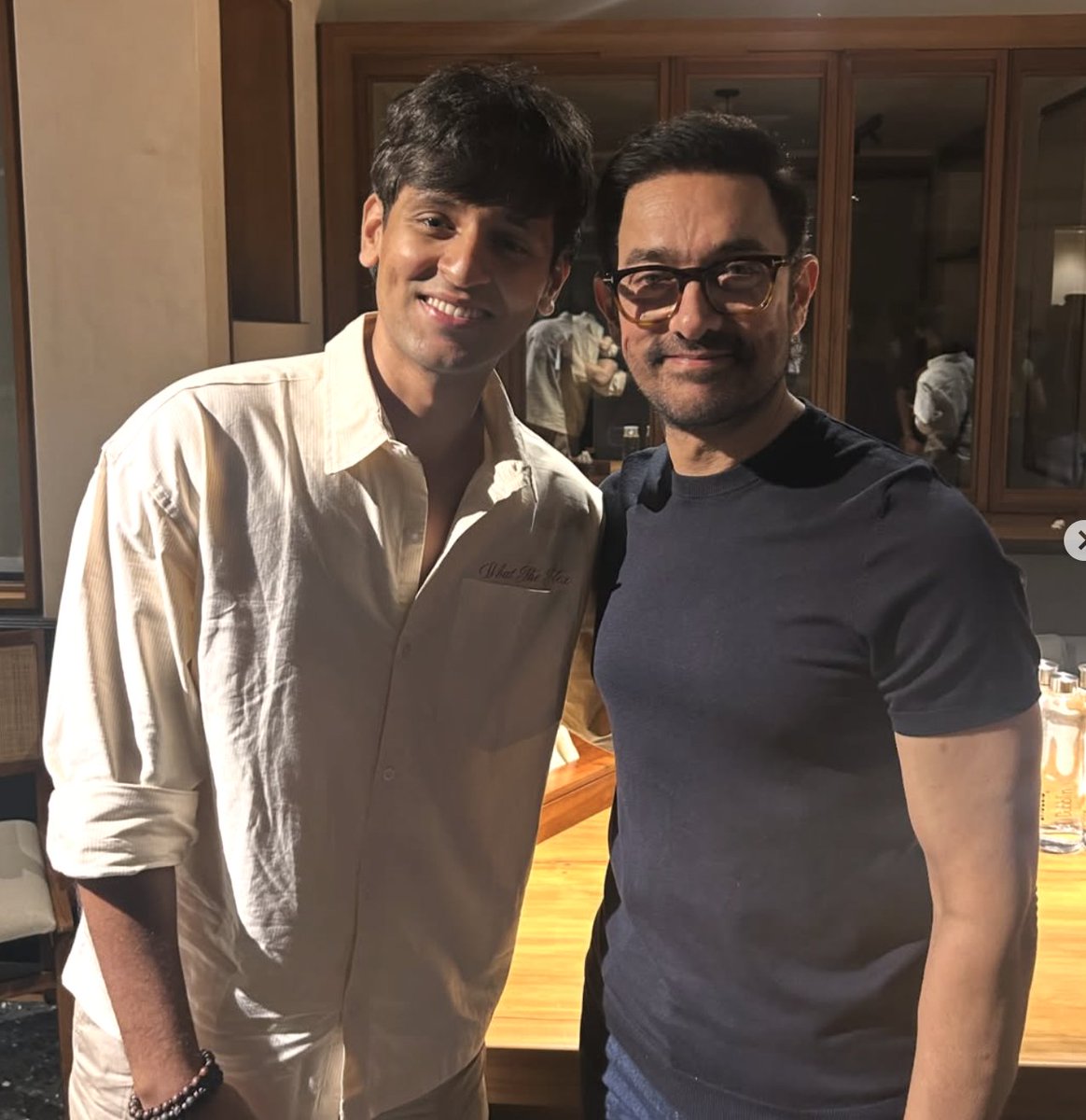
3 observations after I spent time with Amir Khan last evening:
1. He remembers names of the people he has worked 10 years ago. I mean LITERALLY!
2. I know all the memes etc, BUT he is honestly and inherently sensitive to emotions he can openly express in front of small/large groups.
3. He listens, not because he is supposed to, but because he truly wants to.
I realised Mr.perfectionist is not just a title. It's a responsibility he carries everyday while openly failing.

English

In this small village school, children write with both hands.
Different tables. At the same time.
I saw a little girl filling her slate from left and right hands like it’s the most normal thing in the world.
And behind it all, one teacher who believes education should multiply teachers, not just marks.
These are farmers’ children. They clean their own utensils. They learn discipline before theory.
We often talk about “untapped potential.”
And, I saw it, fully alive.
English

Dear NGOs, start creating content. At this point, it’s a humble request.
I’ve seen one Instagram story raise more attention than months of silent work.
And that’s when I understood what content really does.
A lot of NGOs think content is marketing.
It’s not.
It’s documentation of impact.
It’s proof that the work is real.
Today, visibility matters more than ever.
In fact, 85% of nonprofits say proving impact is a top priority for attracting donors, and 70% of funders look for evidence of actual impact before they give.
I’ve been closely observing crowdfunding platforms.
Two campaigns can have the same urgency. Same cause. Same need.
But the one that tells its story better often performs better.
I’ve also noticed something else.
Campaigns that keep sharing small, real updates tend to build more trust.
That’s not just intuition. Research on crowdfunding shows that campaign updates can be more strongly linked to success than the original campaign description itself.
Because people aren’t just donating.
They are watching. Following.
They are becoming emotionally invested in the outcome.
And that changes behaviour.
Digital giving itself has grown sharply, with Blackbaud reporting 20% year-over-year growth in online giving in its charitable giving reporting.
I’ve seen organisations go from being known in one village
to being recognised across the country.
Nothing changed in their work.
Only one thing changed.
They started telling their story.
And maybe that’s the real lesson.
English

so i built at that intersection. content × culture × change.
founder — kindly.club, director — create together foundation, host — just kidding with sid (where kids steal the spotlight)
this time, i’m not just posting. i’m building impactful narratives..
let's build
English