Single Broker

257 posts

Single Broker banner
Single Broker

Single Broker

@singlebrokerage

CeDeFi's platform integrates CEXs, DEXs, DeFi tools, secure storage, and fiat OnRamp. Simplifying crypto asset portfolio management.

Switzerland Katılım Mayıs 2023
108 Takip Edilen17.2K Takipçiler
Single Broker
Single Broker@singlebrokerage·
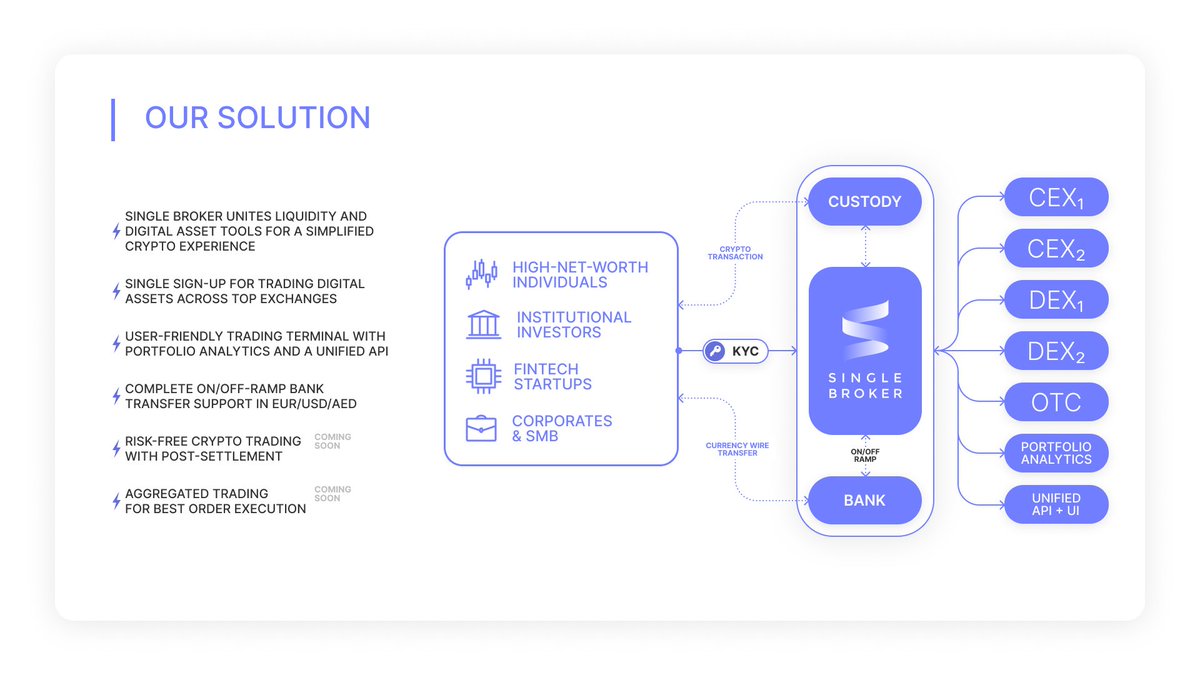
Tired of juggling multiple platforms, APIs, wallets, and compliance checks? SingleBroker changes the game by offering a unified platform that brings together everything professional traders and institutions need to operate in crypto - securely, efficiently, and at scale. Here's what you get with SingleBroker: ⚡ Single sign-up for access to top CEXs, DEXs & OTC ⚡ Full custody with integrated bank support (EUR / USD / AED) ⚡ Unified API and trading terminal with advanced portfolio analytics ⚡ Seamless fiat on/off-ramps and liquidity aggregation ⚡ Future-ready features like risk-free post-settlement trading (coming soon) One platform. Full control. Institutional-grade. singlebroker.com
Single Broker tweet media
English
1
0
0
306
Single Broker
Single Broker@singlebrokerage·
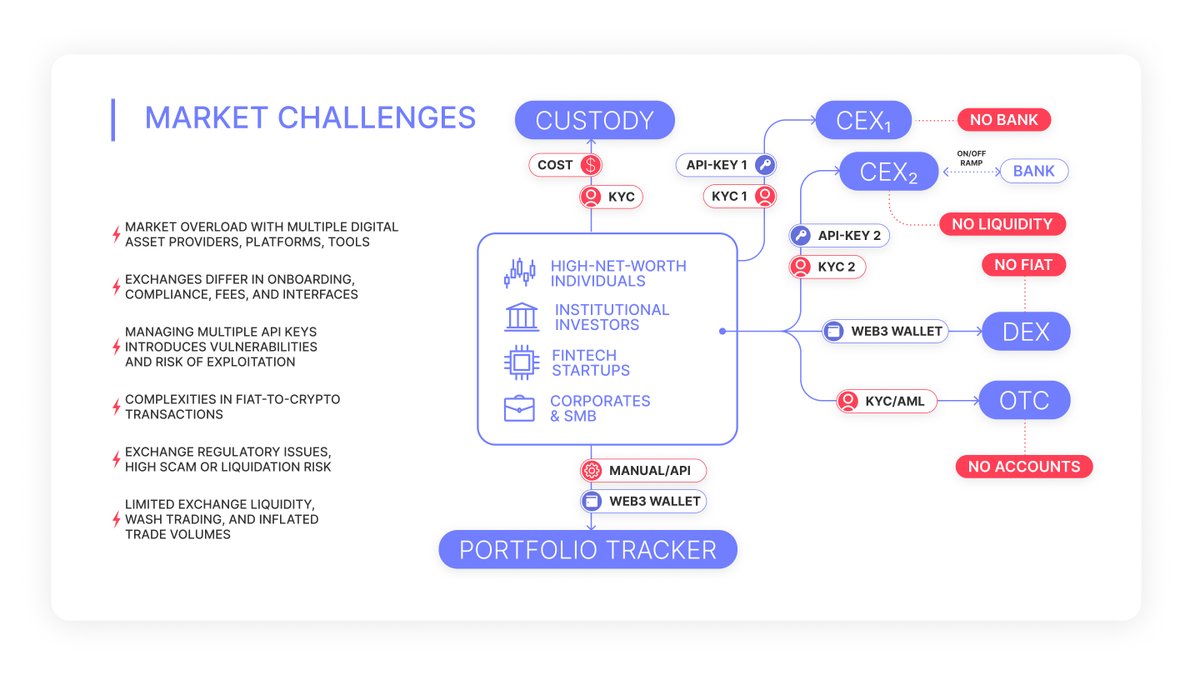
Challenges of managing digital assets, and how we're solving them The crypto market is fragmented, complex, and full of inefficiencies: ⚡ Multiple platforms, providers, and tools create operational chaos ⚡ Exchanges vary in fees, onboarding, and compliance ⚡ Managing multiple API keys increases security risks ⚡ Fiat-to-crypto transactions remain slow and cumbersome ⚡ Liquidity issues, wash trading, and inflated volumes create uncertainty At SingleBroker, we believe institutional investors and professional traders deserve a smarter way to manage digital assets. Our platform streamlines access to centralized and decentralized exchanges, simplifies liquidity management, and eliminates the complexity of fragmented trading infrastructures. A single interface. A unified trading experience. The future of digital asset management starts here: singlebroker.com
Single Broker tweet media
English
0
0
0
185
Single Broker
Single Broker@singlebrokerage·
What is Lending and Borrowing in Crypto? Crypto lending and borrowing have revolutionized traditional financial practices by introducing decentralized finance (DeFi) innovations. Let's explore these concepts in more detail. Lending in Crypto Imagine you have some cryptocurrency sitting idle in your digital wallet. Instead of letting it gather virtual dust, you can lend it out through various platforms to earn interest. This process involves depositing your tokens into a platform's liquidity pool, which then becomes available for others to borrow. The interest you earn depends on the demand for those specific assets. For example, platforms like Aave and Compound allow users to lend their crypto assets and receive interest in return. Suppose you have 10,000 USDC (a stablecoin pegged to the US dollar). By lending it on a platform like Aave, you can earn interest, which fluctuates based on the borrowing demand for USDC. This way, your idle assets generate passive income. Borrowing in Crypto Borrowing allows you to access liquidity without selling your valuable crypto holdings. For instance, if you own a significant amount of Ethereum (ETH) and anticipate its value will rise, you might not want to sell it. Instead, you can use your ETH as collateral to borrow other assets like stablecoins. This method enables you to meet immediate cash needs or invest elsewhere without relinquishing your ETH holdings. Platforms such as Aave and Compound facilitate this process by allowing users to borrow against their crypto collateral. You have 5 ETH and need $5,000 for an investment. By locking your ETH as collateral on a platform like Compound, you can borrow the required amount in stablecoins, all while retaining ownership of your ETH. Overcollateralization In the crypto world, assets are volatile. To protect lenders, borrowers are often required to provide collateral that exceeds the loan amount - a practice known as overcollateralization. This means if you want to borrow $1,000, you might need to lock up $1,500 worth of another cryptocurrency. This system safeguards the lender in case the value of the collateral drops. However, borrowers must monitor their collateral's value closely; if it falls too much, the platform may automatically liquidate the collateral to cover the loan. This automated process leaves little room for negotiation. You lock up $1,500 worth of Bitcoin to borrow $1,000 in stablecoins. If Bitcoin's value declines significantly, and your collateral's value drops below a certain threshold, the platform will automatically sell your Bitcoin to repay the loan. Flash Loans Flash loans are a unique feature in DeFi, allowing users to borrow funds without collateral, provided the loan is repaid within the same blockchain transaction. If not repaid instantly, the transaction reverses as if it never happened. This tool is particularly useful for arbitrage opportunities, debt refinancing, or swapping collateral. For example, Aave offers flash loans, enabling users to execute complex strategies without upfront capital. A trader notices a price difference for a token across two platforms. They can use a flash loan to borrow funds, buy the token at a lower price on one platform, sell it at a higher price on another, repay the loan within the same transaction, and pocket the profit - all in one go. Credit Delegation Credit delegation allows a lender to permit a trusted third party to borrow against their collateral. It's akin to extending a line of credit to someone you trust, without involving a traditional bank. This mechanism is beneficial for institutions aiming to deploy capital efficiently without managing individual loans. Aave's credit delegation feature enables users to delegate their borrowing power to others, facilitating more flexible financial arrangements. A company with substantial crypto holdings wants to support a partner's project. By using credit delegation, they allow the partner to borrow funds against their collateral, providing liquidity without directly handing over assets. Risks and Considerations While crypto lending and borrowing offer exciting opportunities, they come with risks: - Smart Contract Vulnerabilities DeFi platforms operate on smart contracts - self-executing contracts with the terms directly written into code. Bugs or vulnerabilities in these contracts can be exploited, potentially leading to significant losses. It's crucial to choose platforms that have undergone rigorous security audits and have a strong reputation. - Market Volatility The crypto market is known for its rapid price swings. A sudden drop in the value of your collateral can trigger liquidations, resulting in unexpected losses. For example, during market downturns, many borrowers have faced liquidations due to the declining value of their collateral. - Regulatory Uncertainty The regulatory environment for cryptocurrencies is continually evolving. Changes in regulations can impact the operations of lending and borrowing platforms, potentially affecting your assets. Staying informed about the legal landscape in your jurisdiction is essential. Major Crypto Lending and Borrowing Platforms Several platforms have become popular for crypto lending and borrowing, each with its own features. Here’s a straightforward overview: 1. Aave Aave is a decentralized finance (DeFi) protocol that allows users to lend and borrow cryptocurrencies without intermediaries. Operating on multiple blockchains, including Ethereum and Avalanche, Aave offers features like flash loans and credit delegation, enhancing flexibility for users. A user can deposit DAI into Aave’s liquidity pool to earn interest or borrow ETH by providing collateral, all through a decentralized platform. 2. Compound Compound is another DeFi protocol enabling users to earn interest on their crypto holdings or borrow assets against them. Interest rates on Compound adjust algorithmically based on supply and demand, ensuring efficient capital utilization. By supplying USDC to Compound, a user can earn variable interest and use the supplied assets as collateral to borrow other cryptocurrencies. 3. MakerDAO MakerDAO is the creator of DAI, a decentralized stablecoin pegged to the US dollar. Users can generate DAI by locking up collateral, such as ETH, in MakerDAO’s smart contracts, effectively allowing them to borrow against their crypto assets. Locking ETH in a Maker Vault enables a user to mint DAI, providing liquidity without selling their ETH holdings. 4. Nexo Nexo is a centralized platform offering instant crypto loans and interest-earning accounts. Users can borrow against their crypto assets without selling them and earn daily interest on their holdings. Depositing BTC into Nexo allows a user to receive a loan in USD or stablecoins, with interest rates depending on the loan-to-value ratio. 5. Binance Loans As part of the Binance ecosystem, Binance Loans provides crypto lending services with flexible terms. Users can borrow various cryptocurrencies by providing collateral from their existing Binance holdings. A Binance user can collateralize BNB to borrow USDT, choosing from flexible loan terms and interest rates. 6. OKX OKX is a cryptocurrency exchange that also offers lending and borrowing services. Users can access loans in various cryptocurrencies, with flexible interest rates and terms. An OKX user can lend USDT at a fixed rate or borrow BTC by providing collateral, depending on their investment strategy. 7. CoinRabbit CoinRabbit is a crypto lending platform that provides instant loans without credit checks. Users can borrow stablecoins against their crypto assets with flexible terms. By depositing DOGE as collateral, a user can quickly obtain a loan in USDT, with the option to repay at their convenience. 8. Abra Abra is a digital asset platform offering crypto lending, borrowing, and trading services. Users can earn interest on their crypto holdings and access loans using their assets as collateral. An Abra user can deposit BTC to earn interest or borrow USD against their BTC holdings for other investments. In conclusion, crypto lending and borrowing have transformed traditional financial mechanisms by leveraging blockchain technology. While they offer innovative ways to manage and utilize digital assets, it's vital to approach them with a clear understanding of the associated risks and conduct thorough research before participating.
Single Broker tweet media
English
1
0
1
116
Single Broker
Single Broker@singlebrokerage·
Margin Trading is Live on SingleBroker! 💥 We're taking trading to the next level - margin trading is now available on ByBit, with Binance support coming soon. Trade spot markets with up to 10x leverage on most instruments, unlocking new possibilities for your trading strategies. Whether you're optimizing capital efficiency, hedging risk, or amplifying potential returns, SingleBroker gives you the tools to execute with precision. Stay ahead of the market - margin trading is here.
Single Broker tweet media
English
0
0
0
129
Single Broker
Single Broker@singlebrokerage·
SingleBroker goes mobile📱 We're excited to announce the release of the mobile version of SingleBroker trading platform, now with PWA (Progressive Web App) support! You can install the app directly on your device for seamless access to digital asset markets anytime, anywhere. Enjoy the full suite of features, including: unified access to centralized and decentralized exchanges, 3000+ trading pairs, fund allocation tools, deep portfolio analytics and OTC access. Your favorite all-in-one CeDeFi trading platform, now in the palm of your hand.
English
0
0
0
203
Single Broker
Single Broker@singlebrokerage·
Liquid Staking: best of both worlds Liquid staking bridges the gap between rewards and liquidity, addressing one of the biggest drawbacks of traditional staking - frozen assets. Normally, when you stake assets, they're locked up and inaccessible until the staking period ends. With liquid staking, you receive a tokenized representation of your staked assets — essentially, a derivative — that can be traded, lent, or reinvested while still earning staking rewards. For example, platforms like Lido Finance or Rocket Pool allow users to stake assets like ETH and receive liquid tokens (e.g., stETH for Ethereum) in return. These liquid tokens can be used in other decentralized finance (DeFi) applications. This way, you can participate in additional yield-generating strategies or manage liquidity needs without waiting for the unstaking period to end. Liquid staking has redefined the "slow and steady" approach, as it introduced a middle ground between traditional staking's reliability and DeFi's flexibility. In essence, liquid staking combines the steady rewards of traditional staking with the freedom to move and use your assets. This flexibility makes it especially attractive for institutions. It allows capital to remain productive across multiple strategies while mitigating the opportunity cost of staking. However, the use of derivatives introduces counterparty risk, as these tokens depend on the reliability of the liquid staking platform. Thus, rigorous due diligence is critical here.
English
0
0
0
101
Single Broker
Single Broker@singlebrokerage·
Liquidity Mining: the power play Liquidity mining is a specific type of yield farming where you provide liquidity to decentralized exchanges (DEXs) and earn rewards in native protocol tokens, along with a slice of trading fees. This dual income stream can make liquidity mining incredibly lucrative, especially in high-volume pools. But this is not for the faint-hearted, as it requires expertise and constant oversight. Managing smart contracts, monitoring token price volatility, and evaluating risks like slippage become full-time activities here. Thus, a liquidity mining strategy is essentially like managing a mini-hedge fund - big rewards, yes but you need to stay sharp and involved to mitigate the risks. As you can see, 'plain' staking is the easiest to implement as it requires minimal setup, while liquidity mining is the most complex. On the yield side of things, liquidity mining leads in potential returns with dual income streams, whereas staking offers lower but more predictable yields, like a typical conservative choice.
English
1
0
0
117
Single Broker
Single Broker@singlebrokerage·
Staking vs. Restaking vs. Yield Farming vs. Liquidity Mining When it comes to putting idle crypto assets to work, big players have several options to choose from - staking, restaking, liquid staking yield farming, liquidity mining. While they might sound similar, each has its quirks, risks, and potential rewards. Let's break them down ⬇️
Single Broker tweet media
English
1
0
0
178
Single Broker
Single Broker@singlebrokerage·
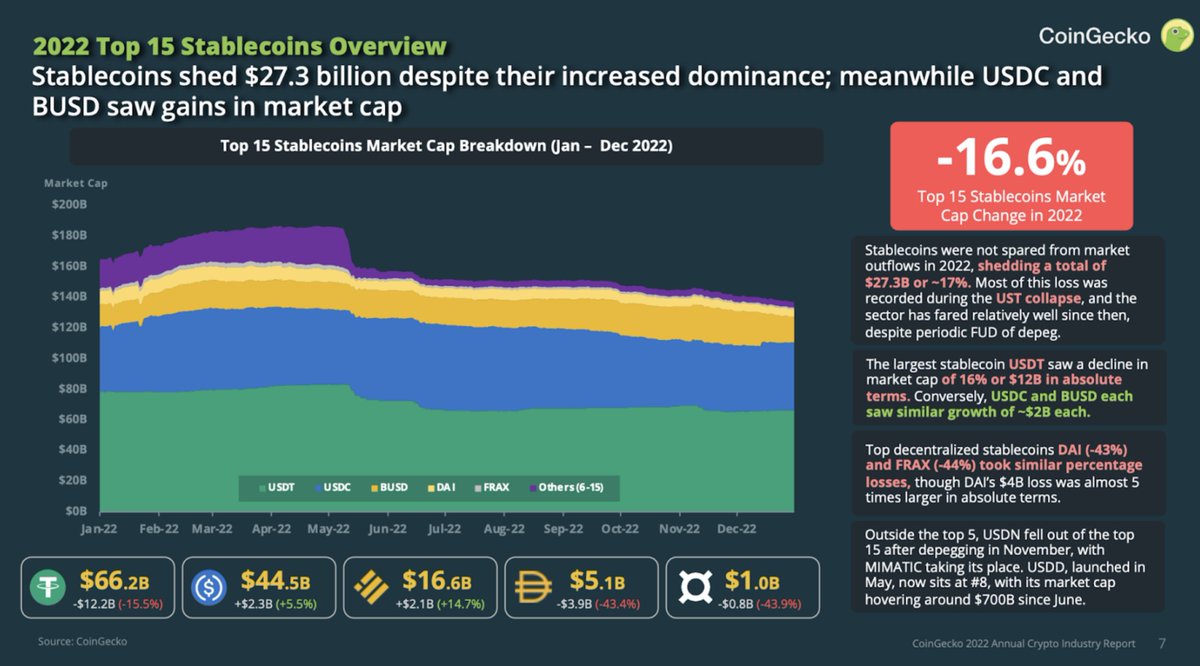
Looking back further, 2022 was marked by turmoil; stablecoins had shed $27.3 billion in market cap, primarily due to the collapse of UST and related depegging fears. Despite these losses, traditional stablecoins like USDT and USDC cemented their role as safe havens during market downturns – a role they continue to play today. Even as some yield-bearing stablecoins in 2024 are outflowing, traditional options remain a reliable volatility hedge for wealth managers and funds. As the competition among yield-generating stablecoins heats up, the potential for innovative stable investment products remains strong.
Single Broker tweet media
English
0
0
0
89
Single Broker
Single Broker@singlebrokerage·
This milestone underscores a recovery trajectory following the challenges of prior years. In 2023, USDT dominance surged by 22%, with a $25.5 billion gain in market cap; meanwhile, USDC and BUSD experienced sharp declines as investor confidence fluctuated. The broader stablecoin market saw a 5% overall decline that year but held firm as new entrants like FDUSD entered the scene.
Single Broker tweet media
English
1
0
0
105
Single Broker
Single Broker@singlebrokerage·
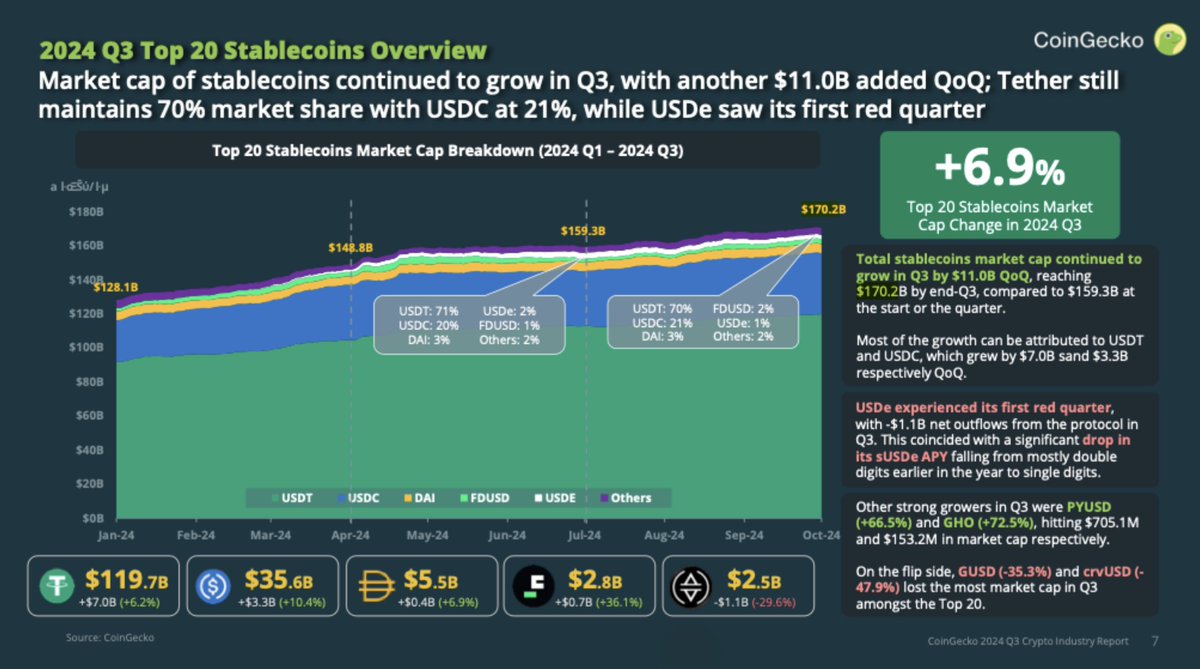
Stablecoins Hold Steady Amid Volatility If you thought crypto was all volatility, think again. CoinGecko's report shows the stablecoin market cap reaching $170.2 billion in Q3, with Tether (USDT) and USDC leading the pack.
Single Broker tweet media
English
2
1
1
167
Single Broker
Single Broker@singlebrokerage·
How to Stake Staking doesn't have to be complicated, but it does require a bit of planning and attention. Whether you're using a centralized platform or taking full control with decentralized tools, the key is finding a setup that fits your goals and resources. Here's how to get started - and make the most of it. 1. Choose a PoS Network. First things first: pick a blockchain. Not all PoS networks are created equal, so look for one that aligns with your objectives. Are you after security and scale? Ethereum 2.0 is the obvious choice. Want efficiency and speed? Cardano or Solana might be your answer. But don't just chase rewards — evaluate the network's stability, tokenomics, and ecosystem maturity. 2. Decide: Centralized or Decentralized. Here's your first big decision: do you want simplicity or control? Centralized platforms: if you're looking for ease, platforms like Binance, Coinbase or Figment do most of the work for you. They handle validator selection, technical setup, and even offer features like partial unstaking or tokenized derivatives of your staked assets. It's plug-and-play, which is perfect if you're not ready to dive deep into the tech. Decentralized platforms: prefer to roll up your sleeves? Decentralized wallets like MetaMask (for Ethereum) or Daedalus (for Cardano) let you take the reins. This route demands more effort - setting up wallets, choosing validators - but you get complete autonomy over your assets. If your firm has regulatory constraints or just prefers self-custody, this might be the way to go. 3. Delegate or Operate a Validator. The next step determines how hands-on you want to be. Operating a validator node: want full control? Running your own validator node is the ultimate DIY approach. You'll handle staking operations, collect all the rewards, and manage everything from infrastructure to uptime. Obviously, this approach isn't for everyone. It requires technical expertise, constant maintenance, and a serious commitment to infrastructure. So, it's best suited for institutions with dedicated blockchain teams. Delegating to a validator: most institutions go this route. Delegation means handing off the operational load to an existing validator. All you need to do is choose a trustworthy, high-performing validator and let them do the heavy lifting. This is straightforward, reliable, and frees you up to focus on optimizing your returns rather than troubleshooting downtime. 4. Stake Your Tokens. Now comes the easy part. Use your chosen platform or wallet to lock your tokens into the staking mechanism. The specifics depend on the network - some might require just a few clicks, while others need a bit more of a setup. Be sure to double-check the lock-up periods or withdrawal terms, so you're not caught off guard later. 5. Monitor and Optimize. Staking isn't a "set it and forget it" game, especially for institutional players. After you stake, keep an eye on your performance metrics: is your validator maintaining high uptime? Are your rewards consistent? Use dashboards or analytics tools to track your position and make adjustments when needed. If you're delegating, stay on top of your validator's performance - they can make or break your returns. Also, keep an ear to the ground for protocol updates. Networks often tweak their staking rules or introduce new features, so staying informed keeps you both safe and competitive.
Single Broker tweet media
English
0
0
0
104
Single Broker
Single Broker@singlebrokerage·
𝗨𝗽𝘀𝗶𝗱𝗲𝘀 𝗼𝗳 𝗦𝘁𝗮𝗸𝗶𝗻𝗴 Staking offers several benefits for institutional players: - 𝗖𝗼𝗻𝘀𝗶𝘀𝘁𝗲𝗻𝘁 𝗬𝗶𝗲𝗹𝗱. Rewards from staking provide predictable returns, often higher than those from traditional financial instruments. - 𝗦𝘂𝗽𝗽𝗼𝗿𝘁𝗶𝗻𝗴 𝘁𝗵𝗲 𝗡𝗲𝘁𝘄𝗼𝗿𝗸. By staking, participants actively contribute to the blockchain’s security and decentralization. - 𝗜𝗻𝗳𝗹𝗮𝘁𝗶𝗼𝗻 𝗛𝗲𝗱𝗴𝗲. Staking rewards, often paid in native tokens, can counterbalance inflationary pressures within the network. - 𝗘𝗰𝗼𝘀𝘆𝘀𝘁𝗲𝗺 𝗜𝗻𝗰𝗲𝗻𝘁𝗶𝘃𝗲𝘀. Some PoS networks grant governance rights or additional bonuses to stakers, increasing long-term value. The main tradeoff is that requires assets are often locked for a predefined period – this could be anywhere from weeks to years. During this period, the assets cannot be moved or sold. This lock-up creates some considerations for institutional players: 𝗟𝗶𝗾𝘂𝗶𝗱𝗶𝘁𝘆 𝗖𝗼𝗻𝘀𝘁𝗿𝗮𝗶𝗻𝘁𝘀. Tokens locked in staking are unavailable for other opportunities, such as trading or collateral for lending. 𝗠𝗮𝗿𝗸𝗲𝘁 𝗧𝗶𝗺𝗶𝗻𝗴 𝗥𝗶𝘀𝗸𝘀. Staked tokens are vulnerable to market fluctuations. If prices drop during the lock-up period, participants may face unrealized losses without the option to exit. 𝗣𝗼𝗿𝘁𝗳𝗼𝗹𝗶𝗼 𝗜𝗺𝗽𝗮𝗰𝘁. A lack of liquidity can impact broader portfolio strategies; for large players, it’s essential to balance staked and liquid assets to maintain flexibility. A relatively new way to mitigate this is liquid staking – a type of staking where you receive tradable tokens representing your staked assets. These derivatives can be traded and otherwise utilized as full-on crypto assets in their own right. Look to platforms like Lido Finance or Rocket Pool for some of the most reliable liquid staking offers.
Single Broker tweet media
English
0
0
0
103
Single Broker
Single Broker@singlebrokerage·
What is Cryptocurrency Staking? Staking is the practice of earning passive income by locking up cryptocurrency in a wallet or platform to support the operations of a blockchain that uses Proof of Stake (PoS) consensus or its variants. Prominent PoS networks include Ethereum 2.0, Cardano, Polkadot, Solana, Avalanche, and Tezos. In return for committing assets to the network, participants earn rewards, typically in the form of additional tokens. For institutional players, staking offers a reliable mechanism for generating yield while contributing to the security of the blockchain. How Staking Works Proof of Stake (PoS) blockchains select validators based on the amount of cryptocurrency they’ve staked. These validators confirm transactions and secure the network while committing their tokens as collateral. Unlike Proof of Work (PoW), which relies on energy-intensive computational power, PoS uses financial incentives, making it faster and more energy-efficient. Validators face penalties like "slashing" if they act maliciously, which is how the system remains healthy. Staking can be done in two ways: - Run a Validator Node: gives full control over staking operations but requires technical expertise, dedicated hardware, and 24/7 uptime. Best for institutions with in-house blockchain teams. - Delegate to a Validator: simpler option preferred by most institutions. Assign tokens to an existing validator who manages the technical side and shares the rewards. This approach minimizes complexity while still earning reliable returns. The above apply to staking directly on a blockchain. For even more convenience, staking can be done through a centralized brokerage like Binance, Coinbase for retail users, or Figment for institutional – these platforms handle all technicals, so the staker can focus on their yield-generating strategies.
Single Broker tweet media
English
0
0
0
92
Single Broker
Single Broker@singlebrokerage·
𝗢𝗻-𝗖𝗵𝗮𝗶𝗻 𝗠𝗲𝘁𝗿𝗶𝗰𝘀 𝗘𝘃𝗲𝗿𝘆 𝗖𝗿𝘆𝗽𝘁𝗼 𝗧𝗿𝗮𝗱𝗲𝗿 𝗦𝗵𝗼𝘂𝗹𝗱 𝗧𝗿𝗮𝗰𝗸 On-chain analysis has become an essential tool for professional traders and institutional investors. By examining blockchain data, traders can gain valuable insights into market trends, investor behavior, and the overall health of a blockchain network. Here are some key on-chain metrics that every crypto trader should monitor: 𝗔𝗰𝘁𝗶𝘃𝗲 𝗔𝗱𝗱𝗿𝗲𝘀𝘀𝗲𝘀 The number of active addresses interacting with a blockchain provides a clear indicator of user engagement and network activity. An increase in active addresses often signals growing interest and participation, which can be a precursor to price movements. Conversely, a decline may indicate waning interest or consolidation phases. 𝗧𝗿𝗮𝗻𝘀𝗮𝗰𝘁𝗶𝗼𝗻 𝗩𝗼𝗹𝘂𝗺𝗲 Monitoring the total value of assets being transferred on a blockchain helps assess the level of economic activity. High transaction volumes can reflect increased usage and demand, potentially leading to price appreciation. Low volumes might suggest reduced interest or a stagnant market. 𝗘𝘅𝗰𝗵𝗮𝗻𝗴𝗲 𝗜𝗻𝗳𝗹𝗼𝘄𝘀 𝗮𝗻𝗱 𝗢𝘂𝘁𝗳𝗹𝗼𝘄𝘀 Tracking the flow of assets to and from exchanges can provide insights into potential buying or selling pressure. Large inflows to exchanges may indicate that holders are preparing to sell, while significant outflows could suggest accumulation and intent to hold assets off-exchange. 𝗪𝗵𝗮𝗹𝗲 𝗛𝗼𝗹𝗱𝗶𝗻𝗴𝘀 Analyzing the distribution and balances of large holders, or “whales”, can reveal market sentiment among major investors. An increase in whale holdings might indicate confidence in the asset, whereas a decrease could signal potential sell-offs. 𝗠𝗮𝗿𝗸𝗲𝘁 𝗩𝗮𝗹𝘂𝗲 𝘁𝗼 𝗥𝗲𝗮𝗹𝗶𝘇𝗲𝗱 𝗩𝗮𝗹𝘂𝗲 (𝗠𝗩𝗥𝗩) 𝗥𝗮𝘁𝗶𝗼 The MVRV ratio compares an asset’s market capitalization to its realized capitalization (the value of all coins at the price they were last moved). An MVRV ratio above 1 suggests that the asset is overvalued, while a ratio below 1 indicates it may be undervalued. This metric helps in assessing market tops and bottoms. 𝗦𝘁𝗮𝗯𝗹𝗲𝗰𝗼𝗶𝗻 𝗦𝘂𝗽𝗽𝗹𝘆 𝗼𝗻 𝗘𝘅𝗰𝗵𝗮𝗻𝗴𝗲𝘀 The amount of stablecoins held on exchanges can serve as a gauge for potential buying power. A high stablecoin balance proposes that traders have capital ready to deploy into other cryptocurrencies, potentially leading to upward price movements. By integrating these on-chain metrics into their analysis, traders can make more informed, data-driven decisions, enhancing their ability to navigate the complex crypto markets effectively.
English
0
0
1
122
Single Broker
Single Broker@singlebrokerage·
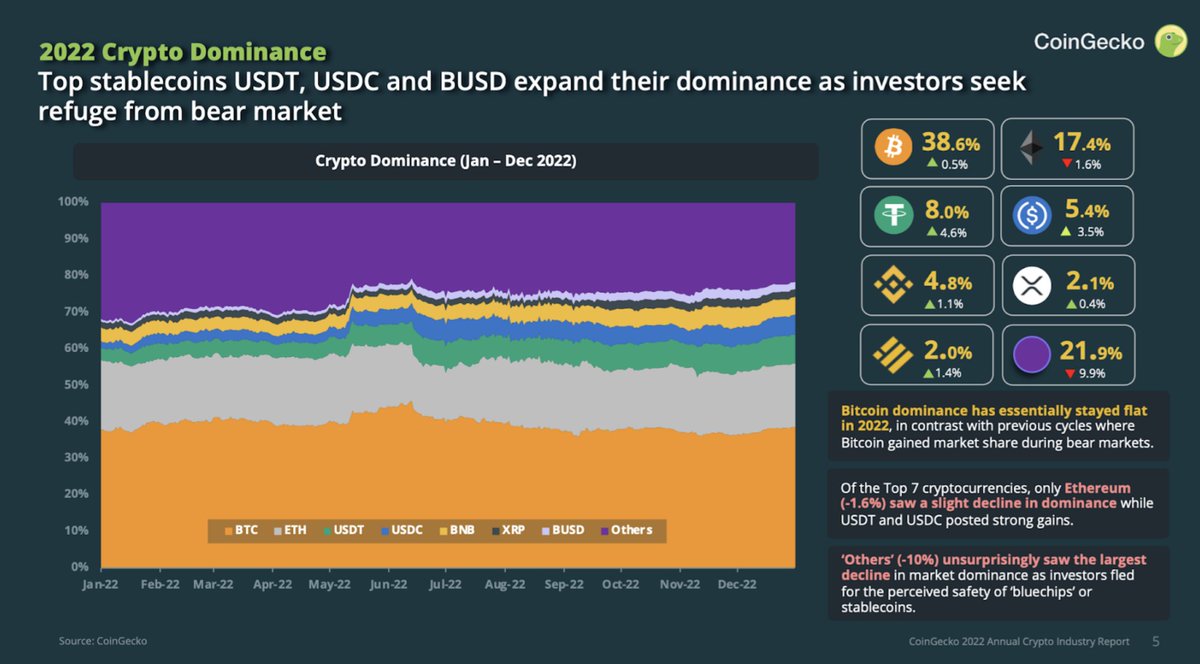
This trend solidifies BTC's “safe haven” status in crypto – a quality that stood out during the volatility of 2022 when its price dropped by 64.2%. Bitcoin’s role as a market bellwether became even clearer in 2023, with its correlation to total crypto market cap at 0.97 and a notable 155% annual gain – more than other asset classes could say. These metrics reinforce BTC as a cornerstone for asset managers and HNW investors seeking lower-risk crypto exposure amid market jitters. With that in mind, Bitcoin in 2024 is likely to remain a vital part of any well-diversified portfolio.
Single Broker tweet media
English
0
0
0
65
Single Broker
Single Broker@singlebrokerage·
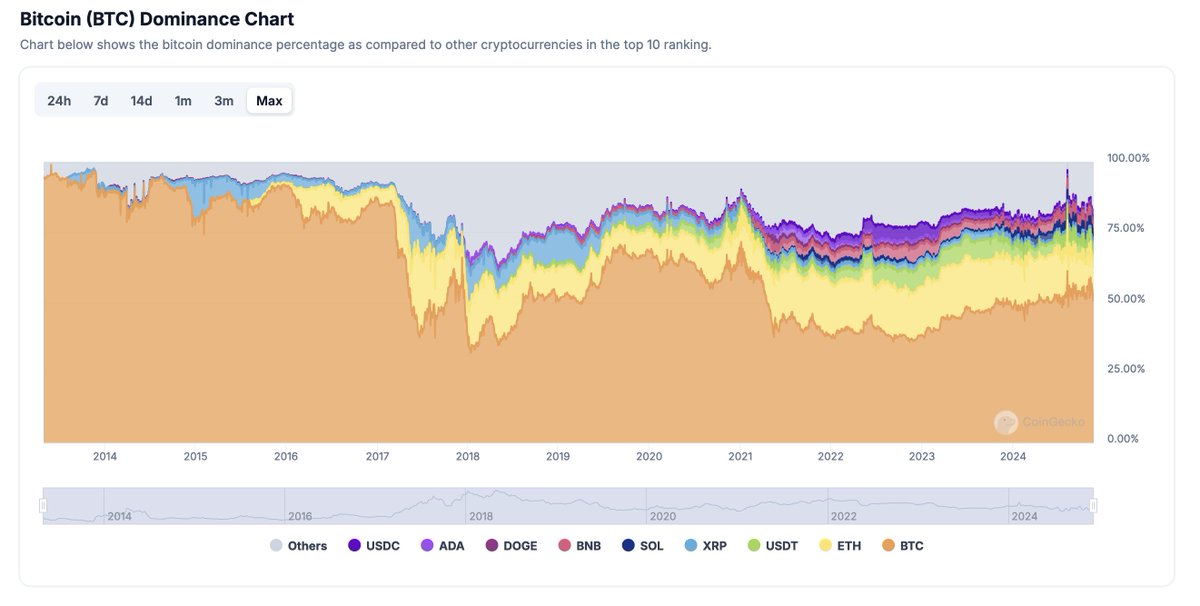
This rise builds on the impressive recovery seen in 2023, when Bitcoin dominance surged by 9.2%, climbing to 47.8% after a year of relative stagnation in 2022, when its dominance remained flat even during a prolonged bear market.
Single Broker tweet media
English
1
0
0
77
Single Broker
Single Broker@singlebrokerage·
Bitcoin’s Market Reign Strengthens Bitcoin continues to assert its dominance in the cryptocurrency market, maintaining a substantial share of the total market capitalization over the years. While the crypto space has evolved with new players like Ethereum, SOL, BNB, USDT, and others carving out their niches, Bitcoin’s foundational role and widespread adoption keep it firmly at the top. Recent trends even show a resurgence in Bitcoin’s dominance, signaling its resilience and unmatched position in the digital asset ecosystem.
Single Broker tweet media
English
1
0
0
218