Skymaps | The Evening Sky Map

5K posts

Skymaps | The Evening Sky Map banner
Skymaps | The Evening Sky Map

Skymaps | The Evening Sky Map

@skymaps

Publishing The Evening Sky Map since January 2000. A free, easy-to-use 2-page monthly all-sky map & sky calendar of celestial events for sky watchers worldwide.

Adelaide, Australia Katılım Mayıs 2008
186 Takip Edilen10.9K Takipçiler
Skymaps | The Evening Sky Map
🌒 The thin crescent Moon appears close to Mars over the next few hours. The pair is visible in the pre-dawn sky with closest approach around 22h UT on May 14th. To spot Mars, look for the bright red "star" a few degrees from the Moon. 🔭 May 2026 events: skymaps.com/skycalendar/
English
1
2
8
202
Skymaps | The Evening Sky Map
🌒 🪐 The waning crescent Moon appears close to Saturn over the next few hours. The pair is visible in the pre-dawn sky with closest approach around 18h UT on May 13th. To spot Saturn, look for the bright yellow "star" a few degrees from the Moon. 🔭 #stargazing
English
0
2
4
190
Skymaps | The Evening Sky Map
🌗 Last Quarter Moon occurs at 21:13 UT (now) on 9 May 2026. This Moon phase marks the onset of dark moonless evening skies -- a great time to enjoy #stargazing. Go to skymaps.com/tesm/ to download The Evening Sky Map (PDF) and treat yourself to an evening under the stars!
Skymaps | The Evening Sky Map tweet media
English
0
2
11
260
Skymaps | The Evening Sky Map
The Eta Aquariid meteor shower peaks in the pre-dawn hours of 6 May 2026. Most active for 7 days around this date. Produces very fast, bright meteors, up to 50 per hour. Best seen from the tropics and southern hemisphere. Moonlight adversely impacts meteor visibility in 2026. 🔭
English
0
3
3
321
Skymaps | The Evening Sky Map
🌖 The Moon will reach apogee (farthest from Earth) at 22h UT (now) on 4 May 2026. At this time the Moon's distance from Earth will be 405,839 km or 252,177 miles and span an angular size of 29.4 arc-minutes. 🔭 May 2026 Sky Calendar: skymaps.com/skycalendar/
Skymaps | The Evening Sky Map tweet media
English
0
5
15
468
Skymaps | The Evening Sky Map
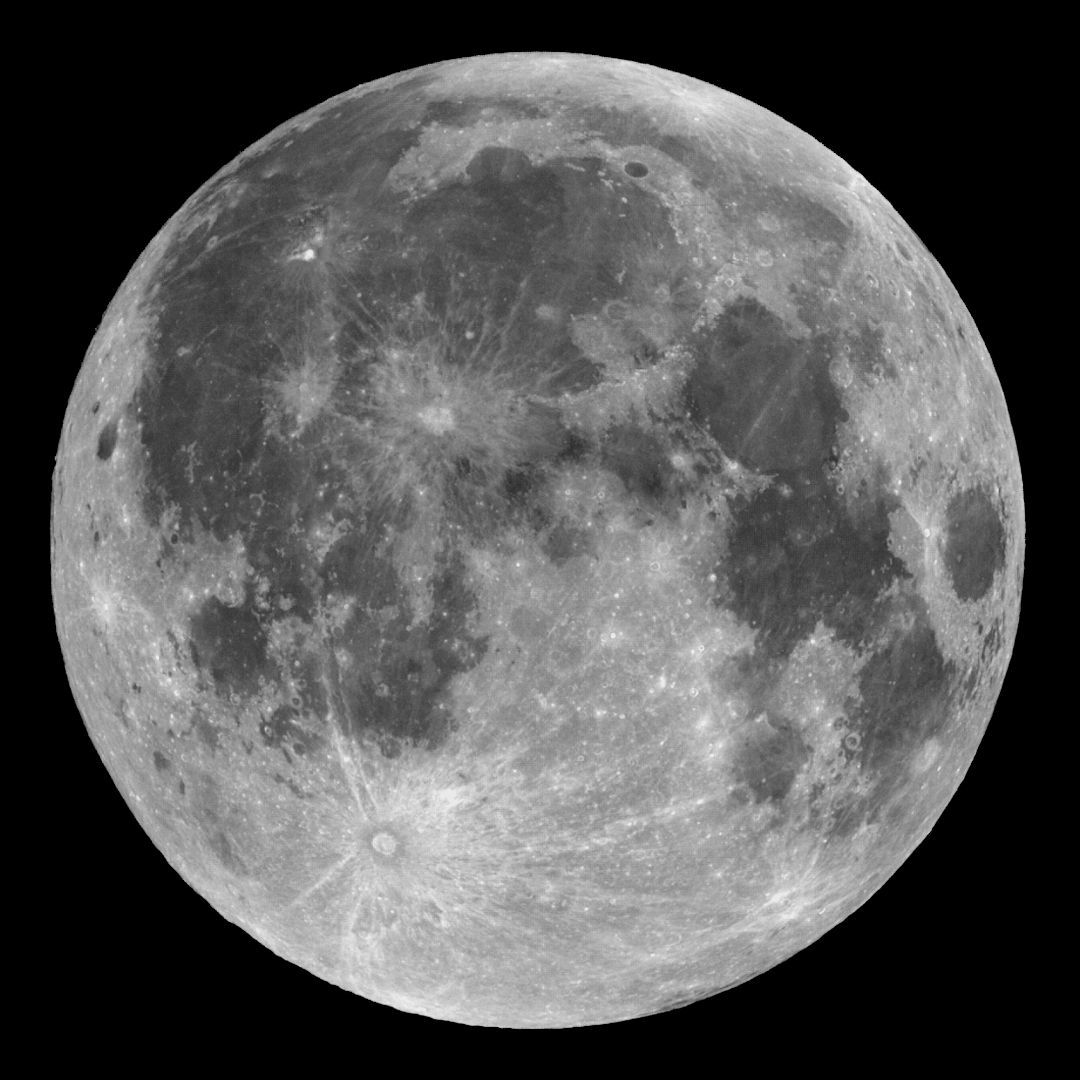
🌕 The Full Moon occurs at 17:24h UT (now) on 1 May 2026. This is the first of two Full Moons in May. The other will occur on May 31st and, being the second such event in the same month, is referred to as a "Blue Moon". 🔭 May 2026 sky events: skymaps.com/skycalendar/
Skymaps | The Evening Sky Map tweet media
English
0
5
10
425
Skymaps | The Evening Sky Map
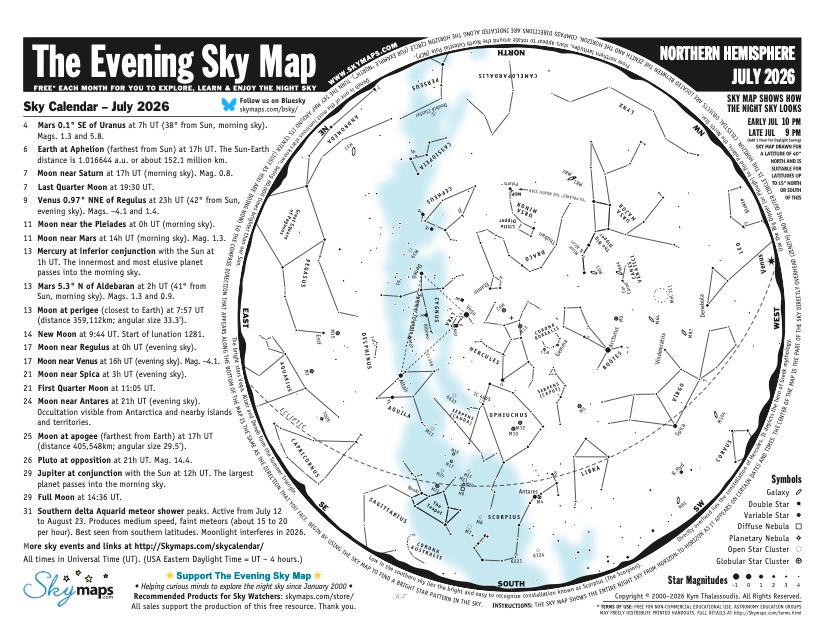
🌟 The May 2026 edition of The Evening Sky Map (PDF) is now available for download at skymaps.com/tesm/. The PDF features easy-to-use sky maps for the northern & southern hemispheres, and for the equatorial regions. Please share and enjoy exploring the Universe! 🔭 #space
Skymaps | The Evening Sky Map tweet media
English
0
3
12
397
Skymaps | The Evening Sky Map
Look up this evening to see the Moon passing between Jupiter and the bright stars Castor & Pollux -- the Gemini twins of Greek mythology. In ancient times the twins were considered patron saints of seafarers. 🔭 #stargazing #Gemini
Skymaps | The Evening Sky Map tweet mediaSkymaps | The Evening Sky Map tweet media
English
0
2
9
467
Skymaps | The Evening Sky Map
On 21 April at 22h UT (now), the waxing crescent Moon will appear near the M35 star cluster which lies about 3,000 light years away in Gemini (skymaps.com/tesm/). A much fainter and more distant star cluster, NGC 2158, lies southwest of M35 (see photo). 🔭
Skymaps | The Evening Sky Map tweet media
English
0
2
8
292
Skymaps | The Evening Sky Map
Mercury, Mars and Saturn appear within a 1.7° circle in the pre-dawn sky. Closest approach is at 23h UT on 20 April 2026. Mags. −0.2, 1.2 and 0.9. The planets remain close for several days. 🔭 #stargazing April 2026 Sky Calendar: skymaps.com/skycalendar/
English
0
3
5
286
Skymaps | The Evening Sky Map
New Moon occurs at 11:53 UT (now) on 17 April 2026. Start of lunation 1278. 🌟 The next few days remain a great time for evening stargazing. Download The Evening Sky Map (PDF) (skymaps.com/tesm/) and enjoy exploring the Universe with your eyes, binoculars or a telescope!
Skymaps | The Evening Sky Map tweet media
English
0
3
6
243
Skymaps | The Evening Sky Map
The waning crescent Moon will be near Mars (mag. 1.2) at 22h UT on 15 April 2026. Mercury (mag. 0.0), Neptune (mag. 7.9) and Saturn (mag. 0.9) will all be nearby. A Parade of Planets in the pre-dawn sky! 🔭 #stargazing
English
0
3
5
240
Skymaps | The Evening Sky Map
The RA & Dec data at 15:54:30 (UT), namely "18 02 08.81 -26 36 26.6", is entered into ASTAP. The time corresponds to the start time (UT) of the 30sec exposure stored in the FITS header. ASTAP then marks the image with the location of the crewed Artemis II Orion spacecraft.
Skymaps | The Evening Sky Map tweet mediaSkymaps | The Evening Sky Map tweet media
English
0
0
2
202
Skymaps | The Evening Sky Map
The same coordinates can also be used to identify Artemis in images using the astrometric plate solver ASTAP (hnsky.org/astap.htm). This table lists the computed RA & Dec coordinates for Artemis II at specific times (UT) on 2026-04-02 for my location.
Skymaps | The Evening Sky Map tweet media
English
1
0
1
206
Skymaps | The Evening Sky Map
Further examination of my Artemis II images reveal not one but two objects in motion. The two objects are the crewed Orion spacecraft capsule (3.3m x 5.0m) and the larger (hence brighter) Interim Cryogenic Propulsion Stage (13.7m x 5.1m). #space #Artemis #astrophotography
Skymaps | The Evening Sky Map tweet media
English
1
0
5
382