Santi

708 posts

Santi banner
Santi

Santi

@smallchano

@_treasurehq CEO. making conventions better. 🇦🇷

Katılım Temmuz 2015
150 Takip Edilen185 Takipçiler
Santi
Santi@smallchano·
@paoloanzn Boomer response they vibecoded something that works for them…. Don’t need scale when n=1 The real slack killer is anyone being able to do this
English
0
0
1
157
4nzn
4nzn@paoloanzn·
vibecoder asks claude code to build a chat app, gets a working prototype in 20 minutes, immediately tweets "just killed slack and discord"… brother you don't even know what a distributed system is. you don't know what database replication means. you have no idea how websocket connections behave at scale or what happens when 50k people are online at once and someone's message needs to show up in 200ms across 3 continents slack has engineers making $300k+ who have spent a decade solving problems you don't even know exist yet. race conditions, eventual consistency, message ordering, presence systems, file storage at scale, search indexing across billions of messages your app works on localhost with 2 connections. that's not the same thing as "killing slack" that's a college homework assignment the prototype is maybe 0.5% of what makes these products actually work in production. the remaining 99.5% is infrastructure, reliability, edge cases, and years of iteration on problems that only surface when real humans use your thing at scale and the worst part is the confidence. "yeah its not perfect but ai one-shotted it, just need to adjust a few things and deploy" - the few things you need to adjust IS the entire product. thats like pouring a foundation and saying you basically built a skyscraper, just need to adjust a few things ai is genuinely incredible for building tools and prototypes. i use it every day. but there's this weird thing happening where people who have never shipped anything to real users at scale now think the hard part of software is writing the first 200 lines of code it never was bro
English
220
474
4.9K
285.6K
Santi
Santi@smallchano·
@claudeai Rip our cubic subscription
English
0
0
0
8
Claude
Claude@claudeai·
Introducing Code Review, a new feature for Claude Code. When a PR opens, Claude dispatches a team of agents to hunt for bugs.
English
2.1K
5.2K
62.9K
22.7M
Santi
Santi@smallchano·
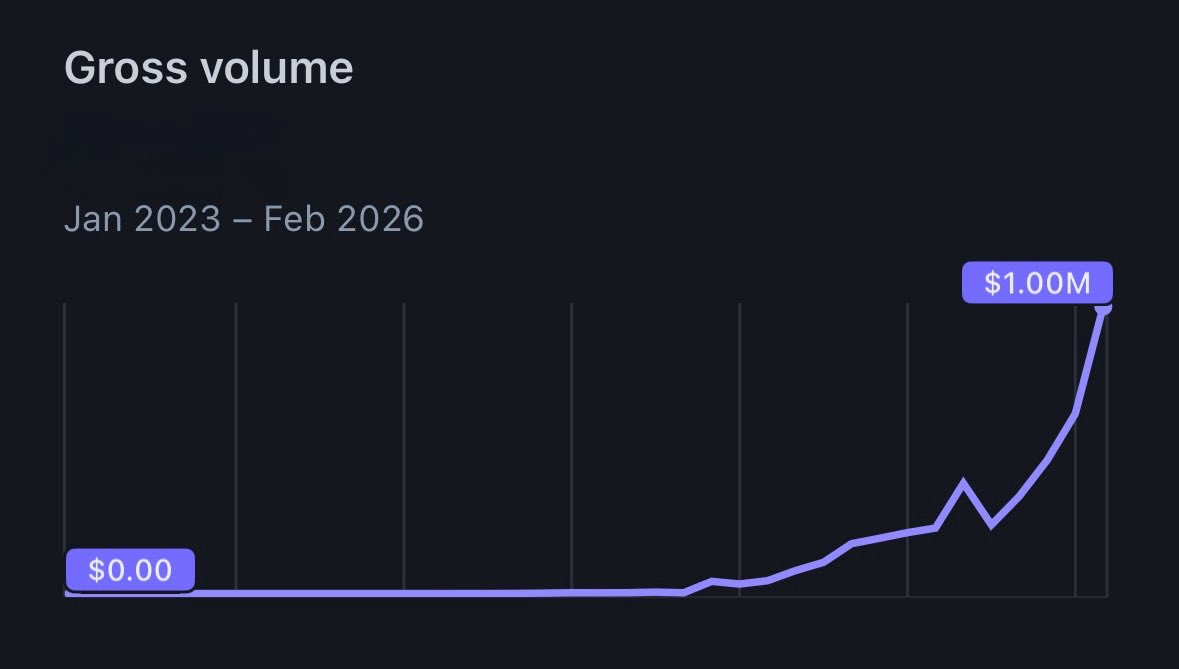
Woke up on my birthday to our first $1m month It gets better guys just keep working
Santi tweet media
English
0
0
1
33
Santi
Santi@smallchano·
@CoolGuyPodge Are a lot of your transactions in person? If so just curious what makes using a payment app better for you irl
English
0
0
0
303
Mitchell Cox
Mitchell Cox@CoolGuyPodge·
Open and honest question, vendors who have “gone legit” how do you make it? Rn I’m staring at a 3% fee for any payment app and 6% sales tax. On a business where you need to competitively buy at 80+ and often sell at 90 to be competitive with other vendors. Help?
English
22
0
45
19.3K
Santi
Santi@smallchano·
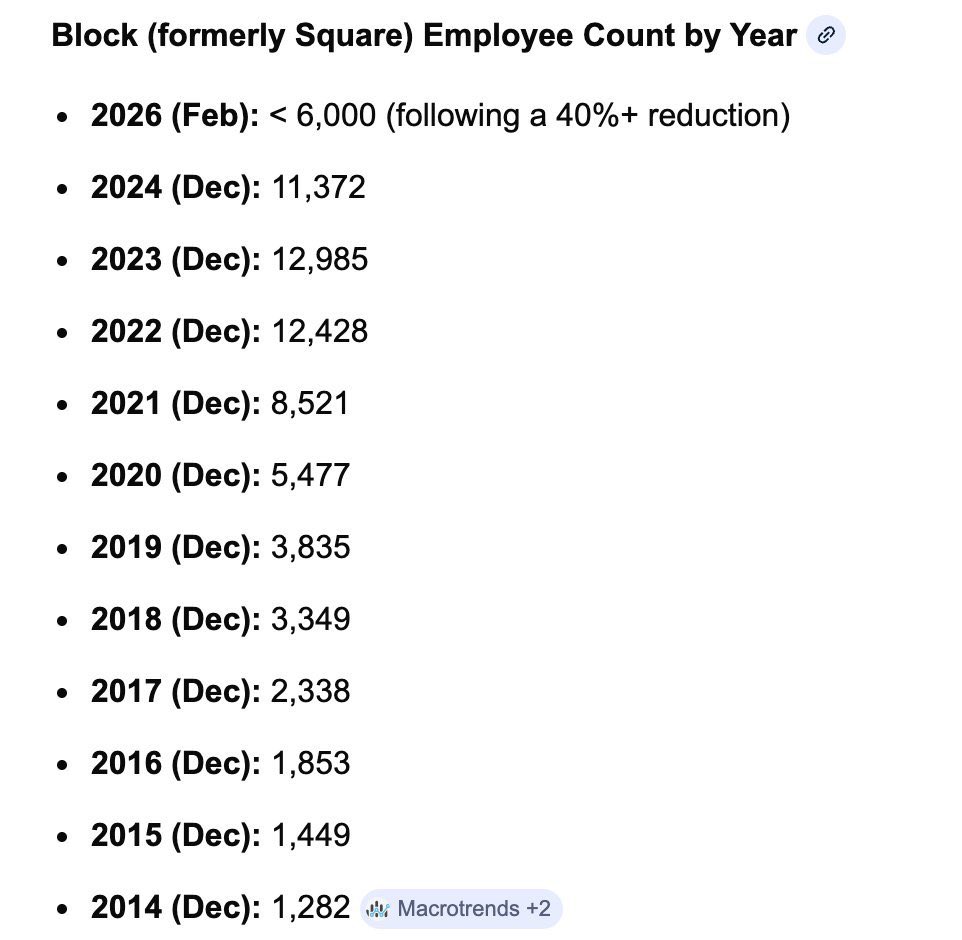
@jack @blocks Unfortunately this is really just because he over hired and not indicative of AI productivity
Santi tweet media
English
0
0
0
160
jack
jack@jack·
we're making @blocks smaller today. here's my note to the company. #### today we're making one of the hardest decisions in the history of our company: we're reducing our organization by nearly half, from over 10,000 people to just under 6,000. that means over 4,000 of you are being asked to leave or entering into consultation. i'll be straight about what's happening, why, and what it means for everyone. first off, if you're one of the people affected, you'll receive your salary for 20 weeks + 1 week per year of tenure, equity vested through the end of may, 6 months of health care, your corporate devices, and $5,000 to put toward whatever you need to help you in this transition (if you’re outside the U.S. you’ll receive similar support but exact details are going to vary based on local requirements). i want you to know that before anything else. everyone will be notified today, whether you're being asked to leave, entering consultation, or asked to stay. we're not making this decision because we're in trouble. our business is strong. gross profit continues to grow, we continue to serve more and more customers, and profitability is improving. but something has changed. we're already seeing that the intelligence tools we’re creating and using, paired with smaller and flatter teams, are enabling a new way of working which fundamentally changes what it means to build and run a company. and that's accelerating rapidly. i had two options: cut gradually over months or years as this shift plays out, or be honest about where we are and act on it now. i chose the latter. repeated rounds of cuts are destructive to morale, to focus, and to the trust that customers and shareholders place in our ability to lead. i'd rather take a hard, clear action now and build from a position we believe in than manage a slow reduction of people toward the same outcome. a smaller company also gives us the space to grow our business the right way, on our own terms, instead of constantly reacting to market pressures. a decision at this scale carries risk. but so does standing still. we've done a full review to determine the roles and people we require to reliably grow the business from here, and we've pressure-tested those decisions from multiple angles. i accept that we may have gotten some of them wrong, and we've built in flexibility to account for that, and do the right thing for our customers. we're not going to just disappear people from slack and email and pretend they were never here. communication channels will stay open through thursday evening (pacific) so everyone can say goodbye properly, and share whatever you wish. i'll also be hosting a live video session to thank everyone at 3:35pm pacific. i know doing it this way might feel awkward. i'd rather it feel awkward and human than efficient and cold. to those of you leaving…i’m grateful for you, and i’m sorry to put you through this. you built what this company is today. that's a fact that i'll honor forever. this decision is not a reflection of what you contributed. you will be a great contributor to any organization going forward. to those staying…i made this decision, and i'll own it. what i'm asking of you is to build with me. we're going to build this company with intelligence at the core of everything we do. how we work, how we create, how we serve our customers. our customers will feel this shift too, and we're going to help them navigate it: towards a future where they can build their own features directly, composed of our capabilities and served through our interfaces. that's what i'm focused on now. expect a note from me tomorrow. jack
English
8.8K
6.7K
51.3K
64M
Santi
Santi@smallchano·
Sometimes the simplest solutions are the most effective
BURKOV@burkov

LLMs process text from left to right — each token can only look back at what came before it, never forward. This means that when you write a long prompt with context at the beginning and a question at the end, the model answers the question having "seen" the context, but the context tokens were generated without any awareness of what question was coming. This asymmetry is a basic structural property of how these models work. The paper asks what happens if you just send the prompt twice in a row, so that every part of the input gets a second pass where it can attend to every other part. The answer is that accuracy goes up across seven different benchmarks and seven different models (from the Gemini, ChatGPT, Claude, and DeepSeek series of LLMs), with no increase in the length of the model's output and no meaningful increase in response time — because processing the input is done in parallel by the hardware anyway. There are no new losses to compute, no finetuning, no clever prompt engineering beyond the repetition itself. The gap between this technique and doing nothing is sometimes small, sometimes large (one model went from 21% to 97% on a task involving finding a name in a list). If you are thinking about how to get better results from these models without paying for longer outputs or slower responses, that's a fairly concrete and low-effort finding. Read with AI tutor: chapterpal.com/s/1b15378b/pro… Get the PDF: arxiv.org/pdf/2512.14982

English
0
0
0
50
Santi
Santi@smallchano·
@Hartdrawss This stack should be zero cost (excluding Claude) until 5000+ users if you build correctly
English
0
0
0
264
Harshil Tomar
Harshil Tomar@Hartdrawss·
Here's the only stack you need in 2026: Frontend: Next.js 15 (stop overthinking) Backend: Supabase (database + auth + storage) Payments: Stripe (nothing else comes close) Email: Resend (cleanest API) Analytics: PostHog (privacy-first, free tier) Hosting: Vercel (zero config deploys) AI: Claude API (via OpenRouter for cost) Total cost until 1000 users: $0-50/month Bookmark this. Build today.
English
54
39
552
35.4K
Santi
Santi@smallchano·
This is why founder led companies perform so well. When you bring in someone that doesn’t understand the industry / product or even worse, both You get outcomes like PayPal ($360B -> $42B)
David Marcus@davidmarcus

A few thoughts about PayPal, nearly 12 years after I left. I woke up this morning to dozens of messages from former PayPal colleagues. It pushed me to finally speak up. I never spoke publicly about the company after I left. Part of that was loyalty to John Donahoe, who gave me an unlikely opportunity, handing the reins of PayPal to a startup guy who, on paper, had no business running a then 15,000-person organization. But part of it was something else: I had left. I chose not to stay and fight for the changes I believed in. Speaking from the sidelines felt like armchair commentary. Easy opinions without the burden of execution. So I stayed quiet. But twelve years of silence is long enough. And today's news makes it clear the pattern I've watched unfold isn't self-correcting. I left PayPal in 2014 because I was deeply frustrated. We had executed a silent turnaround of a company that had lost its soul. We brought back engineering talent, shipped good products quickly, and acquired Braintree and Venmo. The company was on a tear. So much so that Carl Icahn felt compelled to accumulate a position in eBay and push for a PayPal spinoff. At the time, eBay decided to fight Icahn. It was a difficult period for me, caught between what I felt was right for PayPal and my loyalty to the eBay team. This is when Mark Zuckerberg approached me to join Facebook. The combination of his conviction that messaging would become foundational, the appeal of going back to building products at scale, and my growing exhaustion with the internal politics at PayPal and eBay eventually convinced me to leave and join one of the best teams in the world, one I had admired for a long time. In the summer of 2014, I met John in a café in Portola Valley and told him I had decided to leave. During that conversation, he told me that Icahn had effectively won the fight, that PayPal was going to become an independent company, and he tried to convince me to stay on as CEO, but I had already said yes to Mark, and my word is my bond. There was no turning back. After my departure, the board scrambled to find a replacement, and it took a few months for them to land on Dan Schulman. The leadership style shifted from product-led to financially-led. Over time, product conviction gave way to financial optimization. Much of the momentum we had created still persisted and carried the company forward, mainly driven by Bill Ready, who came over in the Braintree acquisition and rose to COO. Under his leadership, Venmo grew exponentially, and total payment volume (TPV) accelerated quickly. But the shift under Schulman became more pronounced after Bill's departure at the end of 2019. With him went the product conviction that had defined the post-spinoff momentum. Then, for a period, COVID-fueled online shopping hid a lot of the company's new weaknesses. During that period, the company made a fundamental miscalculation: it optimized for payment volume instead of margin and differentiation. It leaned into unbranded checkout, where PayPal had the least leverage, instead of branded checkout, where the margin, data, and customer relationship actually lived. Visa masterfully structured a deal that effectively ended PayPal's ability to steer customers toward bank-funded transactions, which had been a core driver of PayPal's economics. Not long after, PayPal lost a significant portion of eBay's volume. Over time, it saw its share of checkout among its most profitable customers steadily erode as Apple Pay and others continued to execute well. The same pattern repeated itself across lending, buy-now-pay-later (BNPL), and new rails. On lending, PayPal missed the opportunity to turn it into a platform weapon. Products like Working Capital were conservative, short-duration, and optimized for loss minimization. Lending never became programmable, never became identity-driven, and never became a reason for merchants or consumers to choose PayPal over something else. The missed opportunity in BNPL was even more striking. Klarna, Affirm, and Afterpay didn't just offer installment payments, they built consumer finance brands, persistent credit identities, and new shopping behaviors. PayPal saw the BNPL turn, entered the market, and had every advantage: distribution, trust, and merchant relationships. But BNPL was treated as a defensive checkout feature rather than an offensive category. There was no attempt to turn it into a core consumer relationship, no super-app behavior, and no meaningful differentiation for merchants. Others built platforms, PayPal added a feature. The failure to lean into building and owning new rails followed the same logic. After the spinoff, PayPal had a once-in-a-generation opportunity to build a global, at scale payment network. Instead, the company focused on building on top of existing networks and third-party rails. More recently, that mindset carried over to PYUSD. Technically, the product was sound. Strategically, it launched without a compelling transactional reason to exist. PYUSD had distribution, but no organic demand. It was not embedded deeply enough into flows to become a true settlement layer, a cross-border merchant rail, or a programmable money primitive. It sat adjacent to the product instead of inside the core of it. Acquisitions during this period followed a similar pattern. Honey was not a strategic acquisition for PayPal. It added activity, but not leverage. It lived outside the transaction, monetized affiliate economics rather than payment economics, and never meaningfully strengthened PayPal's control of the customer or the checkout moment. Xoom solved a real problem in remittances, but it never compounded PayPal's advantage. It scaled volume without changing the underlying rails, identity graph, or settlement model, and as importantly, it didn’t cater to a high-value, high-margin customer archetype. None of these were bad companies. They were just a wrong fit for PayPal and became unnecessary distractions. The board eventually recognized the problem. In 2023, they brought in Alex Chriss, an Intuit veteran with a strong product background, explicitly to restore product conviction. It was the right instinct. But Alex came from software, not payments. He understood SMB product development. He didn't have the muscle memory for transaction economics, network effects, or settlement infrastructure. In hindsight, he also made an error: clearing out much of the leadership team that understood payments deeply. Executives with years of institutional knowledge departed within his first year. This morning, Alex was removed as CEO. Branded checkout grew 1% last quarter. The board tapped another operator, Enrique Lores, the former HP CEO who's been on the PayPal board for five years. I don’t know Enrique. And he might be a great leader, but on paper at least, he’s a hardware executive. For a payments company. The common thread through all of this is incentive design. Once PayPal became independent, short/medium-term predictability beat long-term vision and ambition. Stock performance mattered more than platform risk and network opportunity. Financial optimization replaced product conviction. I'm not claiming I would have made every call differently. Running a public company at scale involves tradeoffs I didn't have to make after I left. But the pattern, choosing predictability over platform risk, again and again, was a choice, not an inevitability. Over time, the company that had every advantage and could’ve become the most consequential and relevant payments company of our time, lost its mojo, its product edge, and its ability to compete in a market that’s being rewired and reinvented in front of our eyes. That's the part that's hardest to watch for a company I care so deeply about.

English
0
0
0
60
Santi
Santi@smallchano·
@ItzSuds Would love to chat, we’re the biggest events company in the space right now
English
0
0
1
209
sudarshan
sudarshan@ItzSuds·
I meet a lot of interesting people so I generally have an idea of what’s going to be big 3-12 months from now I’ve seen enough now to say 2026 will be huge for TCGs & for sports cards I need to meet EVERYONE in the space. What does the next WhatNot look like? Who’s building it?
sudarshan@ItzSuds

My friend’s PE firm has $200m of sealed Pokémon cards in inventory I didn’t realize before yesterday how big the TCG market was (~$20b), but there’s an opportunity to securitize it & create a slew of financial products (insurance, borrowing, central market etc) for them Crypto?

English
22
1
77
41.1K
Santi
Santi@smallchano·
@ItzSuds Collectibles is so much bigger than most investors think, the amount of money being transacted at conventions + online is grossly under appreciated
English
0
0
1
213
Luc
Luc@investingluc·
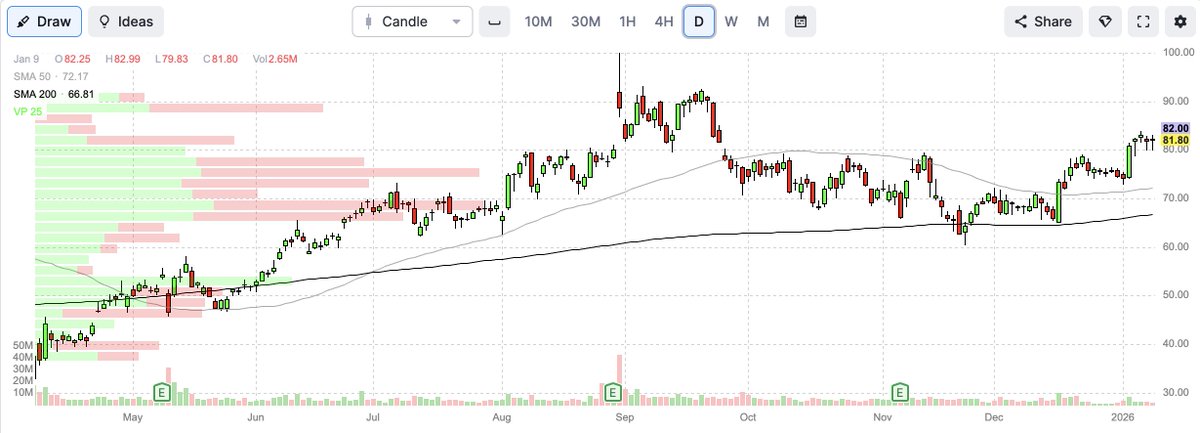
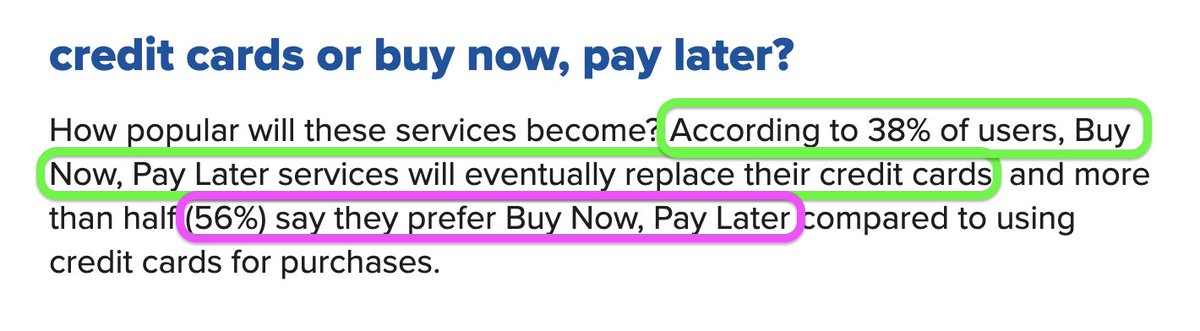
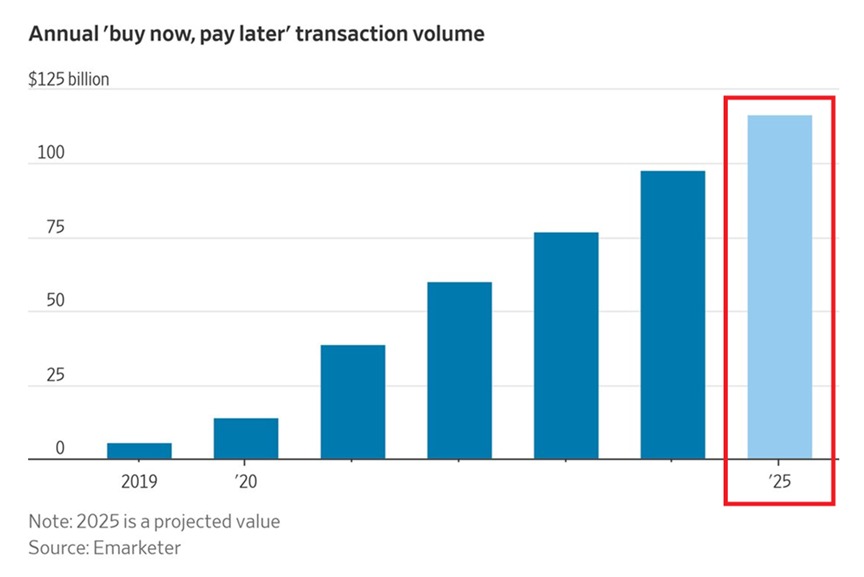
I was laying in bed last night thinking about the news regarding a 10% cap on credit card interest rates. And there's a huge winner. (but it’s not shorting $V or $MA like everyone’s screaming about) It's the BNPL trade. Why? If credit card issuers get forced into a 10% cap, they’re going to pull back on risky borrowers...really fast, which instantly removes access to credit for millions of people. But (obviously) those consumers can't just stop spending, so they just migrate to using something else. ...and the only place for them to migrate is *buy now, pay later*. Trump's announcement becomes a *structural* tailwind for BNPL adoption. Without access to credit, people get pushed to alternative "credit" rails. We literally just saw record numbers of BNPL activity over the holiday season. Demand is there. So you have tightening credit, record demand, and a political catalyst that steers millions of consumers into BNPL by default? aka an entire sector is on the verge of re-pricing... I'm watching a few BNPL names: One. $AFRM...cleanest pure BNPL exposure in the usa with a huge merchant network, and a direct volume lift coming Two. $KLAR...largest BNPL platform in the world, recent IPO, eating market share in the US quickly Three. $PYPL...massive distribution, "PayPal Pay Later" is already everywhere at checkout Four. $SQ (owns cashapp + afterpay)...exposure to BNPL + consumer lending rails...secondary winner But my top focus is $AFRM. > more direct exposure & sensitivity to the U.S. credit tightening catalyst > affirm is overwhelmingly us-centric > stronger U.S. merchant penetration > direct $amzn integration > exclusive partnership with $shop I like $KLAR too, but if this 10% cap only applies to the USA, then $AFRM is the most direct, immediate beneficiary. This theme is about to really heat up. $AFRM is currently $81.80.
Luc tweet mediaLuc tweet mediaLuc tweet media
The Kobeissi Letter@KobeissiLetter

BREAKING: President Trump calls for a 10% cap on credit card interest rates for one year, effective January 20th.

English
154
193
2.2K
598.3K
Santi
Santi@smallchano·
@_georgemoller nice alternative to using context but not super valuable for more complex forms where you are going to need context anyway imo
English
0
0
1
237
George Moller
George Moller@_georgemoller·
❌ Conditional rendering loses form state in React. ✅ React 19's Activity API preserves it. e.g. Switch between steps → your data stays. Effects cleanup automatically → no wasted resources.
English
28
74
950
73.7K
Santi
Santi@smallchano·
@aakashgupta Great idea except that he’s looking at the wrong metric Less than 1% of users make 90% of content so using DAU shows misleading information Much too common with PMs nowadays
English
0
0
4
123
Aakash Gupta
Aakash Gupta@aakashgupta·
This is what great PM looks like. User requests feature. Bad PM says “good idea, added to backlog.” Great PM asks: who actually has this problem? 0.00072% of DAU. That’s the entire product management discipline in one data point. The feature request sounds reasonable. The user sounds passionate. The use case is real. And building it would serve roughly 7 users per million. Nikita does something else that separates senior PMs from junior ones: he flips the request into a diagnostic. “Why aren’t you just posting those drafts?” The 10+ draft problem isn’t a missing search bar. The user has a publishing friction problem masquerading as a discovery problem. Most PMs would log the request and move on. This response models the thinking that prevents roadmap bloat: quantify the surface area before discussing the solution.
Nikita Bier@nikitabier

@miragemunny People with >10 drafts: 0.00072% of DAU This would be the worst engineering-to-impact ratio in the known universe. Better thing I’d like to solve: why aren’t you just posting those drafts when inspiration strikes?

English
68
58
1.3K
226.2K
Santi
Santi@smallchano·
actually the goat of ai
Jarrod Watts@jarrodwatts

> be demis hassabis > spawn in london > age 4, become child chess prodigy > win chess tournaments > reach ~2300 elo > face danish chess champion > game lasts hours > position is a forced draw > too exhausted to see it > resign > danish guy laughs and shows the draw > feel sick to my stomach > realise something is wrong > chess is too narrow a problem > brilliant minds wasting decades on it > decide not to become a chess pro > buy a computer with chess winnings > teach self to program from books > start hacking on games with friends > decide to finish school early > apply to cambridge age 16 > cambridge says you're too young > forced to take a gap year > enter a video game coding competition > win > get invited to join bullfrog game studio > too young to be legally employed > work there anyway > build ai system inside theme park game > game becomes a global hit > turn 17 > offered £1,000,000 to stay and build games > turn it down > go to cambridge anyway > decide games aren't enough > study computer science > interested in agi since 2007 > most people laugh at this idea > realise brain is only form of agi we have > want to learn more about human brain > go back to school > study neuroscience > realise academia moves too slow > decide to build a company instead > start deepmind > pitch “solve intelligence” > investors don’t know what that means > get to meet peter thiel for one minute > wonder how to convince him > spend one minute playing chess with him > pitch "solve intelligence" again > he invests > go into total stealth mode for two years > no website > secret office > candidates think it’s a scam > start to train ai in simulated environments > train ai with reinforcement learning > train ai on pong first > it sucks > can't win a single point > keep trying > wait it won a a point > wait it's winning every single point > it actually works > expand to train on any two-player game > chess first, then move on to go > beats world champion at go > beats pros at starcraft > games is not enough > want to push into science > realise compute is the bottleneck > know this will take decades > google offers ~$400m > not the highest price > but they offer unlimited compute > accept > refuse to become a product team > stay in research mode > determined to use ai for good > need to figure out what's next > land on protein folding > 50-year-old unsolved science problem > many great minds have tried and failed > "good luck" > start up alphafold > try to solve protein folding > humans take years to find 1 protein structure > alphafold can find ~5 per day > submit results, win competition > not good enough > hire more scientists > rebuild it > go from solving one per day to millions per day > create invaluable system > pharma would pay anything > have to decide what to do with this > could sell access for usage > maybe make it a paid service > remember childhood chess tournament > remember why we built this > decide to give it away all away for free > publish all known protein structures publicly > win nobel peace prize > just the beginning towards agi

English
0
0
0
48
Santi
Santi@smallchano·
@SamuelRome97104 please give us a way to full screen cron job sql snippet instead of having to look at it in this small window 🙏
Santi tweet media
English
1
0
2
66
Sam Rome
Sam Rome@SamuelRome97104·
Supabase now includes a Stripe Sync Engine integration. It automatically syncs Stripe data—customers, payments, and subscriptions—directly into your Postgres database. You can enable it right from the Supabase dashboard → Integrations.
Sam Rome tweet media
English
3
3
27
2.9K