Melvyn Newton

1K posts

Melvyn Newton banner
Melvyn Newton

Melvyn Newton

@smokingcyclist

love the sound of breaking glass

Sheffield, England Katılım Ağustos 2010
747 Takip Edilen256 Takipçiler
Melvyn Newton retweetledi
Rabbi David Mivasair
Rabbi David Mivasair@RabbiMivasair·
Don’t like people wearing watermelon pins at your shitty medical conference? Don’t care. “From the river to the sea, Palestine will be free” makes you feel scared? Don’t care. Seeing Palestinian flags on university campuses upsets you? Don’t care. A student calling Israel an apartheid state hurts your little feelings? Don’t care. A doctor speaking publicly about Palestinian children being massacred feels “divisive” to you? Fuck you. People refusing to condemn Palestinian resistance makes you uneasy? Don’t care. Hearing the word “genocide” feels inflammatory to you? Don’t care. A keffiyeh in a workplace gives you a panic attack? Don’t care. “Globalise the intifada” sounds genocidal to you? Don’t care. People interrupting politicians feels disrespectful to you? Don’t care. You no longer being able to monopolise victimhood makes you angry? Truly could not care less. What I care about are the Palestinian children being burned alive. The doctors being tortured. The families erased under rubble. The starvation. The concentration camps. The destruction of Gaza’s hospitals and universities and refugee camps and entire civilian infrastructure. But for the nearly last 1,000 days and decades prior, Western institutions have demanded everyone stop and carefully tend to Jewish emotional discomfort instead. Not Palestinian lives. Not Palestinian suffering. Not Palestinian speech. Zionist discomfort. Zionist fragility. Zionist political sensitivity—elevated, enforced, and institutionalised across universities, hospitals, media outlets, professional associations, politicians, donors, and advocacy groups. All working in sync to transform Zionist discomfort into institutional emergency. While Palestinian suffering is rendered invisible. While Palestinian speech is disciplined. While Palestinian humanity is treated as negotiable. That is the function of the Jewish Feelings Industrial Complex. Not safety. Not care. Not protection. Institutionalised Zionist emotional management at scale. Fuck every single institution that constantly weaponizes “Jewish safety,” “Jewish discomfort,” and “Jewish feelings” to justify censorship, repression, career destruction, anti-Palestinian racism, and silence in the face of mass atrocity. If a watermelon pin destabilises you more than the annihilation of Gaza, the problem is not the watermelon pin. The problem is you. -- from "The Anti-Zionist" patreon.com/posts/awww-you…
English
722
5.8K
14.3K
313.5K
Melvyn Newton retweetledi
Clive Lewis MP
Clive Lewis MP@labourlewis·
Westminster may finally be about to have the argument it has spent 40 years avoiding. If Andy Burnham returns to Parliament, the political class will know how to cover it. A leadership drama. Who is up, who is down, whether Keir Starmer can survive, whether Labour is once again turning inward. The familiar machinery of Westminster psychodrama will whirr into life. That framing misses the larger point. Burnham’s possible return matters not because of what it says about Labour’s leadership, but because of what it reveals about the British state: what it can still do, what it has forgotten how to do, and what kind of country it must become if it is serious about resilience. Britain is finally having a more serious conversation about national security. The Strategic Defence Review, the pivot back towards Europe, the recognition that hybrid warfare turns citizens, infrastructure and civic institutions into part of the front line: all of it marks a real shift in how the state thinks about its own survival. But at the centre of that conversation lies a question that the defence establishment, and most of Westminster, still does not want to answer. What kind of society do you need to be before resilience is possible? Finland is now the model everyone cites. Comprehensive security. Whole-of-society defence. Civilian preparedness woven into military planning. British strategists admire the Finnish system and ask how it might be copied. But the admiration stops short of the uncomfortable question: why does it work there? The answer is not geography or history or some mysterious quality of Finnish national character. It is structural. Nearly 80% of Finns say they would defend their country if attacked. In Britain, the figure is closer to 33%. That gap is not an accident. It exists because Finland has spent decades building a society in which people have a genuine stake in what they are being asked to defend. Energy is affordable. Housing is available. Public services function. Institutions command trust. The Nordic welfare state is not a sentimental add-on to Finnish security policy. It is the foundation of it. You cannot ask people to defend a country that does not work for them. Britain has spent 40 years building the opposite. The privatisation of essentials – energy, water, transport, housing – transferred wealth upwards from households to shareholders while making the basics of everyday life more expensive. The state, stripped of the tools to control costs at source, has been reduced to compensating after the fact. Out of every pound the Government spends on housing, 88p goes to subsidising private rents. Just 12p goes to building homes. When energy prices spiked in 2022, the Government spent £40bn in a single winter cushioning the blow, not because it had a resilient energy system but because it lacked one. Debt interest now consumes more than £100bn a year. Britain has the highest debt servicing costs in the G7: the compounding price of financing failure rather than eliminating it at source. This is what bond market dependency actually looks like. It is not an abstract fiscal condition. It is the consequence of a state that has been stripped of the supply-side tools that would let it cure the problems it now pays, indefinitely, to manage. And here is the paradox the Treasury refuses to confront. The countries that borrow most cheaply are often those that have retained the public investment model Britain abandoned. The spread between UK and Dutch borrowing costs has widened sharply not because markets fear public investment, but because they have lost confidence in a model that borrows to subsidise private failure while never addressing its causes. This is the connection Britain’s defence debate is missing. The familiar framing, that social spending is what must be sacrificed to meet the NATO target, is not merely politically toxic. It is strategically illiterate. Cutting the foundations of social cohesion to fund the hardware of national defence is self-defeating. You end up with planes and no pilots, submarines and no crew, an army that cannot recruit because the society it is meant to protect has stopped believing in itself. I think Burnham understands this. That is why his programme is more interesting than the leadership gossip suggests. What he has been building in Greater Manchester – public control of transport, expanded social housing, investment in the productive foundations of the city economy – is not a nostalgic rerun of postwar nationalisation. It is a proof of concept for a different kind of state. The Bee Network is the most visible example, but the argument behind it travels. A state that can shape markets is not condemned to subsidise their failures. A state that produces affordable energy through public generation does not need to spend tens of billions cushioning every price shock. A state with a serious public housebuilding programme does not need housing benefit to rise endlessly in line with private rents. A state that builds institutions people can see, use and trust begins to restore the civic confidence on which resilience depends. The real constraint on Britain is not money. It is capacity: the workers, institutions, supply chains and public purpose needed to turn national will into national renewal. Britain’s tragedy is not that it has run out of money. It is that after 40 years of hollowing out the state, it has made itself less able to act. Burnham’s critics will reach for the familiar warning. Borrow more, spend more, spook the gilt markets, repeat the Truss disaster. But this misunderstands both the problem and the opportunity. Bond markets do not have ideological preferences. They have functional ones. They prefer clarity, credible revenue streams, productive investment, and a state with a plan. What they punish is not public ambition but incoherence. A properly designed productive state programme would not be a leap into fiscal fantasy. It would be an attempt to end the much costlier fantasy that Britain can keep borrowing to compensate for broken markets while refusing to repair them. The defence conversation and the economic conversation need to become the same conversation. Finland did not build national resilience by choosing between welfare and security. It built resilience by understanding that they are inseparable: that a country in which the basics work, where people trust one another and the institutions around them, is one that can face danger with something more than anxiety. That is the deeper argument Burnham represents. Westminster will be tempted to treat him as a leadership story. It should resist the temptation. The question is not whether Burnham can return to parliament. It is whether Britain can return to the idea that the state should make life work. Because a country that cannot command the confidence of its people cannot truly defend itself.
English
550
805
3.6K
780.3K
Melvyn Newton
Melvyn Newton@smokingcyclist·
@CherrylWat41268 @JamesMelville "The kick back from crimes committed by Israel against Palestine has been more tolerant than it could have been. Jewish communities who condemn the crimes must stand and loudly speak out against it but they don't which suggests at best complicity." Antisemitism, do you see?
English
0
0
0
5
Cherryl Watson
Cherryl Watson@CherrylWat41268·
@JamesMelville The kick back from crimes committed by Muslims against a British society has been more tolerant than it could have been. Muslim communities who condemn the crimes must stand and loudly speak out against it but they don't which suggests at best complicity.
English
1
0
0
277
James Melville 🚜
James Melville 🚜@JamesMelville·
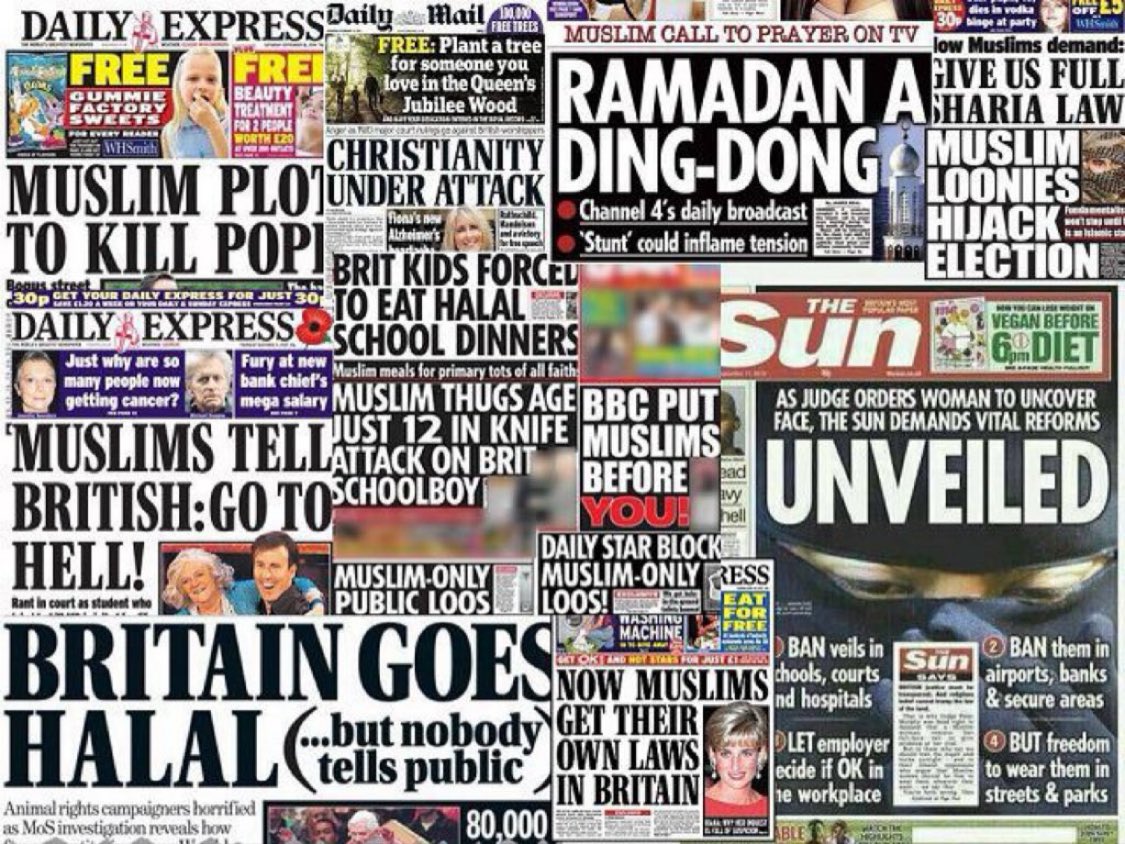
Where does all the hated come from? Just pop down to your local newsagents and buy some hated. Imagine if the Jewish community had tabloid headlines like this thrown at them on a regular basis. They would have every right to think it’s discriminatory. Yet headlines like this are regularly pumped out against Muslims. A negative narrative against the many Muslims in the UK who are hard working, law abiding citizens and get tarred by the same brush of grim headlines like this.
James Melville 🚜 tweet media
English
425
666
1.7K
51.9K
Melvyn Newton retweetledi
Hannah
Hannah@GreenPartyHan·
And just like that, in less than 24 hours I went from photo 1, to photo 2. From holding my own live on the BBC to getting straight back under the floor fitting central heating 🙌🏻 Elect folk who live in the real world not who set out on a career in politics to stroke their ego!
Hannah tweet mediaHannah tweet media
English
93
682
4.1K
222.8K
Rupert Read 🌍 🔥
Rupert Read 🌍 🔥@GreenRupertRead·
BREAKING!: Huge news: The Government has quietly published [link below] on its website, without any fanfare, the Joint Intelligence Committee / Defra report on 'GLOBAL BIODIVERSITY LOSS, ECOSYSTEM COLLAPSE AND NATIONAL SECURITY' that it suppressed last October. It has presumably done this at this point (in the middle of an international crisis) to try to bury the story. ...this is a huge story. Just consider the report's title, for starters... the report warns of multiple likely ecosystem >collapses< that will have dire implications for our national security, and that require serious strategic adaptation at minimum. The report also sets out how these collapses if they are allowed to occur will significantly increase migration-pressure: "as development gains begin to reverse", a phrase that should make any human shudder in anguish. There is much more... But it doesn't end there: what they have published very much appears to be >only part of a larger piece of work<: there is no detail at all in what they have published on the geo-regional analyses; the connections from those regional analyses to the national security threats consequently facing Britain are not detailed; the "Key Judgements" of the report are not properly explained. It is fairly obvious what has happened here: in response to FOIs, they are trying to slip this report out, presumably because they feared it would otherwise get out anyway; but they have done so in a form that holds back much of the most disturbing content - the content that WE as citizens need to know if we are to know how to protect ourselves, what we are potentially going to have to adapt TO. We must continue to press for the full report to be released... But in the meantime there is much here to digest and reflect on, to put it mildly. Kudos to those who commissioned the report; do READ this version of it (it's only short!), and let's take it from there... Kudos too to those who pursued an (at least partly) successful battle to get the report released, via Freedom of Information requests... >>Please share widely! assets.publishing.service.gov.uk/media/696e0eae…
English
64
1.8K
3K
176.3K
Melvyn Newton
Melvyn Newton@smokingcyclist·
@KiszelyPhilip You've popped up on my timeline, modern X. What especially triggered you about this news? At first glance it seems the name of the lecture was enough. Did you find out about the lecture's content?
English
0
0
0
44
Dr Philip Kiszely
Dr Philip Kiszely@KiszelyPhilip·
After October 7th, one British university drama department delivered a first-year lecture-seminar session entitled “Palestinian Resistance and Performativity”. It was perhaps one of the vilest moments in the history of British education—certainly over the last 50 years. I wonder how the social-justice indoctrination crew will respond to the events in Iran. How will they demonstrate their allegiance to the regime? No doubt a trans interpretive dance routine will meet the case. It usually does. I’m not even joking. If you see mass murder and gang rape as performative resistance, you’re dog-sh*t stupid. More to the point, you’re capable of anything (even interpretive dance). Here’s the thing: our universities haven’t just fallen to ideology; they have, more accurately, become an institutional expression of crippling personality disorder. It’s nothing short of tragic that our young people are exposed to such poison.
English
14
97
539
13.8K
Rachel Moiselle
Rachel Moiselle@RachelMoiselle·
I’ve been contemplating Irish Twitter’s response to my Sunday Independent piece all day. From an Irish perspective alone, leaving aside the disrespect shown to the Irish Jewish community and to me personally, I honestly find it just so sad. Ireland is the ‘Land of Saints and Scholars’. And yet any article related to Jews and antisemitism will inevitably be awash with the same brain-dead stock responses from Irish people who clearly haven’t even read the piece let alone thought about it critically. They are so propagandised and entrenched in their own self righteousness that they have lost the curiosity, loquaciousness, and erudition that is part of our culture. That is all abandoned in favour of the same worn out squeals of ‘Zionist shill!’, ‘paid propagandist!’, and ‘criticism of the Israeli government isn’t antisemitic!’ when no reasonable person ever said it was (and Israel wasn’t even the point of discussion in my latest piece). At this point I have had a few conversations with Irish people, both Jewish and non-Jewish, about the fact that Ireland’s adoption of the pro-Palestine movement as being intrinsic to Irishness has eroded our own individual identity and culture (some Irish people even describe themselves as ‘Paddystinians’ now). I would agree with this. But I think it goes further. It is often said that antisemitism destroys everything it touches, and I would contend that this is true of the denial of antisemitism as well. The complete unwillingness to accept the presence of this conspiratorial hatred in Irish society, the outright refusal of so many people to engage in good faith and with an open mind on this issue, the lazy anti-intellectualism inherent in the abusive responses towards those of us who put our heads above the parapet…this is all the antithesis of the visionary depth us Celts are known for. We are losing more than I think any of us can comprehend by letting antisemitism - and, crucially, the denial of it - continue to fester in our society. The risk is far greater than our diplomatic reputation (which, yes, is floundering). This cuts to the very soul of who we are as a people.
English
81
61
617
36.6K
Melvyn Newton
Melvyn Newton@smokingcyclist·
@ChesterMorton96 @RachelMoiselle I think that is happening all over, tragically, but not the point I was making. My question is how a long article like this avoids asking if Israel is creating a problem for Jews.
English
1
0
0
9
Chester Morton
Chester Morton@ChesterMorton96·
@smokingcyclist @RachelMoiselle Distinguishing between Israel and your Jewish neighbors isn't nuanced conversations, genius. It's basic logic for civilized people. By your logic, can I blame my Muslim neighbors for Hamas's actions?
English
1
0
0
12
Melvyn Newton
Melvyn Newton@smokingcyclist·
@ChristopheGuve1 @RachelMoiselle So many truths that people hold dear. Palestinians are being removed from their remaining homelands in a variety of ways, absolute fact, one of which is genocide - possible (but unlikely) that Israel will mitigate their actions in Gaza. You would probably deny all of this.
English
0
0
1
7
Melvyn Newton
Melvyn Newton@smokingcyclist·
@RachelMoiselle ... You had a whole two pages. Some people conflate hating Israel's crazed destruction with hating Jews. One day the destruction will stop and the space for nuanced conversations may return.
English
1
0
1
44
Melvyn Newton
Melvyn Newton@smokingcyclist·
@RachelMoiselle I didn't think your piece said much that a non-Irish non-Jew could offer an opinion to. The story arc was look at this community and how afraid they are, please believe these stats. You didn't mention the elephant in the room - the genocide - and that makes me wary..
English
2
0
3
237
Mike Winger
Mike Winger@MikeWingerii·
Which Muslim was more closely imitating Mohammed? The shooter or the hero who stopped him? I’d say it was the shooter.
English
229
255
3.5K
108.8K
Melvyn Newton
Melvyn Newton@smokingcyclist·
@des__cribe Nah, not really. This is 2022 statement about Russia with a few words swapped out.
English
0
0
0
6
Melvyn Newton
Melvyn Newton@smokingcyclist·
@des__cribe We remain dedicated to protecting the values of a cultural competition which promotes international exchange and understanding, brings audiences together, celebrates diversity through music and unites Europe on one stage.
English
1
0
0
11
Davin C. ✌🏼
Davin C. ✌🏼@des__cribe·
results of the EBU general assembly's vote on the participation of israel in #eurovision 2026: ✅ FOR: 738 ❌ AGAINST: 264 ➖ ABSTENTION: 120 let those numbers sink in. let yourself realise 738 people voted for more division and hatred.
Davin C. ✌🏼 tweet media
English
3
0
15
1.7K
Melvyn Newton
Melvyn Newton@smokingcyclist·
@des__cribe Before making this decision the EBU took time to consult widely among its membership. The EBU is an apolitical member organization of broadcasters committed to upholding the values of public service.
English
0
0
0
11
Melvyn Newton
Melvyn Newton@smokingcyclist·
@des__cribe The Reference Group recommendation was also supported by the EBU’s Television Committee. The decision reflects concern that, in light of the unprecedented crisis in Gaza, the inclusion of an Israeli entry in this year’s Contest would bring the competition into disrepute.
English
0
0
0
19
Melvyn Newton
Melvyn Newton@smokingcyclist·
@s_jhs96 @des__cribe Do you think there would have been a different result if the vote had been directly about Israel?
English
0
0
0
11
Tis the Samn Season
Tis the Samn Season@s_jhs96·
@des__cribe Not exactly. EBU tied the vote to voting on the new regulations for the contest (which are needed) to prevent nations from voting directly on the issue. They've made loopholes to force people to vote for the changes (and therefore israel).
English
2
0
2
108