
Sabitlenmiş Tweet
sofía
19.3K posts



sofía retweetledi

La dictadura fue esto. Obligar a parir a una mujer esposada en el asiento de un Ford Falcon y negarse a acercarle al bebé cuando se cayó al piso. Fue obligarla a limpiar desnuda su propia placenta mientras se reían de ella y su beba lloraba de frío.
Esta es la memoria completa.
Español
sofía retweetledi

Yo apenas me entero que alguien que conozco es negacionista directamente busco no relacionarme más mira si voy a querer ser amiga de alguien que justifica que militares torturen EMBARAZADAS, se apropien de sus BEBÉS y después las asesinen, no podría compartir mesa con alguien así
Español
sofía retweetledi

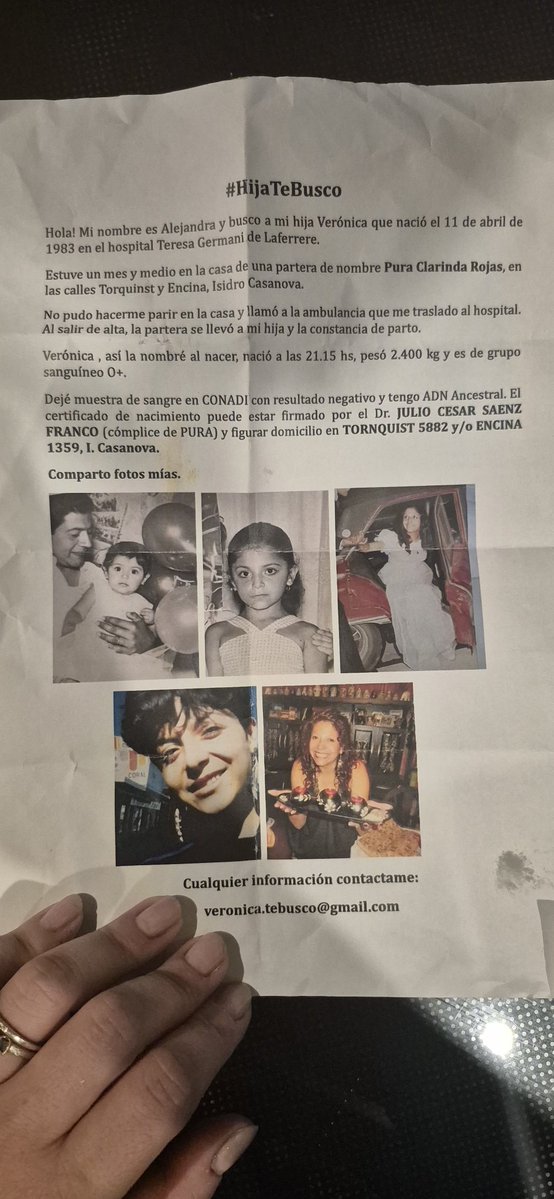
Hoy en la plaza me encontré con Alejandra. Le damos una mano con difusión?

Español
sofía retweetledi

imaginate poder decir que esta es tu primera canción open.spotify.com/track/5Ohxk2dO…
Español
sofía retweetledi


sofía retweetledi



@somoscorta Dios mío… qué manera de romper las pelotas con este temita, no se cansan?
Español

sofía retweetledi

Tenemos que lograr que ser mala gente vuelva a dar vergüenza.
mavica@mavica7
Entrada Facultad de agronomía adoctrinamiento full con los pañuelos de las vieja zurdas. Pesadilla sin fin
Español
quien pudiera tener ese concepto de malaria yo estoy al borde de almorzar grillos como proteína
Martín ☢️ 🌈@argiropolitano
Síntomas de malaria: las familias reemplazando el asado por las pastas para los almuerzos del domingo (todos). Debe haber otros.
Español


sofía retweetledi

sofía retweetledi

OH, QUE HABRA PASADO HACE 50 AÑOS EN ARGENTINA??

Our World in Data@OurWorldInData
Until fifty years ago, Argentina was richer than Spain— (This Data Insight was written by @EOrtizOspina.) In a recent Data Insight, I wrote about how Argentina was one of the richest countries in the world at the beginning of the 20th century. Today, I want to follow up with a striking comparison between Spain and Argentina. The chart shows GDP per capita for Argentina and Spain over the last two centuries. These are historical estimates from the Maddison Project, and the data is adjusted for inflation and differences in the cost of living. When Argentina declared independence from Spain in 1816, the two countries had very similar GDP per capita. By the late 19th century, Argentina had become richer than its former colonial power, and it stayed ahead for many decades. Spain then started growing faster in the 1960s, and by the mid-1970s it had caught up. Continued economic growth in Spain after the 1980s drove the large gap we see today. It kept GDP per capita on a steep upward path into the 21st century. Argentina, by contrast, grew more slowly and went through several economic crises, visible on the chart. Today, Argentina’s GDP per capita is closer to my home country of Colombia than to Western European countries like Spain. This helps us see how much of a difference economic growth can make within just a few generations.
Español
sofía retweetledi

sofía retweetledi

sofía retweetledi


por que hacer competir dos cosas tan hermosas no
Ashley Reese@offbeatorbit
better than mr. brightside
Español
pero que libre me siento lpmm 👏🏻👏🏻👏🏻
Clarín@clarincom
EL DESEMPLEO SUBIÓ A 7,5% Y HAY CASI 200 MIL NUEVOS DESOCUPADOS - En 2024 había finalizado en 6,4%. En relación a fines de 2023 (5,7%), equivale a un incremento de 1,8 puntos. - Afecta a más de 1,7 millones de personas. La cifra implica 193 mil nuevos desocupados. Y en dos años equivale a casi 350.000 desocupados más. - El Gran Buenos Aires es la zona que registra la mayor tasa de desempleo (8,6%). Lo sigue la región pampeana (7,7%) y el noreste (5,6%). La región noroeste tiene la menor cantidad de desocupados (4,2%), seguida por la Patagonia (4,8%) y Cuyo (4,9%). (+) en Clarín: clar.in/4bwPaeu
Español