stef ♡✿
722 posts

@softbynoticing
previously @.relaxbywriting . 𖤓☽ jumarkmomie happiness ☆✮


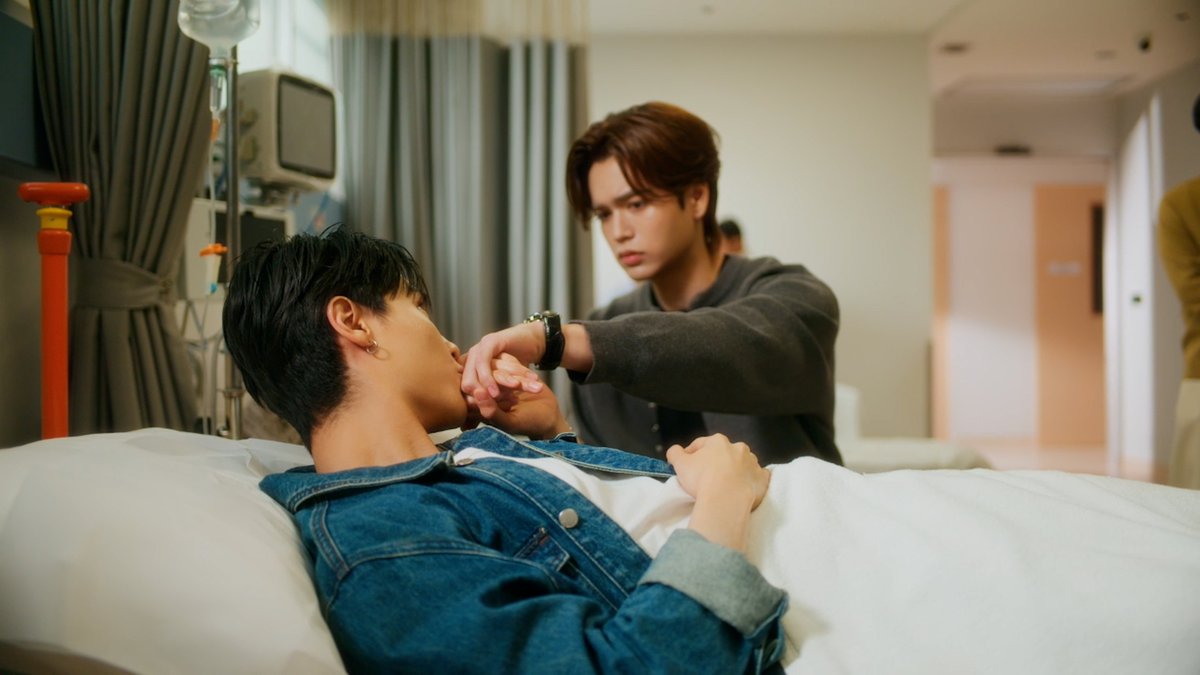
a slippery divorce (almost) #MyRomanceScammerEP8 sometimes the truth of love is not in what we decide, but in what escapes us when we are too frightened to pretend. this final scene does not end with a grand confession or a dramatic reconciliation. it ends with instinct. with panic. with care that slips out before pride can stop it. this scene is not about whether they still love each other. viewers already know they do. this scene is about what the body reveals when the heart is too overwhelmed to hide behind language anymore. just like how the episode started with laundry, the final scene ends with laundry. and right away tim looks absent versus at the beginning of the episode he looks confident and playful. here he is doing the action of laundry, but he is not really there. his hands are moving, his body is standing, the basket is on the table, but his mind is somewhere else entirely. this shows how shattered and preoccupied he still is after the dinner and after agreeing to the divorce. he has already said yes to something his heart does not accept. and you can see it in the way he moves through ordinary tasks without fully inhabiting them. this is grief in its dullest form. not dramatic. not loud. just disorientation. yu enters with his own laundry, the laundry he promised north he would do, and asks casually, “can i put my laundry in your load?” but tim does not even register that he is there. yu has to call him more than once, then physically tap him on the back to pull him out of his thoughts. tim is not ignoring him. he is lost inside himself. and when yu finally asks, “where’s your mind at? you look like a kicked puppy,” it is almost funny, but painfully accurate. tim does look like a kicked puppy. not angry. not resistant. just defeated in that soft, helpless way that says he has already been hurt before the real ending has even happened. he can’t even hide behind his jokes or humour any longer. then comes the line that tells us everything: “pai said he wants a divorce. i already agreed to it.” tim says he agreed, but the scene immediately shows us that agreement and acceptance are not the same thing. he agreed because he loves pai enough not to force him. he agreed because he knows pai’s reasons are valid. he agreed because love cannot be begged into trust. but emotionally, spiritually, psychologically, he does not want it. and the whole scene lives inside that contradiction. he’s worried that the final thread that connects them will be forever severed and he’ll have no reason to stay by pai’s side. yu tries to encourage him. “it’s alright. take it easy. i got divorced before getting back together as well. there’s still hope. don’t be discouraged.” this is more than comic reassurance. it introduces the possibility that divorce does not have to mean emotional finality. that legal endings and emotional endings are not always the same thing. this whole episode has been haunted by the difference between what is official and what is true. tim says yes to the divorce. but his love has not said yes. his body has not said yes. his hope has definitely not said yes. after yu leaves, tim goes back to the laundry, but now the emotional logic of the scene becomes almost cruelly poetic. he slips. he falls. clothes scatter everywhere. and yes, there is irony here, because viewers have seen tim stage harm before. viewers know the history of injury and manipulation in this relationship. but this time it is real. there is no plan. no angle. no calculated accident. just a real fall from someone who is distracted, exhausted, and heartbroken. that difference is essential. the first time harm brought pai to him through deception. this time harm brings pai to him through truth. and then the scene cuts to pai getting ready. this cut is brilliant because it puts both of them in parallel. tim is outside, physically unraveling (though unconscious). pai is inside, emotionally unraveling. pai looks in the mirror, but he does not look happy or resolute. this is not the face of someone relieved to finally end things. it is the face of someone doing what he believes he has to do, not what he wants to do. there is a subtle heartbreak in the preparation itself. he is dressing for the district office, for paperwork, for finality, but nothing in him looks settled. he looks sad. heavy. almost fragile in his composure. then he steps out, and yu and north are there coming along as witnesses. even that detail is painful. this is supposed to be an administrative moment, a legal severing, but it takes a small, quiet support system to get through it. and the first thing pai notices is absence. “where is tim? why isn’t he here?” that question matters more than it seems. because even now, even after everything, part of pai still expects tim to show up. still tracks his presence. still notices his absence before anything else. and when yu says he just saw him out back doing laundry, pai immediately calls for him. “Hey!” and then the suspicion comes. “is he trying to get out of this?” this line shows how much pai still does not know how to read tim cleanly anymore. part of him still thinks tim might be avoiding, stalling, escaping. and given everything that has happened, that suspicion is understandable. but then pai goes looking for him and finds something else entirely. tim is unconscious. clothes everywhere. body on the floor. no performance. no excuse. no charm. just a real injured person. and pai’s reaction is immediate. “hey. are you hurt? what happened?” then calling out, “north! yu!” this is one of the clearest examples in the entire story of pai’s body choosing before his pride can intervene. there is no delay, no bitterness, no coldness. just alarm. urgency. fear. viewers have seen this before. pai rushing toward injury. pai panicking over tim. pai turning into pure instinct when tim is hurt. and that repetition is not accidental. it is the show telling us that no matter how hard pai tries to intellectualize this relationship, his care remains involuntary. he cares about tim deeply and it shows when tim is physically hurt. time and time again. the hospital scene deepens that further. north is rubbing pai’s back in the waiting area, trying to comfort him, and pai looks exactly like someone who is trying not to let panic fully show but failing. when the doctor comes and says tim is safe, pai does not waste a second. “can i see him?” there is urgency in that line. no hesitation. no pause to collect himself. he has to see him with his own eyes. and then he enters the room. this entrance is beautifully acted because pai does not rush all the way in immediately. he stops for a second when he sees tim in the bed. that pause matters. it is the moment where fear turns into visible relief, where the worst possibility dissolves but leaves the body still shaking from what it imagined. then he hurries to his side, takes his hand, touches his arm, and the first thing he asks is heartbreaking in its own way: “this is not a ruse, is it?” that line says so much about the damage that still lives between them. even in his fear, even with his heart clearly in his throat, pai still has to ask whether it is real. because tim has lied before. because injury has been manipulated before. because love and deceit have been so entangled that even panic has to pass through suspicion first. and tim shaking his head in response matters. no words. just no. this is real. then pai slips almost immediately into scolding him. “why were you so careless? i told you to scrub the algae off that part of the floor.” and this is one of the most revealing things about pai. when he is terrified, love comes out sounding like a lecture. care comes out as nagging. panic comes out as telling you what you should have done differently. it feels domestic in the deepest way. not performative romance, but the kind of intimacy that has long moved past beautiful words into irritated concern. this is how people sound when they are afraid of losing someone they are used to caring for. tim says, “i’m sorry.” and then the line happens. “you’re always like this, teerak. i don’t like it.” this is the emotional center of the scene. because pai does not plan this. he does not think it through. it slips out. and the word “teerak” changes everything. it is not just an endearment. it is a memory. a habit. a truth that has lived in his body longer than his anger. and the fact that it comes out now, when he is shaken, terrified, relieved, and vulnerable, tells viewers something undeniable. the love is still there. not in theory. not in nostalgia. in reflex. tim hears it instantly.eyes wide open. Instantly shifts his body to pai. “what did you just call me?” his reaction is almost disbelieving, because he knows how much that word means. he knows how long it has been since pai let that part of himself surface. and pai himself looks shocked, almost caught by his own heart before his mind can deny it. then he pulls back into self consciousness. “don’t make fun of me. i’m still shaken.” that line is so painful because it is both explanation and concealment. yes, he is shaken. yes, the word slipped because he was scared. but it also means he knows exactly what happened and is not ready to fully face it. then tim does something so small and so important. he takes pai’s hand and rubs it with his thumb. then he brings it up and kisses it. this is such a quiet reversal. tim is the one in the bed, tim is the one injured, tim is the one who should be receiving comfort, and yet he is the one soothing pai. because tim understands something essential in that moment. pai is the one shaking. pai is the one who almost lost him, even for a second. so tim comforts him not because he is stronger, but because he knows where the fear is landing. and in the quiet gesture of tim lifting pai’s hand to his lips, there is a return to something achingly familiar. this is the same tenderness pai once knew, the same instinct to soothe, to care, to hold gently. it reinforces that these are not two separate people, but different versions of the same man that is tim, because even now, stripped of the facade, that instinct to love him softly has never disappeared. and pai responds too. he rubs tim’s hand back. both of them are touching each other, soothing each other, trying to steady the same fear from opposite sides. this mutual hand-rubbing is such a beautiful detail because it says what the scene has been proving all along: they are still each other’s instinct. even hurt, even separated, even after truth and betrayal, when crisis hits, they still move toward each other the same way. in the background, yu quietly tells north, “from the look of it, i don’t think they’re getting divorced.” and the line lands because it is true, but not simply in the legal sense. this scene is not really telling us the paperwork will be cancelled because of one accident. it is telling us that their emotional truth is stronger than the formal ending they were about to impose. the divorce was meant to be clarity. this accident exposes that clarity as incomplete. what makes this last scene interesting is that it pulls everything back to instinct. all episode, they have been trying to speak carefully, think logically, build structures around their pain. dinner reservations, divorce conversations, bakery management, practical plans. but here, none of that survives the shock of almost losing each other. what remains is the core. pai runs to him. tim comforts him. the endearment returns. the hands find each other again. for viewers, it tells us that pai’s desire for divorce was never about lack of love. it was about broken trust and the need to survive. and it tells us tim’s agreement was never surrender. it was love trying to be selfless. but when an accident strips both of them back to pure instinct, the truth underneath all of that is undeniable. they are still emotionally tethered. not by obligation. not by legal status. not by guilt. by care. and that is why the scene hurts so much. because it is not a dramatic reunion. it is something sadder and more beautiful. two people realizing, in the most frightened possible moment, that the part of them still reaching for each other never really left. what breaks the heart about this scene is not that love returns. it is that love was there the whole time, waiting for fear to loosen what pride kept shut. this final scene also parallels earlier injuries in the story, but with a crucial difference. before, injury brought them together through manipulation, strategy, or hidden motive. here, injury reveals them without any of that. this time, nothing is staged. nothing is performed. nothing is being earned. and because of that, the tenderness feels even more real. it is no longer filtered through the facade tim once built for pai. nor through the defensive anger pai built after the reveal. it is raw. worried. ordinary. and therefore, maybe more intimate than ever. the episode does not end by solving everything. it ends by giving viewers something more painful and more hopeful than resolution. it gives us proof. proof that love still lives in the spaces they cannot control. proof that care still arrives before thought. proof that even when they are trying to say goodbye, their hearts are still learning the language of staying.

the dinner where truth had no where to hide (part iv) #MyRomanceScammerEP8 the version you loved, the version you lost. the question that follows is deceptively simple, but it cuts deeper than anything said before. “was it hard playing tim?” on the surface, it sounds like curiosity. but psychologically, this is pai asking something much more devastating. was loving me a role to you? was everything i held onto… just performance? tim asks, “what do you mean?” pai clarifies, “being someone who was created exactly just for me,” and this forces viewers to sit with the precision of what tim did. he did not just lie. he tailored himself. he studied pai’s preferences, his rhythms, his emotional needs. the way he dressed, the way he spoke, the way he deferred, the way he never challenged pai even when he had his own opinions. during wedding planning, during conflicts, during decisions. that version of tim was built to fit seamlessly into pai’s world. and here is the uncomfortable truth. that version was not entirely fake. it was curated. amplified. restrained. but not entirely invented. tim answers honestly again. “it was hard… it wasn’t me at all. to tell you the truth, i don’t think someone like him exists. he’s like… a unicorn. too good to be true.” and this is where tim misunderstands himself, in my opinion. because he believes that version of him is impossible. unattainable. a fantasy. but what he fails to recognize is that pai did not fall in love with something nonexistent. pai fell in love with a version of tim that did exist, just not sustainably, not continuously, not without effort or distortion. that gentleness, that attentiveness, that care… they were real traits. but they were stretched into perfection. and perfection is what breaks reality. tim calls it a unicorn. pai calls it something he is grieving. “it’s too bad… i’d love to meet him just one more time.” this is not longing for a lie. this is mourning. because pai never got to say goodbye to that version. the man who courted him, who asked him to marry him, who stood beside him before everything shattered. that version disappeared the moment the truth was revealed, without warning, without closure. and now pai is asking, just for a moment, to see him again. not to stay. not to believe in him again. just… to say goodbye. and tim, almost instinctively, obliges. “that tim? …alright.” what follows is one of the most painful transitions in the entire series. tim adjusts himself. his posture, his tone, the way he leans forward, the way his voice softens. and then, “hey teerak.” that single word carries the weight of everything they lost. because it is familiar. it is intimate. it belongs to a time before everything broke. and the moment pai hears it, he sees him. not the man in front of him now, but the one he loved. and the realization is immediate and overwhelming. because it was that easy. that is what hurts. it was always accessible. always there, just beneath the surface. which means the loss was not clean. it was not total. it was conditional. and that makes it harder to let go. pai’s reaction is not anger. he laughs. but this laughter is not joy. it is defense. it is the body rejecting the weight of what it is feeling. because if he sits in it for too long, it will break him completely. and tim says, “don’t laugh. you’re making me break character.” and this line, almost playful, is devastating in implication. because now the audience sees it clearly. what was once effortless is now fragile. what was once sustained is now something that can crack at any moment. the “character” is no longer something tim lives in. it is something he has to consciously step into. and step out of. so he tries again. “hey, teerak. what’s the matter?” and this time, pai doesn’t laugh. this time, it lands. you can see it in the way he freezes. the way his eyes widen, then soften. the way his lips part, then close. this is recognition colliding with grief. this is the moment where pai understands something fully. this version of tim is not gone. but it is no longer his. it doesn’t belong to him because it is not truly real. pai tells this version of tim, “i have something to tell you.” and then, “close your eyes.” what happens next is not just action. it is ritual. tim obeys. sits back. closes his eyes. trusts him. and the camera pulls away, placing the viewers outside again. because what is about to happen is too intimate to be witnessed up close just yet. it becomes something almost sacred. pai stands up from his chair. walks behind tim. stops only for a second. and then pai wraps his arms around him. from behind. not face to face. because this is not about confrontation. this is about farewell. pai rests his chin against tim’s head. closes his eyes. and finally, finally, lets himself feel everything he has been holding back. the tears come slowly. forming in his eyes. quietly. not dramatic, not loud. just… inevitable. this is not just heartbreak. this is grief. because pai is not just losing a person. he is letting go of a version of reality. of memories that now feel unstable. of a love that was real to him, even if it was built on something broken. and tim… knows. he cannot see pau. his eyes are closed. but he knows. his mouth tightens. his expression shifts. and then, without turning, he reaches up and places his hand over pai’s. his thumb brushing gently, grounding, familiar. they are both shedding tears for each other but also for themselves. And neither of them speaks. because there is nothing left to say that would not undo this moment. this is goodbye, but not in words. this is goodbye in touch. in memory. in acceptance. and the details matter here. pai is wearing the watch. throughout the series, time has always been present. schedules, plans, deadlines, carefully constructed timelines of a scam. but here, the watch becomes something else. a symbol of time that has passed, time that cannot be returned, and yet, in this moment, time that feels suspended. because for a brief second, the past and present overlap. pai is holding the man he loved. tim is feeling the person he hurt. and everything exists at once. and then it ends. not with resolution. but with release. and what makes this scene even more devastating is not just what is said, but what is left unsaid. tim never explains everything. not the full reason for the scam. not the debt. not the family. not the house. not his parents. not the desperation that led him here. pai never asks. not because it does not matter, but because, in this moment, it is no longer the point. tim does not ask for another chance. he does not say, stay. he does not ask, do you still love me. pai does not ask, why did you do this to me. he does not say, i still love you. he does not ask, can we fix this. all of those questions exist. they sit between them, heavy, unspoken. but instead of answers, they choose something else. closure. not the kind that resolves everything. but the kind that acknowledges that some things cannot be repaired in the same shape they were broken. and this is where my earlier reflection settles in. what is harder than saying goodbye is standing this close, holding someone, and realizing that love is still there… but it cannot exist the same way anymore. what is harder than letting go is choosing to do it anyway, while every part of you still reaches back and in this moment, pai chooses to let go. and tim… lets him not because the love is gone but because for the first time, they are both seeing it clearly and sometimes, clarity is what finally breaks what love could not hold together.


the dinner where truth had no where to hide (part iii) #MyRomanceScammerEP8 the truth that hurts more because it is gentle. the shift in this part of the scene is almost imperceptible, but it changes everything. the tension of divorce softens into something quieter, more dangerous. pai is drinking. the glass in his hand, the looseness in his expression, the slight smile that doesn’t quite belong to joy. this is not happiness. this is what happens when pain settles just enough for honesty to slip through. liquid courage, yes, but also emotional surrender. because the questions he asks now are not about legality or separation. they are about understanding. “was i an easy target?” and this question is devastating in its simplicity. because it is not really about strategy. it is about worth. it is about asking, was i chosen because i was weak? because i was naive? because i was easy to break? and tim, even in this moment, does not lie. “not really. you’re kind of stubborn.” this answer matters. because he could have softened it, deflected, reassured him in a gentler way. but instead, he tells the truth. pai was not easy. pai was a challenge. and then tim continues, laying out the architecture of the scam with almost clinical precision. “you like challenges even when you keep complaining that it’s exhausting… so i put you in some challenging situations at first.” this is where the psychology of pai is fully exposed. tim did not just manipulate him randomly. he studied the way pai moves through the world. pai is someone who thrives on overcoming, on proving himself, on pushing through difficulty even when it drains him. and tim used that. not by forcing him, but by presenting him with something pai would choose himself. this is not force. this is engineered consent. and that is what makes it more unsettling. “once you accepted the challenge, you began to have fun. once you had fun, you let your guard down.” this line is almost cruel in how accurate it is. because it reframes their entire relationship. what pai thought was natural progression, curiosity turning into comfort, was in part designed. but at the same time, it reveals something else. pai’s joy was real. his laughter, his excitement, his openness. those were not fake. they were just… reached through manipulation. and that is the contradiction that sits at the heart of this scene. something can be built on a lie and still feel real while you are inside it. the exact same way tim’s care and affection for pai was built on alie but was still very real. “after that, i just let my gentlemanly side take the lead.” and here is where everything collapses into ambiguity. because this is not a confession of pure deceit. this is an admission that somewhere along the way, the act stopped being entirely an act. tim had that side in him. the caring, attentive, gentle version of himself. and instead of switching it on as a performance, he says he let it lead. meaning there was a point where he stopped controlling it, where it became instinct instead of strategy. and pai hears all of this. he does not interrupt. he does not lash out. he nods. slowly, almost like he is piecing together something that has already been forming inside him. and then he says, “you stripped me bare, didn’t you?” this line is layered in a way that is almost unbearable. on the surface, it is accusation. you broke me down. you took everything from me. you exposed me. but underneath, it is also confession. you saw me. you got past everything i built to protect myself. you reached parts of me no one else has. to be stripped bare is not just to be hurt. it is to be known completely. and that is the paradox pai is sitting in. the same person who deceived him is also the one who understood him most intimately. and tim… does not deny it. he does not apologize in this moment. he simply looks at pai and smiles. not arrogantly, not proudly, but softly. because he knows exactly what pai means. and because, in some quiet way, that connection was real to him too. “do you have any more questions?” and this is where the scene opens up into everything that is unsaid, which we will talk about in the last part. because there are so many questions pai could ask. why did you do it. what happened to you. who are you really. what else have you lied about. what was real. what wasn’t. but pai does not ask any of those. instead, he goes back to the beginning. “is tim really your name?” and this is one of the most important psychological choices in the entire scene. because pai is not trying to understand the scam anymore. he is trying to understand the person. and the most basic, foundational piece of knowing someone is their name. identity. existence. truth at the most fundamental level. it’s what one does when they first encounter someone. that first impression. it’s almost as if pai was trying to get to know tim again yet he is in denial. after everything that has happened, pai is not asking for the big explanations. he is asking, who are you, really, at the simplest level? and tim’s reaction is almost disarming. “it is!” there is a lightness to it. almost a laugh. as if even he is surprised that this is the question pai chose. because for someone who has lived through layers of lies, aliases, constructed identities, this is the one thing that remained untouched. “you didn’t even think about using an alias?” and pai’s tone here carries something almost ironic. questioning the logic of a scammer who, in every other way, was meticulous. why leave something so obvious, so traceable, so real? and tim answers with something that shifts the entire narrative. “it just kinda slipped out the first time i met you… that moment felt really special.” this is not strategy. this is instinct. and the flashback confirms it. “i’m tim.” “i’m pai.” a simple exchange. but now, recontextualized, it becomes something else entirely. because in that moment, before the layers of the scam fully settled in, tim was not performing. he was reacting. he was meeting someone who made him forget, even briefly, what he was supposed to be doing. “it didn’t feel like i was scamming anyone.” this line changes everything. because it means that from the very beginning, there was a fracture in the plan. a moment where intention and feeling diverged. tim was still a scammer. the situation was still built on deceit. but emotionally, something real had already begun. “it was like… i was actually flirting with someone i really wanted.” remember that tim did not first encounter pai as a target. he saw him first, simply as a person, in the mall. before the plan, before the structure of the scam, before intention had fully taken shape, there was already something there. an attraction, a pull, something that made pai stand out among everyone else. and maybe tim himself did not name it in that moment, did not recognize it as love or even the beginning of it, but the body often knows before the mind does. which reframes everything that comes after. it unknowingly became love at first sight. because when tim says, “it just kinda slipped out… that moment felt really special,” it is not just about that single interaction. it is tied to that first sighting, that first impression that lingered longer than it should have. choosing pai as a target was not entirely random, not entirely calculated. it was influenced, however subtly, by that initial pull. which makes the scam itself even more complex. it was never just business. there was already something personal embedded into the choice before the game even began. and that is what makes pai’s position even more unbearable. and this is where the tragedy deepens. because now the audience understands what pai is trying to find in this conversation. because the person he is trying to understand now, the one sitting across from him, did not start as a lie. the lie came after. layered on top of something that, in its earliest form, might have been the most honest moment tim ever had with him. which means pai is not just searching for truth within deception. he is unknowingly tracing it all the way back to a moment where, for once, tim did not mean to deceive him at all. pai is not trying to understand the scam. he is trying to locate the truth within it. to figure out if the person he loved ever really existed, or if he was entirely constructed. and tim, without realizing it, gives him the answer. yes, it existed. but not cleanly. not honestly. not in a way that pai could safely hold onto. and that is why this part of the scene feels so heavy. because the truth is no longer simple enough to reject. if everything had been a lie, pai could walk away cleanly. but it wasn’t. and now he is left with something much harder. not the grief of being fooled, but the grief of knowing that what he felt was real… just born in the wrong way, at the wrong time, from someone who did not know how to give it without breaking everything else around it.


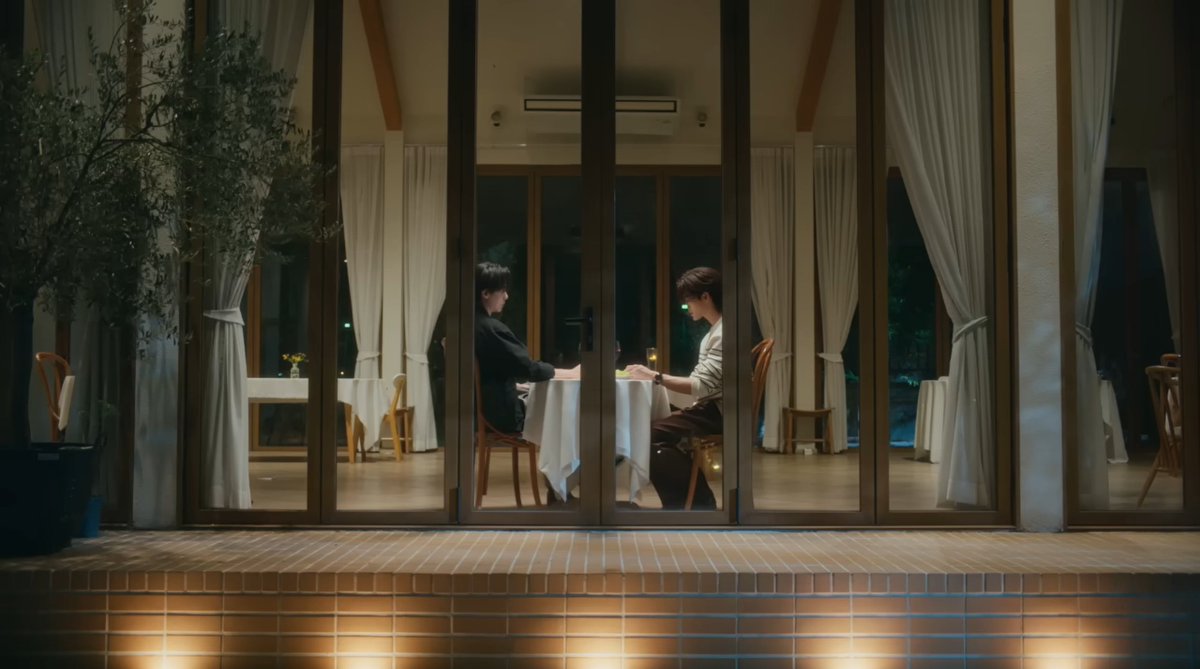
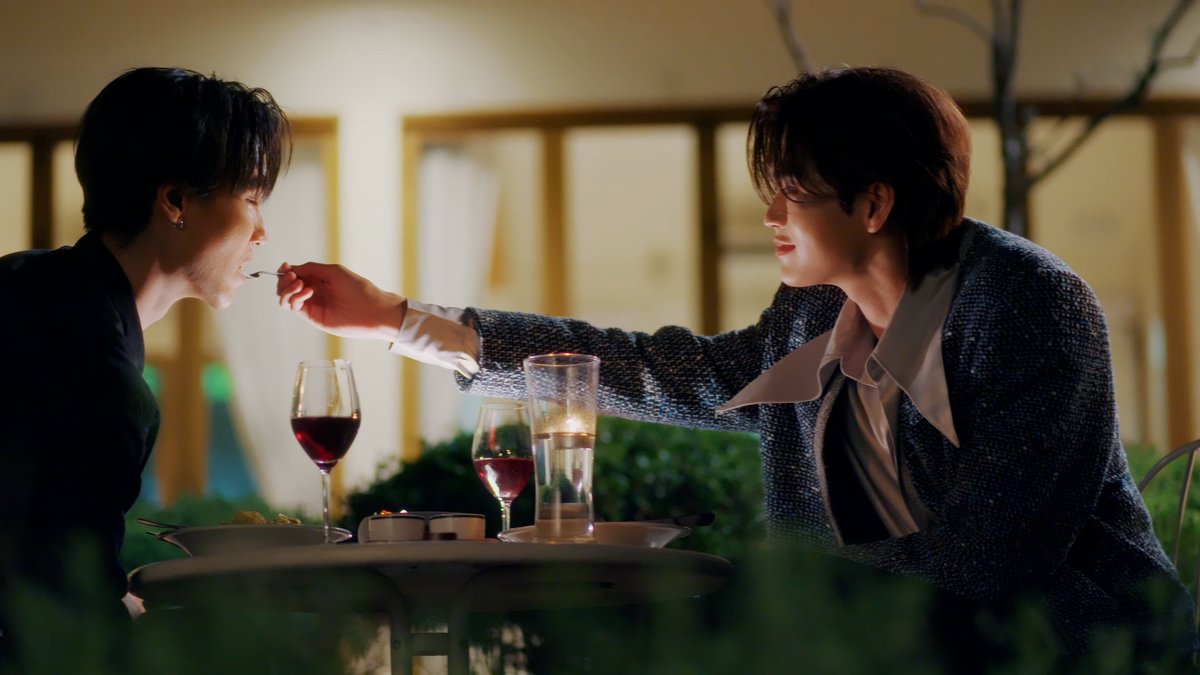
the dinner where truth had no where to hide (part i) #MyRomanceScammerEP8 this is the scene. the one where everything strips down. no noise. no distractions. no one else to interrupt. just two people sitting across from each other with nothing left but truth, consequences, and whatever fragile pieces of love still remain. and what makes this scene devastating is not what is said. it is what cannot be undone. we begin quietly. pai tells north he will leave early. it is practical, almost routine. “i’ll see you at home.” nothing emotional, nothing revealing. but even here, there is already a shift. pai is choosing to go. choosing to meet tim outside of obligation, outside of shared space. this is intentional. this is not coincidence. this is the first step toward confrontation. tim is waiting. he is not late. he is not distracted. he is not careless. he is anxious, alert, ready. when pai approaches, tim immediately stands, moves, opens the door. there is a nervous urgency in him. a quiet eagerness. the kind that comes from someone who knows this moment matters more than anything else right now. because it does. the camera first places viewers outside the restaurant, looking in. and this framing is not accidental. we are not sitting at the table with them. we are watching them. separated by glass, like observers to something fragile, something contained, something that could break if we got too close. and inside, there is no one else. no background noise. no movement. the entire space is empty except for tim and pai. they are alone. but it does not feel intimate. it feels exposed. this is where the parallel to their first dinner becomes almost unbearable. it’s the same exact location and tim remembers. that first dinner after their first month of dating was bright despite it being in the evening as well. warm. open. they sat outside, leaned in towards each other, smiled easily. laugh loudly. pai in his glittering blazer, tim looking sharp. Is attentive, charming, soft. everything looked like the beginning of something beautiful. but now we know that beauty was incomplete. because it was not built on truth. and here, in this empty restaurant, everything is reversed. no laughter. no softness. no illusion. pai is no longer dressed in elegance. he is wearing tim’s clothes. stripped of status, stripped of identity, stripped of everything that once defined him externally. tim, too, is no longer performing. no carefully curated charm. no smooth persona. just himself. this dinner is quieter. duller. heavier. and yet this is the first time they are truly meeting each other. because this time, there is nowhere to hide. everything is in parallel yet the exact opposite. and you know what? sometimes the most honest version of love looks nothing like the one we first fell for. the silence between them is thick. and the first line that breaks it is not gentle either. “you don’t have the kind of money that can reserve this whole place.” it is not a question. it is not curiosity. it is a statement. pai is not here to be impressed. he is here to see through things. and tim falters. “just forget about that kind of thing.” he tries to brush it off, to deflect, maybe out of habit, maybe out of fear. but pai does not let it go. he crosses his arms. he waits. he demands truth without raising his voice. and tim realizes. there is no version of this conversation where he can hide. tim looks away like he was trying to find an answer, takes a breath, rubs his knee and he tells the truth. “i took out a loan on my car.” and that moment lands quietly, but heavily. because this is not just about money. this is about tim choosing to give something he cannot afford, for someone he cannot afford to lose. pai’s response is immediate, sharp, grounded. “you shouldn’t live beyond your means. don’t you realize we’re legally one person. i don’t want to have to be liable to any debts you incur.” this is pai in survival mode. practical. structured. controlled. he brings it back to legality, to consequence, to shared liability. he refuses to romanticize the gesture. because to him, this is not love. this is risk. this is instability. this is another mess waiting to happen. and underneath that, it is fear. fear of being dragged into something he cannot control again. fear of being tied to someone who makes reckless choices. fear of repeating the same cycle. but tim’s answer changes everything. he confesses, “i just… i want to give you what you were used to.” and this line is where the scene breaks open. because for the first time, tim is hiding behind humour or performing generosity. he is confessing inadequacy. he knows he cannot match the world pai came from. he knows he cannot give him the life he once had. he knows he has nothing left to offer except himself. and yet. he still tries. he tries in the only way he knows how to make the dinner special or memorable. catering what he thinks pai would like and want. he understands pai has been suffering. tired. and just wants to be cared for. but this time. love, when it has nothing left to offer, still reaches out with empty hands. there is no joke here. no deflection. no charm. just a quiet, painful truth. It’s like tim is saying, “i don’t have what you had. but i still want to give it to you.” and pai looks at him gently, almost differently, in that moment. because this is not the tim he met. this is not the man who curated perfection. this is someone who is painfully aware of his shortcomings and still choosing to try. and that is where the heartbreak deepens. because this version of tim is real. and it comes too late. but there's a realization that this tim now who tries and shows care, is also the same tim as before who tried and showed cared. and maybe that is what makes it hurt even more. because this version of tim, stripped of the facade, is not entirely new. the care, the attentiveness, the instinct to look after pai… it was always there, even when it was wrapped in deception. which means pai is not just grieving a lie, but coming to terms with the unbearable truth that parts of what he loved were real all along, just given to him under the wrong name, at the wrong time. and you know what’s painful and heartbreaking? the cruelest timing in love is when the truth arrives after the damage is already done. tim’s expression softens into something almost childlike. unsure. hopeful. bracing. like he is waiting to see if this honesty will be accepted or rejected. and pai. does not respond with softness. not yet. because understanding does not erase pain. because truth does not undo betrayal. because love, when broken, does not return in the same shape. and this is what makes this dinner one of their most important scenes. not because they reconcile. but because for the first time. they are both fully present. no illusion. no performance. no roles. just two people (who are still very much in love with each other) sitting in the quiet aftermath of everything that has happened, trying to figure out what remains. this is not the dinner where they fall in love. this is the dinner where they learn what love costs. and that is only the beginning.

the dinner where truth had no where to hide (part iii) #MyRomanceScammerEP8 the truth that hurts more because it is gentle. the shift in this part of the scene is almost imperceptible, but it changes everything. the tension of divorce softens into something quieter, more dangerous. pai is drinking. the glass in his hand, the looseness in his expression, the slight smile that doesn’t quite belong to joy. this is not happiness. this is what happens when pain settles just enough for honesty to slip through. liquid courage, yes, but also emotional surrender. because the questions he asks now are not about legality or separation. they are about understanding. “was i an easy target?” and this question is devastating in its simplicity. because it is not really about strategy. it is about worth. it is about asking, was i chosen because i was weak? because i was naive? because i was easy to break? and tim, even in this moment, does not lie. “not really. you’re kind of stubborn.” this answer matters. because he could have softened it, deflected, reassured him in a gentler way. but instead, he tells the truth. pai was not easy. pai was a challenge. and then tim continues, laying out the architecture of the scam with almost clinical precision. “you like challenges even when you keep complaining that it’s exhausting… so i put you in some challenging situations at first.” this is where the psychology of pai is fully exposed. tim did not just manipulate him randomly. he studied the way pai moves through the world. pai is someone who thrives on overcoming, on proving himself, on pushing through difficulty even when it drains him. and tim used that. not by forcing him, but by presenting him with something pai would choose himself. this is not force. this is engineered consent. and that is what makes it more unsettling. “once you accepted the challenge, you began to have fun. once you had fun, you let your guard down.” this line is almost cruel in how accurate it is. because it reframes their entire relationship. what pai thought was natural progression, curiosity turning into comfort, was in part designed. but at the same time, it reveals something else. pai’s joy was real. his laughter, his excitement, his openness. those were not fake. they were just… reached through manipulation. and that is the contradiction that sits at the heart of this scene. something can be built on a lie and still feel real while you are inside it. the exact same way tim’s care and affection for pai was built on alie but was still very real. “after that, i just let my gentlemanly side take the lead.” and here is where everything collapses into ambiguity. because this is not a confession of pure deceit. this is an admission that somewhere along the way, the act stopped being entirely an act. tim had that side in him. the caring, attentive, gentle version of himself. and instead of switching it on as a performance, he says he let it lead. meaning there was a point where he stopped controlling it, where it became instinct instead of strategy. and pai hears all of this. he does not interrupt. he does not lash out. he nods. slowly, almost like he is piecing together something that has already been forming inside him. and then he says, “you stripped me bare, didn’t you?” this line is layered in a way that is almost unbearable. on the surface, it is accusation. you broke me down. you took everything from me. you exposed me. but underneath, it is also confession. you saw me. you got past everything i built to protect myself. you reached parts of me no one else has. to be stripped bare is not just to be hurt. it is to be known completely. and that is the paradox pai is sitting in. the same person who deceived him is also the one who understood him most intimately. and tim… does not deny it. he does not apologize in this moment. he simply looks at pai and smiles. not arrogantly, not proudly, but softly. because he knows exactly what pai means. and because, in some quiet way, that connection was real to him too. “do you have any more questions?” and this is where the scene opens up into everything that is unsaid, which we will talk about in the last part. because there are so many questions pai could ask. why did you do it. what happened to you. who are you really. what else have you lied about. what was real. what wasn’t. but pai does not ask any of those. instead, he goes back to the beginning. “is tim really your name?” and this is one of the most important psychological choices in the entire scene. because pai is not trying to understand the scam anymore. he is trying to understand the person. and the most basic, foundational piece of knowing someone is their name. identity. existence. truth at the most fundamental level. it’s what one does when they first encounter someone. that first impression. it’s almost as if pai was trying to get to know tim again yet he is in denial. after everything that has happened, pai is not asking for the big explanations. he is asking, who are you, really, at the simplest level? and tim’s reaction is almost disarming. “it is!” there is a lightness to it. almost a laugh. as if even he is surprised that this is the question pai chose. because for someone who has lived through layers of lies, aliases, constructed identities, this is the one thing that remained untouched. “you didn’t even think about using an alias?” and pai’s tone here carries something almost ironic. questioning the logic of a scammer who, in every other way, was meticulous. why leave something so obvious, so traceable, so real? and tim answers with something that shifts the entire narrative. “it just kinda slipped out the first time i met you… that moment felt really special.” this is not strategy. this is instinct. and the flashback confirms it. “i’m tim.” “i’m pai.” a simple exchange. but now, recontextualized, it becomes something else entirely. because in that moment, before the layers of the scam fully settled in, tim was not performing. he was reacting. he was meeting someone who made him forget, even briefly, what he was supposed to be doing. “it didn’t feel like i was scamming anyone.” this line changes everything. because it means that from the very beginning, there was a fracture in the plan. a moment where intention and feeling diverged. tim was still a scammer. the situation was still built on deceit. but emotionally, something real had already begun. “it was like… i was actually flirting with someone i really wanted.” remember that tim did not first encounter pai as a target. he saw him first, simply as a person, in the mall. before the plan, before the structure of the scam, before intention had fully taken shape, there was already something there. an attraction, a pull, something that made pai stand out among everyone else. and maybe tim himself did not name it in that moment, did not recognize it as love or even the beginning of it, but the body often knows before the mind does. which reframes everything that comes after. it unknowingly became love at first sight. because when tim says, “it just kinda slipped out… that moment felt really special,” it is not just about that single interaction. it is tied to that first sighting, that first impression that lingered longer than it should have. choosing pai as a target was not entirely random, not entirely calculated. it was influenced, however subtly, by that initial pull. which makes the scam itself even more complex. it was never just business. there was already something personal embedded into the choice before the game even began. and that is what makes pai’s position even more unbearable. and this is where the tragedy deepens. because now the audience understands what pai is trying to find in this conversation. because the person he is trying to understand now, the one sitting across from him, did not start as a lie. the lie came after. layered on top of something that, in its earliest form, might have been the most honest moment tim ever had with him. which means pai is not just searching for truth within deception. he is unknowingly tracing it all the way back to a moment where, for once, tim did not mean to deceive him at all. pai is not trying to understand the scam. he is trying to locate the truth within it. to figure out if the person he loved ever really existed, or if he was entirely constructed. and tim, without realizing it, gives him the answer. yes, it existed. but not cleanly. not honestly. not in a way that pai could safely hold onto. and that is why this part of the scene feels so heavy. because the truth is no longer simple enough to reject. if everything had been a lie, pai could walk away cleanly. but it wasn’t. and now he is left with something much harder. not the grief of being fooled, but the grief of knowing that what he felt was real… just born in the wrong way, at the wrong time, from someone who did not know how to give it without breaking everything else around it.


the dinner where truth had no where to hide (part iv) #MyRomanceScammerEP8 the version you loved, the version you lost. the question that follows is deceptively simple, but it cuts deeper than anything said before. “was it hard playing tim?” on the surface, it sounds like curiosity. but psychologically, this is pai asking something much more devastating. was loving me a role to you? was everything i held onto… just performance? tim asks, “what do you mean?” pai clarifies, “being someone who was created exactly just for me,” and this forces viewers to sit with the precision of what tim did. he did not just lie. he tailored himself. he studied pai’s preferences, his rhythms, his emotional needs. the way he dressed, the way he spoke, the way he deferred, the way he never challenged pai even when he had his own opinions. during wedding planning, during conflicts, during decisions. that version of tim was built to fit seamlessly into pai’s world. and here is the uncomfortable truth. that version was not entirely fake. it was curated. amplified. restrained. but not entirely invented. tim answers honestly again. “it was hard… it wasn’t me at all. to tell you the truth, i don’t think someone like him exists. he’s like… a unicorn. too good to be true.” and this is where tim misunderstands himself, in my opinion. because he believes that version of him is impossible. unattainable. a fantasy. but what he fails to recognize is that pai did not fall in love with something nonexistent. pai fell in love with a version of tim that did exist, just not sustainably, not continuously, not without effort or distortion. that gentleness, that attentiveness, that care… they were real traits. but they were stretched into perfection. and perfection is what breaks reality. tim calls it a unicorn. pai calls it something he is grieving. “it’s too bad… i’d love to meet him just one more time.” this is not longing for a lie. this is mourning. because pai never got to say goodbye to that version. the man who courted him, who asked him to marry him, who stood beside him before everything shattered. that version disappeared the moment the truth was revealed, without warning, without closure. and now pai is asking, just for a moment, to see him again. not to stay. not to believe in him again. just… to say goodbye. and tim, almost instinctively, obliges. “that tim? …alright.” what follows is one of the most painful transitions in the entire series. tim adjusts himself. his posture, his tone, the way he leans forward, the way his voice softens. and then, “hey teerak.” that single word carries the weight of everything they lost. because it is familiar. it is intimate. it belongs to a time before everything broke. and the moment pai hears it, he sees him. not the man in front of him now, but the one he loved. and the realization is immediate and overwhelming. because it was that easy. that is what hurts. it was always accessible. always there, just beneath the surface. which means the loss was not clean. it was not total. it was conditional. and that makes it harder to let go. pai’s reaction is not anger. he laughs. but this laughter is not joy. it is defense. it is the body rejecting the weight of what it is feeling. because if he sits in it for too long, it will break him completely. and tim says, “don’t laugh. you’re making me break character.” and this line, almost playful, is devastating in implication. because now the audience sees it clearly. what was once effortless is now fragile. what was once sustained is now something that can crack at any moment. the “character” is no longer something tim lives in. it is something he has to consciously step into. and step out of. so he tries again. “hey, teerak. what’s the matter?” and this time, pai doesn’t laugh. this time, it lands. you can see it in the way he freezes. the way his eyes widen, then soften. the way his lips part, then close. this is recognition colliding with grief. this is the moment where pai understands something fully. this version of tim is not gone. but it is no longer his. it doesn’t belong to him because it is not truly real. pai tells this version of tim, “i have something to tell you.” and then, “close your eyes.” what happens next is not just action. it is ritual. tim obeys. sits back. closes his eyes. trusts him. and the camera pulls away, placing the viewers outside again. because what is about to happen is too intimate to be witnessed up close just yet. it becomes something almost sacred. pai stands up from his chair. walks behind tim. stops only for a second. and then pai wraps his arms around him. from behind. not face to face. because this is not about confrontation. this is about farewell. pai rests his chin against tim’s head. closes his eyes. and finally, finally, lets himself feel everything he has been holding back. the tears come slowly. forming in his eyes. quietly. not dramatic, not loud. just… inevitable. this is not just heartbreak. this is grief. because pai is not just losing a person. he is letting go of a version of reality. of memories that now feel unstable. of a love that was real to him, even if it was built on something broken. and tim… knows. he cannot see pau. his eyes are closed. but he knows. his mouth tightens. his expression shifts. and then, without turning, he reaches up and places his hand over pai’s. his thumb brushing gently, grounding, familiar. they are both shedding tears for each other but also for themselves. And neither of them speaks. because there is nothing left to say that would not undo this moment. this is goodbye, but not in words. this is goodbye in touch. in memory. in acceptance. and the details matter here. pai is wearing the watch. throughout the series, time has always been present. schedules, plans, deadlines, carefully constructed timelines of a scam. but here, the watch becomes something else. a symbol of time that has passed, time that cannot be returned, and yet, in this moment, time that feels suspended. because for a brief second, the past and present overlap. pai is holding the man he loved. tim is feeling the person he hurt. and everything exists at once. and then it ends. not with resolution. but with release. and what makes this scene even more devastating is not just what is said, but what is left unsaid. tim never explains everything. not the full reason for the scam. not the debt. not the family. not the house. not his parents. not the desperation that led him here. pai never asks. not because it does not matter, but because, in this moment, it is no longer the point. tim does not ask for another chance. he does not say, stay. he does not ask, do you still love me. pai does not ask, why did you do this to me. he does not say, i still love you. he does not ask, can we fix this. all of those questions exist. they sit between them, heavy, unspoken. but instead of answers, they choose something else. closure. not the kind that resolves everything. but the kind that acknowledges that some things cannot be repaired in the same shape they were broken. and this is where my earlier reflection settles in. what is harder than saying goodbye is standing this close, holding someone, and realizing that love is still there… but it cannot exist the same way anymore. what is harder than letting go is choosing to do it anyway, while every part of you still reaches back and in this moment, pai chooses to let go. and tim… lets him not because the love is gone but because for the first time, they are both seeing it clearly and sometimes, clarity is what finally breaks what love could not hold together.


i've doing all members birthday video and i forgot is almost may