
Soil4Climate

5.5K posts

Soil4Climate banner
Soil4Climate

Soil4Climate

@soil4climate

Katılım Haziran 2015
1.6K Takip Edilen7.3K Takipçiler
Soil4Climate
Soil4Climate@soil4climate·
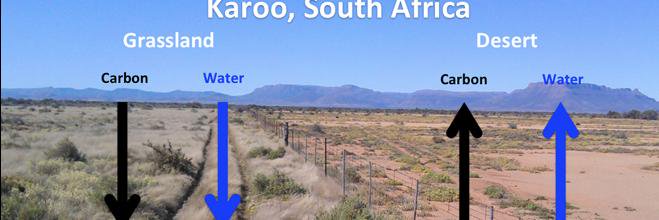
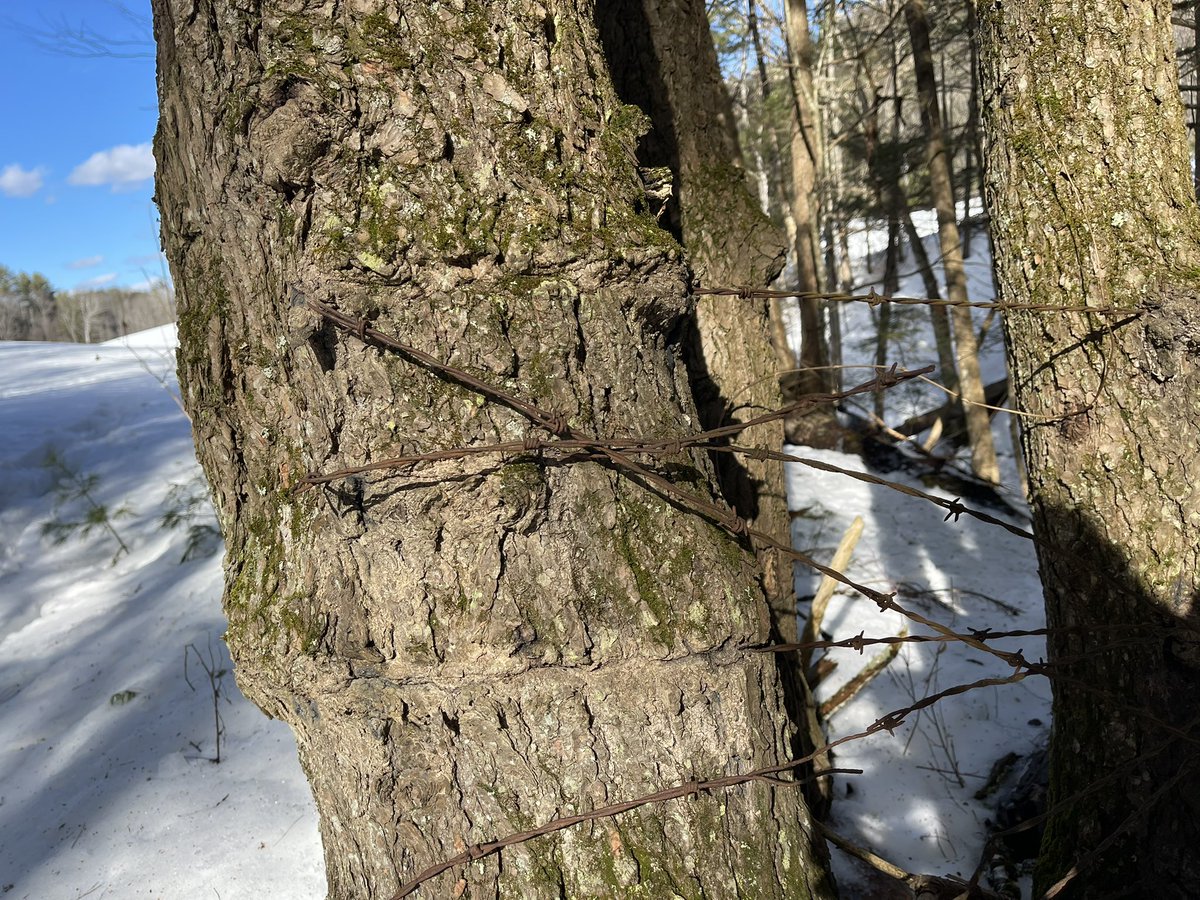
When Hemlock Swallowed Iron and the Future of Grazing Any explanation needed? A typical scene in the Vermont woods: 100-year-old barbed-wire coming right out of the middle of a hemlock tree. Pastures are mostly reforested. Even stone walls in the middle of woods aren’t unusual. Times are certainly changing. Places like Vermont and the rest of New England will reforest when large herding ruminants are gone, but the natural grasslands of the world won’t. They’ll become desert. We don’t need barbed-wire anymore, but, on most of the world, we do need herding ruminants (not to be confused with forest herbivores like deer and moose). How those (domestic) animals are herded remains the ongoing question - electric collars, dogs, drones, walking herders, cowboys and cowgirls, shepherds, or, in parts of Australia, even helicopters 🚁 (Yes. Helicopters). But, one way or another, they have to be herded and there better be a plan. According to Allan Savory, that “plan” needs to be holistic, meaning social, economic, and environmental considerations managed tightly together, as one system. In New England and other perennially wet areas, we can “cheat.” Nature is more forgiving. It will “rebound.” It will gobble up our errors, like hemlock over iron.
Soil4Climate tweet media
English
0
0
2
185
Soil4Climate
Soil4Climate@soil4climate·
It's Soil Saturday! Yebo! What's on your mind today?
Soil4Climate tweet media
English
0
0
0
64
Soil4Climate retweetledi
No Farmers, No Food
No Farmers, No Food@NoFarmsNoFoods·
The University of Nebraska has debunked the onesided manipulation behind cow farts/burps and methane emissions: “They have not accounted for the capture part, they only account for methane being released. Carbon capture in soil and grass - helped out by cow grazing and manure - can far outweigh the emissions from cattle. Grasslands can take up more CO2 and carbon in the soil and plants, that offsets the CO2 that cattle are producing but it also offsets the methane.”
English
69
981
3.1K
36.9K
No Farmers, No Food
No Farmers, No Food@NoFarmsNoFoods·
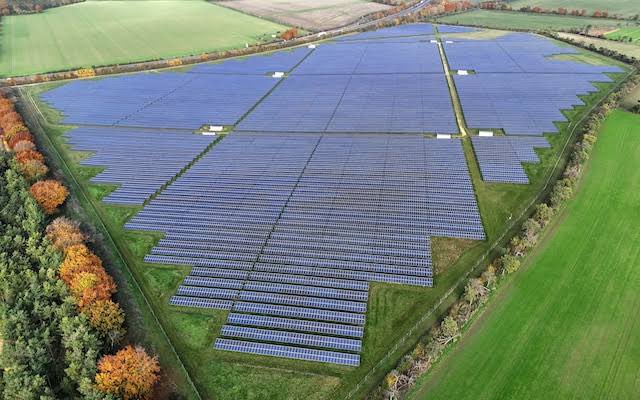
“Don't it always seem to go That you don't know what you got 'til it's gone? They paved paradise and put up a solar farm.”
No Farmers, No Food tweet media
English
32
267
691
8K
Soil4Climate retweetledi
Sam Knowlton
Sam Knowlton@samdknowlton·
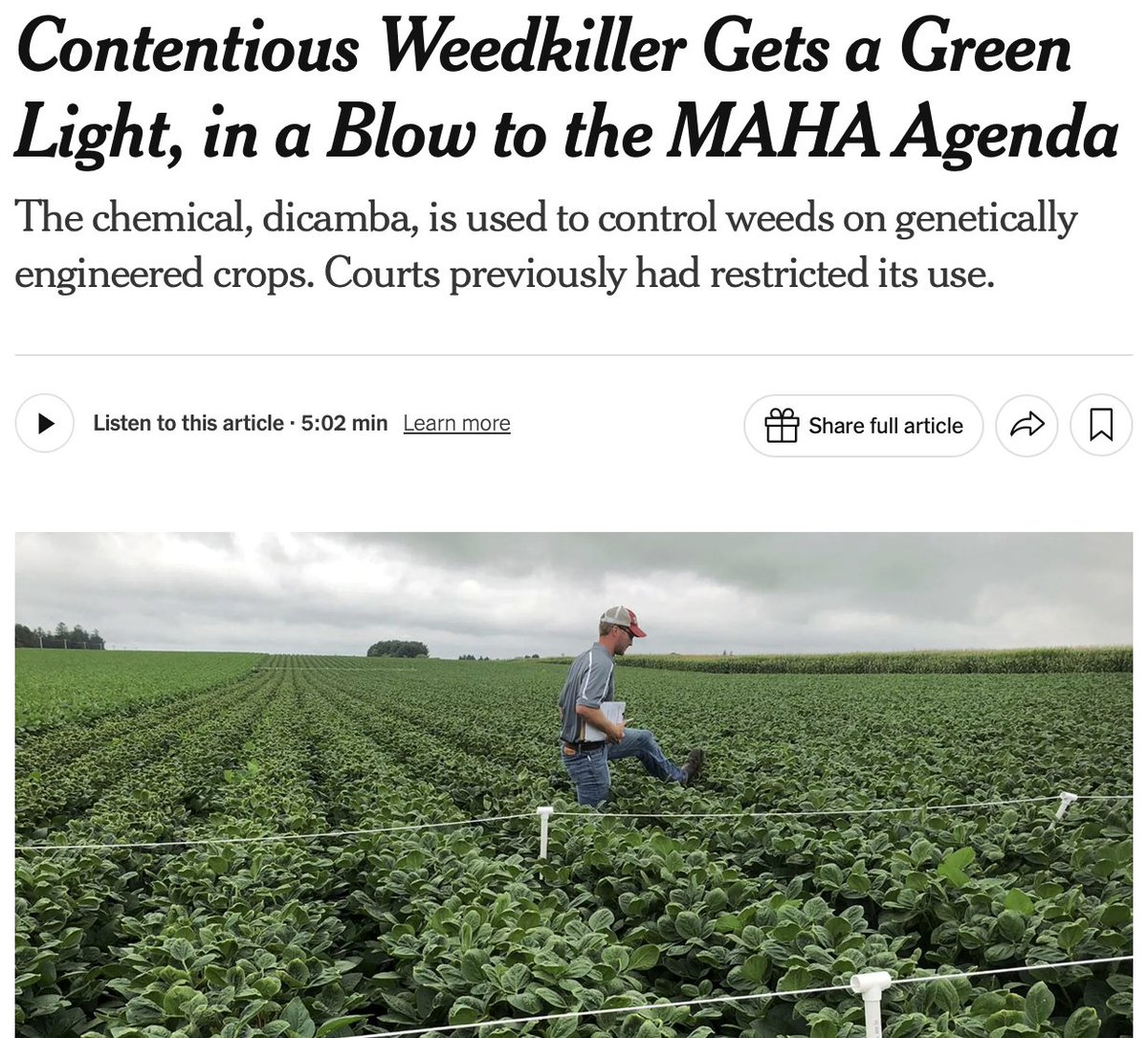
The EPA re-approved dicamba for use on genetically engineered soybeans and cotton, despite mounting evidence that this herbicide is undermining ecological, soil, and human health at landscape scale. Dicamba is a synthetic auxin, meaning it mimics a plant's own growth hormones, triggering uncontrollable cell growth that kills sensitive broadleaf weeds. The problem is that its effects don't stay where they're applied. Dicamba vaporizes for up to 72 hours after application and drifts unpredictably for miles. By 2017, 3.6 million acres of soybeans were damaged across 25 states from drift events. Drift exposures reduce flowering in native plants, suppress pollinators, and shrink insect biomass which cascading through food webs that migratory birds in the depend on. Proponents of dicamba claim it's a necessary tool due to its ability to eliminate "super weeds" that have developed resistance to glyphosate and other herbicides. It turns out the same problem is repeating. Dicamba resistant waterhemp has already been confirmed in 4 states. Weeds are evolving internal detoxification pathways broad enough to neutralize not just dicamba but also herbicides they've never even encountered. Dicamba disrupts rhizosphere microbial communities and upregulates denitrification pathways, essentially draining plant-available nitrogen from the system while suppressing nitrogen fixation. Dicamba increases antibiotic resistance genes in soil bacteria, linking its use to one of the major public health issues of our time. And if that's not enough cause for concern, an NIH study linked the highest dicamba exposure to an 80% increased risk of liver and bile duct cancer, along with non-Hodgkin lymphoma, leukemia, and hypothyroidism. Another biomonitoring study detected dicamba in every pregnant participant across three Midwestern states at four times the concentration measured a decade prior. This is yet another example of the herbicide treadmill. Each chemical fix erodes the biological capital - soil microbiology, pollinators, native plant diversity and ultimately human health.
Sam Knowlton tweet media
English
76
749
1.4K
97.5K
Soil4Climate
Soil4Climate@soil4climate·
Can we have an Olympics of soil? What would that look like?
Soil4Climate tweet media
English
0
1
1
104
Soil4Climate
Soil4Climate@soil4climate·
Superbowl Soil Sunday With Your Host, Seth J. Itzkan 2-8-26, 2-4 PM ET soil4climate-org.zoom.us/j/86737633563 Discussing Soil, Climate, Regen Grazing, Regen Pastoralism, Health, Food, Complex Systems, and Hope for the Future Part of the Soil4Climate 10-year Anniversary Celebration Series Also streamed to the Soil4Climate Facebook group. Will be pinned to the top. facebook.com/groups/Soil4Cl… Let Seth know if you want to be a panelist. seth.itzkan@soil4climate.org
Soil4Climate tweet media
English
0
0
1
67
Soil4Climate
Soil4Climate@soil4climate·
"I just want to say how much I appreciate this community ..." (ten-year reflections) I just want to say how much I appreciate this community, and the entire global network of people working in soil and soil health and, particularly, (those) working on the climate side. And, as it's been ten years now that Soil4Climate has been an organization, it's given me a lot to think about, and to be grateful about ... I'm grateful to all of you who have helped propel this narrative that soil is the skin of the Earth and it has an essential role in regulating the climate, and that regenerative agriculture, including regenerative grazing, will be fundamental parts in how we both regulate the climate to our needs while also providing the food that we need to survive, both ... Ultimately, we're in a partnership with the land and the climate ... And this is what Holistic Management is all about. It’s about establishing that partnership. It evolved out of grazing and land, but what Allan Savory has discovered is that it's so much more than that. It's about how we work within complex systems. So there's a whole sort of systems dynamic to this, which we can get to. And that's part of where I'm coming from in the first place, because I studied engineering in college, and I took thermodynamics, and the whole systems stuff, and emergent behaviors from complex systems, and order out of chaos. That (systems theory) was part of my upbringing anyway. Even before I was an environmentalist, and even before I knew about climate, let alone grazing, I was interested in systems, and emergent behavior from systems, and so this is all sort of a complete cycle, if you will, from where I started from ages ago anyway, as a freshman in college. So, what we're looking for now in the future, is a holistic perspective of our relationship on this planet, and how we manage the energy flows of the planet, and how we produce food while managing those energy flows. And soil is the largest ecosystem type on the landed surface of the Earth that we can manage or be partners in, and the largest ecosystem type within soil is grasslands. And regenerative grazing is an essential part of keeping grasslands healthy and producing food while mitigating global warming. So we have to be focusing on regenerative grazing, and as Allan Savory says, … “When the management is holistic, the agriculture will be regenerative.” So that's where we're really trying to go, is toward a holistic management of the whole system. So, anyway, more, more to say about all of that, but the key point is that thank you, you're a hero for believing that this is even important. It is. It's really important. And I think on Sundays I'm gonna try to have a regular session on Sundays, where we, where we can call in and, you know, have sort of group meetings and webinars about this. Okay, love you. Take care.
English
0
1
3
142
Soil4Climate retweetledi
Sama Hoole
Sama Hoole@SamaHoole·
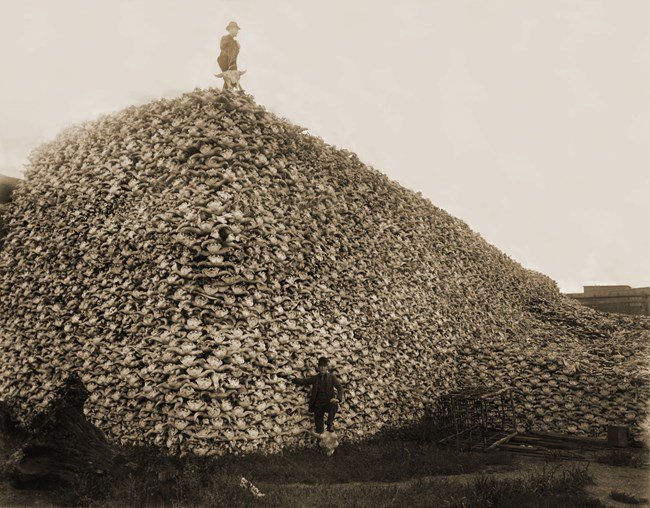
1860s-1880s American West. The U.S. government has a problem: Plains Indians maintain independence through bison hunting. Approximately 30-60 million bison provide meat year-round. Plains Indians need nothing from the U.S. government. Complete nutritional independence enables political independence. The military solution: Eliminate the bison. Systematically. General William Tecumseh Sherman, 1868: "The quickest way to compel the Indians to settle down to civilized life was to send ten regiments of soldiers to the plains, with orders to shoot buffaloes until they became too scarce to support the redskins." He wasn't being metaphorical. This was official policy. 1870-1883: Commercial hunters, often with military support, killed 50+ million bison. Not for meat - most carcasses were left to rot. For hides, sure. But primarily: To eliminate Plains Indians' food source. By 1884: Fewer than 300 bison remained in North America. Plains Indians, forced onto reservations, received government rations: Flour, sugar, lard. Minimal meat. The transformation was immediate and devastating. Sitting Bull, 1883: "Our people were healthy and strong before the white man came. Now they are sick and weak." Reservation agents documented the change: Diabetes appeared. Obesity emerged. Dental health collapsed. Chronic diseases proliferated. All within one generation of dietary change. From bison-based diet (primarily meat and fat) to government rations (primarily flour and sugar). Military reports noted that Plains Indians on reservations were physically weaker than previous generations. Less capable of resistance. This wasn't accidental. It was the goal. Eliminate the bison, force grain dependency, eliminate resistance capacity. The strategy worked perfectly. No major Plains Indian uprising after 1890. Not because they accepted subjugation. Because they lacked the physical capacity to sustain prolonged resistance. The bison elimination was genocide through nutrition. Destroy the food source that enables independence, replace with rations that create dependency and weakness. It's documented explicitly in military correspondence. The goal was stated openly. Modern American history teaches the bison elimination as environmental disaster or economic shift. It was deliberate nutritional suppression to eliminate political resistance. The Plains Indians understood this. Their oral histories are explicit about the connection between bison elimination and population weakening. But American historical narrative prefers the environmental story. Less uncomfortable than admitting we starved populations into submission using grain rations. The experiment worked. The results were documented. Remove the meat source. Provide grain. Watch physical capacity collapse. Plains Indians went from warrior cultures dominating the Great Plains to reservation populations with catastrophic health outcomes in one generation. The variable: Diet changed from bison to flour. That's not coincidence. That's cause and effect. The bison elimination proved what every empire has known: Control protein access, control political capacity.
Sama Hoole tweet media
English
128
587
1.5K
86.1K
Soil4Climate retweetledi
Frédéric Leroy
Frédéric Leroy@fleroy1974·
@NoFarmsNoFoods "Although greenhouse gas emissions from animal agriculture do pose a real challenge, these are often overstated as a primary driver of climate change due to activist-driven half-truths and oversimplified narratives" aleph2020.org/planet/greenho…
English
1
14
55
3.4K
Soil4Climate
Soil4Climate@soil4climate·
Is it fair to say that soil depends on community? thebullvine.com/news/5100-herd… “5,100 Herds Left: How Wisconsin Dairy Neighbors Show Up When the Milk Truck Stops Coming” “Executive Summary: Wisconsin starts 2026 with about 5,100 licensed dairy herds—roughly half as many as ten years ago and only a third of what there were two decades back. The cows and the milk are still there; what’s changing is which farm lanes the milk truck turns into, and how those roads feel when it stops coming to one more yard. This feature takes readers into the kitchens, barns, and sale rings where neighbors quietly scrub parlors on last‑milk days, pull into yards when barn lights stay on too late, and line rural roads with headlights when one family can’t carry it alone. It shows how consolidation, beef‑on‑dairy economics, and aging owners collide with real tools like Wisconsin’s Farmer Wellness Program, 4‑H and FFA projects for non‑farm kids, and lease‑to‑own and non‑family succession paths that keep some barns in use a little longer. The heart of the story isn’t the numbers—it’s the people: farm families, youth, vets, nutritionists, pastors, and co‑op folks who refuse to let each other fall alone. And it closes with simple, realistic ways any reader can strengthen their own road, from checking on late barn lights to opening their barn to one more kid who wants to learn.”
Soil4Climate tweet media
English
0
0
0
92