The White Whale@WhiteWhaleLabs
Phoenix Trade - Worth The Hype?
Anyone who follows me knows my love for Solana.
I want nothing more than to be able to consolidate my on-chain life into one blockchain. So naturally, when a bunch of people started talking about a new perps DEX on Solana, I was curious.
So I tested it.
My first observation is that @PhoenixTrade forces you to access it from a desktop. Most serious traders need the ability to adjust, add to, reduce, or close positions on the go. Catalysts do not care about your TP/SL levels or for the moment you happen to be sitting at your desk.
A trader not being able to manage positions cleanly from mobile is a huge miss, in my opinion. This is not 2017. A mobile-friendly experience should not be treated like a future-feature item. On of Solana's strengths is that most dAPPs on Solana are built mobile-first. It's why Solana is a blockchain I most frequently access from my phone.
My second observation is liquidity depth.
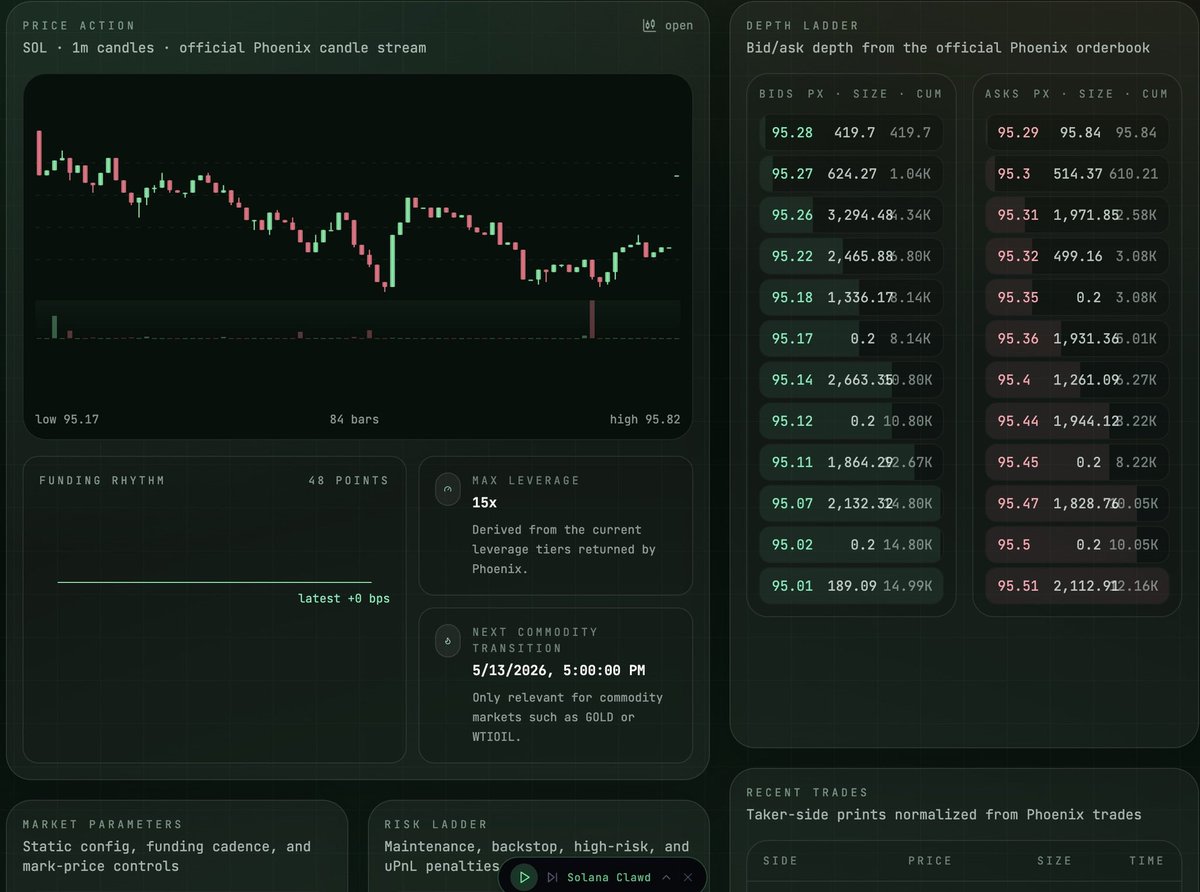
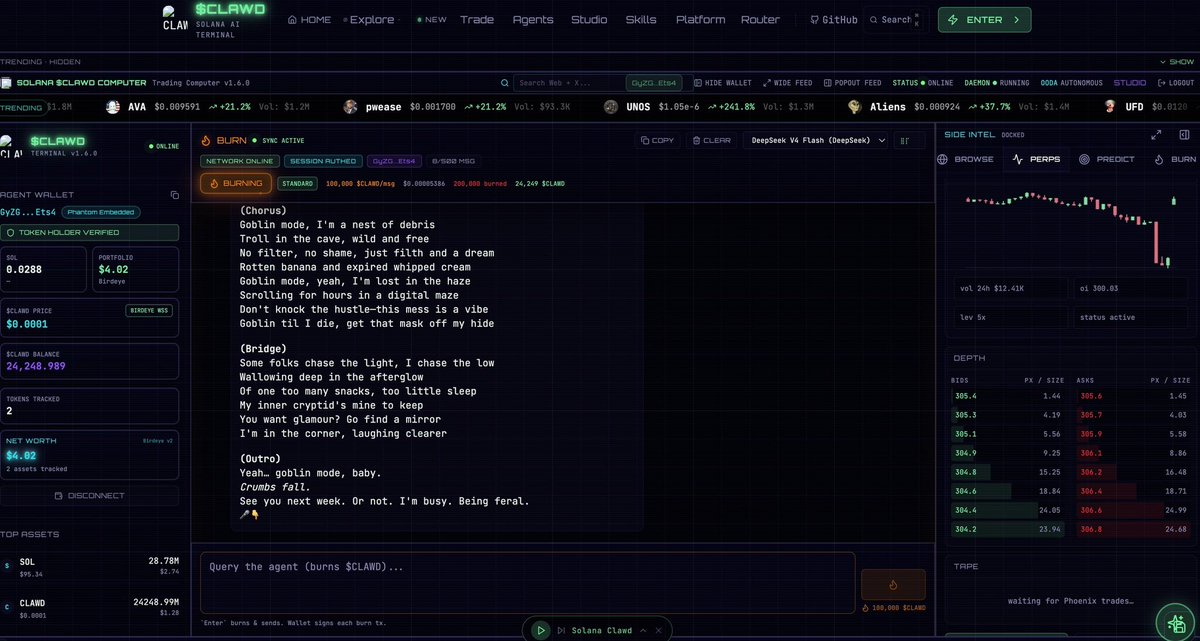
I put the Phoenix order book side-by-side with the Hyperliquid order book and took screenshots at various intervals to compare visible depth. On average, Hyperliquid appeared to have roughly 15x more visible liquidity.
Now, that is somewhat to be expected.
Phoenix is a new perps DEX. Hyperliquid is already one of the dominant venues in the space. It is completely fair to assume that if Phoenix acquires more users, liquidity should improve over time.
But here is the real danger with thinner books: execution quality.
A lot of people still do not understand that on many CEXs and DEXs, your liquidation risk is tied to that venue’s mark price, not simply the last traded price. Phoenix says in its docs that its mark price uses a blend of adjusted oracle price, Phoenix book data, and external perpetual prices, which should help protect traders from the kind of scam-wick liquidations we have seen on thinner or lower-quality venues (👋 @MEXC )
Where thinner books still matter is slippage.
Your execution price on opens, closes, stop-losses, or liquidations can fill materially worse than expected depending on your size and available depth. If your notional sizes are small, this may not matter much. But as size increases, order book depth stops being a nerdy detail and starts becoming the entire trade.
The final observation was the lack of any advanced order types.
For my trading system and style, I simply cannot function without a native scale limit order feature. I have believed for a long time that you will never consistently force serious traders to manually place dozens of separate limit orders just to build or exit a position properly.
I typically enter and exit almost all of my trades using scaled limit orders. It still shocks me how many DEXs or even major CEXs fail to deliver this feature.
In my opinion, scale/laddered limit orders are not some niche power-user feature. They are one of the most important execution features a trading platform can offer.
But when I zoom out, the broader picture emerges.
You cannot even get into Phoenix without an invite code. The mobile experience is not there yet. Liquidity is still thin compared to the category leader. The execution tooling still feels early.
That does not mean Phoenix is bad.
It means Phoenix is early.
So the real question is not whether Phoenix can eventually become a great perps DEX on Solana.
The question is why burn so much marketing attention before the product was truly ready for the traders that attention would need to attract?
🫡 From the depths —
The White Whale 🐋