

Soll
3.1K posts

Bracelet électronique, libération anticipée... : le gouvernement donne son feu vert aux mesures pour réduire la surpopulation carcérale sudinfo.be/id1153519/arti…
Français

@romuald_correia Redonnez ces bâtiments à des gens propres et consciencieux et ils en referaient un petit bijoux et ces mêmes "sauvages" seraient ensuite encore capables de les envier.
Français

Ils vivent comme des porcs jettent les poubelles par les fenêtres et osent dire que c'est parce que les ascenseurs sont en panne 🤔 non c'est juste que c'est des sauvages qui n'ont pas à vivre avec nous
Français

@RadioGenoa Le coup du sac à main de la fille. J'adore ! Mettons des briques dans nos sacs.
Français

He was annoying everyone in London and it didn't end well for him.
English

« Ils ont menacé de revenir avec des armes » : la crèche « Les Roses » à Anderlecht fermée après une tentative d’intrusion sudinfo.be/id1152153/arti…
Français
Soll retweetledi
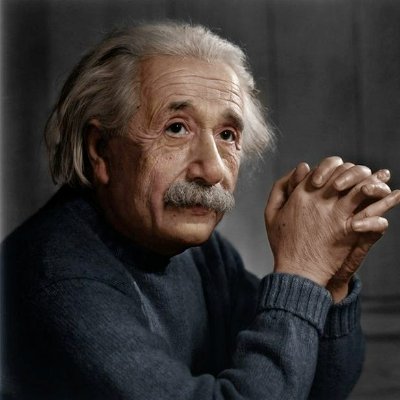
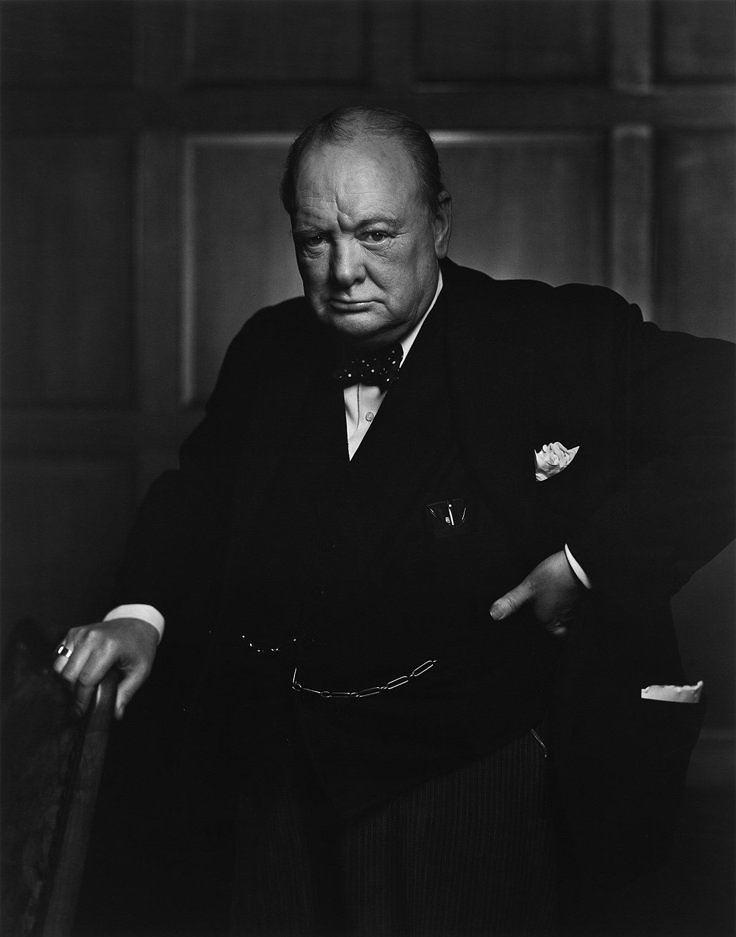
"If you are going through hell, keep going."
-Winston Churchill
English
Soll retweetledi
『音楽でも、歌でも、ダンスでも、演技でも、絵を描くことでも、絵画でも、彫刻でも、詩でも、小説でも、エッセイでも。どんな芸術でも実践しなさい。上手いか下手かは関係ない。お金や名声を得るためではなく、何かになっていくことを体験するために。自分の内側に何があるのかを知るために。そして、魂を成長させるために。』
カート・ヴォネガットさんの言葉。素敵だな。
お金や名声を得るために行動軸がある方はどこかで破綻します。
でもこれは、お金や名声が悪いということではありません。
お金も、名声も、誰かの役に立った結果として自然についてきます。
それ自体を否定する必要はありません。
ただ、それが一番の目的になってしまうと、心は少しずつ苦しくなっていく傾向があります。
ヒトはいつの間にか、自分が何のためにそれを始めたのかを見失ってしまいます。
経済学者のエルンスト・フェールさんは、利他の心は社会を支える大切な力だと語っています。
誰かが困っているとき、手を差し伸べる人がいる。
誰かが苦しんでいるとき、見て見ぬふりをせず支えようとする人がいる。
そうした利他的な心があるからこそ、人と人は信頼し合うことができ、社会は成り立っていくのだと思います。一人で生きていくことは、難しいです。とっても難しいです。だって僕たちは社会的な生き物なのだから。
福祉も、協力も、自由も、文化も、根っこのところには「自分だけではなく、他者も大切にする」という心があるのではないかなと思います。
その中でも芸術は、否応なしに自分を見つめることになります。
特にプレイヤーになると自分を見つめることが多くなります。
面白いことに、自分の内側を見つめることで、他者の痛みにも気づけるようになる。
自分の弱さを知ることで、誰かの弱さにも優しくなれる。
そのような方は、ヒトとしての深みを持たれているので、誰かの心に光を灯すことができると思います。ただ、だからこそ、心に負担をきたすことも、あります。
自分のためだけに磨いた力は、どこかで限界が来ます。
でも、誰かの幸せや、誰かの救いにつながるように磨いた力は、長く続いていきます。
歌うこと。踊ること。演じること。描くこと。書くこと。
それを純粋に自分のために学び、楽しむこと。
その行為の中で、自分の心が少し、やわらかくなる。
そして、そのやわらかくなった心が、誰かに向けられたとき、そこに利他の芽が生まれるのだと思います。
日本語
Soll retweetledi
"La envidia es una declaración de inferioridad"
Napoleón Bonaparte

Español
Soll retweetledi

« Si la souffrance était réellement source d’enseignement, le monde serait peuplé de sages. La douleur n’a rien à apprendre à ceux qui n’ont ni la force ni le courage de l’écouter. » Sigmund Freud
Qu'on se le dise !
Democratic Republic of Congo 🇨🇩 Français
Soll retweetledi

“More is lost by indecision than wrong decision. Indecision is the thief of opportunity.”
- Cicero
English
Soll retweetledi
Soll retweetledi


Soll retweetledi

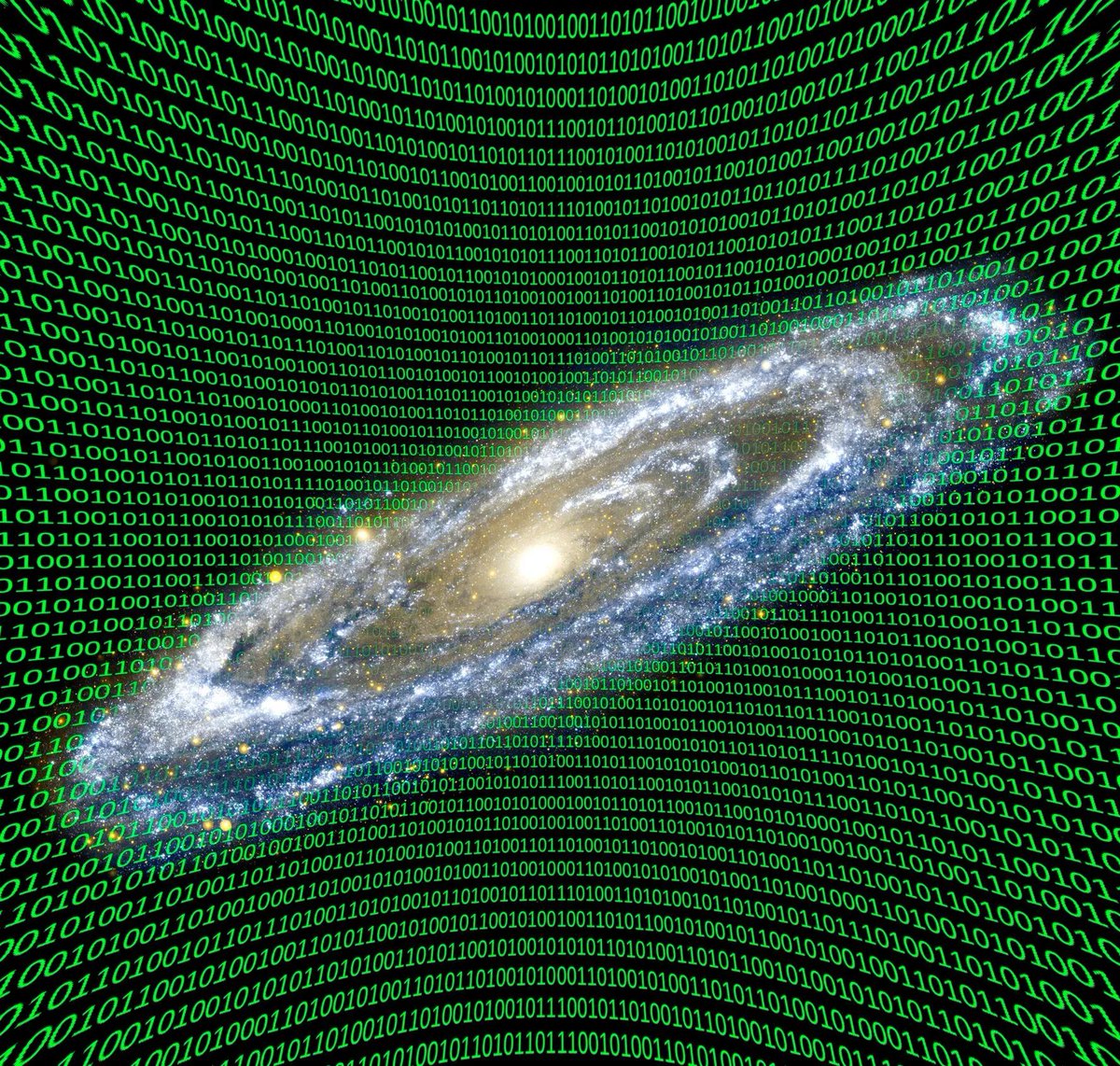
🚨: Physicists prove the Universe isn’t a simulation after all─ mathematically proven
This discovery challenges the simulation hypothesis and reveals that the universe’s foundations exist beyond any algorithmic system.
New research from UBC Okanagan mathematically demonstrates that the universe cannot be simulated.
Using Gödel’s incompleteness theorem, scientists found that reality requires “non-algorithmic understanding,” something no computation can replicate.
English
Soll retweetledi

Stanley Kubrick explique la fin de "2001 : l’Odyssée de l’espace" lors d’un rare appel téléphonique
Français
Soll retweetledi

"My soul comes from better worlds and I have an incurable homesickness of the stars.
— Nikos Kazantzakis

English
Soll retweetledi

“Democracy is not enough. If the culture dies, the country dies.”
— Pat Buchanan

English
Soll retweetledi
@ihtesham2005 Prendre les notes à la main, c'est aussi l'occasion de pouvoir relier des points, schématiser, visualiser. Et sans compter aussi les tonnes d'abréviations, et symboles dont, encore aujourd'hui, je parviens difficilement à me défaire.
Français

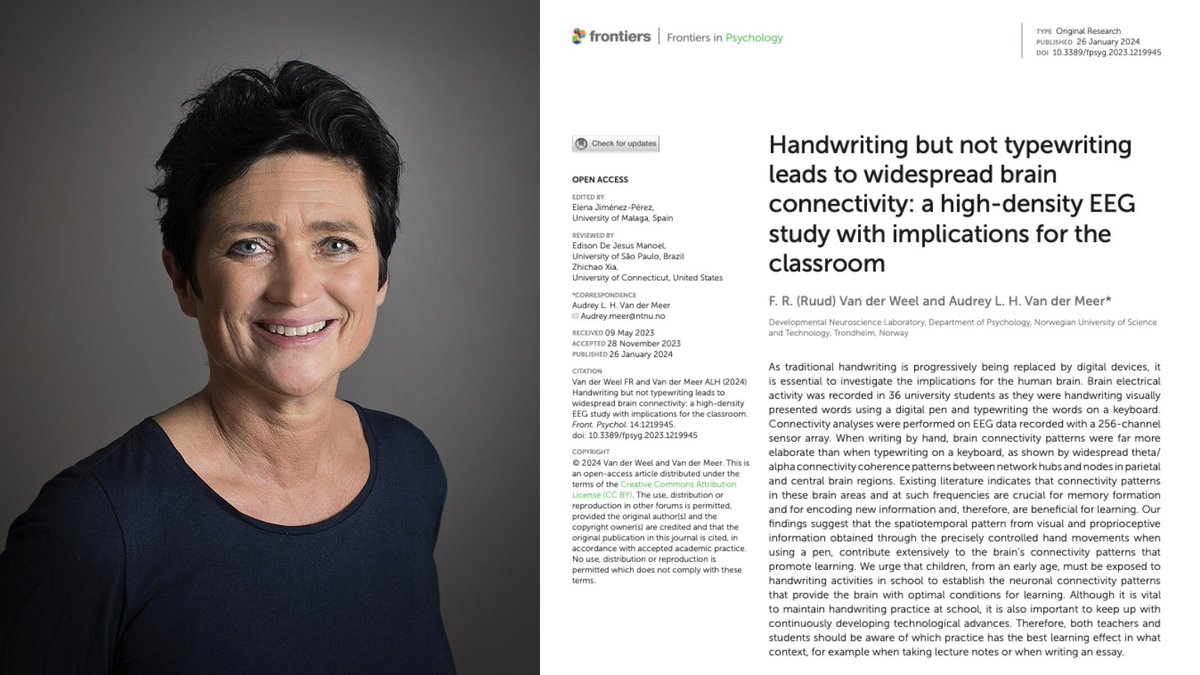
A Norwegian neuroscientist spent 20 years proving that the act of writing by hand changes the human brain in ways typing physically cannot, and almost nobody outside her field has read the paper.
Her name is Audrey van der Meer.
She runs a brain research lab in Trondheim, and the paper that closed the argument was published in 2024 in a journal called Frontiers in Psychology. The finding is brutal enough that it should have changed every classroom on Earth.
The experiment was simple. She recruited 36 university students and put each one in a cap with 256 sensors pressed against their scalp to record brain activity. Words flashed on a screen one at a time.
Sometimes the students wrote the word by hand on a touchscreen using a digital pen, and sometimes they typed the same word on a keyboard. Every neural response was recorded for the full five seconds the word stayed on screen.
Then her team looked at the part of the data most researchers had ignored for years, which is how different parts of the brain were communicating with each other during the task.
When the students wrote by hand, the brain lit up everywhere at once.
The regions responsible for memory, sensory integration, and the encoding of new information were all firing together in a coordinated pattern that spread across the entire cortex. The whole network was awake and connected.
When the same students typed the same word, that pattern collapsed almost completely.
Most of the brain went quiet, and the connections between regions that had been alive seconds earlier were nowhere to be found on the EEG.
Same word, same brain, same person, and two completely different neurological events.
The reason turned out to be something nobody had really paid attention to before her work. Writing by hand is not one motion but a sequence of thousands of tiny micro-movements coordinated with your eyes in real time, where each letter is a different shape that requires the brain to solve a slightly different spatial problem.
Your fingers, wrist, vision, and the parts of your brain that track position in space are all working together to produce one letter, then the next, then the next.
Typing throws all of that away. Every key on a keyboard requires the exact same finger motion regardless of which letter you are pressing, which means the brain has almost nothing to integrate and almost no problem to solve.
Van der Meer said it plainly in her interviews.
Pressing the same key with the same finger over and over does not stimulate the brain in any meaningful way, and she pointed out something that should scare every parent who handed their kid an iPad.
Children who learn to read and write on tablets often cannot tell letters like b and d apart, because they have never physically felt with their bodies what it takes to actually produce those letters on a page.
A decade before her, two researchers at Princeton ran the same fight using a completely different method and ended up at the same answer. Pam Mueller and Daniel Oppenheimer tested 327 students across three experiments, where half took notes on laptops with the internet disabled and half took notes by hand, before testing everyone on what they actually understood from the lectures they had watched.
The handwriting group won by a wide margin on every question that required real understanding rather than surface recall.
The reason was hiding in the transcripts of what the two groups had actually written down.
The laptop students typed almost word for word, capturing more total content but processing almost none of it as they went, while the handwriting students physically could not write fast enough to transcribe a lecture in real time, which forced them to listen carefully, decide what actually mattered, and put it in their own words on the page.
That single act of choosing what to keep was the learning itself, and the keyboard had quietly skipped the choosing and skipped the learning along with it.
Two studies. Two countries. Same answer.
Handwriting makes the brain work. Typing lets it coast.
Every note you have ever typed instead of written went into your brain through a thinner pipe. Every meeting, every book highlight, every idea you captured on your phone instead of on paper was processed at half depth.
You did not forget those things because your memory is bad. You forgot them because typing never woke the part of the brain that would have made them stick.
The fix is the thing your grandmother already knew.
Pick up a pen. Write the thing down. The slower road is the faster one.
English