Sabitlenmiş Tweet
Vienna's little diary ✍️
21.5K posts
Vienna's little diary ✍️
@sonyavienna
Never forget the kindness of those who helped you… 🌻 | poetry, spirituality, Feng Shui, and a little bit of good pop culture 🍸
Bolak-balik Bandung - Jakarta Katılım Ekim 2010
581 Takip Edilen491 Takipçiler
Vienna's little diary ✍️ retweetledi

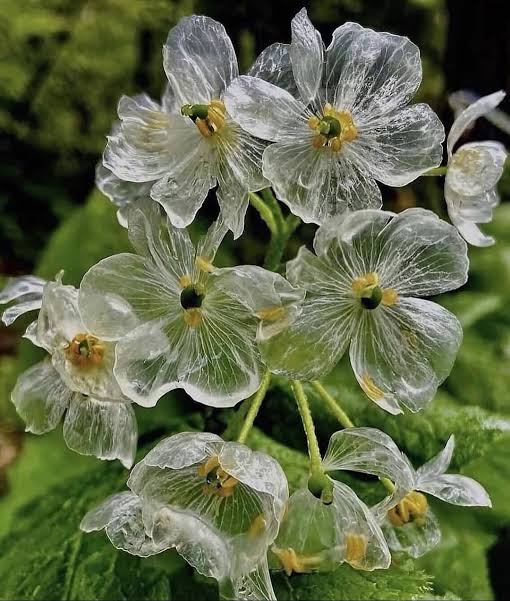
Gue baru tau ada bunga yang punya "mode transparan" pas kena ujan. Namanya Diphylleia grayi atau Skeleton Flower.
Beneran berubah jadi kayak kaca kristal, bukan editan CGI atau sihir. Visualnya magical banget, asli.
Bunga ini aslinya warna putih biasa, tapi sel kelopaknya unik banget. Pas kena air, struktur selnya bikin cahaya nggak mantul, malah jadi tembus pandang. Pas udah kering? Ya balik putih lagi.
Cuma ada di Jepang, China, sama US. Kayak konsep stealth tapi versi tanaman.


Indonesia
Vienna's little diary ✍️ retweetledi

Jadi inget 2009-2010 gue suka baca cerpen kompas tiap hari Minggu siang. Hang out, nge-mall, apa itu? Those years gue ada di rumah terus selain jadual kuliah. Reading good short stories had always been my weekend pleasure.
alfa tj@alfatj_
cerpen kompas akhir pekan ini, Triyanto Triwikromo feat. Franz Kafka 🐈
Indonesia
Vienna's little diary ✍️ retweetledi

cerpen kompas akhir pekan ini,
Triyanto Triwikromo feat. Franz Kafka 🐈

alfa tj@alfatj_
cerpen kompas akhir pekan ini satir yang begitu indah dari Mashdar Zainal. di saat ladang-ladang desa kebakaran. kepala desa mereka masih sibuk berkeliling kota menghadiri undangan dan satu-satunya harapan adalah hujan lebat—yang entah kapan akan turun. oh, betapa familiarnya.
Indonesia
Vienna's little diary ✍️ retweetledi

I.M. Pei, the architect who designed the Louvre's glass pyramid, used to put it this way. In Western buildings, a window is a hole that lets in light and air. In Chinese buildings, a window is a picture frame. And the garden is always painted on the other side.
These are called 漏窗 (lou chuang), or "leaky windows." Wind. Moonlight. Glimpses of the garden, framed by every cutout in the wall. It all leaks through.
A garden designer named Ji Cheng published a whole manual on this in 1635. The Craft of Gardens. The final chapter is titled "Borrowed Scenery." Ji called it the most important part of designing a garden.
He named four kinds of borrowing. Distant: mountains, rivers, far horizons. Adjacent: the neighbor's roof, a wall, a tree next door. Upward: clouds, branches against the sky, even the stars at night. Downward: a pond, the rocks below. Every shape and height in these images is doing one of those four jobs.
In Suzhou, a canal city near Shanghai, the oldest surviving garden was built in the 1040s. It has 108 of these windows along a single corridor. No two are the same. Each frames a different slice of the same pond and the same hills.
By the early 1900s, Suzhou had more than 170 private gardens. Nine of them are now UNESCO World Heritage Sites. Researchers in 2021 photographed almost 3,000 windows across 15 of these gardens, just to train an AI that could tell the patterns apart.
The shapes meant something too. Pine for long life. Plum blossoms for purity. A bat anywhere in the pattern brought good luck to the household. Phoenix for wealth.
There's a pattern called "ice crack." Lines splinter across the wall like cracks on a frozen pond. Scholars adopted it as their own signature. For them, it stood for the moment ice breaks and spring begins, when life starts moving again.
The point of the design was simple. You should never see the whole garden at once. You walk a path, a wall blocks the view, then a window opens it again, framed differently each time. The Chinese proverb for it: "by detours, access to secrets."
A 2024 paper from Xi'an Jiaotong-Liverpool University showed the ice-crack pattern is actually stronger than a regular grid when the weight on top is uneven. Four hundred years later, the math still works.
serenity@calmlivng
English
Vienna's little diary ✍️ retweetledi

Mon ex-mari m'a battue si violemment que mon tympan gauche a éclaté. J'avais 24 ans et j'étais enceinte de trois mois.
Cette nuit-là, j'ai perdu le bébé.
Dans la salle de bain d'un hôtel miteux de Las Vegas, la chemise déchirée et le visage tuméfié, j'ai vu l'eau des toilettes virer au rouge. Je n'ai pas appelé d'ambulance.
J'ai appelé ma mère.
Elle m'a dit : « Ma chérie, sors. Pars tout de suite. »
Mais je ne savais même pas comment partir.
J'étais Pamela Anderson – la fille d'Alerte à Malibu, la couverture de Playboy, la femme que tout le monde regardait mais que personne n'écoutait vraiment. Mon corps était traité comme un objet. Ma poitrine avait sa propre réputation. J'étais « la blonde idiote » qui avait épousé un batteur de rock déjanté.
Ce que les gens ne voyaient pas, c'était la suite de l'histoire.
Quand j'avais douze ans, la baby-sitter de mon frère a abusé de moi à plusieurs reprises. J'ai grandi sur une petite île canadienne sans eau chaude, et je mettais des sacs plastiques autour de mes pieds pour que mes chaussures usées ne soient pas trempées.
Quand je suis arrivée à Los Angeles avec seulement 400 dollars, j'ai vécu dans ma voiture pendant trois mois.
Il y a deux semaines, Netflix a sorti mon documentaire, Pamela : Une histoire d'amour. Et pour la première fois en plus de trente ans, les gens me disent : « Je ne savais pas que tu étais aussi attentionnée. »
« Je ne savais pas que tu écrivais de la poésie. »
« Je ne savais pas tout ce que tu as traversé. »
Je ne partage pas ça par vengeance.
Je le partage pour la fille qui, en ce moment même, est réduite à un corps, à une blague, à un objet de consommation.
Si on te sexualise, ce n'est pas ta faute.
Si on te sous-estime, ce n'est pas ta limite.
Si quelqu'un te fait du mal, ce n'est pas ton destin.
Il m’a fallu des décennies, mais un matin, je me suis réveillée dans ma ferme sur l’île de Vancouver, les pieds dans la terre humide, entourée de poules et d’arbres fruitiers, et une chose m’est enfin apparue clairement :
Je n’ai besoin de l’approbation de personne.
Mon corps m’appartient.
Mon histoire m’appartient.
Et personne – absolument personne – ne pourra jamais la réécrire. FB
— Pamela Anderson

Français
Vienna's little diary ✍️ retweetledi

ariel tatum itu sebenernya anomali di industri kita soalnya dia satu satunya seleb yang bisa bikin standar kecantikan jadi nggak masuk akal tapi di saat bersamaan dia yang paling vokal soal self acceptance.
yang bikin mind blowing tuh bukan soal visualnya tapi gimana dia bisa tetep relevan tanpa perlu gimmick receh atau drama settingan kayak artis jaman sekarang.
Muklis Nonton@tvindonesiawkwk
Unpopular opinion about:
Indonesia
Vienna's little diary ✍️ retweetledi

Pangeran Diponegoro adalah penggemar wine, Grand Constantia. Meski Islam mengharamkan alkohol, Diponegoro berdalih bahwa anggur itu adalah obat. Termasuk selingkuh dengan gadis pemijat keturunan Cina sebelum maju perang
neohistoria Indonesia@neohistoria_id
Unpopular opinion tentang Sejarah yang bisa bikin kamu kayak begini:
Indonesia
Vienna's little diary ✍️ retweetledi

Di Chinese new year ini, saya inget 1 quote yang bisa jadi reminder di hidup yang terlalu cepat ini adalah quote filsafat Cina, Taoisme, dari Lao Tzu, kurang lebih gini:
“Alam enggak tergesa. Tapi semuanya tetap selesai accomplished pada waktunya.”
Di tengah budaya hustle, lomba cepet-cepetan, ini ngingetin… Nggak perlu buru-buru, bukan berarti nggak bertumbuh. Nggak perlu memaksa, segala sesuatu yang dipaksakan seringkali nggak baik. Ada kebijaksanaan dalam ritme alami.
Indonesia

All shio wrapped up in one article. Galloping into the year of Fire Horse, Happy Lunar New Year! 🏮🎊
edition.cnn.com/travel/chinese…
English
Vienna's little diary ✍️ retweetledi

When Domenico Dolce (a Sicilian himself) and Stefano Gabbana were preparing this collection in 1987, they wanted to do the exact opposite of the colorful, shoulder-padded, neon American fashion of the era (like Madonna’s pop style at the time). The scenario they constructed was this: *The secret eroticism of a traditional, mourning Sicilian woman.*
The designers took the "Widow" figure--who appeared outwardly conservative and mournful--and made her sexy. They imagined that beneath her visible black lace and headscarf, this woman was wearing satin corsets, garter belts, and bustiers.
At the time of this shoot, Ferdinando Scianna was not a fashion photographer; he was a photojournalist documenting life in Sicily.
When Domenico Dolce and Stefano Gabbana knocked on Scianna's door to present their collections, the photographer turned them away, saying, "I’m not a fashion photographer." But that was exactly the designers' vision; they didn't want to just showcase the clothes--they wanted to show the "life" inside them.
Eventually, Scianna refused lighting assistants and artificial sets. He took Dutch model Marpessa to the villages where he’d spent his childhood. Scianna told Marpessa Hennink only one thing: "Put on these clothes and act naturally in the village."
As Marpessa wandered through remote Sicilian villages dressed in all black with a headscarf, the village elders actually mistook her for a young Italian woman mourning her late husband.
Finally, the gloomy bedroom in this photo isn't a studio set. It’s the home of a real family living in that village. The picture of the saint on the wall, the crucifix, the beds... It’s all original. Marpessa entered that house and struck that pose, matching the weight of the atmosphere. When Scianna's documentary eye combined with Marpessa's cultural camouflage, the result was this iconic shot--an image that changed fashion history and brought the "Neorealismo" (New Realism) movement to the catwalks.
Archaeology & Art@archaeologyart
Dolce Gabbana 1987 campaign w/ Marpessa by Ferdinando Scianna
English
Vienna's little diary ✍️ retweetledi

'Malèna' (2000) is a film about projection: how societies turn a woman into a symbol instead of seeing her as a person. To the men, she becomes desire. To the women, she becomes threat. To the boy obsessed with her, she becomes fantasy.
The film is seen as controversial due to Malèna's intimate relationship with a boy. Critics also argue that the film reduces the character (Malèna) to an object, focusing on her beauty rather than her inner life.
English