Sabitlenmiş Tweet

@kaushalgautam @ThePrintIndia Mr @kaushalgautam why dont u put the figures here yourself. Also pl put the evidence against me here instead of resorting to waffling.
English
Sanjiv Krishan Sood Addl DG BSF Retired
32.3K posts
@sood_2
Traveller in time Security Border Mgt Politics Humour Averse to communal Bhakts Hamare muh se jo nikle wahi sadaqat hai Hamare muh mein tumhari zubaan thodi h
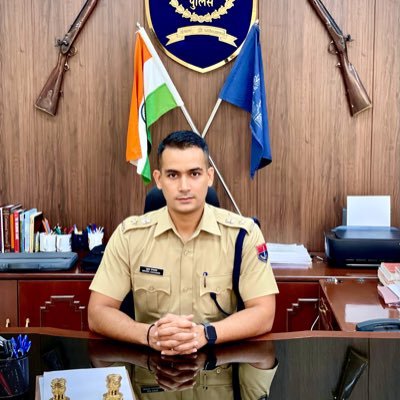
Retired CAPF officials organise a press conference to oppose the proposed Central Armed Police Force (General Administration) Bill, 2026, likely to be introduced in the ongoing budget session of Parliament.

Saw a few tweets about the new CAPF Bill and the controversy around it, so decided to read up on it. In short, yet another pointless controversy over a solid reform. The face of this legal-media opposition is Sarvesh Tripathi, projected as an ex-CRPF officer and lawyer, but what’s not told explicitly is that he’s also a Samajwadi Party national spokesperson and runs a CAPF coaching institute. A clear conflict of interest. 1. First, why the Bill is good: Central Armed Police Forces (CAPF) comprise seven forces like CRPF, ITBP, and BSF under the Home Ministry. Earlier, each followed scattered rules and ad hoc orders, causing confusion, inconsistency, and poor transparency. The CAPF (General Administration) Bill, 2026 introduces, for the first time, a single legal framework for over 10 lakh personnel. It replaces fragmentation with a uniform system for recruitment, promotions, discipline, and operations, making governance clearer, more transparent, and efficient. It also improves coordination during riots, border tensions, and internal security operations, while addressing career stagnation through better promotion avenues. The Bill further aims to improve working conditions, rationalise postings, and bring greater clarity and stability for personnel in demanding roles. 2. Now the controversy: Opposition is from the few ex-CAPF officers (not jawans), supported and encouraged by Congress allies, over IPS officers holding top CAPF posts. They demand only CAPF officers controlling CAPF, no IPS. However, CAPF’s job is a blend of civil policing (a state subject) and paramilitary roles (central), where IPS officers are needed as the Centre–state bridge. This deputation is necessary for Union–State coordination, and this model has delivered results, from Greyhounds (1989) to CoBRA (2008); it has seen significant operational success. In fact, this integrated structure is a major reason why Naxalism, once a massive internal security threat across large parts of India, has been systematically crushed and reduced to a shadow of its former self. Even if one argues for replacing IPS with CAPF cadre officers, it cannot be done overnight; a sudden shift would disrupt law and order, administration, and federal balance. Even the SC has emphasised a gradual transition, not abrupt replacement. The Bill reflects this by reducing IPS presence from near total dominance to ~20% at DIG and ~50% at IG levels. In essence, the Bill seeks to make CAPFs more organised, fair, and future-ready for faster, more effective responses. The controversy around it is less about reform and more about control, politicised support amplifying selective concerns, where structural change is being resisted under the guise of cadre justice.



@ICICIBank_Care Ek aur tareekh but for a change they informed me on 17th itself Grateful for small mercies BUT PLEASE PLEASE RESOLVE THE ISSUE BY 19TH AS PER LATEST PROMISE


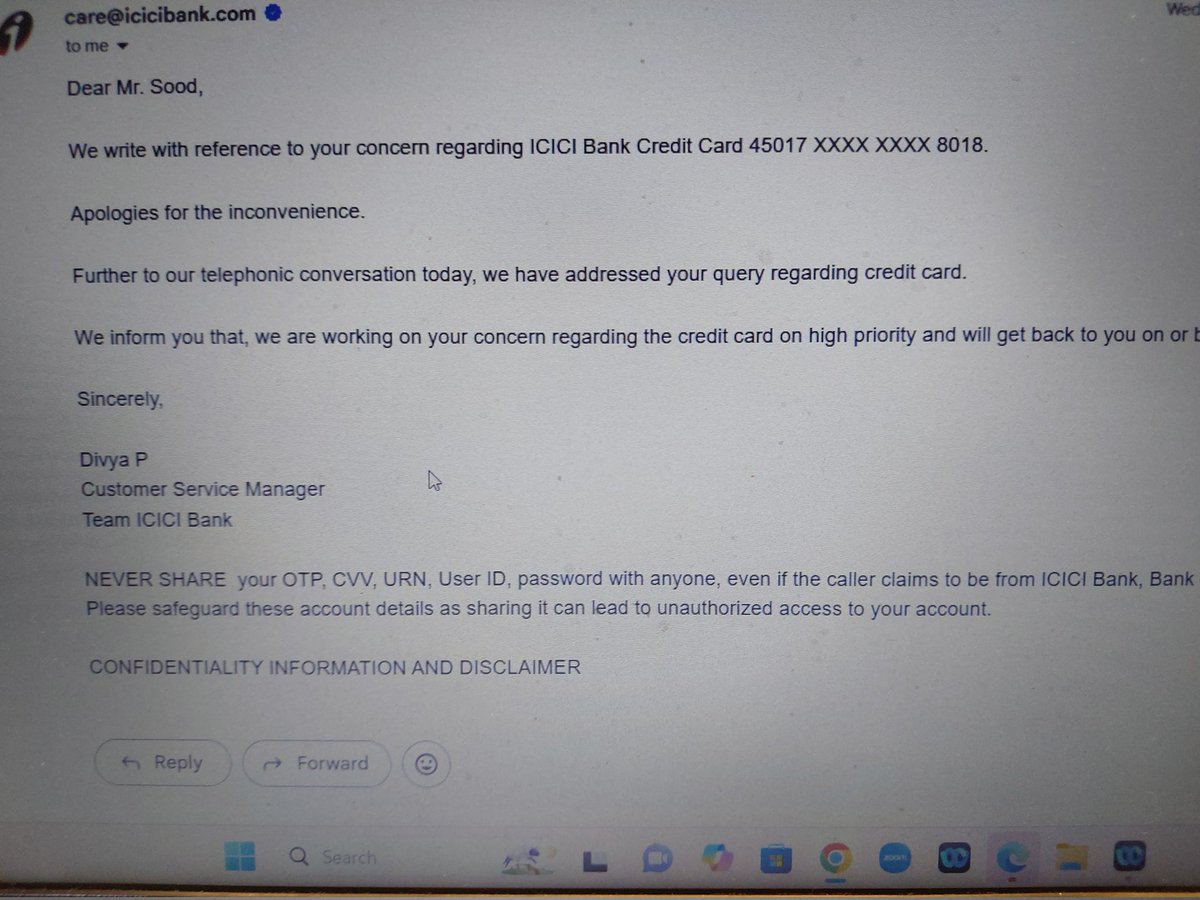
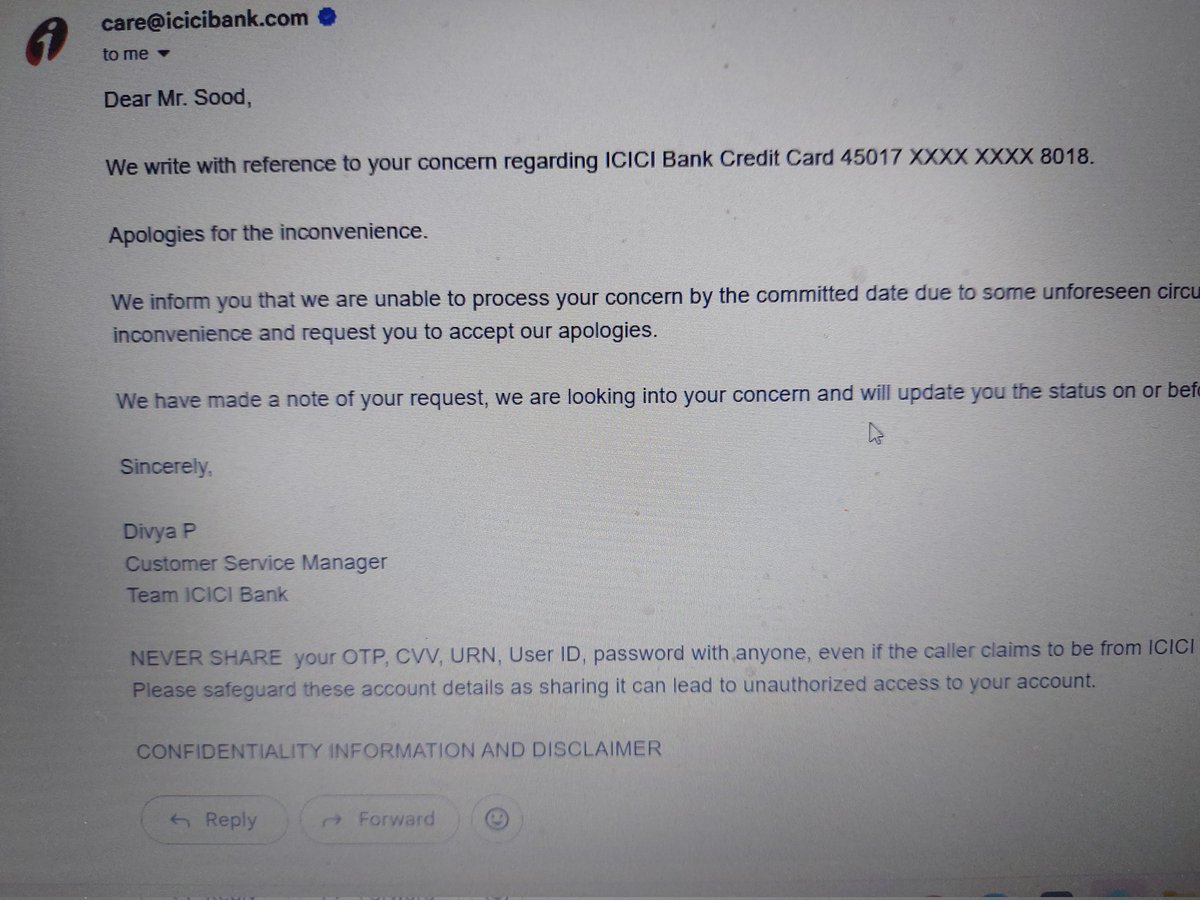
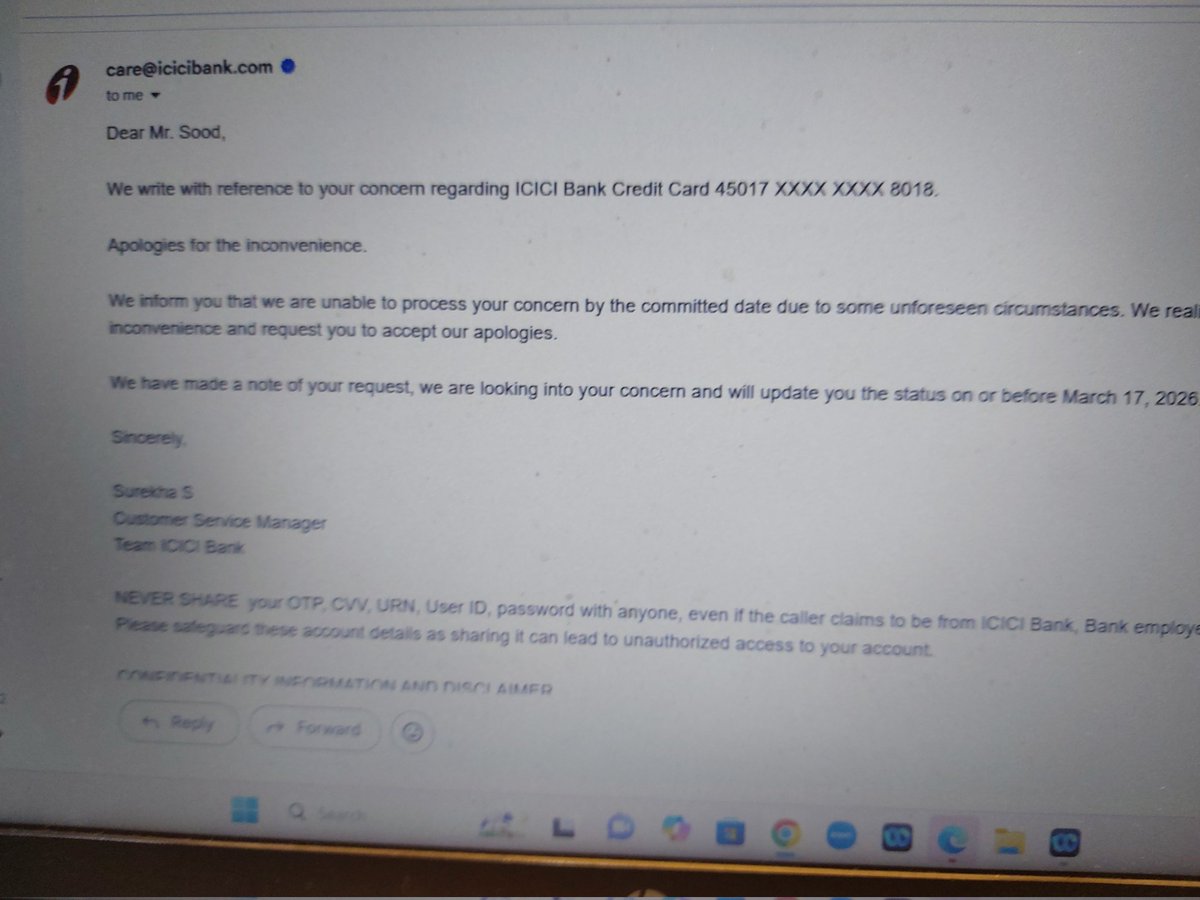
SR No 1102723033 Contacted help line on 27th who promised 2 days to resolve issue of wrong blocking of my credit card ending 8018 & 8109 Divya P Customer Service Manager contacted on 4th after my tweet dt 3rd Again promised resolution & confirm by 7th Yet nothing so far Why !!!

@mujifren CAPF AC is essentially DSP equivalent cadre. Both are 3 star gazetted officers. In most states DSP start at Pay Level 10 (Group A level).