Sabitlenmiş Tweet

Starting from ₦7,500 a month, you can support our mission to keep Nigerian history alive and at everyone’s fingertips.
Scan the code or tap the link to become a member today.
archivi.ng/membership

English
archivi.ng
5.7K posts

@StartArchiving
Building Nigeria’s historical record online. Today: newspapers, magazines, oral histories. Tomorrow: an archive that outlasts us all.

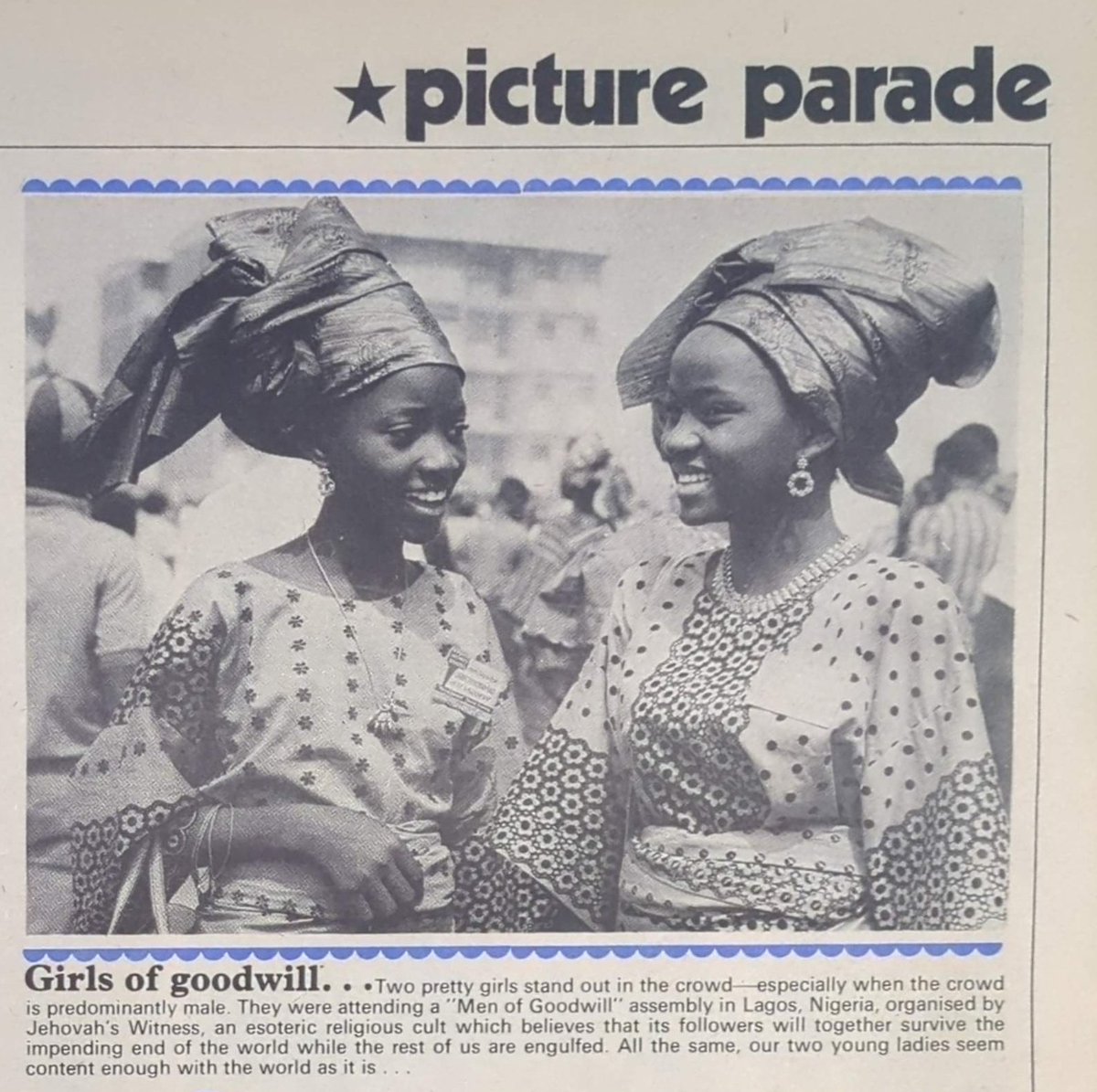
Lagos, 1971 "Two pretty girls stand out in the crowd..." Source: TRUST




Fresh out of prison and brimming with ideas, Orlando Owoh declared in 1988 that his music was entering a bold new phase, one he believed would dominate the Nigerian soundscape. In an interview with The Republic, the Maiyegun of Ilara-Mokin described his jail time, following drug charges he was later cleared of, as “educative.” He had used the period to sharpen his guitar skills and compose enough material to fill albums for the next five years. Confident and unapologetic, Owoh placed himself firmly among Nigeria’s elite, saying he belonged in the class of Rex Lawson, and adding that he had no musical master except Fela Anikulapo-Kuti. The trio had earlier shared international recognition, with Owoh and Fela representing West Africa at a 1972 show in London. Known for his versatility, Owoh blended Yoruba, Owo, Hausa, Igbo and English in his music, insisting his talent was a divine gift. With his album Experience, he pushed boundaries further, infusing Afro-jazz, reggae and Afrobeat elements, making his sound difficult to categorise.