Sabitlenmiş Tweet
Steel
527 posts


Steel
@steeldotdev
Humans use Chrome, Agents use Steel. Feed this to your OpenClaw or Hermes: curl -fsS https://t.co/5wGwI3ivmR | sh
Katılım Ağustos 2024
9 Takip Edilen1.5K Takipçiler

What's coming:
✦ identity, reliability & stealth
✦ new SDKs
✦ better pricing
New drop every day, Mon–Fri.
Follow along: steel.dev/launch-week
English
English
What's new @ Steel - Changelog #029
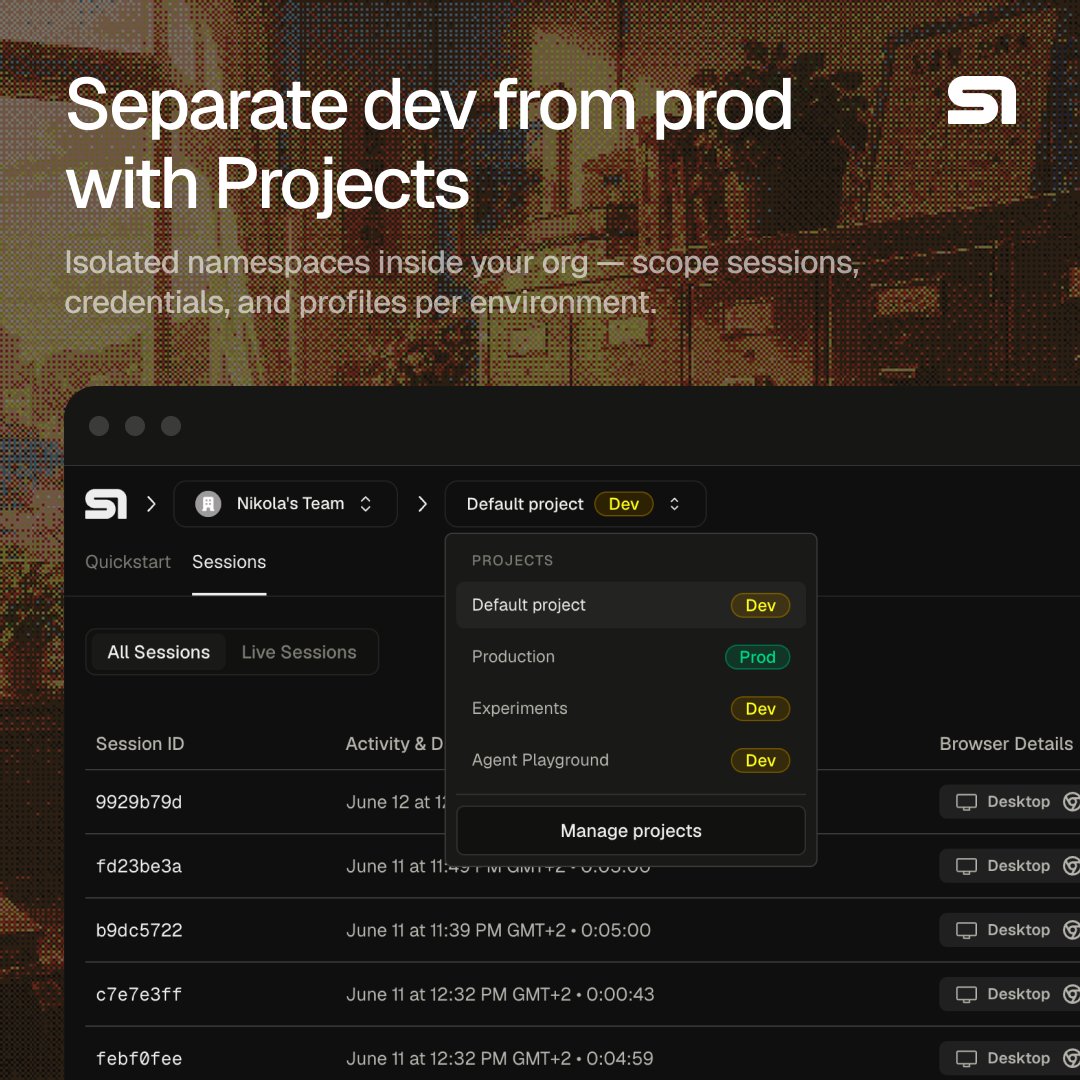
✦ Projects + project-scoped API keys and sessions
✦ Sessions can now trust custom CAs with caCertificates
✦ v1/scrape markdown overhaul: better extraction, richer metadata, full-page fallback
✦ Plus live viewer upgrades, browser pooling & more
Link below ↓

English
Nothing to migrate. Every org now has a Default project with your resources and keys already in it. Your code keeps working.
Full write-up.
steel.dev/blog/introduci…
English
We held off on this longer than most platforms. Our honest opinion was simplicity trumps complexity: one org, one bucket, nothing to configure.
Then one agent became a fleet, and simple scripts became workflows carrying their own credentials and profiles. One bucket doesn't scale with agents.

English


Not sure if I wrote this, or if this one wrote me.
Steel@steeldotdev
.@nibzard built a deep research agent on Steel. Then the evals taught him it was good at the wrong thing: beautiful overviews, weak exact answers. The fix was not another tool. It was routing, durability, and reading the failures. ↓
English
Steel mattered because the research needed browsers, not fetches.
The useful web renders late, redirects, blocks scrapers, or hides content behind behavior.
Plain fetch sees a thinner world.
Deep research agents improve when every failed run leaves enough evidence to inspect, resume, and turn into the next change.
steel.dev/blog/durable-r…
English
Pi from @badlogicgames for the agent loop, Absurd by @mitsuhiko for durable execution, Steel for browser sessions, Postgres for checkpoints.
The real unlock was making failure resumable.
Every model message checkpoints. Notes, URLs, claims, and source ledgers rebuild from the transcript.
Crashes became annoying instead of existential.

English
The "deep research" workflow bundled in Claude Code isn't deep. It's wide.
Niko pulled Claude Code's dynamic workflow to find exactly that shape. ↓
Niko(la)@nibzard
claude code /deep-research isn't deep. it's wide. your question gets sprayed across 5 parallel searches, the pile gets summarized, done. no agent ever reads a result and forms a sharper question from it. i pulled the workflow out of its binary to inspect it. ↓
English