Stephen Burgess

2.8K posts

Stephen Burgess

Stephen Burgess

@stevesphd

Medical statistician, work with genetic data to disentangle causation from correlation. Author of book on Mendelian randomization.

Cambridge, England Katılım Mayıs 2010
243 Takip Edilen2.5K Takipçiler
Sabitlenmiş Tweet
Stephen Burgess
Stephen Burgess@stevesphd·
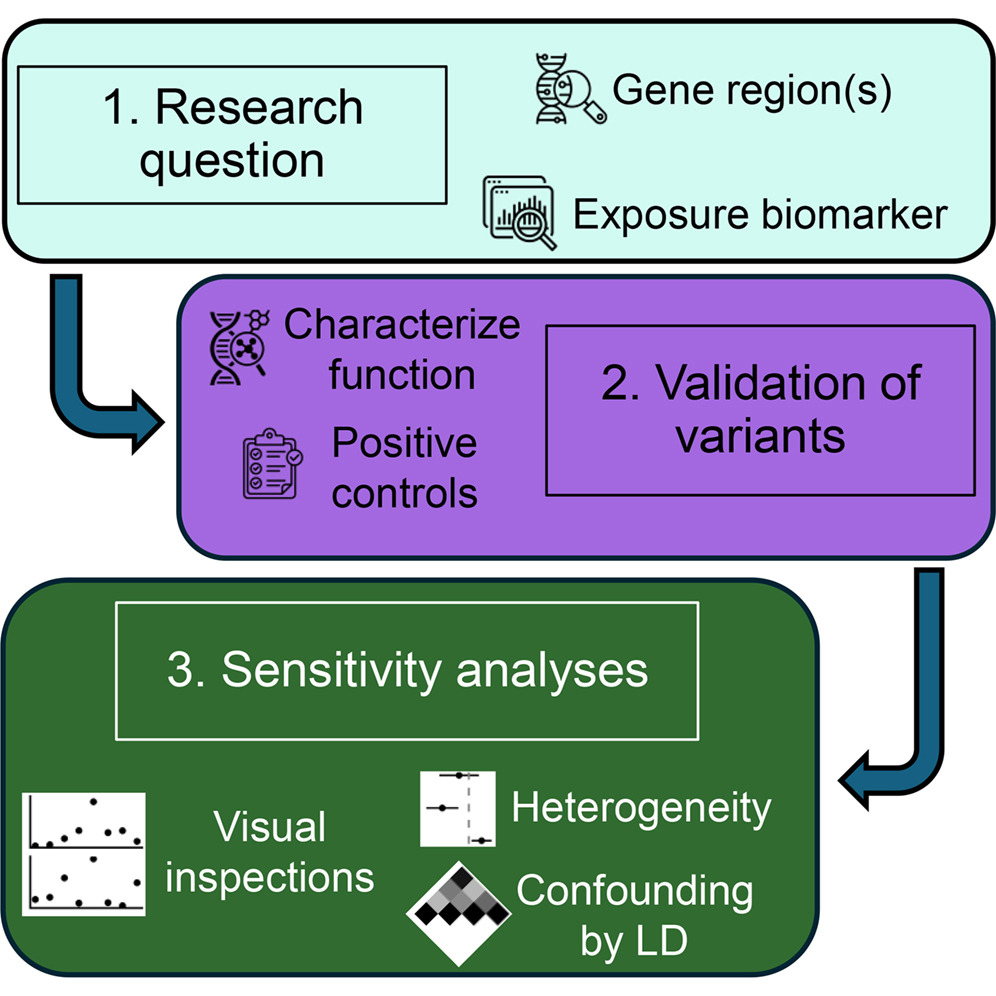
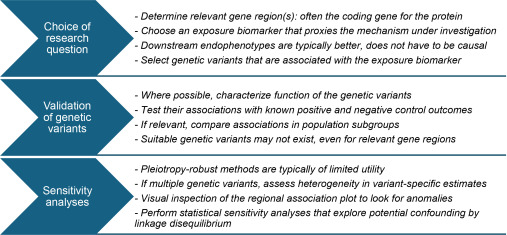
Guidelines on performing Mendelian randomization investigations written by an all-star line-up of MR researchers are now available on Wellcome Open Research: wellcomeopenresearch.org/articles/4-186… - represents a consensus statement after 12+ months of deliberation. Comments welcome!
English
3
69
140
0
Stephen Burgess
Stephen Burgess@stevesphd·
Thanks to Ash for leading this work, and to Frank DiTraglia for asking difficult questions about the statistical methodology. All comments (and suggestions for applications) welcome!
English
0
0
0
61
Stephen Burgess
Stephen Burgess@stevesphd·
Lots of interesting maths under the hood here in terms of flexibly estimating the function defining individuals' stickiness to change their behaviour (the propensity score), and ensuring our estimates are robust and efficient to the specification of this function.
English
1
0
0
73
Stephen Burgess
Stephen Burgess@stevesphd·
New pre-print on treatment effect heterogeneity led by Ash Patel: "Efficient semiparametric estimation of marginal treatment effects with genetic instrumental variables" available at arxiv.org/abs/2603.08871. Brief summary:
English
1
0
6
440
Stephen Burgess
Stephen Burgess@stevesphd·
Non-linear MR did not show evidence for non-linearity for most outcomes. Where it did, it never suggested a non-monotone relationship - no J-shaped or U-shaped findings for any outcomes.
English
0
0
1
170
Stephen Burgess
Stephen Burgess@stevesphd·
We threw MR with alcohol as an exposure at a large number of exposures. Most came out supporting harmful effects, particularly for neurologic and behavioural, circulatory, and liver outcomes. Potential protective effects were for migraines and urinary calculus.
Stephen Burgess tweet media
English
1
1
2
247
Stephen Burgess
Stephen Burgess@stevesphd·
Great to be involved in this publication: "Phenome-wide study on alcohol consumption provides genetic evidence for a causal association with multiple diseases and biomarkers" led by Nigussie Kassaw - doi.org/10.1016/j.nume….
English
1
2
6
316
Stephen Burgess
Stephen Burgess@stevesphd·
Great to see the first paper from James' PhD out as a pre-print - thanks to Ash for providing lots of support and help! Look forward to receiving comments!
English
0
0
1
80
Stephen Burgess
Stephen Burgess@stevesphd·
Using MSE, with lots of confounding (\rho>0.3), IV outperforms OLS at F lower than 10. With minimal confounding (\rho~0.1), the F threshold is higher. Using an F statistic to determine your analysis strategy is a bad idea in any case, but that's a story for another day.
Stephen Burgess tweet media
English
1
0
1
92
Stephen Burgess
Stephen Burgess@stevesphd·
New preprint: "Revising the use of F-tests in weak instrument practice: point estimation and beyond" led by James Lane: papers.ssrn.com/sol3/papers.cf…. The F>10 threshold for avoiding weak instrument bias has almost mythical status. Where does it come from? Does it make sense? In brief:
English
1
0
4
306