Stuart Lowman retweetledi
Stuart Lowman
27K posts

Stuart Lowman
@stuartlowman
I am the General Manager at @BizNewsCom, a parent, a husband, a business enthusiast, an entrepreneur, and a lover of the 'Blues.' I also enjoy a good story.
Cape Town, South Africa Katılım Ekim 2009
1 Takip Edilen1.4K Takipçiler
Stuart Lowman retweetledi

We are sending our kids to school to memorize facts that AI can retrieve in 0.3 seconds.
We're grading them on essays that AI writes better than their teachers.
We're preparing them for jobs that won't exist by the time they graduate.
The entire education system is training humans to compete with machines at what machines do best.
That's not education. That's sabotage.
The schools that survive will teach thinking, not memorizing. Creating, not repeating. Discerning, not obeying.
Every other school is a museum that doesn't know it yet.
English
Stuart Lowman retweetledi

Hey @elonmusk I've been thinking... What if the model that’s democratized share ownership for millions in SA, access for everyone, demographic alignment, trusted partners, with "rails" to more than 50% of our citizens, could help unlock Starlink’s EEIP path here (equity-equivalent investments advancing real empowerment)? @EasyEquities ready to explore synergies and do the work. Thoughts?”
English
Stuart Lowman retweetledi

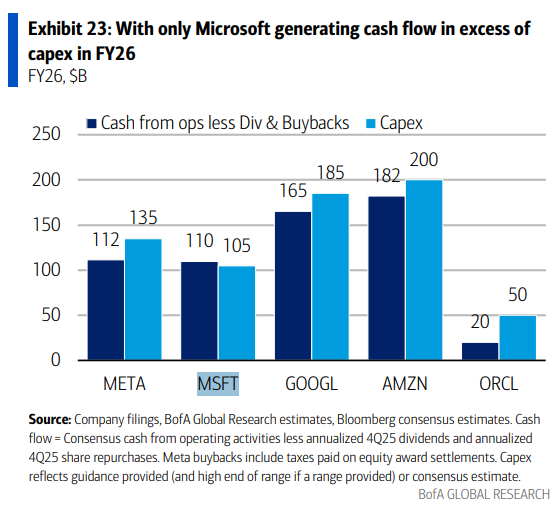
$GOOGL what a business:
• $400B annual revenue
• $70B annual cloud revenue
• $60B YouTube revenue
• 10 billion tokens per minute
• 750 million Gemini monthly users

Investing visuals@InvestingVisual
$GOOGL Q4 2025 earnings: • Revenue $113.8B vs $111.5B Est. • EPS $2.82 vs $2.64 Est. • Google Cloud $17.7B vs $16.2B Est. FY26 CapEx guidance: $180B vs $120B Est.
English
Stuart Lowman retweetledi

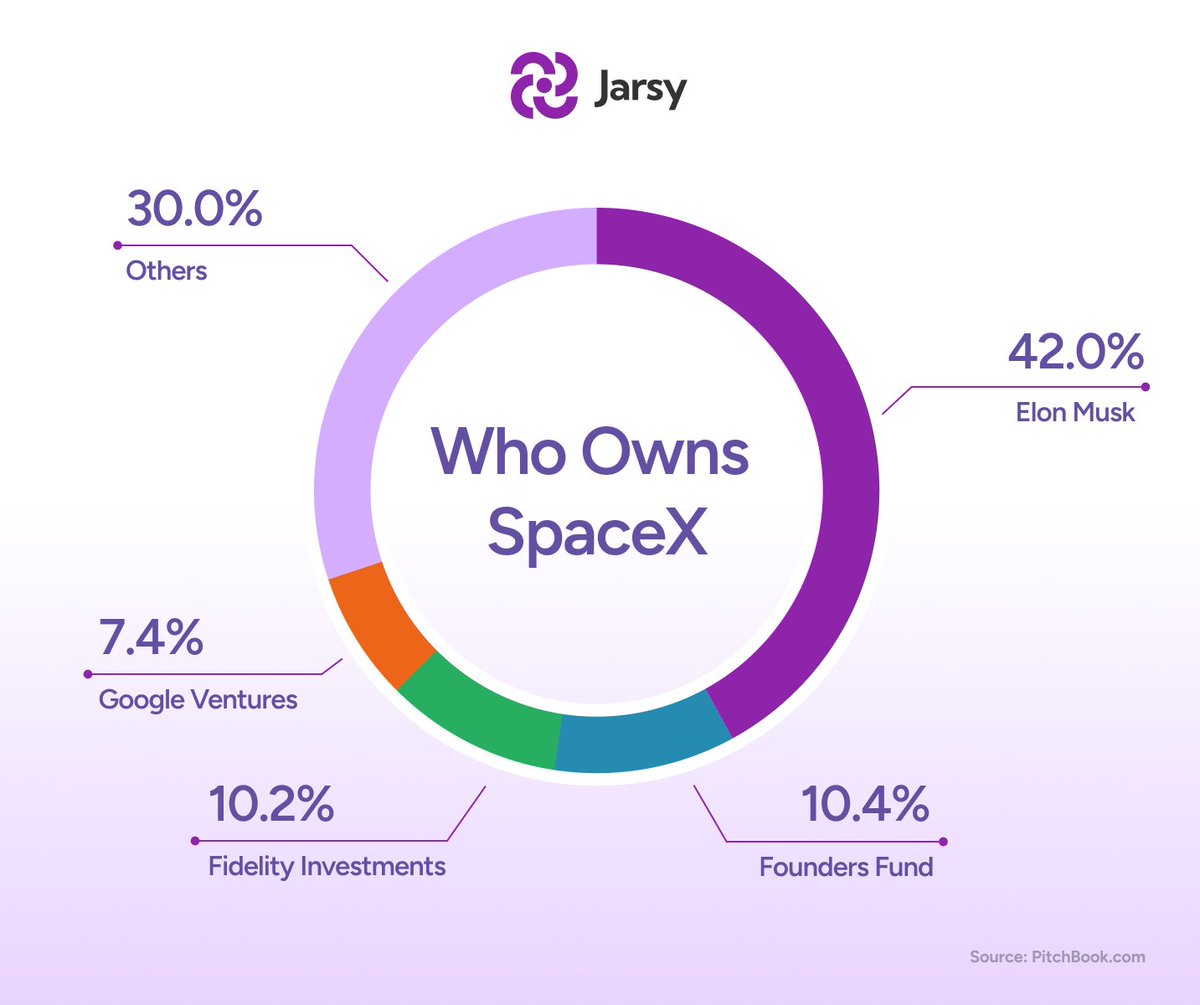
Google is the biggest winner in the SpaceX IPO.
Back in January 2015, Google made a decision that most venture capitalists would call insanely risky.
They threw $900 million at SpaceX when the company was valued at just $12 billion.
Elon had recently figured out how to land rockets.
Starlink was literally just a PowerPoint deck.
The company was burning through cash like water trying to prove the entire concept of reusable rockets could actually work.
On paper, this looked like Google throwing away nearly a billion dollars on a moonshot.
But they saw something everyone else missed.
A founder willing to do the impossible and a company building what would become essential infrastructure for the next decade.
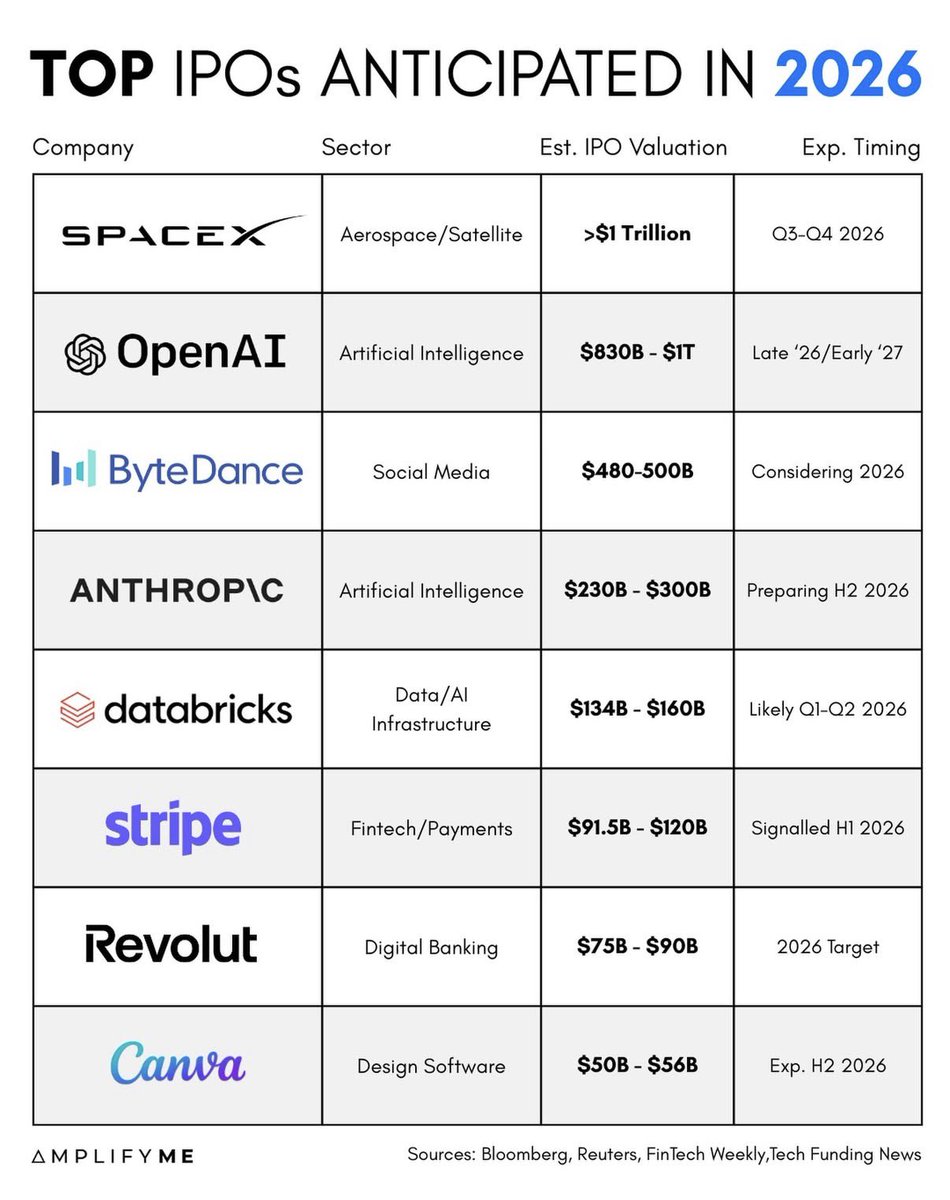
Fast forward to February 2026 and that single decision is about to make Google the biggest winner in what's shaping up to be the largest IPO in human history.
SpaceX is prepping for a mid June IPO at a $1.5 trillion valuation.
Google's 7.4% stake is about to be worth approximately $111 billion.
That's an increase of over $110 billion from their original $900 million investment.
To put it another way, every dollar Google invested just turned into roughly $123.
The reason Google deserves the title of biggest winner isn't just about the raw numbers, though those are absolutely staggering.
It's because they made this bet when nobody was paying attention.
SpaceX could have easily gone under.
In 2015, SpaceX had never successfully landed a rocket and recovered it.
The Falcon 9 had only been flying for a few years.
Starlink was a concept that most people in Silicon Valley thought was a distraction from the core business.
Revenue was basically nonexistent compared to today.
Yet Google saw the market opportunity.
A company with an effective monopoly on launching things to space at scale.
A founder with unlimited conviction and a business model that would become increasingly valuable as the world's data and compute needs exploded.
What makes this different from other venture capital wins is the sheer trajectory.
If you plot SpaceX's valuation from 2015 to 2026, it's almost vertical.
From $12 billion to $36 billion by 2020.
Then jumping to $100 billion by 2021.
$180 billion by 2023.
$210 billion by mid-2024.
$350 billion by late 2024.
Now sitting at $1 Trillion in February 2026.
The IPO target is $1.5 trillion.
Every year, the valuation roughly doubles or triples.
That's the kind of growth trajectory that only happens when you're building something genuinely transformative.
Google got to ride that entire wave with a single check.
The reason Google is the standout winner compared to other early shareholders is also about timing and positioning.
Fidelity Investments also made a big bet alongside Google in 2015.
They've obviously done well too.
But Google's stake is the single largest outside shareholder position after Elon.
They're getting the ability to influence a company that's basically becoming a fourth branch of government in terms of how critical space launch capability is.
No other private company can claim that level of control over orbital infrastructure.
Here's what's actually wild about this whole thing: most people don't even know this is happening.
Because SpaceX is a private company, Google's stake has been sitting on their balance sheet essentially at cost for a decade.
The gain has been completely hidden from casual observers.
But the moment SpaceX IPOs, that $111 billion position becomes real.
It shows up in earnings.
It fundamentally changes how people view Alphabet as an investment.
That's a massive catalyst that a lot of investors aren't positioned for.
What also makes Google the biggest winner is that they didn't need to take this risk and they knew it.
Google had mountains of cash.
They were already the dominant search company.
They could have just kept doing what they were doing and still been worth hundreds of billions of dollars.
But Sundar Pichai and the team at the time made a strategic bet that space infrastructure was going to matter.
They believed that reusable rockets would become foundational.
They were convinced that SpaceX was the only company that could pull it off.
They were right.
And now they're about to collect one of the largest venture capital payouts in history.
The other thing that makes this interesting is that Google gets strategic benefits on top of the equity upside.
By owning 7% of SpaceX, Google has visibility into the company's satellite internet plans.
They can negotiate favorable launch terms for their own ambitions in space.
They're essentially hedged into the space economy at scale.
As AI compute demands keep growing and data centers need more bandwidth, having ownership in the only company that can reliably launch satellites becomes incredibly valuable.
So Google is securing their own infrastructure future.
When the IPO closes in June and Google's stake becomes liquid and tradeable, we're going to see headlines everywhere.
Google turned less than a billion dollars into over $100 billion.
But the real story is that they had the foresight to make the bet when almost nobody believed in SpaceX.
They had the patience to hold it for a decade.
While the company became the most valuable private company on Earth.
That's what separates truly great venture capital wins from lucky bets.

The Kobeissi Letter@KobeissiLetter
IT’S OFFICIAL: Elon Musk’s SpaceX has acquired xAI, here’s the official press release. The biggest IPO in history just got even bigger. Absolutely incredible.
English
Stuart Lowman retweetledi

Stuart Lowman retweetledi