Sunil Kulkarni - suku99

13.1K posts

Sunil Kulkarni - suku99

Sunil Kulkarni - suku99

@suku99

Entrepreneur - FinTech - LangTech - Digital Transformation - IT Soln & Services - SaaS / Website Localization (Linguify) - Japan-India-ASEAN

Japan-India Katılım Aralık 2008
5.3K Takip Edilen1.4K Takipçiler
Sunil Kulkarni - suku99 retweetledi
Chutki Chaiwali🇮🇳
Chutki Chaiwali🇮🇳@Chai_Angelic·
Couple aged 80+ serving the best unlimited veg meals in udupi🙏😍🫶
English
14
103
489
8.2K
Shekhar
Shekhar@Shekharcoool5·
इथे आवाज नाही… पण अर्थ घुमतो. #Legends
MR
2
10
79
2K
Sunil Kulkarni - suku99 retweetledi
Grey
Grey@jgreyfriend·
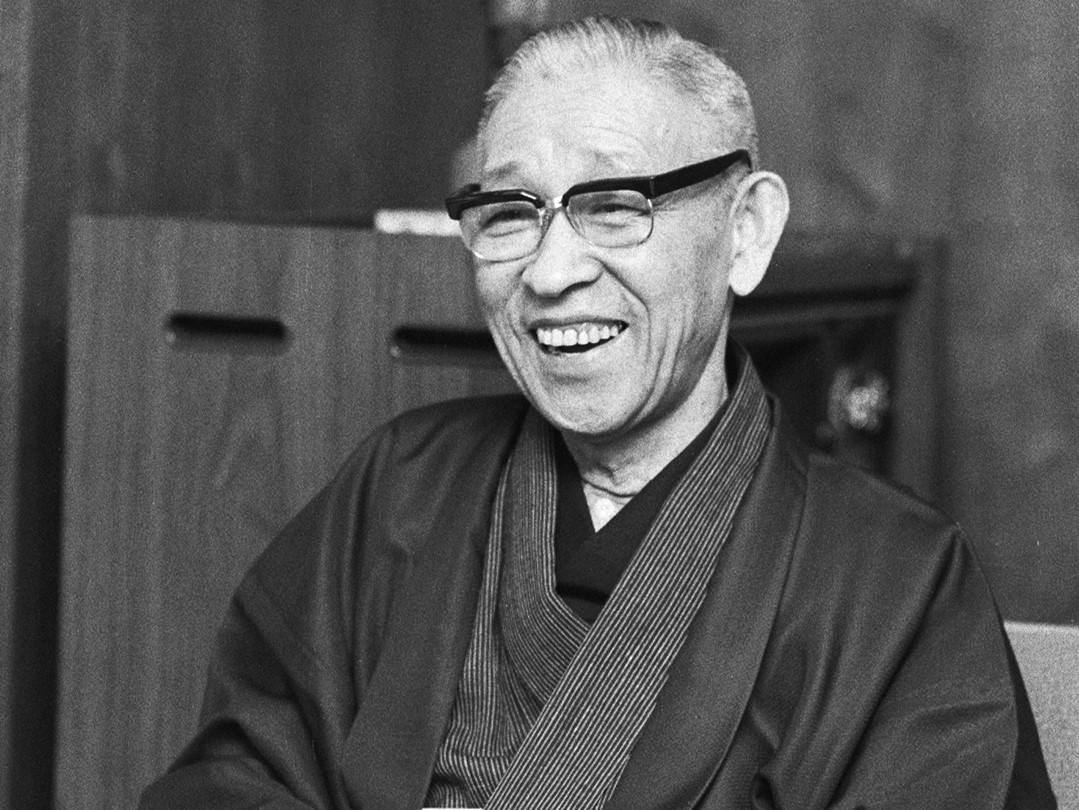
• be Konosuke Matsushita • born into a wealthy Japanese family in 1894 • your father gambles the entire family fortune on the rice market and loses everything when you are 4 years old • forced to drop out of school at age 9 to sweep floors in a bicycle shop just to survive • you look around and realize electricity is the future, so you join the Osaka Electric Light Company and quickly become their youngest inspector • at 22, you invent an improved, highly efficient light socket in your spare time • you show it to your boss. He tells you it's useless and will never sell. • most people would accept the rejection and stay at the safe corporate job • you immediately quit, take your life savings of 100 yen, and start a company in your tiny dirt-floor apartment with your wife and teenage brother-in-law • you nearly starve. You literally have to pawn your wife’s kimono just to buy food. • finally, you get a hit with a two-way socket, but you notice a bigger problem: bicycle lamps in 1920s Japan use candles, which constantly blow out in the wind • you engineer a bullet-shaped, battery-powered bicycle lamp that lasts for 40 hours • you take it to the massive wholesalers. They laugh at you and refuse to stock it. • you execute the ultimate asymmetric marketing hack: you completely bypass the gatekeepers • you take the lamps directly to local bicycle shop owners, leave them in the stores for *free*, and tell them: "Turn it on. If it stays lit, pay me. If it dies, keep it." • the lamps work perfectly. The public goes crazy. You have successfully hacked the distribution network. • you formulate the "Water-Tap Philosophy": the stoic belief that an entrepreneur's duty is not just to make money, but to mass-produce goods until they are as cheap and abundant as tap water, eradicating poverty through sheer industrial scale • WWII happens. The Allies dismantle your massive company and order you to be fired and purged from the industry. • your own factory workers—who you treated with radical respect instead of viewing them as disposable cogs—literally protest the US military government • your union petitions General Douglas MacArthur himself, demanding you be reinstated as CEO • the US military is so confused by a labor union fighting *for* their corporate boss that they actually agree • you rebuild from the ashes to create **Panasonic** • live to 94, leaving behind a legacy built on the idea that business is a philosophical pursuit of human betterment "If you make an honest mistake, I will forgive you. But if you compromise on our core values, I will fire you."
Grey tweet mediaGrey tweet media
English
43
776
5K
160.4K
Sunil Kulkarni - suku99 retweetledi
Frankie™️🦅
Frankie™️🦅@B7frankH·
Akira Nakai 🇯🇵is the founder of RWB (Rauh-Welt Begriff). He is a legendary Japanese tuner famous for hand-building radical, wide-body Porsche 911s. He travels the world to cut fenders and install kits by eye, giving each car a unique soul and name. His modifications will cost you beginning $40k but value of Porsche will double immediately afterwards. He travels with his dog and daughter who is only person to touch a car and help him during the modification work. He is overbooked until 2029. He is the only legal body maker and tuner recognized by Porsche. What makes him unique is he is using only simple hand tools, none of the his project Porsche cars resembles the other. Further Reading 👇 Akira Nakai - Japan's Most Precious Porsche Tuner │Yokogao Magazine share.google/o2ZkYPi8VBpqO0…
English
93
773
5.2K
536.9K
Sunil Kulkarni - suku99 retweetledi
Dr. Lemma
Dr. Lemma@DoctorLemma·
A railway company in Japan once ran out of money to pay a stationmaster. So they gave the job to the cat who lived outside the station. She wore a custom made hat, worked for cat food, and saved the entire line. Her name was Tama. She was a calico cat who had spent her days sitting near the entrance of Kishi Station in Wakayama Prefecture, Japan, greeting passengers anyway. When the company destaffed the station in 2006 to cut costs, the president visited to discuss what to do about the stray cats living nearby. He looked into Tama's eyes and later said they conveyed a sense of purpose as strong as any of his employees. He made her stationmaster. Within a month passenger numbers rose by seventeen percent. People began travelling from across Japan just to see her. Tourists arrived from other countries. A French documentary crew came to film her. The station was eventually rebuilt in the shape of a cat's face. In her eight years as stationmaster Tama contributed an estimated one billion yen to the local economy. She was promoted four times. She eventually held the title of Honorary President of the railway. The only female in a senior position in the entire company. When she passed away in 2015 over three thousand people attended her funeral. She was given the posthumous title Honorary Eternal Stationmaster and enshrined at a nearby Shinto shrine as a goddess. The position of stationmaster at Kishi Station is still held by a cat today.
English
445
6.6K
55.7K
3.7M
Sunil Kulkarni - suku99 retweetledi
Dr. M.F. Khan
Dr. M.F. Khan@Dr_TheHistories·
There are over 33,000 Japanese companies with histories of 100 years or more. These long-standing firms are known as 'shinise'. They are governed by a management philosophy that prioritizes long-term continuity and generational succession over short-term profits. Japan is home to an extraordinary number of long-lived businesses, often referred to as shinise (老舗). Many are small, family-run enterprises that have survived wars, economic upheaval, and technological change by focusing on stewardship rather than expansion. At the heart of shinise culture is a different idea of success. Instead of maximizing short-term profit, these businesses prioritize generational succession, reputation, and stability. Leadership is often passed down, or even adopted into, families to ensure continuity. In fact, Japan has a long tradition of adult adoption (mukoyōshi), where capable successors are brought into the family to carry the business forward. Some companies have operated for centuries. The construction firm Kongō Gumi lasted over 1,400 years before being absorbed in 2006. Others, like traditional inns, tea houses, and sake breweries, have quietly persisted for 200–300 years or more. This long-view mindset reflects a broader cultural principle: a business is not just an asset to be optimized, but a legacy to be preserved. Japan accounts for over 40% of the world’s companies older than 100 years, more than any other country by a wide margin. #drthehistories
Dr. M.F. Khan tweet media
English
25
408
1.4K
62.1K
Sunil Kulkarni - suku99 retweetledi
krithika sivaswamy
krithika sivaswamy@krithikasivasw·
I’m glad Shashwat Sachdev who follows Ramana Balachandhran @_RamanaB_ 's veena, insisted on having him on board for #Dhurandar2. It’s turned out beautifully, with natural elements of classical music woven in. All the layers are played by him. Thats how new age collabs should be
English
20
446
3.2K
78.8K
Sunil Kulkarni - suku99 retweetledi
Vala Afshar
Vala Afshar@ValaAfshar·
Nvidia CEO received his best career advice from a gardener on long term thinking and doing
English
5
28
84
12.3K
Sunil Kulkarni - suku99 retweetledi
Anish Moonka
Anish Moonka@anishmoonka·
A single ant has 250,000 neurons. Your brain has 86 billion. That’s a 344,000x gap. And yet what you’re watching is a colony solving a category of problem that no computer can crack perfectly at scale. It’s called the Steiner tree problem. Given a set of points, find the shortest possible network connecting all of them. First posed in 1811, proved essentially impossible to solve perfectly in 1972 (the computing time grows so fast with size that the world’s fastest supercomputer stalls on a few hundred points). Still one of the hardest open problems in mathematics. Ants solve it with chemistry. When an ant walks a path, it leaves a chemical trail called a pheromone. That trail evaporates over time. Shorter paths get walked faster, so pheromone builds up before it fades. Other ants prefer stronger trails. The colony converges on the shortest route without any single ant knowing the full picture. Jean-Louis Deneubourg at the Free University of Brussels proved this in the early 1990s with a dead simple experiment: two bridges between a nest and food, one twice as long as the other. Within minutes, the colony picked the short one. In 1991, computer scientist Marco Dorigo took that discovery and turned it into an algorithm (a set of step-by-step instructions for a computer) called Ant Colony Optimization. It’s now used to route wires inside microchips with billions of transistors (one study found an 8% reduction in wire length over traditional methods), plan delivery truck routes, and manage internet traffic. The phone you’re reading this on was partially designed using math that ants figured out 100 million years before humans existed. A 2023 study out of Stanford and several other institutions found that turtle ants in the tropical forest canopy build trail networks across tangled branches and vines that approximately solve the Steiner tree problem with zero central control. No ant has any information about the full network. Each one just follows a rule: at each junction, go where the pheromone is strongest. The collective intelligence comes from thousands of these tiny decisions stacking up. Stanford biologist Deborah Gordon has studied this for decades. She compares it directly to how brains work: no single neuron tells the others what to do, but together they produce thought. A 2024 Rockefeller University study found that individual ants decide whether to leave the nest using the same yes-or-no process that brain cells use to decide whether to switch on. The colony is, in a real mechanical sense, a brain spread across thousands of bodies. In early 2025, a Weizmann Institute study pitted ant groups against human groups on a task almost identical to this video: navigating a T-shaped object through a series of obstacles. The bigger the human group, the worse they performed. Too many competing ideas about which direction to push. The bigger the ant group, the better they got. No ego, no debate, just pheromones and simple rules scaling into something that looks a lot like intelligence. 250,000 neurons each. No leader. No blueprint. Solving problems that stumped mathematicians for two centuries.
The Figen@TheFigen_

They are ants solving a geometric problem and it is mind-blowingly colorful.

English
57
796
3.4K
303.7K
Sunil Kulkarni - suku99 retweetledi
Learn Something
Learn Something@cooltechtipz·
The Japanese way of building motor skills. See → understand → move → feel. Children who seem physically slow are often not weak. By repeating this small loop, neural circuits strengthen and movement becomes natural.
English
36
1.6K
7.8K
418.9K
Sunil Kulkarni - suku99 retweetledi
Tansu Yegen
Tansu Yegen@TansuYegen·
A road project in Japan went viral after people noticed how perfectly the manhole cover matched the asphalt surface 🛣️
English
540
2.2K
20K
4M
Sunil Kulkarni - suku99 retweetledi
Antifragile Thinking
Antifragile Thinking@unseenvalue·
I'd give her 11 out of 10.
English
0
102
667
95.5K
Sunil Kulkarni - suku99 retweetledi
A Different Side of Japan
A Different Side of Japan@donnyjkimball·
Few places in Japan have won my heart quite like Ouchijuku. Located deep in the mountains of Fukushima Prefecture, time stands still at this homely hamlet. In the days of yesteryear during the Edo period (1603-1868), Ouchijuku was a post town on the Aizu-Nishi Kaido that connected the domain of Aizu-Wakamatsu with Nikko to the south. In the modern era, Ouchijuku continues to exist as a living snapshot of Japan’s feudal past. And honestly, it’s one of the most atmospheric places in all of Fukushima Prefecture. If you do visit Ouchijuku, you absolutely need to drop by Honke Kanoya. One of the many shops that line Ouchijuku, this cozy nook is managed by the kindest of souls, who is the 11th generation head of the business. Truth be told, it almost makes you wonder how the place stays in business given how freely he shares with visitors. But that warmth is exactly what makes stopping by Honke Kanoya such a memorable part of visiting Ouchijuku. With the cherry blossom season in Tohoku on the horizon and the Grand Van Gogh Exhibition currently being held over at the Fukushima Prefectural Museum of Art, there's never been a better time to visit!
English
3
36
290
8.7K
Sunil Kulkarni - suku99 retweetledi
Tansu Yegen
Tansu Yegen@TansuYegen·
Electric lifts that climb stairs on their own just came out in China, carrying up to 180 kg for 60 to 80 floors, totally changing the game for delivery people...
English
404
3K
15.5K
1.2M
Sunil Kulkarni - suku99 retweetledi
World's Amazing Things
World's Amazing Things@Hana_b30·
Only in Japan 🇯🇵👍🏻
World's Amazing Things tweet media
English
103
1.6K
14.3K
257.6K