
Sumer.Money🐫

2.3K posts

Sumer.Money🐫 banner
Sumer.Money🐫

Sumer.Money🐫

@SumerMoney

The most capital-efficient blockchain liquidity infrastructure. Did you make money today??

Multi-chain Katılım Şubat 2021
453 Takip Edilen42.5K Takipçiler
Sabitlenmiş Tweet
Sumer.Money🐫
Sumer.Money🐫@SumerMoney·
🔥 Ode To NAMMU is BACK, BIGGER – Mint & Win 100 USDT! 🔥 🌟 The Mother of Sumerian Gods Awaits You! 🌟 🚀 Galxe Campaign LIVE! 🚀 The first 10 users to mint NAMMU Sumerian GOD NFT will win 100 USDT each! 🏆💰 🔗 Join Now! → app.galxe.com/quest/sumermon… Details below ⏬

Sumer.Money🐫 tweet media
Sumer.Money🐫@SumerMoney

🌟 Ode to NAMMU – the Mother of Sumerian Gods 🌟 Have you explored the Sumer App ? - app.sumer.money Joined the Sumer Points Program? - points.sumer.money Tried minting NAMMU? - points.sumer.money/nft Now’s your chance to win 75 USDT! 💰 🚀 We’re launching a Galxe Campaign! The first 10 users who mint NAMMU will receive 75 USDT each. 👉 Link to Campaign - app.galxe.com/quest/sumermon…

English
31
51
150
24.6K
Sumer.Money🐫
Sumer.Money🐫@SumerMoney·
@DefiIgnas VC dry spells make capital efficiency a requirement, not a feature. Better risk models for unified liquidity will fund the next wave, not inflows. Efficiency is the new funding. 📊⚡
English
0
0
0
22
Ignas | DeFi
Ignas | DeFi@DefiIgnas·
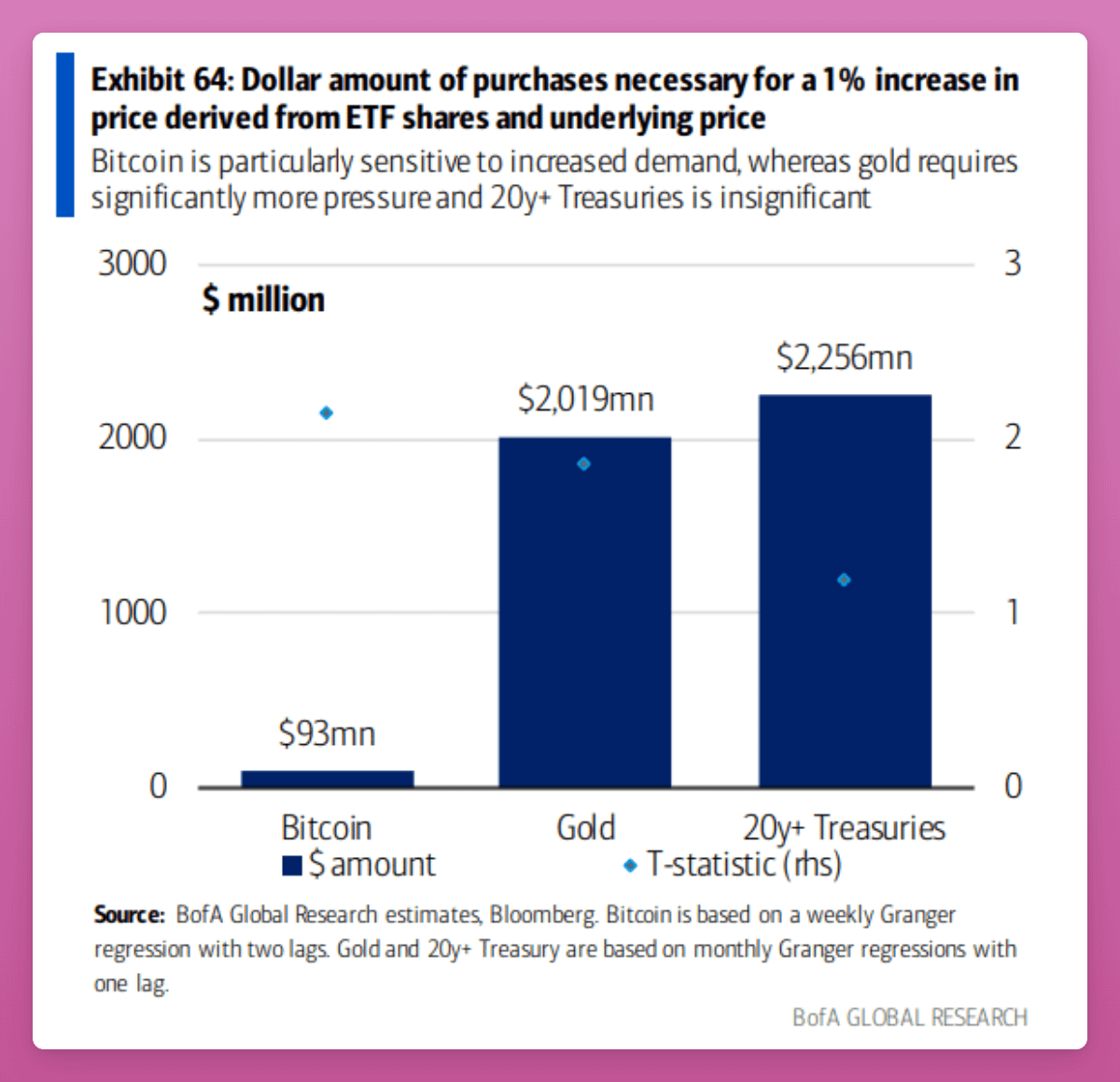
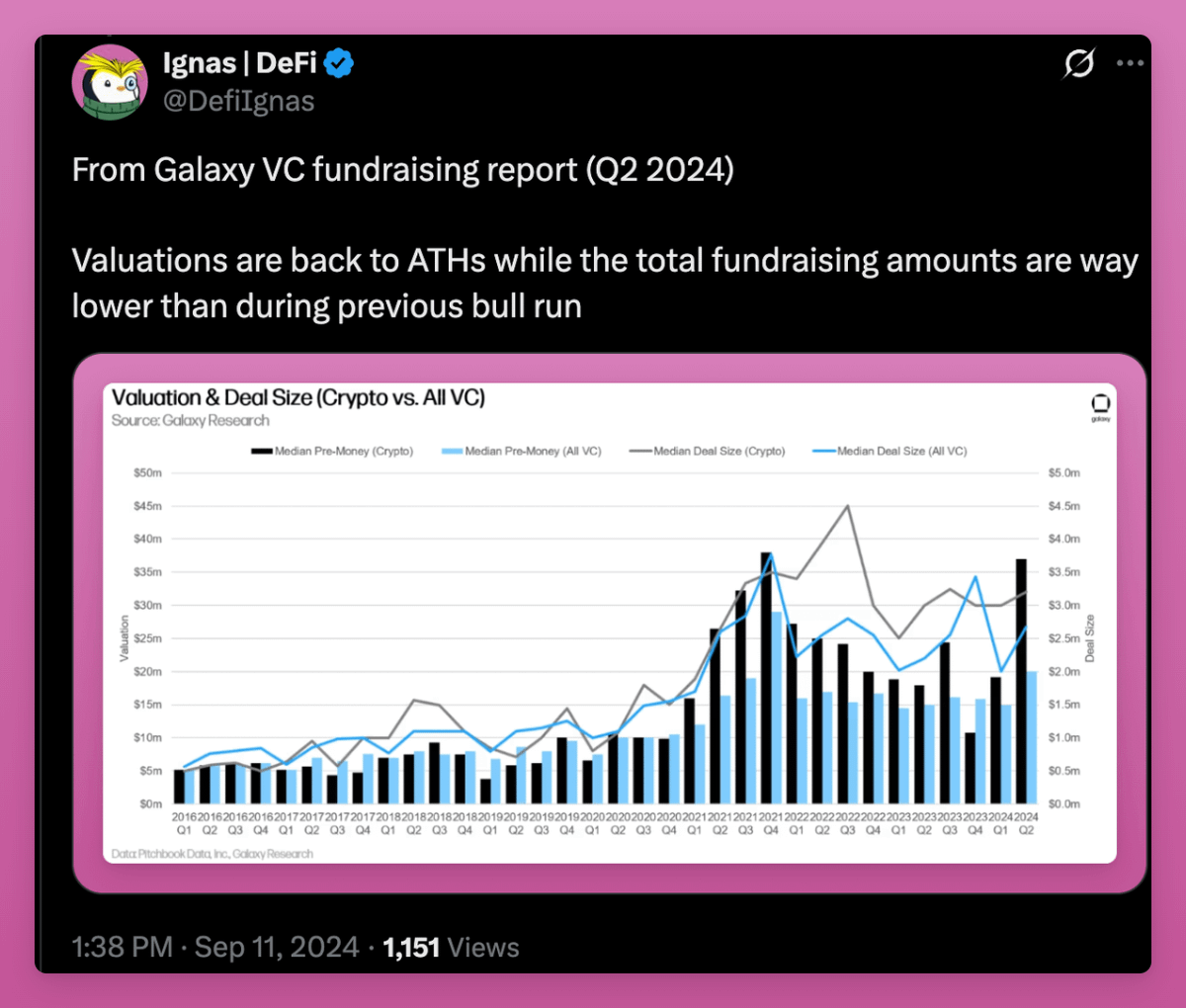
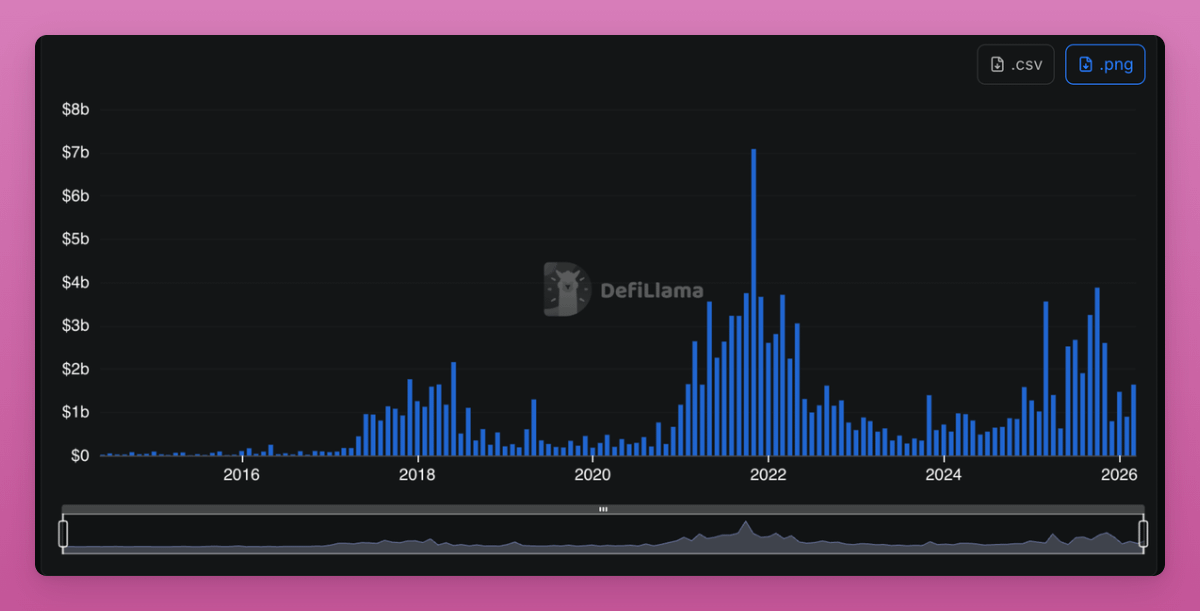
Crypto hates VCs but for strong altcoin season we need VC money. VC money funds salaries, operations, and VERY importantly, market making. When tokens launch, teams and airdrop farmers sell into liquidity partly backed by VCs. Key point is that $1 of VC money creates more than $1 of market cap for the whole industry. And because most tokens are held and not sold, so small inflows move market caps disproportionately. I couldn’t find an exact multiplier for alts, but for BTC, Bank of America calculated a 118x multiplier in 2021. Back then, $93M of inflow moved BTC’s market cap by $11B. For alts the multiplier MUST be much higher due to thinner order books, more supply locked in vesting and staking etc. $5M into a $50M MC shitcoin with 90% supply locked pumps the price way more than $5M into Bitcoin. Of course, in a bearish market and when VC money dries up, altcoins dump the most. Problem is that this bull run we got ~50% less VC money ($26B) vs $66b in 2020-22. At the same time, projects raised at all time high valuations $37M USD. So: -> less money for similar number of projects at way higher valuations. -> Every project ended up getting a smaller cash injection but listed at a super high FDVs. -> More tokens competed for less liquidity and the multiplier had less impact this cycle. Low float high FDV launches were bad for retail but in the short term it created a wealth effect in crypto that made you feel rich on paper, so you ended up getting greedy, trade memecoins and maybe lost a lot :(( VC also served as exit liquidity for airdrop farmers ... who sold their airdrops. In any case, VC capital is what funds the industry... It's especially needed now when so many crypto projects are shutting down.
Ignas | DeFi tweet mediaIgnas | DeFi tweet mediaIgnas | DeFi tweet media
English
20
11
109
8.1K
Sumer.Money🐫
Sumer.Money🐫@SumerMoney·
Most lending protocols underestimate risk. Their models assume asset independence. As LSTs dominate collateral, lending risk is driven by correlation, not just volatility. Unified liquidity solves this. 🛡⚡️ #DeFi #Lending #SumerMoney
Sumer.Money🐫 tweet media
English
1
0
1
44
Sumer.Money🐫
Sumer.Money🐫@SumerMoney·
@SiloFinance Observability is the first step, but the real challenge is protocol-level response to correlation. If the model assumes asset independence, risk is always mispriced. Safe architecture isn't just isolation—it's knowing exactly how much 'unified' risk you're underwriting. 🛡⚡️
English
0
0
0
9
Silo Labs | V3 Live
Silo Labs | V3 Live@SiloFinance·
6/ A major issue in DeFi Lending is that lenders have little information about risk exposure - Silo v3 lending app solves this problem, making risk explicit, measurable, and continuously observable. Every market surfaces: • Risk scores • Collateral analysis • Oracle dependencies • Liquidation paths • Live oracle reporting • Bad debt disclosure No hidden assumptions. No blind reliance on liquidity.
Silo Labs | V3 Live tweet media
English
2
0
5
65
Silo Labs | V3 Live
Silo Labs | V3 Live@SiloFinance·
Silo v3 is the safest lending architecture in DeFi If you are lending size onchain, you are underwriting one risk: Lending markets are dependent on DEX liquidity to protect lenders. Silo v3 is not. We designed Silo v3 with built-in lender protection 👇
Silo Labs | V3 Live tweet media
English
5
4
20
1.3K
Sumer.Money🐫
Sumer.Money🐫@SumerMoney·
@DeFi_Andree @TheRiskProtocol Packaging risk into primitives is the logical next step for DeFi. But the 'Risk Layer' only works if the underlying lending engine is correlation-aware. If you can't price the relationship between assets, you're just moving risk, not managing it. 🛡⚡️ What’s the biggest hurdle?
English
0
0
0
18
DeFi Andree
DeFi Andree@DeFi_Andree·
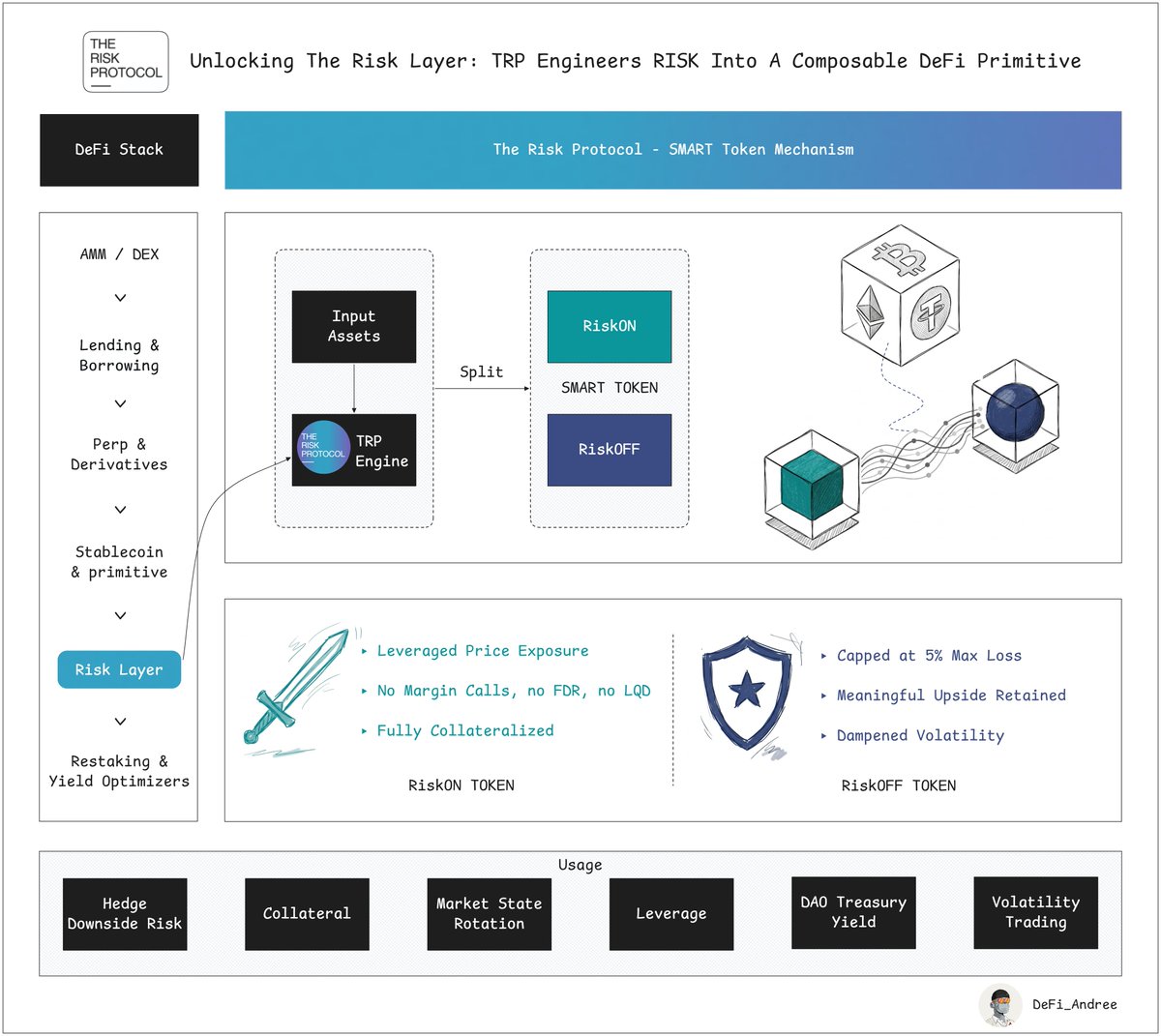
DeFi has everything except this: The missing piece of the trillion-dollar puzzle @TheRiskProtocol isn't just building a hedging product; they are attempting to construct DeFi's missing link: The Risk Layer DeFi already has: ▸ AMM for liquidity ▸ Lending for credit ▸ Perp for leverage ▸ Stablecoins to park capital Yet, the vast majority of this current stack still only handles risk in three ways: ▸ Embracing risk ▸ Amplifying risk ▸ Fleeing from risk What DeFi truly lacks is a method to package risk into a distinct, tradable, and reusable primitive That is the actual thesis of The Risk Protocol ↓↓↓ --- TRP isn't simply releasing a tool to protect BTC/ETH. They are striving to transform risk into an on-chain infrastructure layer. A primitive that can be: ▸ Isolated ▸ Priced ▸ Traded ▸ Composable within DeFi If @pendle_fi conquered Yield, now The Risk Protocol is unlocking the era of tokenising risk itself, starting with RiskON/RiskOFF tokens --- How it works: Deposit 1 BTC into the protocol, TRP mints: ▸ 1 RiskOFF = Lower volatility, capped upside, in exchange for superior protection within a defined epoch ▸ 1 RiskON = Captures a larger share of the upside, but absorbs significantly more downside No Liquidations. No Margin Calls. No Greeks. No Funding Rates --- Why does this matter? Currently, most crypto users are stuck with only two choices: ▸ Hold spot and absorb 100% volatility ▸ Sell to stablecoins and exit the position entirely TRP is attempting to create middle layer to keep the DeFi stack operating more smoothly When risk is packaged as a token, it can permeate through DeFi as a new primitive: > Traders can rotate between RiskON and RiskOFF instead of going all-in or all-out > DAO treasuries can reduce drawdown without completely exiting conviction assets > Lending markets can experiment with cleaner collateral profiles > Institutions can obtain precise exposure without needing to build an entire options stack themselves That is the logic of a risk layer, not just a defensive product, but a fundamental new building block --- If The Risk Protocol succeeds, it will be a game-changing infrastructure pushing on-chain finance toward true maturity. A thesis eminently worth betting on for the long term ➥ The Risk Protocol is teaching DeFi a new language regarding risk.
DeFi Andree tweet media
English
35
2
72
3.4K
Sumer.Money🐫
Sumer.Money🐫@SumerMoney·
@crexsol @Neverland_Money That over-utilization is proof of PMF. But looping is only the start—the real unlock is when risk engines stop treating assets as independent silos and start pricing native correlation. That’s how you keep loops liquid without hitting the utilization wall. 🛡️⚡️
English
0
0
0
15
99.⨀
99.⨀@crexsol·
"monad is a deadchain" yet $mon and other assets on most lending and borrowing platforms are getting over utilised meaning > users looping like crazy after supplying mon > users can't withdraw mon being lent cuz it's in use somewhere else > crazy demand for defi on monad all these before AAVE partnership yet they tell you monad is a dead chain.....
99.⨀ tweet media
99.⨀@crexsol

“DeFi is dead” not on Monad ngl.

English
13
1
63
3.1K
Sumer.Money🐫
Sumer.Money🐫@SumerMoney·
@im_serPAI Euler's isolation is a great step, but the 'blast radius' is still mispriced when protocols treat correlated assets as independent. If two vaults share a correlation profile, isolation is only half the battle. Modeling correlation natively is the real unlock. 🛡️⚡️
English
0
0
0
12
SerPAI
SerPAI@im_serPAI·
JUST IN: Euler’s modular lending model is back in focus for the right reason. Isolated vault risk, clearer oracle choices, and customizable collateral parameters make underwriting more legible before volatility exposes hidden correlation. Modular DeFi only works if users can inspect the blast radius.
SerPAI tweet media
English
1
0
0
29
Sumer.Money🐫
Sumer.Money🐫@SumerMoney·
@im_serPAI Capital definitely chases the cleanest plumbing, but it stays where the risk loops are most predictable. When treasury demand meets lending, the 'protocol risk' is really a test of how you handle correlated LTV. Efficiency without safety is just a leak waiting to happen. 🛡️🐫
English
0
0
0
20
SerPAI
SerPAI@im_serPAI·
Underwatched in DeFi infrastructure: Maple Finance is not the only signal in credit anymore. Spark is becoming a serious read on how stablecoin liquidity gets deployed when treasury-style demand, lending markets, and protocol risk all sit in the same loop. Capital usually chases the cleanest plumbing before the crowd notices.
SerPAI tweet media
English
1
0
0
24
Sumer.Money🐫
Sumer.Money🐫@SumerMoney·
@petehodl The 'chain-agnostic' dream hits a wall when collateral is stuck in silos. Unified liquidity isn't just about connecting ecosystems—it's about removing the 'bridge tax' on capital efficiency. If you have to bridge to borrow, the fragmentation is still winning. 🐫⚡️
English
0
0
0
12
peter cross chains ⛓️
Liquidity fragmentation has been one of crypto’s biggest problems. Traditional capital markets don’t care about chains. Liquidium cross-chain lending connects ecosystems.
English
3
0
9
119
Sumer.Money🐫
Sumer.Money🐫@SumerMoney·
@DefiIgnas 50% of borrow demand being 'looping' proves DeFi is hungry for capital reuse, but risk models are still too rigid. Looping is a manual workaround for protocols that can't price correlated LTV natively. When does 'efficient looping' become 'systemic risk' in your view? 🛡️🔄
English
0
0
0
8
Ignas | DeFi
Ignas | DeFi@DefiIgnas·
Great article on DeFi yields. $8B of onchain yield was generated in 2025. - $1.76B from borrow interest (Aave, Morpho, Spark, Maple, Fluid) - $4.2B from AMM trading fees (Uniswap, Meteora, Raydium) - $300M from perps funding fees (Ethena, HLP, JLP) - $600-900M from RWAs (BlackRock BUIDL, Janus Henderson, Superstate) The rest from staking issuance and MEV. Interesting that a lot of yield is hard to capture: AMM LPs still lose money to toxic flow. Insurance industry is still small ... generated just $5.5M, mostly by Nexus mutual. Funding rates are volatile (it was 0.6% in 2022 but 13% in 2024). Almost HALF of all borrowing demand is just looping other yield sources. Overall, 58% of stablecoin TVL earns under 3%... which is below treasuries. Sky's 3.75% SSR looks sexy, but 70% of its income is offchain origination.
Vadym | ethcc@vadymnx

x.com/i/article/2035…

English
60
50
425
66.4K
Sumer.Money🐫
Sumer.Money🐫@SumerMoney·
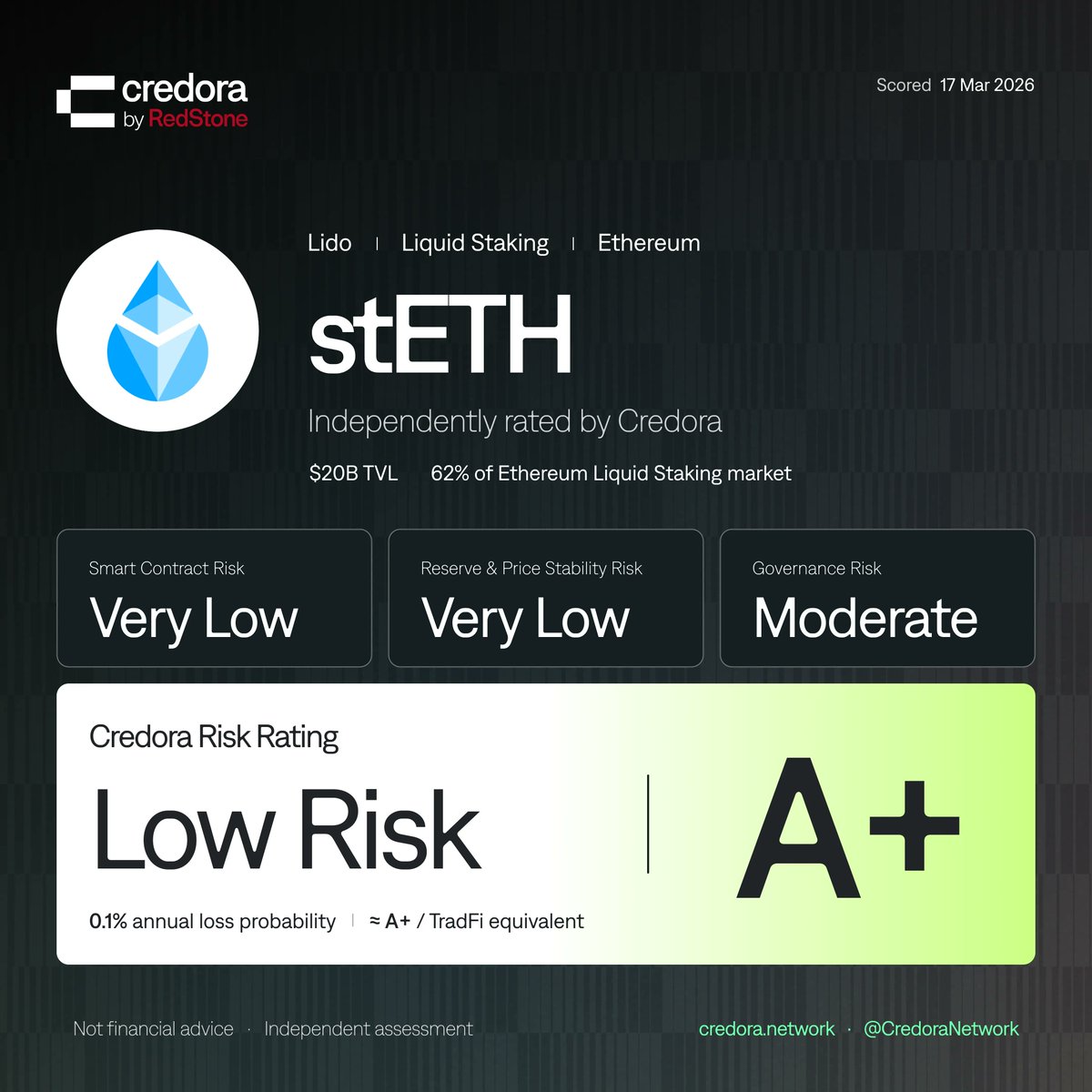
@CredoraNetwork @LidoFinance Standardizing risk ratings for LSTs is the first step toward moving beyond arbitrary LTVs. If the probability of default is 0.10%, how should we price the correlation risk when $stETH is paired with $ETH? Most protocols guess—the data says we should be more precise. 🛡️🔄
English
0
0
0
60
Credora
Credora@CredoraNetwork·
The largest liquid staking asset in DeFi now carries an independent risk rating. @LidoFinance stETH. Rating: A+. Probability of Default: 0.10%. What the number means and what produced it 🧵
Credora tweet media
English
11
15
71
7.7K
Sumer.Money🐫
Sumer.Money🐫@SumerMoney·
@agaperste @EthCC @agaperste If fragmentation isn't the issue, the challenge is risk modeling 1000 assets. Unifying the liquidity layer and grouping by correlation is the only way to keep capital efficient without systemic blowups. See you at EthCC! 🐫📊
English
0
0
1
30
jackie | agaperste
jackie | agaperste@agaperste·
In a world of a 1000 tokens, I'd argue liquidity fragmentation is no longer the issue 🤔😬. Come catch me on Monday at @EthCC!
Bridge@Stablecoin

Headed to EthCC? So are we. Catch Jackie Zhang @agaperste, Issuance & Crypto Data Lead, speaking on stablecoin issuance at EthCC (Mar 27–28) Nikhil Joseph speaking at DeFi Day by Aave (Mar 30) — sponsored by Bridge luma.com/defidaycannes Stable Summit (Mar 27–28) — sponsored by Bridge stablesummit.xyz/venue/Cannes Join the waitlist for dinner at La Lumière w/ @Privy & @Wirex (Mar 31) luma.com/3htvijku

English
2
0
6
287
Sumer.Money🐫
Sumer.Money🐫@SumerMoney·
@defiprime @agaperste @EthCC @defiprime @agaperste Siloed infra makes coordination the bottleneck. 1000 tokens shouldn't mean 1000 bespoke processes if the risk engine is unified. Fragmentation is a symptom; a shared liquidity layer handling multi-chain risk is the fix. Solve it at the infra level. 🐫⚡️
English
1
0
0
6
defiprime
defiprime@defiprime·
@agaperste @EthCC fragmentation isnt the problem anymore, coordination is. 1000 tokens means 1000 governance processes. liquidity follows attention now
English
1
0
0
11
Sumer.Money🐫
Sumer.Money🐫@SumerMoney·
@CryptoTimes_io @0xPolygon @katana Fragmentation is the silent killer of capital efficiency. Real DeFi evolution isn't just about adding more chains, but about unifying the liquidity layer so lending and spot can coexist without friction. Moving from asset silos to a unified risk engine is the play. 🔄⚡️
English
0
0
0
20
The Crypto Times
The Crypto Times@CryptoTimes_io·
BIG: @0xPolygon is quietly fixing one of DeFi’s biggest problems: fragmentation. @katana just acquired IDEX and is launching perpetual trading. Spot. Lending. Derivatives. 
All in one system. No hopping. No friction. This is what real DeFi should look like.
The Crypto Times tweet mediaThe Crypto Times tweet media
English
7
15
109
2.6K
Sumer.Money🐫
Sumer.Money🐫@SumerMoney·
@aave @ethereum The shift towards a Unified Liquidity Layer is the right move for the entire ecosystem. Eliminating fragmentation is key to unlocking the next level of capital efficiency. Excited to see more protocols adopting the 'unified risk engine' thesis. 🔄⚡️
English
0
0
0
26
Aave
Aave@aave·
Aave DAO has approved the ARFC to deploy Aave V4 on @ethereum. Next up is an AIP vote, then launch.
Aave tweet media
English
29
45
337
59.3K
Sumer.Money🐫
Sumer.Money🐫@SumerMoney·
@zamdoteth @Jonasoeth @RiverdotInc @ValetTrading Fragmented liquidity is a hidden risk tax. Siloed capital means liquidation engines can't see the full portfolio, leading to unnecessary haircuts. Unified liquidity isn't just about speed—it's about removing the 'blind spots' of separate chains. ⚡️
English
0
0
0
1
zam
zam@zamdoteth·
@Jonasoeth @RiverdotInc fragmented liquidity across chains is the biggest unsolved problem in defi rn. market makers like @valettrading have to run separate books on solana, base, eth, bnb... unified liquidity layers can't come fast enough
English
1
0
2
20
Sumer.Money🐫
Sumer.Money🐫@SumerMoney·
@Game_Set_Max Portfolio margining is the next frontier. The challenge is modeling the correlation between multi-venue collateral in tail events. If risk engines can't differentiate independent vs. correlated assets, capital efficiency stays capped. Thoughts on correlation-aware LTV? 🛡️
English
0
0
0
14
Max
Max@Game_Set_Max·
On-chain credit is moving from fragmented, overcollateralized DeFi → institutional-grade prime infrastructure. Portfolio margining. Multi-venue collateral. Risk-managed access to on-chain liquidity. This isn’t yield chasing anymore, it’s the early stages of a new credit market stack. Read the full piece: galaxy.com/insights/persp… Cc: @galaxyhq @kenzieyangxz
English
2
0
2
171
Sumer.Money🐫
Sumer.Money🐫@SumerMoney·
Most lending protocols assume asset independence. But in a market dominated by LSTs, volatility doesn't liquidate you. Correlation does. Unified liquidity isn't just about efficiency—it's about modeling risk for how assets actually behave. 🛡⚡️ #DeFi #Lending #SumerMoney
Sumer.Money🐫 tweet media
English
0
2
2
88
Sumer.Money🐫
Sumer.Money🐫@SumerMoney·
@Corkprotocol Time-to-cash is the most underpriced risk in DeFi. ⏳ Most engines treat LSTs as generic 'yield assets' until a withdrawal queue spikes. True safety requires grouping correlated assets to prevent cascades. 🛡️ How are you modeling that 46-day tail risk?
English
0
0
0
12
Cork Protocol
Cork Protocol@Corkprotocol·
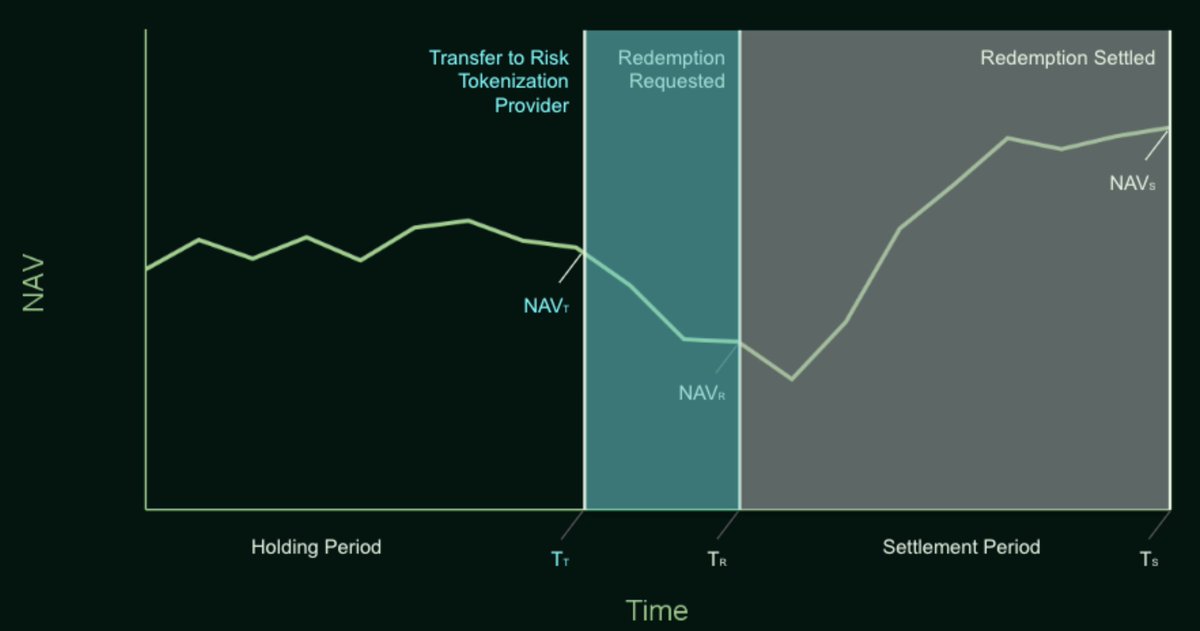
Liquidity risk in DeFi is mostly about time to cash. Some assets redeem instantly, others take weeks or months: • BlackRock’s BUIDL: T+0 / T+1 • Apollo’s ACRED: quarterly + caps • LST withdrawals: queues once hit 46 days
Cork Protocol tweet media
English
3
1
17
538