

lavs
13 posts

lavs
@summonlav
design engineer | ex-@lovart_ai | @cornell_tech alum 🐻
New York City, NY Katılım Nisan 2024
420 Takip Edilen27 Takipçiler

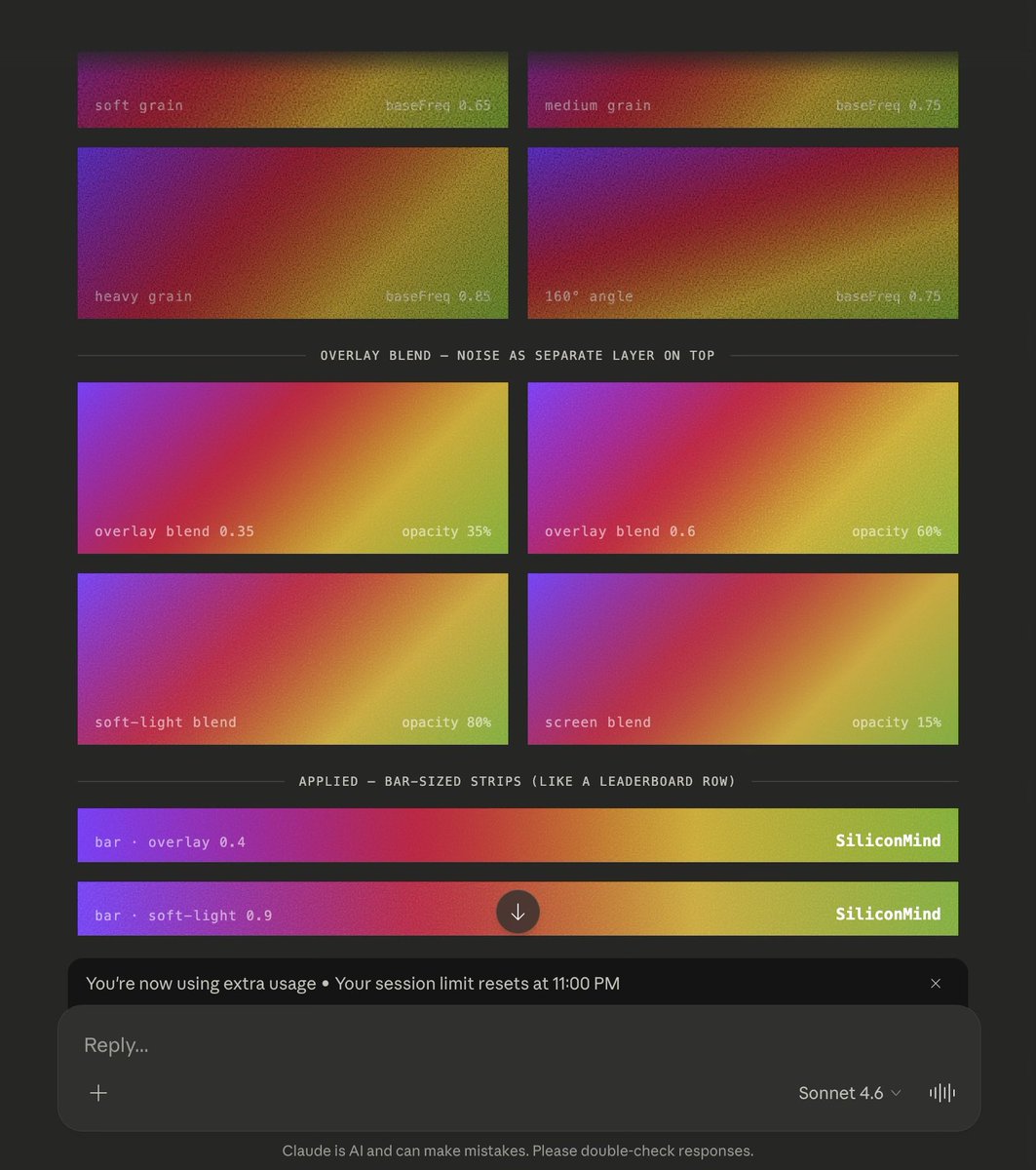
@_RandomYang 嗯我在redesign公司的landing page,就想看看纯色叠一个noise的效果所以倒不用画布探索(算是跳过了静态design的步骤)
中文
Wild! Been playing with github.com/apple/ml-sharp.
One single frame takes me back into that memory.
English
lavs retweetledi

making things true:
design is the practice of seeing through the surface of things to understand their underlying structure, then rearranging those elements into new forms that didn't exist before.
most people think design is about aesthetics – making things look good, choosing colors, polishing interfaces. but underneath, design is a way of thinking about the world. it's about decomposition and recomposition. you take something complex, break it down into its fundamental components, understand the relationships between those parts, and then rebuild it in a way that's simpler, more powerful, or reveals something previously hidden.
this is why i've always been drawn to tools and systems rather than just products. a product solves one problem. a system gives you the building blocks to solve infinite problems. when i was working on Notion, we weren't trying to build another task manager or note-taking app. we were asking: what are the atoms of software? what are the irreducible elements that, when combined, can create any tool you need?
we landed on blocks, databases, views, relations. everything else is just different arrangements of these primitives. once you see this, you realize that all those single-purpose apps – Asana, Linear, Evernote, Airtable – are just rigid, pre-configured assemblies of the same underlying concepts. they've solved for one specific arrangement and called it a product.
but why lock people into one configuration? give them the components and let them build exactly what they need. Notion is lego blocks for thought and work.
Cursor is doing something similar but at a different layer. for decades, the barrier between human intention and working software has been enormous. you need to know syntax, frameworks, design patterns, debugging. most people with ideas never cross that chasm because the cost is too high.
Cursor changes this. when you can describe what you want and the system understands not just the words but the underlying structure – the patterns, the logic, the architecture – then you're no longer translating between human thought and machine language. you're working directly with concepts, and the AI handles the decomposition into code.
this philosophy extends beyond software. language is a finite set of sounds or symbols infinitely recombined to express any thought. music is twelve notes in endless patterns. DNA is four base pairs that encode all of life's complexity.
the universe is fundamentally modular. simple rules, endlessly recombining, creating emergent complexity. design is the human practice of participating in that process consciously. we look at the world, identify the patterns, extract the rules, and use them to build new realities.
when i look at the history of computing, the most important moments weren't new features. they were new primitives. the command line gave us composable programs. the GUI gave us direct manipulation. the web gave us hyperlinks. the smartphone gave us sensors and connectivity. each unlocked entire ecosystems because they provided new atoms that could be infinitely recombined.
AI isn't just a feature. it's a new primitive. it's a new way of decomposing and recomposing reality.
design is philosophy because it forces you to ask: what is this thing really? what are its essential properties? what can i remove before it stops being itself? and once i understand that, what new things can i build?
this is the work. not making things pretty. making things true.
English

lavs retweetledi
on simplicity:
simplicity isn’t about stripping everything down to the bare minimum. it’s about finding the simplest system that can do the most things and serve the most people.
removing features just to remove them isn’t simple – it’s disruptive. real simplicity comes from unification: building systems that allow for variation and customization to fit different needs and contexts.
simplicity is subjective. a pilot wouldn’t be happy if you removed their HUD displays and cockpit controls. but a beginner stepping into that same cockpit for the first time would be overwhelmed, not knowing where to start.
the beautiful thing about software is that it’s conceptual and malleable. unlike physical objects, it can adapt and transform for its user.
true simplicity in software means:
• simplicity at the system level – unified concepts that compose elegantly
• transparency – making the system understandable and explorable
• progressive disclosure – revealing complexity gradually as people grow
• safety – letting people learn without fear of breaking things
this is a simple (but hard) way to create systems that feel simple to beginners while staying powerful for experts. not by removing, but by layering thoughtfully.
the end is not minimalism. it’s maximum capability with minimum friction.
English
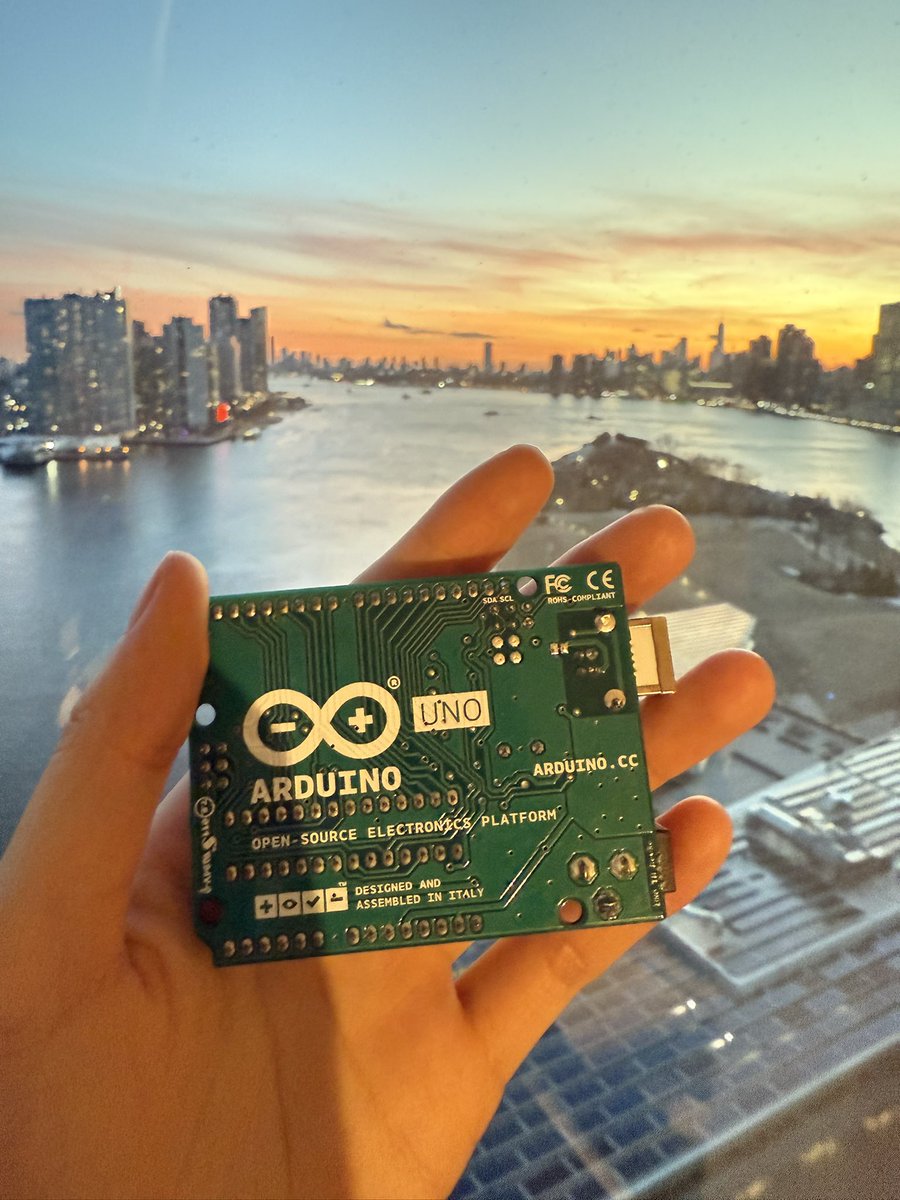

Just dropped my first audio-visual interaction artwork, Shimmering Sunset [v1]! Enjoy!
#touchdesigner #artsandtech #ai
English