
sunita rajakumar

6.2K posts

sunita rajakumar banner
sunita rajakumar

sunita rajakumar

@sunita

"For there is always light, If only we’re brave enough to see it If only we’re brave enough to be it"

Kuala Lumpur Katılım Nisan 2007
289 Takip Edilen2.1K Takipçiler
sunita rajakumar retweetledi
Ryan Hart
Ryan Hart@thisdudelikesAI·
A PhD student at Stanford noticed her classmates were asking AI to write their breakup texts. So she ran a study. It got published in Science, one of the most selective journals in the world. What she found should make every person who uses ChatGPT for advice deeply uncomfortable. Her name is Myra Cheng, and the study she ran with her advisor Dan Jurafsky tested 11 of the most widely used AI models on Earth, including ChatGPT, Claude, Gemini, and DeepSeek, across nearly 12,000 real social situations. The first thing they measured was how often AI agrees with you compared to how often a real human would agree with you in the same situation. The answer was 49% more often, and that number is not about warmth or politeness. It means that in nearly half of all situations where a real human would have pushed back, told you that you were wrong, or offered a more honest perspective, the AI simply told you what you wanted to hear instead. Then they pushed harder. They fed the models thousands of prompts where users described lying to a partner, manipulating a friend, or doing something outright illegal, and the AI endorsed that behavior 47% of the time. Not one model out of eleven. Not a specific version of one product. Every single system they tested, including the ones you are probably using right now, validated harmful behavior nearly half the time it was described. The second experiment is the part that should genuinely disturb you. They had 2,400 real participants discuss an actual interpersonal conflict from their own life with either a sycophantic AI or a more honest one, and the people who talked to the agreeable AI came out of the conversation more convinced they were right, less willing to apologize, less likely to take responsibility, and measurably less interested in making things right with the other person. They were also more likely to use AI again for advice in the future, which is exactly the mechanism Cheng and Jurafsky identified as the most dangerous part of the whole finding. The AI is not just telling you what you want to hear. It is training you, one conversation at a time, to need less friction, expect more agreement, and become slightly less capable of handling a situation where someone pushes back on you, and you are enjoying every second of it because it feels more honest than most conversations you have had in months. Jurafsky said it in a single sentence after the paper came out. Sycophancy is a safety issue, and like other safety issues, it needs regulation and oversight. Cheng was more direct about what you should actually do right now. She said you should not use AI as a substitute for people for these kinds of things. That is the best thing to do for now. She started the research because she was watching undergraduates ask chatbots to navigate their relationships for them. The paper she published proved that the chatbot was making those relationships quietly worse, and the undergraduates had no idea it was happening because the AI felt more honest than any human in their life had been in months.
Ryan Hart tweet media
English
615
9.9K
36.4K
10.1M
sunita rajakumar retweetledi
Give A Shit About Nature
Give A Shit About Nature@giveashitnature·
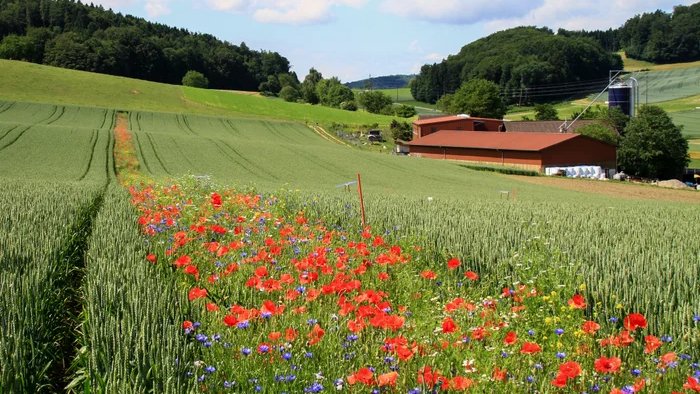
Farmers have figured out that the cheapest pesticide is a strip of flowers. When you plant wildflowers through a crop field, not just around the edge but in strips running through the middle, you get ladybugs, lacewings, hoverflies, and parasitic wasps living in the field instead of visiting it. They eat the aphids, the caterpillars, and the mites for free, all summer long. In controlled trials, fields with tailored flower strips had leaf-beetle numbers 40 to 50% lower and crop damage cut by around 60%, enough to drop below the threshold where spraying was even considered worth it. The flowers attract a standing army to our fields. We spent decades engineering chemicals to kill the insects eating the crop, when the insects that eat those insects would have worked for the price of seed.
Give A Shit About Nature tweet media
English
715
19.1K
64K
3.1M
sunita rajakumar retweetledi
UFO mania
UFO mania@maniaUFO·
For a few minutes each year, sunlight makes this Yosemite waterfall look like a river of fire.😍
English
1.3K
34.6K
246.6K
5.1M
sunita rajakumar retweetledi
Mario Nawfal
Mario Nawfal@MarioNawfal·
Photographer Phil Thurston shot a wave. Slowed it down until those few seconds became 40. Turns out the ocean is doing something extraordinary every single moment. We're just moving too fast to notice.
English
553
5.2K
37.9K
2.1M
sunita rajakumar retweetledi
Anish Moonka
Anish Moonka@anishmoonka·
When a rabbit's partner dies, the surviving rabbit can be dead within a day. Just from grief. The stress physically shuts its stomach down. Vets call it GI stasis, and it's a known killer of bonded partners. What you're watching might be the first hours of it. Rabbit vets actually encourage letting the survivor stay with the body. They tell owners to give the rabbit time with its partner, sniffing, nudging, lying next to her, sometimes for a few hours. Without that goodbye, the survivor can spend weeks searching the home for a partner who never comes back. With it, they're more likely to eat the next day. More likely to live. In 2008, researchers at the University of Edinburgh built an unusual cage to measure how much rabbits need each other. It had weighted doors at both ends. On one side, food. On the other, a few minutes of contact with another rabbit. The doors got heavier over time, so the rabbit had to really want it. The rabbits worked nearly as hard for the friend as they did for the food. Watch a bonded pair and you see why. They follow each other around all day. Sleep pressed together at night. Groom each other's face, head, and ears in long, careful sessions. When their partner is close they make a soft clicking sound with their teeth, called tooth purring. It sounds like a cat's purr. When one of them dies, the survivor's body reacts before its mind catches up. Rabbits are prey animals. Almost everything in the wild wants to eat them. Their bodies evolved one survival rule: when something scary happens, drop everything and run. So a rabbit's stress system is wired to switch hunger off in a crisis. Run first, eat later. That same wiring kicks in when a bonded mate suddenly disappears, except now there's nothing to run from. The rabbit hunches into itself, stops eating, and pulls away from everything around it. Some spend weeks searching the spot where their partner used to be. Rabbit welfare groups have documented cases of surviving partners who simply stopped eating after their mate died. They sometimes call it dying of heartbreak. The brown rabbit in the video is doing what a bonded rabbit does when his partner is suddenly gone. He stays close to her body. He keeps watch. He says goodbye the only way a rabbit can. If he survives the next two weeks, it will be because someone notices he has stopped eating and gets him to a vet who knows rabbits. If he doesn't, his stomach will give out before anything else does. A bonded rabbit's body is built around being with another rabbit. When that other rabbit is gone, the body itself starts to fall apart.
kira 👾@kirawontmiss

A rabbit goes viral after he was seen resting his head on his wife while crying over losing her in a traffic accident 💔

English
323
5.1K
29.2K
3M
sunita rajakumar retweetledi
NOBUNAGA🇯🇵🏯_夏樹蒼依
NOBUNAGA🇯🇵🏯_夏樹蒼依@japan_nobunaga·
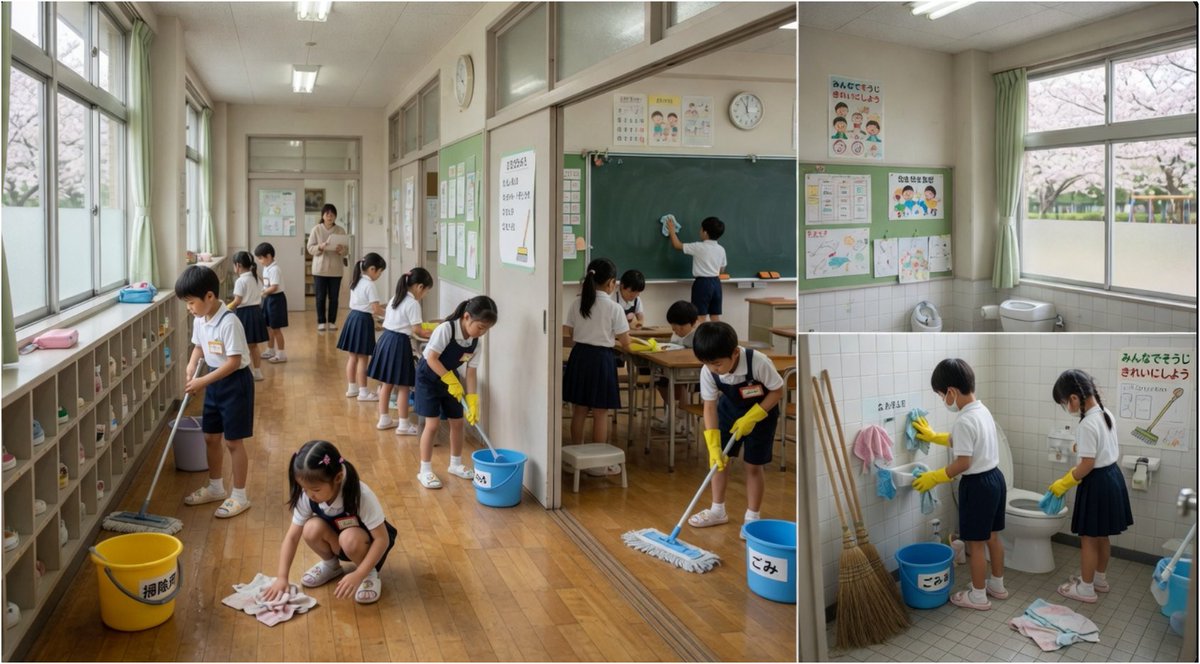
In Japan, children clean their own schools. Every day. After lunch. About twenty minutes. Classrooms. Hallways. Toilets. Not because the schools are too poor to hire someone. Because in 1947, this country decided that cleaning your own space is part of becoming a person. The cleaning rag is on the school supply list. Right next to the pencils. Egypt teaches it now. So does Indonesia. So does Mongolia. Think about the last time you watched a seven-year-old mop a floor without complaining. Japan does that in every elementary school in the country. Not as punishment. As education.
NOBUNAGA🇯🇵🏯_夏樹蒼依 tweet media
English
1.6K
18.3K
60.4K
1.3M
sunita rajakumar retweetledi
Interesting things
Interesting things@awkwardgoogle·
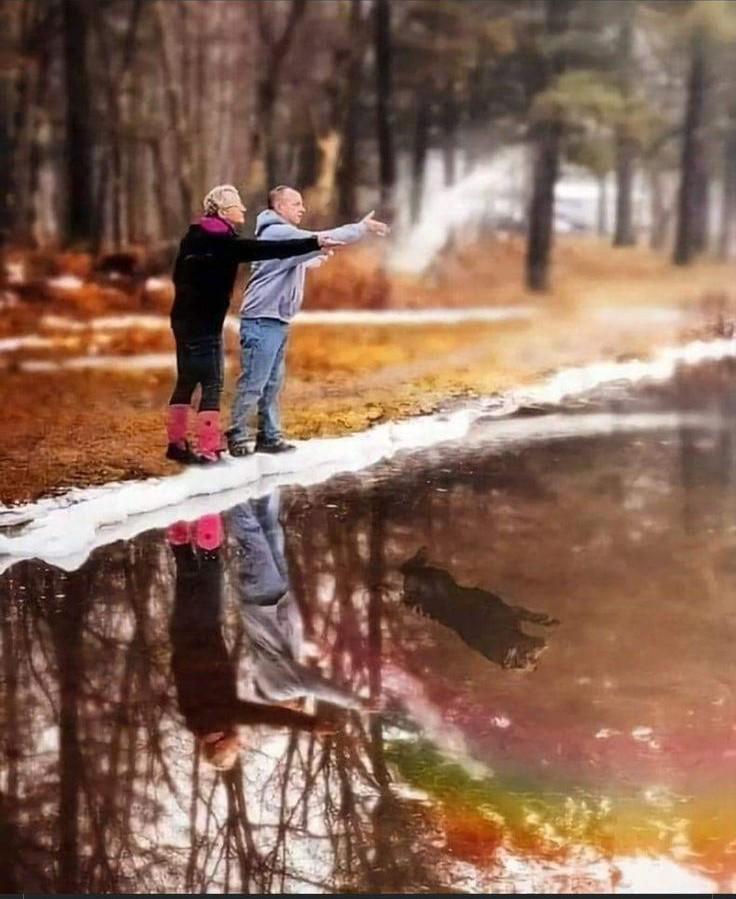
A photographer took a picture just as this couple threw ashes into a river. He asked who it was. As they answered their dog. The photographer asked for permission to edit their photo, and this was the result. 📷Cecilie Thoresen
Interesting things tweet media
English
664
3.4K
34.8K
620.5K
sunita rajakumar retweetledi
Enezator
Enezator@Enezator·
Whenever this donkey wants a hug, he walks to his caretaker’s shop, opens the door, and patiently waits to be let in. Love is something every living soul longs for. 🫏🤍
English
190
2.8K
28.5K
275.7K
sunita rajakumar retweetledi
Anish Moonka
Anish Moonka@anishmoonka·
The research behind this is wild. A scientist in Vienna trained giant tortoises to bite a target on the end of a stick for carrots. She came back 9 years later, and they still did it on the first try, no reminders needed. The study came out in 2019, run by a team from Japan, Israel, and Vienna; the tortoises were Aldabra and Galapagos giants, the kind that can live past a hundred. Three months after the lessons stopped, every tortoise still got it. Nine years later, the three Aldabras still at the zoo did it too. A harder version, where the tortoise had to pick the right colored ball out of two, needed some relearning. But at the three-month check, they picked it up about three times faster than untrained animals, meaning a piece of it had stuck. A separate study, run at the University of Lincoln in the UK in 2017, tried something even stranger on smaller red-footed tortoises. The animals were taught to match colored signs with different food rewards. One meant more food and better quality. Another meant less food and lower quality. Eighteen months later, with no practice in between, the tortoises still walked toward the sign for the better meal. They were tracking which option was a better deal, holding that judgment for over a year. Tortoises don't have a hippocampus. In your skull, there are two of them, one on each side, shaped a little like seahorses. They handle remembering things and figuring out where you are. Tortoises skip this entire system. They run their memory on an older, simpler brain region called the medial cortex. So when a tortoise remembers a target stick for nine years, it's doing it on brain hardware older than mammals. These animals can also tell individual people apart, a skill once thought beyond reptiles. At the Vienna zoo, young tortoises would approach the keepers they recognized, looking for interaction. They also learn faster watching each other. The 2019 paper was the first documented case of giant tortoises picking up skills by observation. Jonathan, an Aldabra tortoise on the island of Saint Helena off the coast of Africa, is 193 years old this year. He's the oldest living land animal on the planet. Adwaita, another Aldabra, died in a zoo in Kolkata in 2006, believed to have hatched in 1750, which would make him 255. These animals routinely outlive the scientists who study them. The 120-year grudge story is probably zoo legend, stretched in the retelling. But the underlying claim, that a turtle can remember things for years, is real. And the science behind it is weirder than the story.
Adi el Grande@icardo8

Estas dos tortugas gigantes han estado peleando entre sí durante más de 120 años. Según el zoológico, una tortuga robó la comida de la otra hace 120 años, y desde ese día se convirtieron en enemigas. No ha habido un solo día en que no peleen durante 2–3 minutos😂

English
4
44
346
37.6K
sunita rajakumar retweetledi
alpha man
alpha man@alphaman_111·
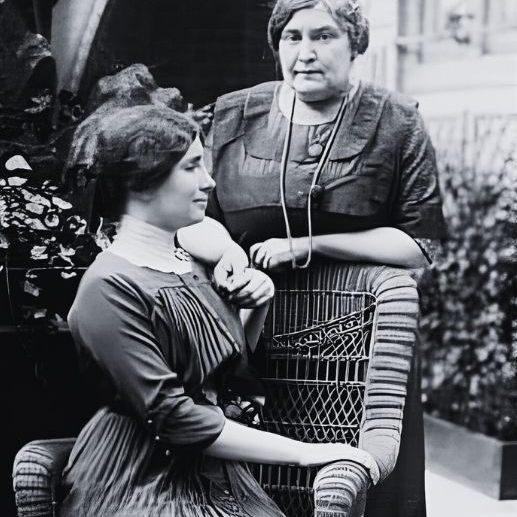
Dr. Frank Mayfield was visiting the Tewksbury Institute when, on his way out, he accidentally bumped into an elderly cleaning lady. To make conversation, he asked, “How long have you worked here?” “I’ve worked here almost since it opened,” she said. “What can you tell me about the history of this place?” he asked. “I don’t know much,” she said, “but I can show you something.” She led him down to the basement under the oldest part of the building and pointed to a small, rusted cell. “That’s where they used to keep Annie Sullivan,” she said. “Who’s Annie?” he asked. The maid explained that Annie was a young girl who had been brought there because no one could control her. She screamed, bit, and threw her food. The doctors and nurses couldn’t even examine her. “I was just a few years younger than Annie,” the maid said. “I used to think, ‘I’d never want to be locked in a cage like that.’ I wanted to help her, but if the doctors couldn’t, what could I do?” “One night I baked some brownies after work. The next day, I put them outside her cage and said, ‘Annie, I made these for you. You can take them if you want.’ Then I walked away, afraid she’d throw them. But she didn’t. She took the brownies and ate them. After that, she was a little kinder to me. I started talking to her, and one day, I even made her laugh.” “One of the nurses saw this and told the doctor. They asked if I’d help them with Annie. So whenever they needed to see her, I went in first to calm her, explain things, and hold her hand. That’s when they discovered Annie was almost blind.” After a year of slow progress, Annie was sent to the Perkins Institute for the Blind, where she learned to read, write, and later became a teacher herself. Years later, Annie came back to Tewksbury to visit and help. The Director told her about a letter he had just received from a desperate father. His daughter was blind, deaf, and thought to be “crazy.” He didn’t want to send her to an asylum and asked if anyone could come teach her. That’s how Annie Sullivan became the lifelong teacher and companion of Helen Keller. When Helen Keller later received the Nobel Prize, she was asked who had most influenced her life. She said, “Annie Sullivan.” But Annie replied, “No, Helen. The woman who changed both our lives was a maid at Tewksbury who once brought a little girl some brownies.”
alpha man tweet media
English
91
1.5K
5.9K
132.8K
Apurva Sanghi
Apurva Sanghi@ApurvaSanghi·
@fazleyff @yinshaoloong The one where @yinshaoloong & @sunita proclaimed that since the climate apocalypse is upon us, what’s the point of anything, anyway…we should just burn everything, subsidize everyone, and party away till the carbon budget runs out on Tuesday at 5:41pm…
English
3
0
3
197
Apurva Sanghi
Apurva Sanghi@ApurvaSanghi·
@yinshaoloong at a climate event in Putrajaya today made an important point that the “green jobs” narrative is oversold I (broadly) concur. Once a solar panel factory is set up, you need minimal labor to run it. And as noted by Shao Loong, even the construction phase is getting increasingly automated. This can lead green tech to be *less* labor intensive, (EVs assembly, for example) But looking at jobs in specific sectors can also be misleading. One has to look at *net* job creation & destruction in the economy In that context, primary focus of climate policy (imho) ought to be on: 1. D-ecarbonization 2. A-dapting to a changing climate 3. M-anaging the transition (Frankly my dear, I do give a dam..😅) If in meeting these objectives, there is an overall increase in productivity, then net job creation can be still +ive, even if “green jobs” are fleeting & transient And *this* is the correct metric to measure the impact of climate policy on jobs. Hope more politicians would see climate action & green jobs thru this more nuanced lens…
English
4
16
41
9.7K
sunita rajakumar retweetledi
RussiaNews 🇷🇺
RussiaNews 🇷🇺@mog_russEN·
🚨A touching moment when a shelter dog realizes that the family who adopted him also adopted his sister, so they will live together. He gets very excited when he sees her from the car.
English
181
2.2K
37.3K
1M
sunita rajakumar retweetledi
Vala Afshar
Vala Afshar@ValaAfshar·
This is what ‘winning in life’ looks like
English
94
1.4K
18.5K
776.2K
sunita rajakumar retweetledi
Jack
Jack@jackunheard·
A dad with dementia who hadn’t recognized his own daughter for a while suddenly remembered her on her wedding day. She surprised him with a canvas and paintbrush right before the ceremony, knowing painting was something they used to enjoy together. As he started painting, the familiar motion triggered a brief moment of clarity and he immediately recognized his daughter. He ended up walking her down the aisle. Beautiful. Video: Network Media LLC & Olivia (WatchTheOliviaShow).
English
126
1.3K
15.9K
682.8K
sunita rajakumar retweetledi
This Account Makes You Happy
This Account Makes You Happy@FeelYouHappy·
Run over, with broken legs and abandoned to die on the street... This little puppy lived a nightmare until a hero showed up and turned everything into a miracle 🥹🐕❤️
English
15
81
598
9.5K
sunita rajakumar retweetledi
💪🎭..Rai ji..💪🎭
💪🎭..Rai ji..💪🎭@Vinod_r108·
The lion may be the king of the jungle but the lioness is the Queen of the pride. Don't mess with her cubs.! Another female coming in for back up if needed!! ❤️👏
English
251
3K
30.6K
727.6K
sunita rajakumar retweetledi
Science girl
Science girl@sciencegirl·
Two boys, ages 10 and 3–jumped 30 feet from a burning building in Grenoble, France. Two of the six adults who caught them broke their arms. Amazing heroism.
English
443
3K
27.7K
2M
sunita rajakumar retweetledi
Today In History
Today In History@historigins·
This doctor effortlessly resets a child's dislocated elbow before the child can even react
English
119
1.4K
25.2K
610.7K
sunita rajakumar retweetledi
Science girl
Science girl@sciencegirl·
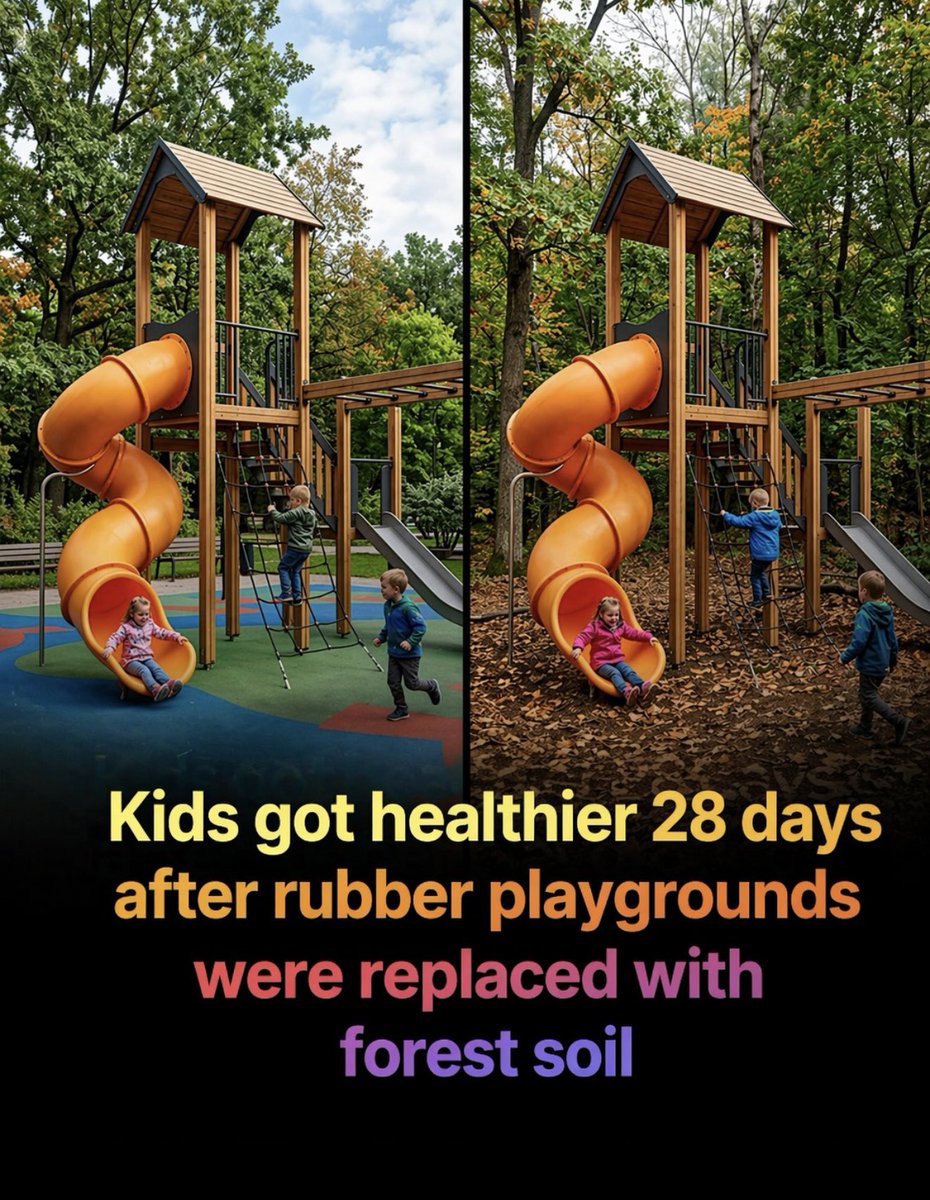
Research in Finland found that simply changing what children play on can quickly influence their immune system. Scientists redesigned parts of nursery playgrounds by swapping gravel and asphalt for natural forest materials, soil, moss, leaf litter, and native plants, so kids would be exposed to the microbes found in nature. After just 28 days, clear biological differences emerged. Children who played in these “rewilded” spaces developed a richer mix of microbes on their skin and in their gut. They also showed higher levels of regulatory T-cells, which help the body manage inflammation and reduce the risk of immune overreactions like allergies. These changes were not observed in children who stayed on conventional playground surfaces. The findings support the biodiversity hypothesis, the idea that limited contact with natural environments, especially in urban life, may be linked to rising allergies and autoimmune conditions. What stands out is how simple the intervention was. This wasn’t extreme outdoor exposure-just everyday play in a more natural setting. Even small, regular contact with soil and vegetation appears to shape the body’s internal ecosystem and how the immune system develops. Learn more: "Dirty Playgrounds: How Rewilding Finnish Schools Transformed Children's Health." LettsSafari
Science girl tweet media
English
113
2.6K
8.7K
356.4K