Weaviate AI Database@weaviate_io
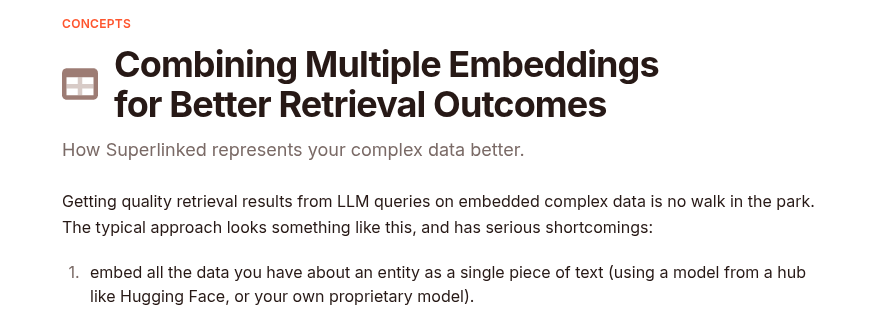
Traditional vector embeddings represent entire documents as single vectors.
But what if we could capture more nuanced relationships?
Enter 𝗺𝘂𝗹𝘁𝗶-𝘃𝗲𝗰𝘁𝗼𝗿 𝗲𝗺𝗯𝗲𝗱𝗱𝗶𝗻𝗴𝘀.
𝗪𝗵𝗮𝘁 𝗮𝗿𝗲 𝘁𝗵𝗲𝘆?
Instead of one vector per document, multi-vector embeddings (like ColBERT) represent each document with multiple vectors. For example:
• Single vector: [0.0412, 0.1056, 0.5021,...]
• Multi-vector: [[0.0543,...], [0.0123,...], [0.4299,...]]
𝗪𝗵𝘆 𝗮𝗿𝗲 𝘁𝗵𝗲𝘆 𝗽𝗼𝘄𝗲𝗿𝗳𝘂𝗹?
Multi-vector embeddings enable "late interaction" - a technique that matches individual parts of texts rather than comparing them as whole units. This preserves fine-grained meaning and enables more precise matching.
𝗛𝗼𝘄 𝗶𝘁 𝘄𝗼𝗿𝗸𝘀:
1. Each token/part of text gets its own vector
2. During a search, each query vector finds its best match in the document
3. Individual matches are combined for a final similarity score
𝗞𝗲𝘆 𝗕𝗲𝗻𝗲𝗳𝗶𝘁𝘀:
• Better handling of word order
• More precise phrase matching
• Improved search accuracy for longer texts
𝗧𝗿𝗮𝗱𝗲-𝗼𝗳𝗳𝘀 𝘁𝗼 𝗖𝗼𝗻𝘀𝗶𝗱𝗲𝗿:
- Generally larger sizes (longer text ➡️ larger vectors)
- Higher memory & storage costs
- Increased inference & search time
𝗜𝗺𝗽𝗹𝗲𝗺𝗲𝗻𝘁𝗮𝘁𝗶𝗼𝗻:
Weaviate v1.30 now supports multi-vector embeddings for production environments through:
1. ColBERT model integration (via @JinaAI_ )
2. Custom multi-vector embeddings
3. Quantization techniques for multi-vector embeddings
Want to learn more? Join our upcoming technical session:
lu.ma/weaviate-relea…