Taravello

417 posts

Taravello banner
Taravello

Taravello

@taravello_

Treasury Management at @kpk_io | Yield Maxi | Opinions are my own

Katılım Eylül 2021
538 Takip Edilen271 Takipçiler
Taravello retweetledi
Deepcryptodive.eth 🏴‍☠️⟠
KPK has fully exited any exposure to rsETH. Zero user funds lost. All @kpk_io @Morpho vaults are 100% operational, with zero exposure to rsETH. Deposits are re-enabled in the ETH Prime vault. Our Prime vaults also have no direct or indirect exposure to Aave nor LayerZero. Don't panic, the yield is organic 😎
Deepcryptodive.eth 🏴‍☠️⟠ tweet media
English
2
1
28
1.4K
Taravello
Taravello@taravello_·
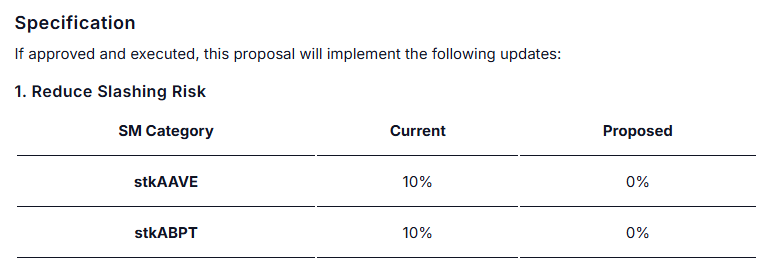
@phtevenstrong @aave Fyi: docs are not up to date, need to dig directly in the forum: "[ARFC] Safety Module & Umbrella Emission Update"
English
1
0
0
62
Taravello retweetledi
Taravello
Taravello@taravello_·
Ngl, $BTC at 77k after ranging between 63 and 75k feels like a new ATH. Are we back?
English
0
0
0
26
Taravello
Taravello@taravello_·
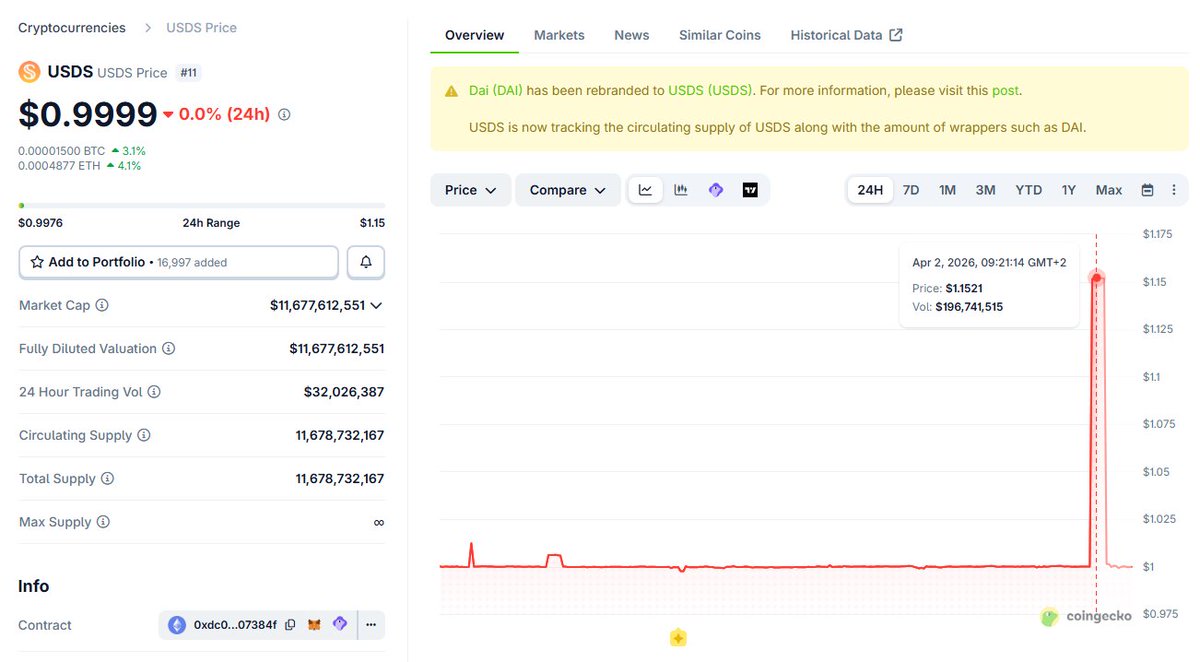
Coingecko casually reporting $USDS at $1.15 earlier this morning. Will we test the resistance at $1.3 or the support at $0.9 first?
Taravello tweet media
English
0
0
3
49
Taravello
Taravello@taravello_·
Gentle reminder to all the @Kalshi and @Polymarket arbitrageurs out there. You have 6 days left to adjust your scripts before letting "the house" win. You are welcome.
Castle Labs 🏰@castle_labs

. @Polymarket will turn on fees for most market categories starting March 30th. The fee structure varies and is downward-parabolic, depending on the market state and the per-share price. So users pay the most when shares are priced at $0.5 and pay progressively less at the edges. To estimate annualised revenue, we sampled the last 30 days of volume across different categories and applied the new fee structure. Since the fee structure varies, we take 30% of the peak rate as an average rate for the analysis. In the last 30 days, Polymarket did $9.55b in trading volume, and with the same metrics, we estimate revenue of about $25m, which would be $300m annualised at current volume levels. At a $20b valuation, it would be a 67x multiple; at $9b (ICE investment), a 30x multiple. On the other hand, @Kalshi is running at an annualised revenue of $1.5b (reported by Bloomberg), implying a revenue multiple of 15x based on their recent round at a valuation of $22b. Additionally, the Polymarket numbers are expected to go higher as they launch Polymarket U.S.

English
1
0
0
57
Taravello
Taravello@taravello_·
Nice win for the @kpk_io curation team here. And yes anon, not a single $ lost across kpk-managed treasuries.
KPK@kpk_io

Update on the Resolv situation. TLDR: kpk's vault architecture worked as designed under real stress. We detected the risk, paused new allocations, and the vault exited automatically the moment liquidity became available. The withdrawal queue design proved itself without requiring any manual intervention. All Ethereum funds fully recovered. Zero loss to depositors. Following the USR minting exploit on Sunday, our Morpho USDC Yield vaults on Ethereum and Arbitrum had limited exposure to the RLP collateral market. When the risk was detected, we immediately set the risk tolerance on the affected market to zero and blocked new allocations. The vault's withdrawal queue was configured to recover the position automatically as soon as liquidity returned. That's exactly what happened. The moment a borrower repaid, a depositor's redemption cascaded through the vault's withdrawal queue, recovering the full amount. Same block, no manual intervention needed. The vault's architecture handled the exit. Result: all Ethereum funds fully recovered. Zero loss to depositors. Concentration limits had already capped our maximum exposure to the market. This is a core part of how we curate: when an individual market fails, the loss ceiling is set at inception, not determined by the speed of the response. Deposits into the Ethereum Yield vault have been re-enabled. The Arbitrum Yield vault is still paused, with ~$1k remaining exposure to Resolv markets. Withdrawals were available to depositors throughout, across both chains. Where we go from here We're using this as an opportunity to strengthen our monitoring and emergency response processes. This includes enhanced oracle divergence monitoring, faster automated exit triggers, and tighter integration with onchain security alerting services. Full documentation of our vault risk framework, including how caps, tiers, and agents work: docs.kpk.io/vaults

English
1
0
7
197
Taravello
Taravello@taravello_·
Audited contracts. Live bug bounty program. And still, $80M minted through a flaw in the core minting logic. This isn't about one protocol. It's about where the industry actually stands on security infrastructure and reliability outside of the few bulletproof protocols out there . Capital moves on trust. And trust takes longer to build when stuff like this keeps happening despite all the right boxes being ticked. We need to get better at this if we want to really "make it" as an industry.
English
0
0
0
62
Taravello
Taravello@taravello_·
So called “crypto influencers” and extractoors fully pivoting to AI content. They now act like experts in an industry they probably do not even understand. Clean your timeline. Be selective. Pay attention to the real ones who stick to their roots. To the real builders.
English
0
0
1
54
Taravello
Taravello@taravello_·
Swapping $50m in a single trade and not expecting any slippage is the real bold move here. How can anyone possibly expect zero price impact at that size? Too easy to point fingers at DeFi and infrastructure issues.
Stani@StaniKulechov

Earlier today, a user attempted to buy AAVE using $50M USDT through the Aave interface. Given the unusually large size of the single order, the Aave interface, like most trading interfaces, warned the user about extraordinary slippage and required confirmation via a checkbox. The user confirmed the warning on their mobile device and proceeded with the swap, accepting the high slippage, which ultimately resulted in receiving only 324 AAVE in return. The transaction could not be moved forward without the user explicitly accepting the risk through the confirmation checkbox. The CoW Swap routers functioned as intended, and the integration followed standard industry practices. However, while the user was able to proceed with the swap, the final outcome was clearly far from optimal. Events like this do occur in DeFi, but the scale of this transaction was significantly larger than what is typically seen in the space. We sympathize with the user and will try to make a contact with the user and we will return $600K in fees collected from the transaction. The key takeaway is that while DeFi should remain open and permissionless, allowing users to perform transactions freely, there are additional guardrails the industry can build to better protect users. Our team will be investigating ways to improve these safeguards going forward.

English
0
0
0
55