
Tony Brite

6.1K posts

Tony Brite banner
Tony Brite

Tony Brite

@tbrite89

WxProbe Christian, Husband, Dad Most experienced USA #hurricane chaser 45 USA hurricanes/18 majors Hurricane Expert Former NWS Meteorologist, NHC intern, Boxer

Eastern NC Katılım Kasım 2013
652 Takip Edilen2.6K Takipçiler
Tony Brite
Tony Brite@tbrite89·
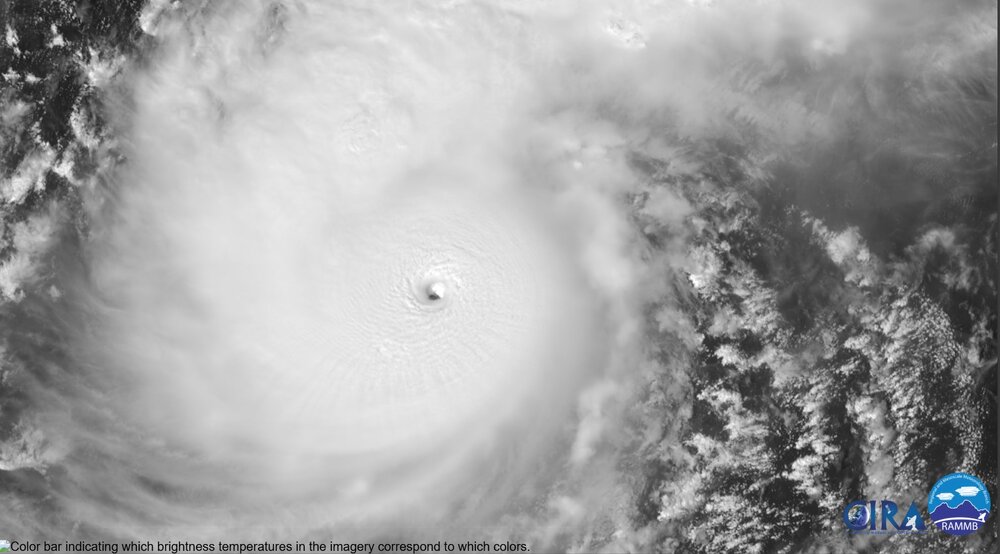
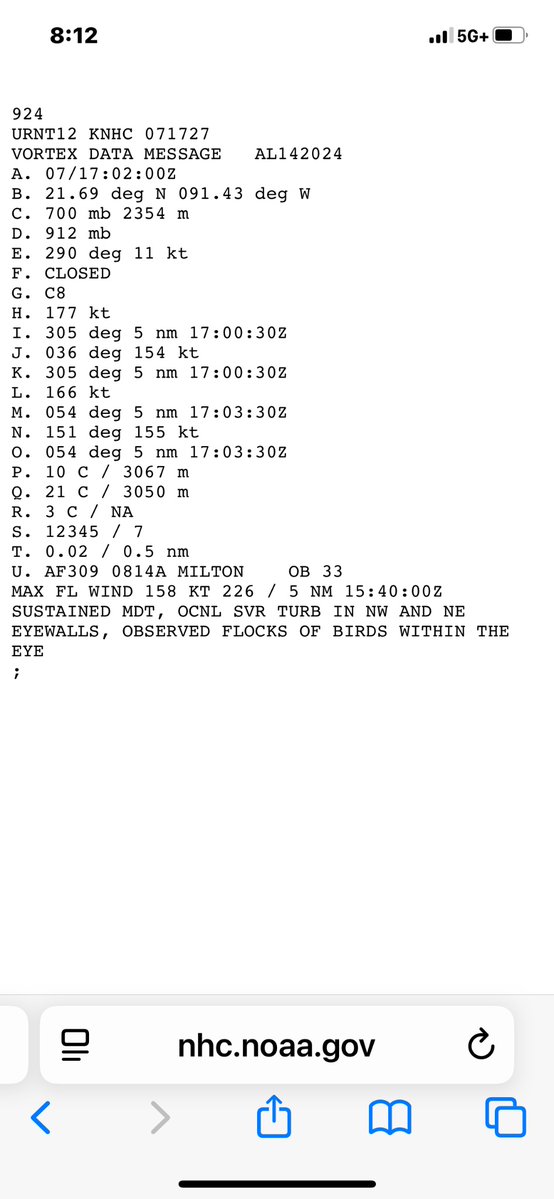
Why Hurricane Milton Was Stronger Than Officially Analyzed: This continues the series re-evaluating Atlantic Category 5 peaks with a focus on structural details — particularly the Radius of Maximum Winds (RMW) at the absolute apex — to refine flight-level-to-surface reduction factors beyond the standard 0.90 value when warranted. Official NHC Peak Intensity: October 7 2024 MSW: 155 kt (180 mph) MSLP: 895 mb Location: Gulf of Mexico (85 n mi NW of Mérida, Mexico) The Key Reconnaissance Data: Hurricane Milton underwent one of the most explosive rapid intensification (RI) episodes in Atlantic history, with its absolute peak occurring during a reconnaissance data gap. Satellite trends showed continued eye sharpening and structural organization through 2000Z, indicating the storm was still intensifying at that time. The final pre-peak Air Force Reserve (AFRES) center fix at 1702Z reported a central pressure of 912 mb (911 mb adjusted for 11 kt eye wind). The eye was extremely well-defined, 8 n mi wide, with a tiny RMW of only 5 n mi. The maximum flight-level wind (FLW) at this fix was carried forward from the previous penetration. The preceding center fix at 1541Z had measured 925 mb (924 mb adjusted for 6 kt eye wind) with a 10 n mi wide eye and a maximum FLW of 158 kt (a +12 kt gain from 1408Z fix). This produced a phenomenal short-term deepening rate of 13 mb over just 81 minutes (9.63 mb/hr) — one of the sharpest pressure-fall bursts ever observed in an Atlantic #hurricane. The subsequent NOAA mission (post-peak/early ERC onset) at 2221Z reported a maximum FLW of 161 kt, 4 n mi RMW, and a dropsonde measured pressure of 899 mb with 24 kt surface wind (adjusted to 897 mb estimated true pressure). The eye remained closed but had degraded to 4 n mi diameter. Two separate dropsondes reported surface winds near 160 kt. Later fixes confirmed an ERC was well underway but remained in its early-to-mid stages. Even so, the central pressure rose substantially during this period: 7 mb in 71 minutes to 2335Z, and another 8 mb over the following 85 minutes to 0100Z. My Reduction Factor Approach: Before applying the appropriate reduction factor, the maximum flight-level wind at the absolute peak (2000Z) must be interpolated across the recon data gap. Interpolation of peak FLW: — From the last measured maximum of 158 kt at 1541Z: +11 kt gain through continued RI momentum (4.32 hours) = 169 kt at 2000Z. — From 2000Z to the NOAA fix at 2221Z (2.35 hours): –8 kt loss (161 kt measured) — which is consistent with gradual inner erosion during early eyewall replacement cycle onset (Sitkowski et al. 2011). Reduction factor application: The ultra-compact RMW (explicitly 4–5 n mi in VDMs, pinhole eye) and extreme RI/steep pressure gradients at apex support a best single reduction factor of 0.935. This constitutes a peak-phase specific upward adjustment from the standard 0.90 value (Franklin et al. 2003), driven by high inertial stability and efficient vertical mixing in small, tight-core systems (Powell et al. 2009; Kepert 2001; Kepert and Wang 2001; Wilma 2005 analog). 0.935 × 169 kt = 158 kt — constrained upward by the aforementioned dropsonde surface floor of 160 kt at 2221Z. Pressure constraint + secondary support: The refined apex central pressure is 893 mb at 2000Z — a clean estimate based on the explosive deepening rate carrying into the gap (moderated continuation of 6.3 mb/hr post-1700Z), followed by a slow 4 mb rise to the adjusted dropsonde value of 897 mb at 2220Z. This is slightly deeper than the official NHC best-track 895 mb, which is more conservative given the data gap and early weakening. For context, Hurricane Melissa (2025) showed a 2 mb pressure increase in just 44 minutes between its last two recon center fixes after its 892 mb peak — illustrating how quickly pressure can rise in the early post-peak phase of a compact storm. The slower initial rise seen in #Milton is consistent with its ultra-tight structure and high inertial stability during the onset of an ERC. KZC (Courtney & Knaff 2009) yields a central estimate of 162 kt (plausible range 160–164 kt) for 893 mb given the very small size (R34 at 70 n mi) and 4 n mi RMW. Final Intensity Estimate: 160 kt This is a modest upward revision from the official 155 kt, justified by the storm’s ultra-compact structure, 160 kt dropsonde surface floor, interpolated FLW of 169 kt at apex, realistic decay rates, and the refined 893 mb peak pressure estimate. A higher-end 165 kt remains plausible per KZC and RI studies but is considered too aggressive without direct sampling in the recon data gap. Next reanalysis subject: Hurricane Gilbert (1988) References/Sources will be listed in the comment section.
Tony Brite tweet mediaTony Brite tweet media
GIF
Tony Brite tweet media
Tony Brite@tbrite89

Follow-up on my #Hurricane Wilma reanalysis to align with the structure/frame work of my latest post on Andrew. The Key Reconnaissance Data: The 0800Z Hurricane Hunter’s eye fix showed a 168 kt peak FLW (SE eyewall) with a corresponding estimated MSLP of 882 mb obtained via dropsonde. The NHC applied the standard flight-level reduction factor (0.90) to get a 151 kt surface wind. Since the aircraft left during an ongoing rapid intensification (RI) phase — eye at record 2.3 n mi diameter (smallest ever in Atlantic) with a corresponding tiny RMW — they interpolated an additional 9 kt to the estimated maximum sustained winds and retained the 882 mb central pressure at 1200Z. My Reduction Factor Approach: As I’ve been discussing throughout these reanalysis of the strongest hurricanes on record in the NATL basin, a higher FLW-to-surface ratio is certainly warranted here as well. For such extreme compactness (high inertial stability, supergradient winds), reduced boundary-layer mixing limits turbulent downward momentum drag, allowing surface winds closer to flight-level (Powell et al. slant reduction studies + Kepert boundary-layer analyses support a 0.93–0.94 factor in small-RMW storms). Application of 0.935 to 168 kt FLW equates to a 157.1 kt surface wind at 0800Z. With continued (but slowing) RI to 1200Z (pressure trend + slightly further RMW contraction), I arrive at the following interpolated peak intensity: * MSW: 165 kt (190 mph) * MSLP: 880 mb Another way to calculate the MSW is to interpolate the likely increase in the FLW over the interceding 4 hour period of 0800Z-1200Z to get 174 kt x 0.935 = 162.7 kt. This edges above NHC's more conservative benchmark, as the tiny eye/RMW physics + KZC-like adjustments suggest 165 kt/880 mb is most accurate — placing #Wilma into the truly upper-elite (along with 1935 GLDH and #Melissa) amongst all known Atlantic TCs on record (dating back to 1851). Next Reanalysis Subject: Hurricane Milton (2024) Sources: 1. NHC Hurricane Wilma TCR: nhc.noaa.gov/data/tcr/AL252… 2. Powell et al. (2009) – on flight-level wind reductions and SFMR-based estimates: journals.ametsoc.org/downloadpdf/vi… 3. Kepert et al (2016) — on why the tropical cyclone boundary-layer isn’t ‘‘well mixed”: journals.ametsoc.org/downloadpdf/vi… #Reanalysis

English
4
20
90
7.6K
Tony Brite
Tony Brite@tbrite89·
Hi Anthony, thank you for the thoughtful post. Yes, Powell et al. (2009) found reduction factors generally increase (meaning higher surface values relative to flight-level) with faster translation speed, due to enhanced left-side inflow/supergradient effects. However, the correlation is weak (only a 6% variance explained), and for Andrew the dominant factor is the small RMW (6–9 n mi) and RI structure — which justifies the 0.92 factor (consistent with Powell/DesRosiers for compact cores). The motion asymmetry is secondary here, but it's still a valid point and something I keep in mind for asymmetric/fast-movers.
English
0
0
0
18
Anthony Kwok
Anthony Kwok@ak_1515·
@tbrite89 This looks interesting. I believe there is some evidence that the conversion ratio from maximum (front-right quadrant) FL winds to surface winds is inversely correlated with translation speed of the storm, have you considered this before?
English
1
0
1
31
Tony Brite
Tony Brite@tbrite89·
Why Hurricane Andrew Was Stronger than Officially Analyzed (Offshore Peak): The NHC's 2004 reanalysis for #Hurricane Andrew's 10th anniversary (Landsea et al.) upgraded the storm from the original post-storm estimate (135 kt) to a peak of 150 kt (175 mph) with a lowest central pressure of 922 mb. This peak occurred during the offshore Bahamas approach/pre-landfall phase on August 23, 1992 (around 1800Z), driven by improved flight-level wind (FLW) reductions (closer to the 90% rule), dropsonde data, and refined wind-pressure relationships. The Key Reconnaissance Data: Focusing on the absolute offshore peak intensity (1525–1800Z on August 23, during Bahamas approach): 1. 1527Z VDM (AF recon obs):
 — Peak FLW of 170 kt (north quadrant, 1525 UTC), with an extrapolated SLP of 926 mb.
 — Extremely tight RMW (1/3 n mi in the north quadrant; other radii 7 n mi NNE, 20 n mi NNE), signifying an asymmetric, ultra-compact inner core amid a rapid intensification (RI) episode. 2. 1649Z VDM (same mission):
 — Further deepening to an extrapolated SLP of 922 mb. — The 170 kt FLW remained the peak recorded value. Overall, this mission revealed a RMW of 6–9 n mi (consistent with the compact eye and tight pressure gradients evident in satellite and recon data). My Reduction Factor Approach: As in my prior reanalyses (1935 Great Labor Day Hurricane, Wilma, Melissa, and others), the small RMW, compact structure, and ongoing RI demand a higher FLW-to-surface factor—driven by greater inertial stability, efficient momentum transport, and steep pressure gradients. Powell et al. (2009) and recent DesRosiers et al. (2025 ML-based SFMR/flight-level collocations) show that the standard 0.90 reduction is often too conservative for these small-RMW, extreme-intensity hurricanes. Consequently, I’m applying a conservative 0.92 factor (tailored to Andrew's 6–9 n mi RMW and RI characteristics) to the 170 kt peak FLW, which yields a maximum sustained surface wind estimate of 155 kt (180 mph). A slightly higher factor (0.93) could be justified given the structure, but Andrew’s 922 mb minimum central pressure constrains the estimate relative to other similarly tight-core TCs in my analyses. This revised peak intensity (155 kt/922 mb) places Andrew solidly in the *elite* tier (MSW of 155 kt+) among all known Atlantic basin hurricanes, but still below the absolute top benchmarks like the 1935 GLDH (170 kt/890 mb), Wilma (165 kt/880 mb), and Melissa (165 kt/891 mb) from my other reanalyses. Even so, it’s still a clear step above the official 150 kt peak. Consistency across these high-end, small-eyed Cat 5s is key—given modern boundary-layer insights support these upward adjustments for the most extreme cases. Sources: 1. Landsea et al. (2004) – the NHC's 10th anniversary reanalysis of Hurricane Andrew's intensity: nhc.noaa.gov/pdf/04landsea.… 2. Powell et al. (2009) – on flight-level wind reductions and SFMR-based estimates: journals.ametsoc.org/downloadpdf/vi… 3. DesRosiers et al. (2025) – ML-based SFMR/flight-level collocations (SWANN model) agupubs.onlinelibrary.wiley.com/doi/epdf/10.10… 4. Hurricane Andrew Reconnaissance Data: nhc.noaa.gov/archive/recon/…
Tony Brite@tbrite89

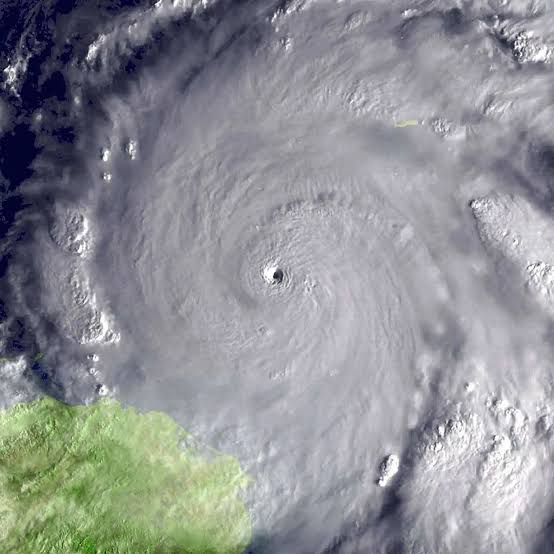
As I’ve done for the 1935 Great Labor Day Hurricane and Hurricane Wilma (2005), I’m continuing this series with detailed reanalyses focused on each hurricane’s absolute peak intensity over its lifetime (maximum sustained winds and lowest pressure — typically offshore, unless the peak coincided with landfall, as it did for hurricane’s Michael and Dorian). Next up: Hurricane Andrew (1992). After reviewing the critical Air Force reconnaissance VDMs from August 23 1992 (which showed 170 kt flight-level winds in the north quadrant and the MSLP dropping to 922 mb), I’ve reassessed Andrew’s peak intensity to 155 kt (180 mph) sustained surface winds accompanied by a lowest central pressure of 922 mb—during its offshore approach to the Bahamas. This places Andrew firmly in the *elite* tier of the strongest *known* Atlantic hurricanes, though still below the absolute top benchmarks like the 1935 GLDH (170 kt/890 mb), Wilma (165 kt/880 mb), and #Melissa (165 kt/891 mb). The complete reanalysis thread for Hurricane #Andrew will be forthcoming/posted within the next 24 hours. Others already posted: — 1935 Great Labor Day Hurricane (170 kt/890 mb): x.com/tbrite89/statu… — Hurricane Wilma (165 kt/880 mb): x.com/tbrite89/statu… #Reanalysis Image: Just prior to reaching its peak between 1400-1800Z on the 23rd.

English
3
5
26
3.5K
Tony Brite
Tony Brite@tbrite89·
Follow-up on my #Hurricane Wilma reanalysis to align with the structure/frame work of my latest post on Andrew. The Key Reconnaissance Data: The 0800Z Hurricane Hunter’s eye fix showed a 168 kt peak FLW (SE eyewall) with a corresponding estimated MSLP of 882 mb obtained via dropsonde. The NHC applied the standard flight-level reduction factor (0.90) to get a 151 kt surface wind. Since the aircraft left during an ongoing rapid intensification (RI) phase — eye at record 2.3 n mi diameter (smallest ever in Atlantic) with a corresponding tiny RMW — they interpolated an additional 9 kt to the estimated maximum sustained winds and retained the 882 mb central pressure at 1200Z. My Reduction Factor Approach: As I’ve been discussing throughout these reanalysis of the strongest hurricanes on record in the NATL basin, a higher FLW-to-surface ratio is certainly warranted here as well. For such extreme compactness (high inertial stability, supergradient winds), reduced boundary-layer mixing limits turbulent downward momentum drag, allowing surface winds closer to flight-level (Powell et al. slant reduction studies + Kepert boundary-layer analyses support a 0.93–0.94 factor in small-RMW storms). Application of 0.935 to 168 kt FLW equates to a 157.1 kt surface wind at 0800Z. With continued (but slowing) RI to 1200Z (pressure trend + slightly further RMW contraction), I arrive at the following interpolated peak intensity: * MSW: 165 kt (190 mph) * MSLP: 880 mb Another way to calculate the MSW is to interpolate the likely increase in the FLW over the interceding 4 hour period of 0800Z-1200Z to get 174 kt x 0.935 = 162.7 kt. This edges above NHC's more conservative benchmark, as the tiny eye/RMW physics + KZC-like adjustments suggest 165 kt/880 mb is most accurate — placing #Wilma into the truly upper-elite (along with 1935 GLDH and #Melissa) amongst all known Atlantic TCs on record (dating back to 1851). Next Reanalysis Subject: Hurricane Milton (2024) Sources: 1. NHC Hurricane Wilma TCR: nhc.noaa.gov/data/tcr/AL252… 2. Powell et al. (2009) – on flight-level wind reductions and SFMR-based estimates: journals.ametsoc.org/downloadpdf/vi… 3. Kepert et al (2016) — on why the tropical cyclone boundary-layer isn’t ‘‘well mixed”: journals.ametsoc.org/downloadpdf/vi… #Reanalysis

Tony Brite@tbrite89

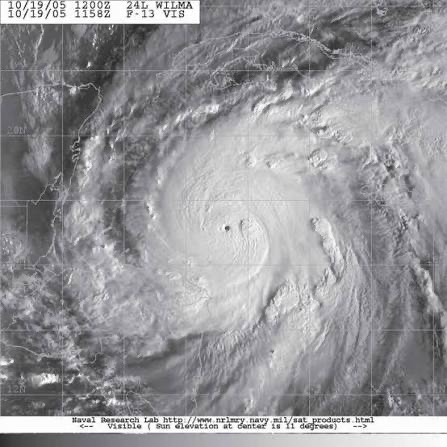
Why Hurricane Wilma Was Likely Stronger Than Officially Estimated: When the NHC completed its post-season Tropical Cyclone Report (TCR) for #Hurricane Wilma (2005), it settled on a peak maximum sustained wind (MSW) of 160 kt (185 mph). This estimate was based on two main observations: 1. Maximum 700 mb flight-level winds of 168 kt (measured in the southeastern eyewall). 2. Evidence of continued rapid intensification between reconnaissance (recon) flights, as indicated by satellite imagery and the fact that the central pressure was still rapidly falling when the last aircraft departed around 0800Z on October 19. I fully agree with applying a 10 kt upward adjustment to account for that ongoing strengthening after the final recon pass. However, I differ on the flight-level wind to surface (10 m) reduction factor. The TCR used the standard eyewall ratio of 0.90 (yielding 151 kt at the surface from 168 kt flight-level), but for a highly organized, rapidly intensifying storm like Wilma—with its exceptionally small eye and efficient vertical transport of momentum—I believe a 0.93 factor is more appropriate. This converts the 168 kt FLW to 156 kt at the surface, plus the additional 10 kt for post-flight intensification, resulting in 165 kt at the presumed peak (around 1200Z on October 19). The lowest central pressure of 882 mb was measured/estimated from recon (via dropsonde at 884 mb with surface winds of 23 kt). Since the pressure was still rapidly falling when the aircraft departed (0801Z), it’s highly likely it continued dropping to around 880 mb (or possibly even lower) during the subsequent 4 hours of continued deepening. Altogether, these observations—tighter reduction factor for Wilma’s compact structure, continued post-flight intensification, and highly probable further pressure decrease—strongly support a revised peak intensity estimate of 165 kt (190 mph). This would tie Wilma with Hurricane #Melissa (2025) for second place among the strongest Atlantic hurricanes by maximum sustained winds (behind the 1935 Great Labor Day Hurricane in my reanalysis). It would also lower Wilma’s record minimum central pressure to 880 mb. This adjustment better reflects modern understanding of boundary-layer dynamics in extreme, small-eyed Cat 5s and maintains consistency across all elite/high-end storms.

English
0
1
27
9.4K
Tony Brite
Tony Brite@tbrite89·
It was rightly considered/called a “travel” back in the day when I played HS basketball (some 40 years ago). This is one of the reasons I can hardly watch BB any longer—it drives me virtually insane, as it now looks more like a run and jump competition. Football just isn’t the same either, with the way the NFL hamstrings the defenses. Things were so much different (and arguably better) prior to the turn of the century.
English
0
0
1
157
Dingers&Jawns
Dingers&Jawns@RtwofourV·
@JoshReynolds24 I don’t know basketball rules, but three steps from the arch to the basket without dribbling isn’t a travel?
English
5
1
17
3.4K
Josh Reynolds
Josh Reynolds@JoshReynolds24·
THIS IS WHY WE LOVE MARCH: I don’t even know how this is possible… High Point guard Chase Johnston with his FIRST TWO POINT FIELD GOAL OF THE ENTIRE SEASON to give them the upset win over Wisconsin. UNBELIEVABLE. The literal definition of madness
English
30
287
5.7K
287.3K
Tony Brite
Tony Brite@tbrite89·
I also meant to note that the 155 kt maximum sustained wind value perfectly matches the KCZ-derived estimate.
English
0
0
3
326
Tony Brite
Tony Brite@tbrite89·
I've been awake the entire night diving deeper into the relevant studies and papers, cross-referencing every reliable data point to arrive at the most accurate and defensible intensity estimates possible. I also completed the draft analyses for both #Hurricane Allen and Hurricane Milton. While finalizing the draft for Milton, I revisited its peak intensity and now assess it at a maximum sustained wind (MSW) of 160 kt (185 mph) with a minimum central pressure of 894 mb. I’m very much looking forward to sharing the specific details and scientific reasoning as we continue through this reanalysis of the true *elite* Atlantic basin hurricanes. For now, I’m going to try to sleep a couple hours before embarking on a very long workday. :)
English
0
0
3
289
Tony Brite
Tony Brite@tbrite89·
As I’ve done for the 1935 Great Labor Day Hurricane and Hurricane Wilma (2005), I’m continuing this series with detailed reanalyses focused on each hurricane’s absolute peak intensity over its lifetime (maximum sustained winds and lowest pressure — typically offshore, unless the peak coincided with landfall, as it did for hurricane’s Michael and Dorian). Next up: Hurricane Andrew (1992). After reviewing the critical Air Force reconnaissance VDMs from August 23 1992 (which showed 170 kt flight-level winds in the north quadrant and the MSLP dropping to 922 mb), I’ve reassessed Andrew’s peak intensity to 155 kt (180 mph) sustained surface winds accompanied by a lowest central pressure of 922 mb—during its offshore approach to the Bahamas. This places Andrew firmly in the *elite* tier of the strongest *known* Atlantic hurricanes, though still below the absolute top benchmarks like the 1935 GLDH (170 kt/890 mb), Wilma (165 kt/880 mb), and #Melissa (165 kt/891 mb). The complete reanalysis thread for Hurricane #Andrew will be forthcoming/posted within the next 24 hours. Others already posted: — 1935 Great Labor Day Hurricane (170 kt/890 mb): x.com/tbrite89/statu… — Hurricane Wilma (165 kt/880 mb): x.com/tbrite89/statu… #Reanalysis Image: Just prior to reaching its peak between 1400-1800Z on the 23rd.
Tony Brite tweet mediaTony Brite tweet mediaTony Brite tweet media
Tony Brite@tbrite89

Strongest NATL Basin Hurricanes (Revised Reanalysis – Update): After a complete review of every Cat 5 in HURDAT2—using direct observations, recon data, flight-level wind reductions, KCZ pressure-wind relationships, RMW/size adjustments, and applicable continuity—here is the updated ranking with additional changes. 1. 1935 Great Labor Day Hurricane — 170 kt (890 mb) * T2. 2005 Hurricane Wilma — 165 kt (880 mb) * T2. 2025 Hurricane Melissa — 165 kt (890 mb) 4. 1988 Hurricane Gilbert — 160 kt (888 mb) T5. 2024 Hurricane Milton — 155 kt (895 mb) T5. 2005 Hurricane Rita — 155 kt (895 mb) T5. 1980 Hurricane Allen — 155 kt (899 mb) * T5. 2005 Hurricane Katrina —155 kt (902 mb) * T5. 1998 Hurricane Mitch — 155 kt (905 mb) T5. 2007 Hurricane Dean — 155 kt (905 mb) * T5. 1932 Cuba Hurricane — 155 kt (908 mb) * T5. 2019 Hurricane Dorian — 155 kt (910 mb) * T5. 1955 Hurricane Janet — 155 kt (912 mb) * T5. 2017 Hurricane Irma — 155 kt (914 mb) * Differs from current official HURDAT2 estimates. #Hurricane #Melissa

English
2
8
48
7.3K
Tony Brite
Tony Brite@tbrite89·
@Weather_Earth25 And that’s prior to peak intensity as it was rapidly intensifying at the time. Can’t find a satellite image at peak, unfortunately. It’s a highly underrated #hurricane and hardly anyone remembers the actual max intensity — only at landfall in SE Florida.
English
2
0
1
138
Tony Brite
Tony Brite@tbrite89·
Why Hurricane Wilma Was Likely Stronger Than Officially Estimated: When the NHC completed its post-season Tropical Cyclone Report (TCR) for #Hurricane Wilma (2005), it settled on a peak maximum sustained wind (MSW) of 160 kt (185 mph). This estimate was based on two main observations: 1. Maximum 700 mb flight-level winds of 168 kt (measured in the southeastern eyewall). 2. Evidence of continued rapid intensification between reconnaissance (recon) flights, as indicated by satellite imagery and the fact that the central pressure was still rapidly falling when the last aircraft departed around 0800Z on October 19. I fully agree with applying a 10 kt upward adjustment to account for that ongoing strengthening after the final recon pass. However, I differ on the flight-level wind to surface (10 m) reduction factor. The TCR used the standard eyewall ratio of 0.90 (yielding 151 kt at the surface from 168 kt flight-level), but for a highly organized, rapidly intensifying storm like Wilma—with its exceptionally small eye and efficient vertical transport of momentum—I believe a 0.93 factor is more appropriate. This converts the 168 kt FLW to 156 kt at the surface, plus the additional 10 kt for post-flight intensification, resulting in 165 kt at the presumed peak (around 1200Z on October 19). The lowest central pressure of 882 mb was measured/estimated from recon (via dropsonde at 884 mb with surface winds of 23 kt). Since the pressure was still rapidly falling when the aircraft departed (0801Z), it’s highly likely it continued dropping to around 880 mb (or possibly even lower) during the subsequent 4 hours of continued deepening. Altogether, these observations—tighter reduction factor for Wilma’s compact structure, continued post-flight intensification, and highly probable further pressure decrease—strongly support a revised peak intensity estimate of 165 kt (190 mph). This would tie Wilma with Hurricane #Melissa (2025) for second place among the strongest Atlantic hurricanes by maximum sustained winds (behind the 1935 Great Labor Day Hurricane in my reanalysis). It would also lower Wilma’s record minimum central pressure to 880 mb. This adjustment better reflects modern understanding of boundary-layer dynamics in extreme, small-eyed Cat 5s and maintains consistency across all elite/high-end storms.
Tony Brite tweet media
GIF
Tony Brite tweet media
English
0
2
6
2.9K
Tony Brite
Tony Brite@tbrite89·
Why the 1935 Great Labor Day Hurricane is Clearly the Strongest NATL Hurricane on Record: When the NHC/HRD Best-Track committee assessed the 1935 Great Labor Day Hurricane (GLDH) at 160 kt (185 mph), they lacked a direct modern analog for comparison. Now, with the detailed reconnaissance data from #Hurricane Melissa’s peak intensity, we can refine that estimate more confidently. With that in mind, let’s compare the two storms at their peaks: — Both reached a measured central pressure of 892 mb. — GLDH had a smaller RMW: 5 n mi vs. Melissa’s 8 n mi. — Both moved at essentially the same slow forward speed (7 kt). — Environmental/background pressures were comparable. — GLDH was slightly more compact overall (smaller ROCI and narrower wind field). These factors—particularly the tighter RMW and greater compactness—create a steeper pressure gradient and more efficient conversion to wind speed. Altogether, they make it abundantly clear that the GLDH was at least 5 kt stronger than Melissa’s official 165 kt peak intensity. This aligns perfectly with refined KCZ pressure-wind conversion estimates, which support 170 kt for GLDH. In short, the physics and structure strongly favor GLDH as the strongest by peak maximum sustained winds in the Atlantic record (dating back to 1851). #1935_3" target="_blank" rel="nofollow noopener">aoml.noaa.gov/hrd/hurdat/met… #Melissa
Tony Brite tweet media
Tony Brite@tbrite89

Strongest NATL Basin Hurricanes (Revised Reanalysis – Update): After a complete review of every Cat 5 in HURDAT2—using direct observations, recon data, flight-level wind reductions, KCZ pressure-wind relationships, RMW/size adjustments, and applicable continuity—here is the updated ranking with additional changes. 1. 1935 Great Labor Day Hurricane — 170 kt (890 mb) * T2. 2005 Hurricane Wilma — 165 kt (880 mb) * T2. 2025 Hurricane Melissa — 165 kt (890 mb) 4. 1988 Hurricane Gilbert — 160 kt (888 mb) T5. 2024 Hurricane Milton — 155 kt (895 mb) T5. 2005 Hurricane Rita — 155 kt (895 mb) T5. 1980 Hurricane Allen — 155 kt (899 mb) * T5. 2005 Hurricane Katrina —155 kt (902 mb) * T5. 1998 Hurricane Mitch — 155 kt (905 mb) T5. 2007 Hurricane Dean — 155 kt (905 mb) * T5. 1932 Cuba Hurricane — 155 kt (908 mb) * T5. 2019 Hurricane Dorian — 155 kt (910 mb) * T5. 1955 Hurricane Janet — 155 kt (912 mb) * T5. 2017 Hurricane Irma — 155 kt (914 mb) * Differs from current official HURDAT2 estimates. #Hurricane #Melissa

English
8
7
33
5.5K
Tony Brite
Tony Brite@tbrite89·
After I had time to more thoroughly analyze older cases—such as Hurricanes Allen, Dean, Katrina, and the 1932 Cuba #Hurricane—it necessitated this updated version of the list.
English
0
0
1
425
Tony Brite
Tony Brite@tbrite89·
Strongest NATL Basin Hurricanes (Revised Reanalysis – Update): After a complete review of every Cat 5 in HURDAT2—using direct observations, recon data, flight-level wind reductions, KCZ pressure-wind relationships, RMW/size adjustments, and applicable continuity—here is the updated ranking with additional changes. 1. 1935 Great Labor Day Hurricane — 170 kt (890 mb) * T2. 2005 Hurricane Wilma — 165 kt (880 mb) * T2. 2025 Hurricane Melissa — 165 kt (890 mb) 4. 1988 Hurricane Gilbert — 160 kt (888 mb) T5. 2024 Hurricane Milton — 155 kt (895 mb) T5. 2005 Hurricane Rita — 155 kt (895 mb) T5. 1980 Hurricane Allen — 155 kt (899 mb) * T5. 2005 Hurricane Katrina —155 kt (902 mb) * T5. 1998 Hurricane Mitch — 155 kt (905 mb) T5. 2007 Hurricane Dean — 155 kt (905 mb) * T5. 1932 Cuba Hurricane — 155 kt (908 mb) * T5. 2019 Hurricane Dorian — 155 kt (910 mb) * T5. 1955 Hurricane Janet — 155 kt (912 mb) * T5. 2017 Hurricane Irma — 155 kt (914 mb) * Differs from current official HURDAT2 estimates. #Hurricane #Melissa
Tony Brite@tbrite89

Reanalysis of the Strongest NATL Basin Hurricanes: As many in the tropical weather community know, the National Hurricane Center (NHC) and NOAA's Hurricane Research Division (HRD) have been conducting a comprehensive reanalysis of all North Atlantic (NATL) basin tropical cyclones dating back to 1851. This ongoing project (now spanning more than two decades), incorporates new historical data, improved methodologies, and modern understanding of pressure-wind relationships. The farther back in time we go, the greater the uncertainty becomes—due to sparse observations, limited technology, and the absence of routine aircraft reconnaissance (RECON) or satellite imagery. Even today, intensity estimates involve a substantial amount of subjectivity and inherent error bars. That said, the science has advanced significantly since the advent of routine Hurricane Hunter reconnaissance flights in the 1940s–1950s, allowing for more reliable assessments of peak intensities in the RECON era and beyond. With that context in mind, listed below is my own educated analysis of the strongest hurricanes in the NATL historical record. This ranking differs slightly from the current “official” HURDAT2 values in several cases—reflective of a more consistent and updated understanding of FLW to surface adjustment factors. 1. 1935 Great Labor Day Hurricane — 170 kt (890 mb) * T2. 2005 Hurricane Wilma — 165 kt (880 mb) * T2. 1988 Hurricane Gilbert — 165 kt (888 mb) * T2. 2025 Hurricane Melissa — 165 kt (890 mb) T2. 1980 Hurricane Allen — 165 kt (899 mb) T6. 2024 Hurricane Milton — 155 kt (895 mb) T6. 2005 Hurricane Rita — 155 kt (895 mb) T6. 1998 Hurricane Mitch — 155 kt (905 mb) T6. 2019 Hurricane Dorian — 155 kt (910 mb) * T6. 1955 Hurricane Janet — 155 kt (912 mb) * T6. 2017 Hurricane Irma — 155 kt (914 mb) *Differs (slightly) from the current official HURDAT2 estimate. I'll follow up in the thread with detailed reasoning for each entry, as time permits, covering the key data sources, adjustments for RECON sampling biases, pressure-wind relationships/conversions, and why certain peaks warrant revision in my own personal view. #Hurricane

English
1
1
8
10.5K