Sabitlenmiş Tweet

Get ready for a 70's style brain drain, capital flight and investment screeching to a halt #Labour #KeirStarmer
English
TeesMiner
108 posts
@teesminer
When the freedom they wished for most was freedom from responsibility, then Athens ceased to be free and was never free again - Edward Gibbon




Cdr Dan Lee hands over command of @HMSDuncan to Cdr James Mitchell
Attending the Installation of Sarah Mullally as the Archbishop of Canterbury at Canterbury Cathedral.

@afneil Hi Andrew — you’re right there are regional hubs. But the UK NBP increasingly relies on LNG to balance the system, and cargoes go to the highest bidder globally. So the price here is increasingly set by the marginal LNG cargo — i.e. a global price, not a domestic one 1/2

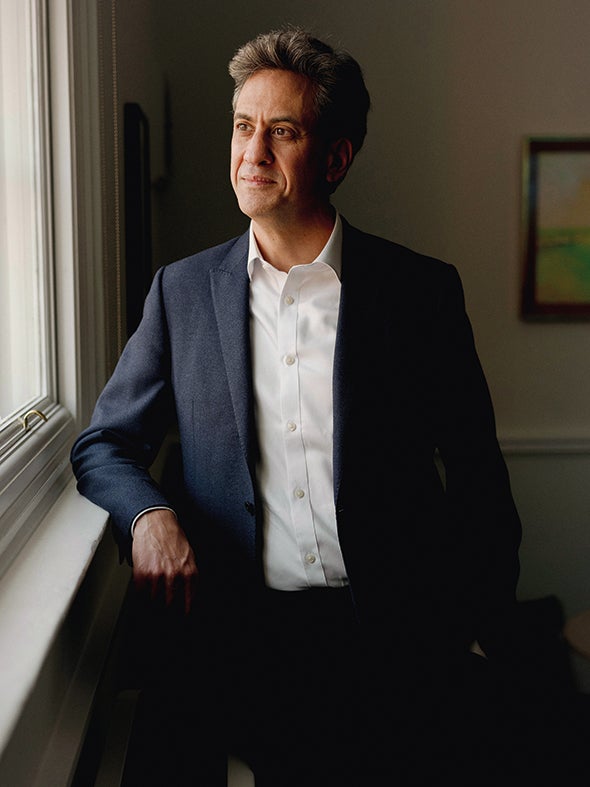
A CERTAIN IDEA OF ED MILIBAND by @Will___lloyd The story of the post-Blair Labour party, if it can be contained in one individual, is the story of Ed Miliband. This is not a story about backstabbing brothers, back room deals with “union paymasters”, election promises printed on tomb stones, questionable slogans on mugs, bacon sandwiches, or double kitchens; nor anything as vulgar as retail policies aimed at marginal constituencies. Miliband’s story is really about the exhilaration of ideas: where they come from, why some of us fall in love with them, and what propels those ideas from the fringes of the debate to the fulcrum of an era. This is not an argument about whether those ideas and the policies they eventually become are right or wrong. It’s a story about the long-term political power that commanding those ideas allows an individual to wield. It is about the years of Edward Samuel Miliband - and Milibandism - which might be seen as the latest, or perhaps even the last, attempt to restore a social democratic political economy in Britain. Since July 2024, when Labour returned to government, it has been hard to work out precisely the point of this administration: to spend a bit more here and there, but leave an abject economic settlement largely intact; or to be much more than that, to fundamentally reshape Britain? For the last 20 months, Miliband has stood distinctly apart from those growing doubts. Even his enemies admit that the Minister for Energy Security and Net Zero knows what he is doing. That, in large part, is why he is so hated by his opponents. Miliband is getting social democratic things done at scale: during an era of uncontrollable global conflict, which began with the Ukraine war and is spiralling in Iran, when the direction of energy policy has become the most fiercely disputed issue in British politics. Miliband and his ideas have become a lightning rod for opponents of this government. (“Eco-zealot”; “madman”; “hysterical eco-obsessive”; “muddled climate zealot”; “demented fantasies”; these are Fleet Street editorials’ relentless tribute to his perceived threat.) And yet, as one of those critics, a source who had worked with Miliband during his leadership of the Labour Party between 2010 and 2015, grudgingly admitted: “There is something about Ed that is significant. He is a symbolic figure… the last flickering of social democracy.” Cover art by Mona Eing and Michael Meißner


What is a "meme", in economic terms? An Austrian School perspective on the economics of memes: insider.iea.org.uk/p/memenomics