Thomas Evangelidis

175 posts

Thomas Evangelidis banner
Thomas Evangelidis

Thomas Evangelidis

@tevangelidis

Founder, CEO & CTO at AI|ffinity (https://t.co/dYmX3SkJN4). Computer-Aided Drug Design & NMR. Strictly science-related posts.

Česká republika Katılım Ekim 2009
473 Takip Edilen300 Takipçiler
Thomas Evangelidis
Thomas Evangelidis@tevangelidis·
@Andrew_Akbashev On one hand your posts are descriptive, concise and accurately reflect academic reality. On the other hand, if you spent less time writing on social media maybe you would have a wealthier publication record and would get the funding. 😁
English
0
0
0
33
Andrew Akbashev
Andrew Akbashev@Andrew_Akbashev·
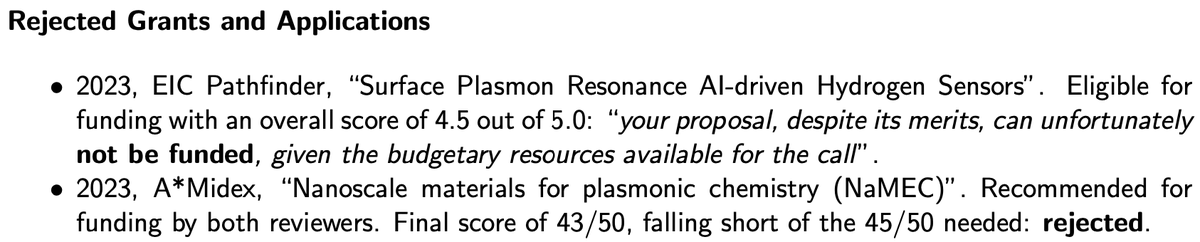
My career funding got recently rejected because I do not have a high "research output" (number of papers published recently). I am also thinking of adding such "Failed Efforts" section to my CV. So much energy is put into ideas, writing, polishing, etc. And yet it never lends into a CV!
English
3
0
40
3.9K
Thomas Evangelidis
Thomas Evangelidis@tevangelidis·
@Andrew_Akbashev But the majority of academic research groups tend to fulfill a greater number of the points you mentioned. 😀
English
0
0
4
1.4K
Andrew Akbashev
Andrew Akbashev@Andrew_Akbashev·
“How to identify a toxic group during interview?” - a typical question that I receive on social media. Below I am providing key indicators that students should pay attention to during interview. So, the lab may be toxic if: 1. You were denied a personal meeting with other PhD students during or after the interview. 2. You receive negative feedback from the lab alumni (you can privately contact them before accepting an offer). 3. Other students/postdocs do not want to discuss things they don’t like about the group. 4. The advisor is the first author on research papers while students did the work. (Remember that if a professor wrote the manuscript, it does NOT automatically entitle him/her to be the first author) 5. Students are rarely first authors on research papers and usually reside in the middle of the list while collaborators are the first authors. This may imply that keeping collaborators happy is more important to the group head than letting his/her students thrive. Or that senior colleagues are given “priority”. 6. The advisor avoids discussing topics related to “personal/professional development” such as attending conferences, doing side projects, accessing to expensive facilities, lab safety, etc, that are crucial for a successful PhD. 7. The advisor makes sarcastic or inappropriate comments about you, other students, other labs or colleagues (e.g., about their personal identity, religion, country of origin, hobbies, etc). This is absolutely unacceptable and clearly a red flag. 8. The advisor noticeably dominates the conversation during interview and doesn’t listen to you. (This means you should expect similar conversations and meetings during your entire PhD) 9. The advisor cannot explain how he/she provides successful mentorship. 10. Postdocs and senior PhDs are bossy and authoritative. (This implies the group is hierarchal and you may have some hard time there) 11. Students in the group are hardly enthusiastic and not quite interested in discussing their work. 12. The advisor doesn’t trust students and doesn’t believe in them. 13. The lab is poorly managed and looks dangerous / unsafe. 14. During interview, the advisor is not interested about your vision for a PhD. Nor does he/she care about YOUR vision for a successful PhD and what you want to gain from your PhD time. 15. If the advisor expects to receive responses during off-hours. Two important points: - Because toxicity can have different “flavors”, everyone should decide on the criteria for themselves. - Even if some of these points are valid, it doesn’t mean the lab is necessarily toxic. But it means the candidate should be careful and explore this lab further before making a decision. Safe PhD-ing and postdoc-ing! #phdchat #AcademicTwitter #research
Andrew Akbashev tweet media
English
16
120
449
96.3K
D. Flemming Hansen
D. Flemming Hansen@DFlemmingHansen·
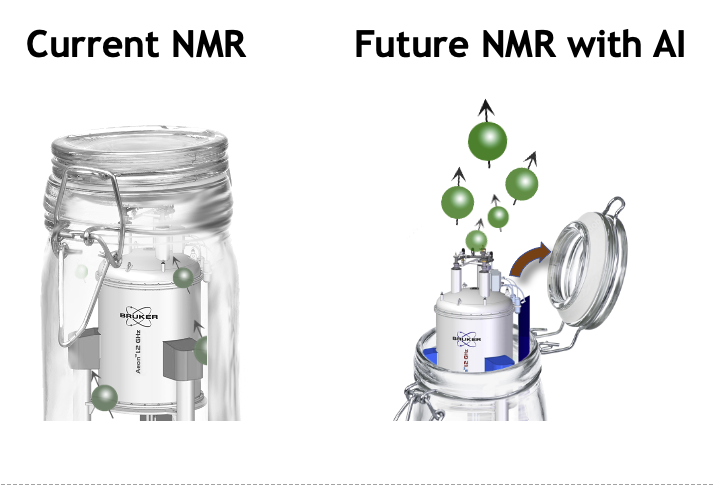
Would you like to do #NMR and #AI together with me? I now officially have a postdoc position available to change the field of #NMRchat forever by concomitantly developing #NMR and #AI. If you are interested, please DM, email or apply below 👇 Please RT. tinyurl.com/4vy3s2tj
D. Flemming Hansen tweet media
English
1
19
51
7.2K
Thomas Evangelidis
Thomas Evangelidis@tevangelidis·
@joe_fenrir @andrei_yudin In our recent preprint, we demonstrate that explicit calculation of ligand deformation energy and ligand conformation entropy on the PM6-D3H4X/COSMO level has no positive effect on protein-ligand scoring, despite the huge computational burden they entail. chemrxiv.org/engage/chemrxi…
English
0
0
1
36
Thomas Evangelidis
Thomas Evangelidis@tevangelidis·
@joe_fenrir @andrei_yudin Well, I don't know whether most of the ligands do not bind in a local minimum conformation, but what I can tell for sure is that the contribution of the strain energy and conformational entropy to ligand binding is overrated.
English
1
0
1
37
Andrei Yudin
Andrei Yudin@andrei_yudin·
What is the current understanding of this 2004 paper's legacy and its claim that "that over 60% of the ligands do not bind in a local minimum conformation"? Is there a consensus? pubs.acs.org/doi/10.1021/jm…
English
6
6
53
14.7K
Thomas Evangelidis
Thomas Evangelidis@tevangelidis·
@Andrew_Akbashev It couldn't be more true! Postdoc salaries are not only disgraceful for the skills and efforts of the employee, but are usually barely enough for someone to live alone. Imagine having a family to support financially and children to raise with this money...🤯
English
0
0
3
314
Andrew Akbashev
Andrew Akbashev@Andrew_Akbashev·
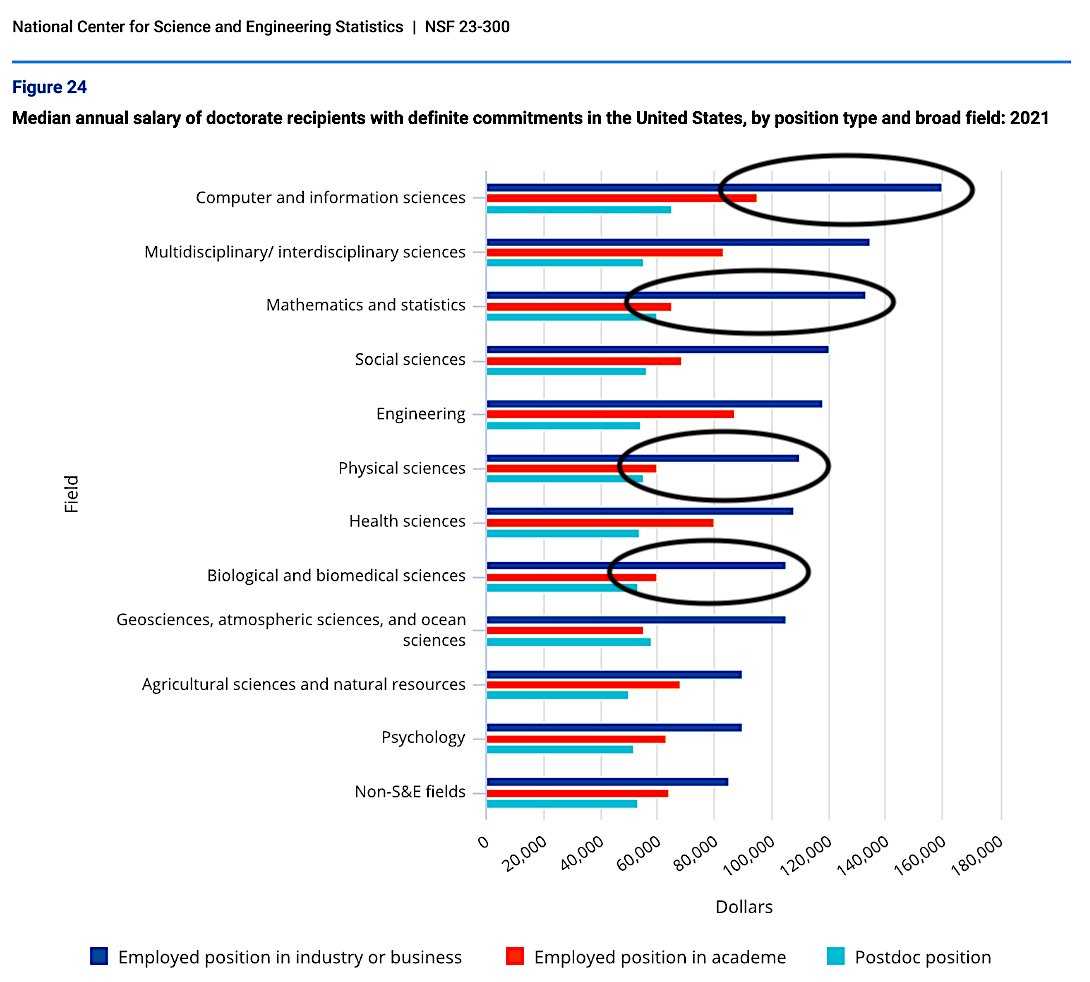
Salaries in industry are ~ 2x higher than in academia after #PhD. This is a huge gap. Many students ask me what to do about their bad advisors and boring PhD time. They love doing #research but have no idea how to stay in academia. My advice these days is simple: 1. Do your best to get the PhD degree. 2. Try to leave your advisor somewhat happy so that you can ask for a recommendation letter. 3. And then LEAVE academia for industry. DON’T look for a postdoc position, it won’t help you. - Why? Because if you have a difficult advisor and unproductive PhD time, it means your chances of staying in academia are extremely slim (~ 1%). BUT companies don’t care about your advisor as much as academics do. They don’t need your fancy papers in Science and Nature. They need your expertise and skills. And you as a critical thinker. It may feel like a hard transition because you’ve got used to academic work so much. But once you move to a company and see your bank account finally doing well, you will be surprised by how shortsighted you were before. In industry, people solve all sorts of complex problems. Many of them are more challenging than in academia. So, believe me that you WON'T be bored if you find the right company. And if you want to stay in academia because your brain strives for solving complex problems, you will be equally challenged in industry, especially in a tech company. Of course industry also has all sorts of troubles. However, they are usually much easier to solve than in academia, especially when you’re a high-level professional. #AcademicTwitter [ Figure is from NSF ]
Andrew Akbashev tweet media
English
59
307
1.6K
468.1K
datamol.io
datamol.io@datamol_io·
0/ Today, we’re excited to introduce molfeat, a new hub of molecular featurizers. Easily discover and implement a diverse range of featurizers directly in your ML workflows. Read more here: m2d2.io/blog/posts/int…
datamol.io tweet media
English
4
24
110
31.9K
Thomas Evangelidis
Thomas Evangelidis@tevangelidis·
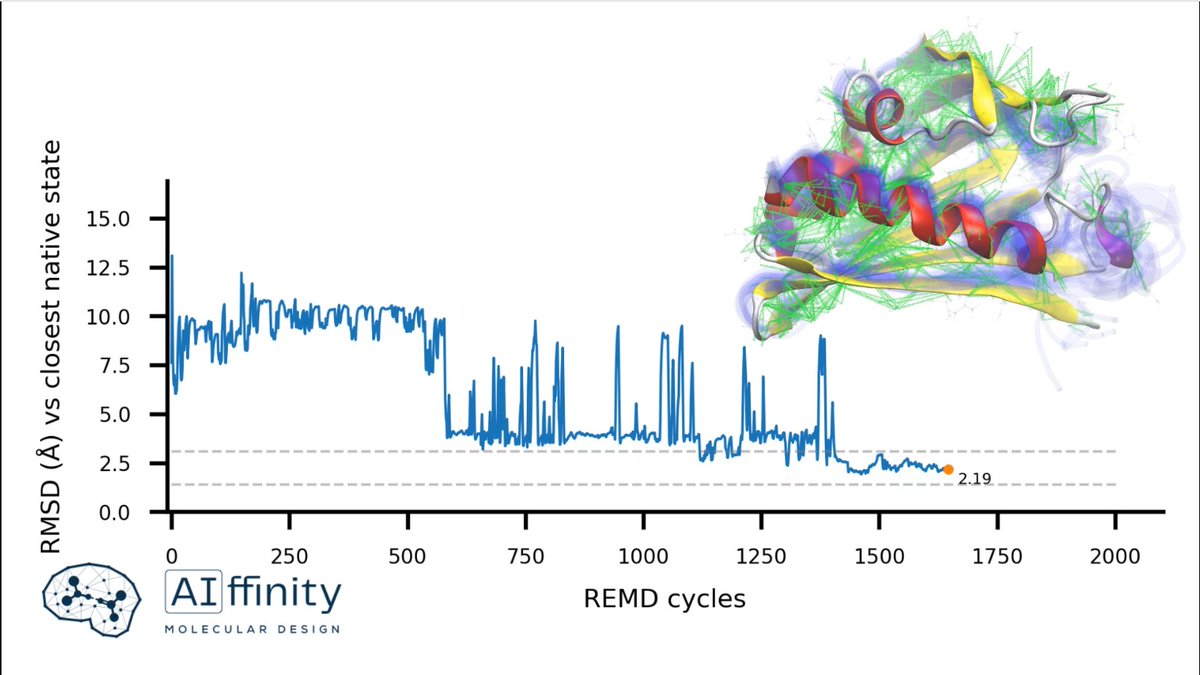
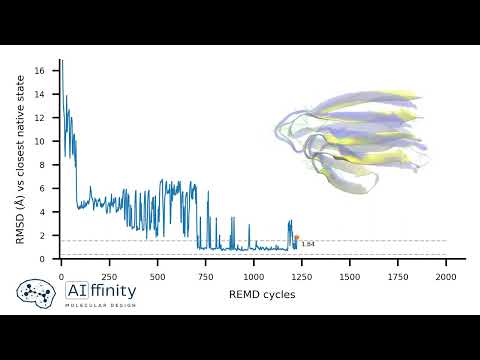
Structure calculations: NOE distance restraint creation and subsequently Replica Exchange Molecular Dynamics simulations with Solute Tempering from the extended peptide conformation using MELD software. (3 days on a commodity PC with Intel Core i9-12900KF processor and A4000 GPU)
English
0
0
0
259
Thomas Evangelidis
Thomas Evangelidis@tevangelidis·
Protein: rcsb.org/sequence/6E5C, 78 residues NMR experiments: 4D HCNH NOESY (4 days) Spectra processing: 2 days including resonance assignment with our 4D-GRAPHS software.
English
1
0
1
322
Thomas Evangelidis
Thomas Evangelidis@tevangelidis·
@LabSchanda In AI|ffinity we develop a new version rewritten from scratch, which is based on AI and allows whole protein resonance assignment from only one 4D spectrum. Stay tuned to learn more soon. 😉
English
0
0
1
80
Thomas Evangelidis
Thomas Evangelidis@tevangelidis·
@LabSchanda Well, according to our Nat Comm paper and also to this video, resonance assignment was conducted with our software 4D-CHAINS. 🙂
English
0
0
0
48
Alessandro Nicoli
Alessandro Nicoli@ANicoli90·
1/2 I am truly amazed at how @UCSFChimeraX has improved over the years. They improved a lot also the streaming of #MD trajectories and their rendering. Here, you can see the MD simulation of the inhibitor L75 in complex with the HIV-1 protease. #compchem #render #phdlife
English
3
9
114
11.3K
Thomas Evangelidis
Thomas Evangelidis@tevangelidis·
Structure calculations: Replica Exchange Molecular Dynamics simulations with Solute Tempering using MELD software. (10 days on a commodity PC with Intel Core i9-12900KF processor and A4000 GPU)
English
0
0
4
314
Thomas Evangelidis
Thomas Evangelidis@tevangelidis·
Protein: MS6282, 145 residues NMR experiments: 4D HCNH TOCSY (5 days), 4D HCNH NOESY (5 days) Spectra processing: 3 days including resonance assignment with our 4D-CHAINS software.
English
0
0
2
297
Thomas Evangelidis
Thomas Evangelidis@tevangelidis·
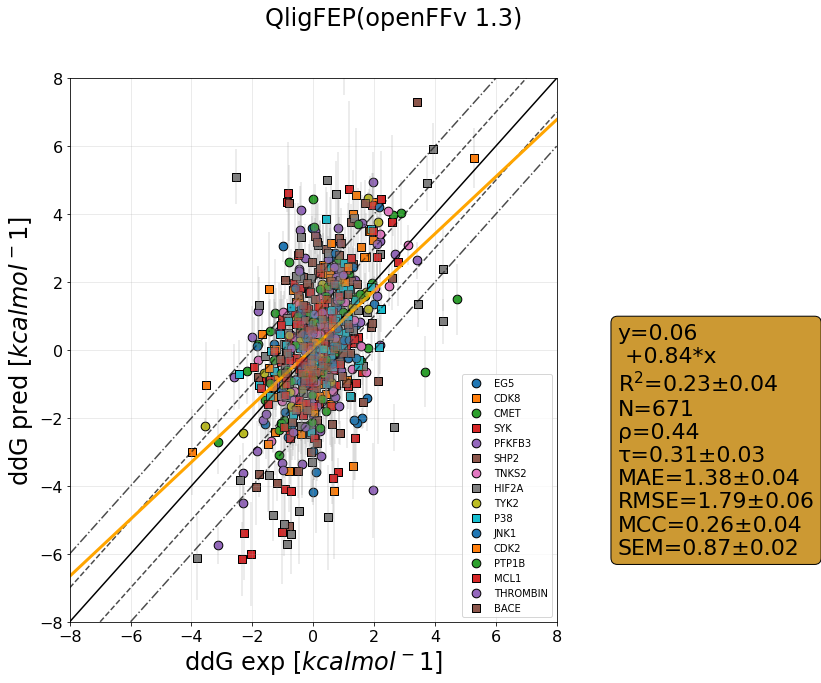
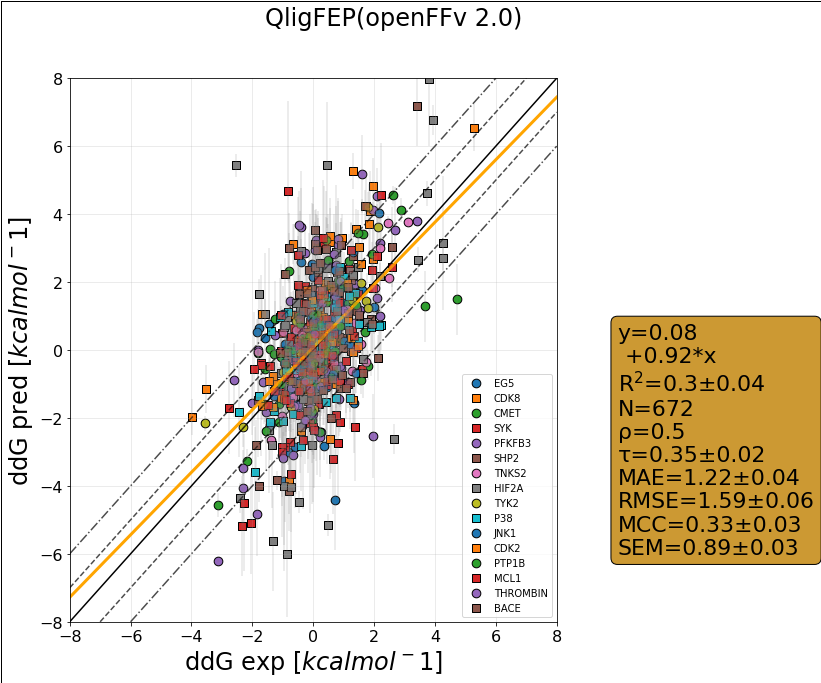
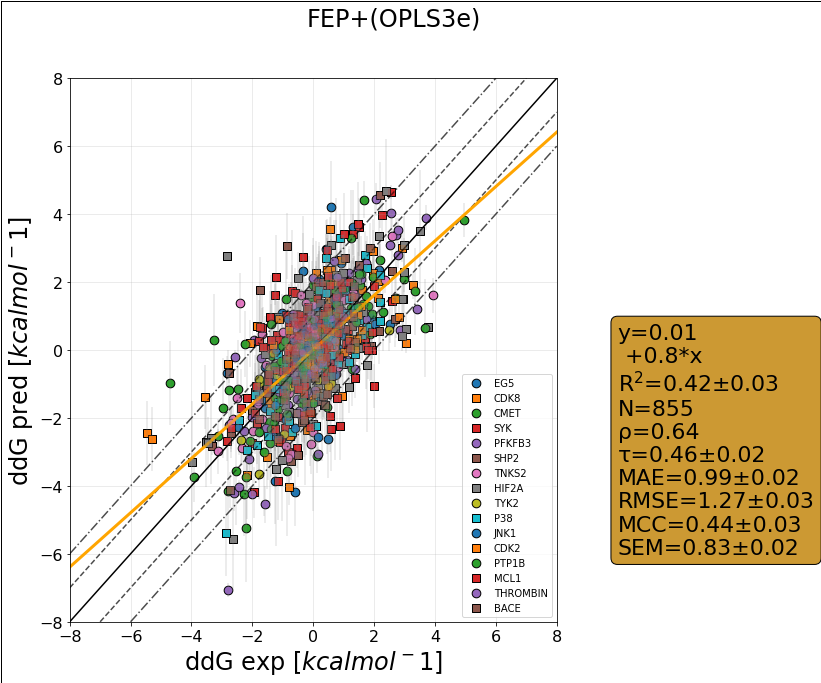
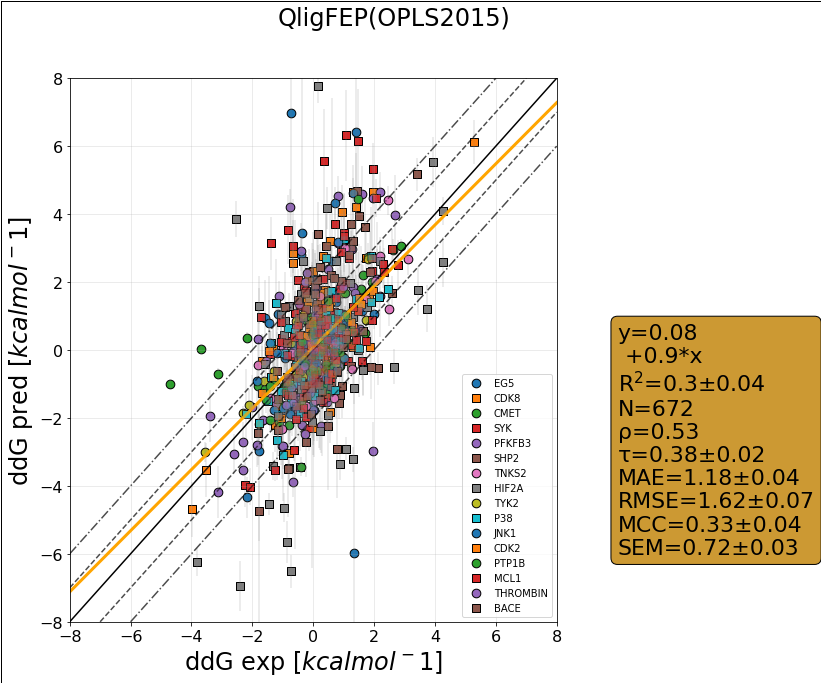
@raghurama123 R^2 is not a good evaluation metric for free energy methods. In the D3R GC they used RMSE and affinity ranking correlation coefficients to evaluate participants' predictions. After all in lead optimization is the ranking power that matters.
English
1
0
1
0
Raghunathan Ramakrishnan
Raghunathan Ramakrishnan@raghurama123·
@mod4sim @davidlmobley @openforcefield The R^2 in the figure got me confused. A model trained on a small dataset, even when its R^2 > 0.9 can result in poor predictions. When trained on a large dataset, 0.7 > R^2 > 0.6 can imply some prediction power. R^2 < 0.5 is not okay for any model. I'll check the dataset.
English
2
0
0
0
MODSIM Pharma
MODSIM Pharma@modsim_pharma·
We've just extensively benchmarked QligFEP on the JACS and Merck datasets (16 targets, >400 ligands) with excellent accuracy. This includes the implementation of the latest OpenFF2.0 "Sage" release. Great to see such an improvement compared to OpenFF 1.0! @openforcefield
MODSIM Pharma tweet mediaMODSIM Pharma tweet mediaMODSIM Pharma tweet mediaMODSIM Pharma tweet media
English
3
9
31
0
Thomas Evangelidis
Thomas Evangelidis@tevangelidis·
@ATuerkova I know another one. Those who speak a lot think less, and conversely for the quiet ones. 😁
English
0
0
1
0
Beth Tuerk
Beth Tuerk@ATuerkova·
Quiet people are actually talkative around the right people.
English
1
1
16
0