Sabitlenmiş Tweet

Most traders overcomplicate 9AM on NASDAQ.
In reality, the entire open can be understood through a simple sequence of time-based behavior.
Each phase of the morning session has a different job.
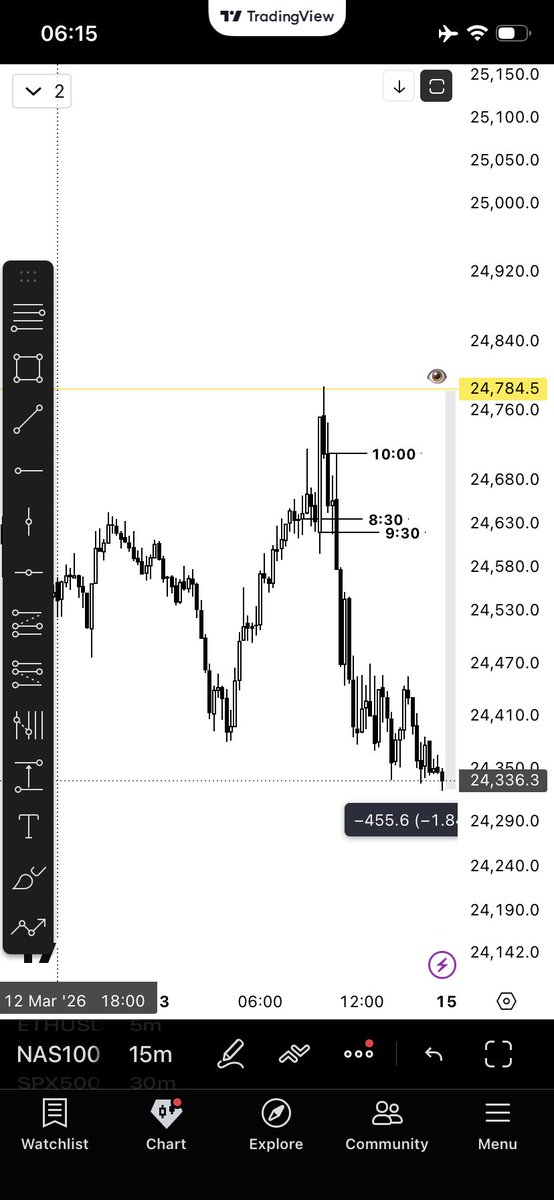
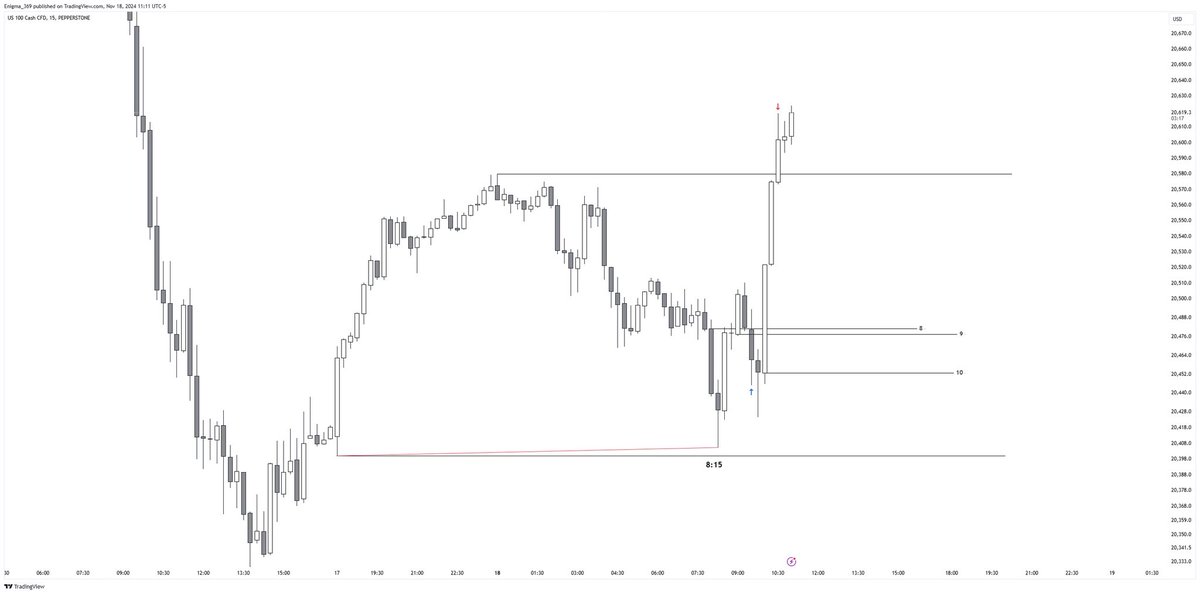
8:30 → Manipulation
9:00 → Rebalance
9:30 → Expansion
10:00 → Reversal or Continuation
If you understand what the market is doing in each phase, the open becomes far less random.
Here’s the full breakdown.
8:30 AM – Manipulation Phase
The 8:30 window is where a lot of false direction is created.
Major economic data often releases here, which causes fast reactions and aggressive volatility. During this time, the market frequently runs:
• Pre-market highs
• Pre-market lows
• Internal liquidity
• Overnight levels
But the key idea is that this move is often not the real direction of the day.
Instead, it is commonly used to engineer liquidity and position participants on the wrong side of the market.
This is why many traders get trapped during this window.
Price may look extremely bullish or bearish, but the move is often just a liquidity sweep before the real session begins.
9:00 AM – Rebalance Phase
By the time the market reaches 9:00, there is usually short-term imbalance created from the 8:30 move.
The market now has a job to do.
That job is rebalance.
Rebalancing means price returns to areas where buying and selling were uneven. These are typically:
• Short-term inefficiencies
• Micro FVGs
• Internal liquidity
• Equal highs or equal lows created during the 8:30 move
This is why around 9:00 you’ll often see sharp retracements or quick sweeps.
Price is correcting the imbalance created during the manipulation phase.
But this phase is usually short.
Once balance is restored, the market prepares for the next stage.
9:30 AM – Expansion Phase
9:30 marks the official New York Stock Exchange open.
This is where the real volatility of the session begins.
After rebalancing internally, the market now seeks external liquidity.
This is where NASDAQ begins its true directional move.
Expansion typically targets:
• Previous day highs or lows
• Pre-market highs or lows
• Major session liquidity
• Higher timeframe levels
This is also why entering immediately at 9:00 can be risky.
Many traders mistake the rebalance phase for the real move.
The real move often begins after balance has been restored, which is why some of the cleanest trades appear after 9:30.
10:00 AM – Reversal or Continuation
The final key moment in the morning session is 10:00 AM.
By this point, NASDAQ has often already delivered a large expansion move.
Now the market decides one of two things:
• Continuation – the trend continues toward larger liquidity targets
• Reversal – profit taking occurs and price retraces back into earlier imbalances
This is why many traders notice that strong moves sometimes stall or reverse around 10:00.
Large participants who entered during the expansion phase begin managing positions, which can create sharp pullbacks or consolidation.
The full sequence often looks like this:
8:30 → Liquidity manipulation
9:00 → Internal rebalance
9:30 → True expansion
10:00 → Reversal or continuation
When you start viewing the morning session through this lens, the open stops looking chaotic.
Instead of asking:
“Where will price go?”
You start asking:
“What phase of the session is the market currently in?”
And that small shift in perspective can completely change how you approach NASDAQ.
ENIGMA
To learn more join the discord link in bio.
All this is covered on my Youtube in a video format.

English