Tony Fadell

4.1K posts

Tony Fadell banner
Tony Fadell

Tony Fadell

@tfadell

iPod, iPhone, Nest, Investor & NY Times bestselling Author #BUILD

Katılım Şubat 2009
480 Takip Edilen225.6K Takipçiler
Tony Fadell
Tony Fadell@tfadell·
Graduates 1) congratulations!!! 2) a reminder not to lose the ability to ask obvious questions! When we were kids we did this naturally as we were learning to understand the world around us. We asked why things work the way they do. Then we become adults and stop asking. We normalize bad experiences, broken systems, unnecessary complexity, and products that frustrate us every day. Many of the best companies and products come from people who never fully accepted that’s just the way it is. The iPod came from questioning why I had to carry around all my music...it was annoying and clunky. Nest came from questioning why thermostats were so poorly designed despite being in every home. Innovation often starts with noticing things other people have stopped seeing. Stay curious. Notice friction. Question assumptions. And don’t let expertise kill your sense of wonder. * 📸 yep that's me. My first real world job after @UMich see at @generalmagicmov I was persistent until I got the job, thanks Dee Gardetti 🙏
Tony Fadell tweet media
English
6
5
63
4.7K
Tony Fadell
Tony Fadell@tfadell·
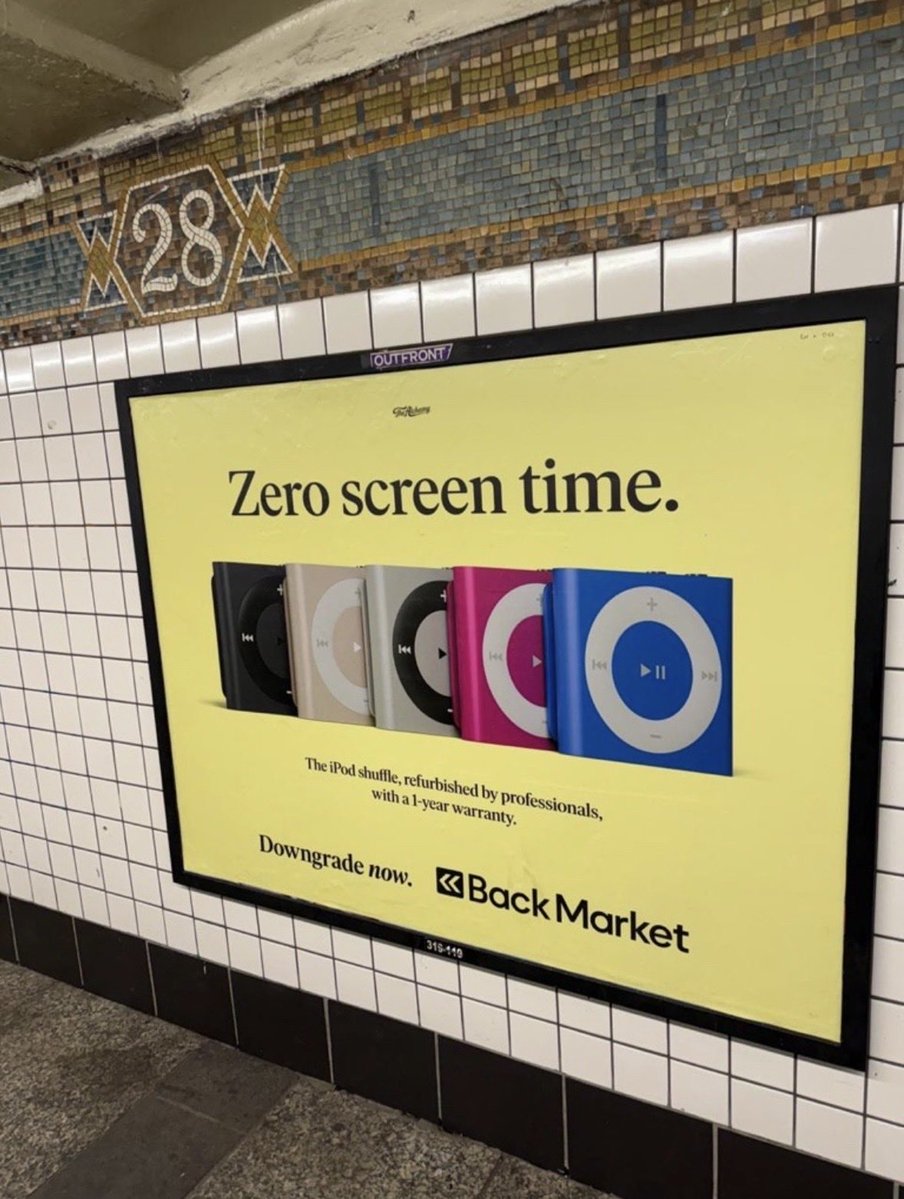
Spotted in the NYC subway. “Zero screen time.” An iPod Shuffle ad in 2026. When we built the iPod, the goal was the technology disappeared and you could have your music wherever you were. 1,000 songs in your pocket. Now we’re living through a moment where people are actively looking for ways to disconnect from the infinite feed, algos, and constant notifications. That doesn’t mean technology is bad. It means the best technology understands when to step back. Not every problem needs another screen, another menu, or another layer of complexity. Constraints create freedom (read: @DavidEpstein new book Inside the Box). And often removing features creates a better product than adding them. The future of technology shouldn’t just be more engagement. It should help us be more human.
Tony Fadell tweet media
English
311
1.4K
13.2K
1.7M
Tony Fadell
Tony Fadell@tfadell·
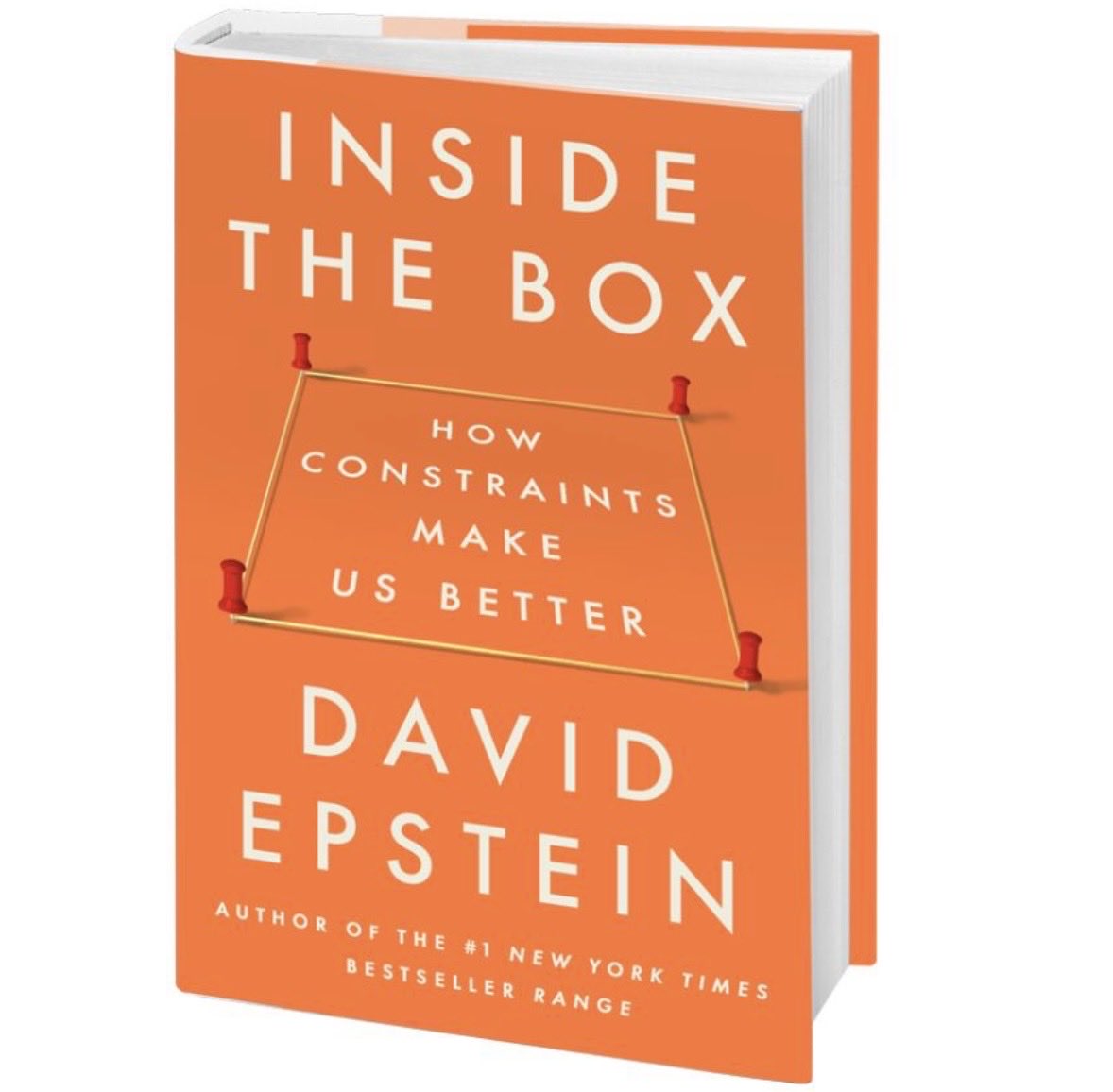
If you don’t have constraints, then make up constraints. After @generalmagicmov many of us walked away realizing the same thing: Big visions fail when the problem space is too big. My friend @DavidEpstein captures this beautifully in his new book, Inside the Box: How Constraints Make Us Better. At General Magic, we were trying to build the future all at once. The vision was extraordinary. Too extraordinary. The technology, infrastructure, interfaces, networks, batteries, displays, and user behavior all needed to evolve simultaneously. We were building everything, but for who? When we built the iPod, we didn’t try to reinvent everything. We focused on one clear problem: people wanted their music collections with them everywhere they went. That focus forced hard decisions: no endless feature list, no bloated interface, and no trying to please everyone. We constrained the team size. We constrained the timeline. We constrained what version one needed to be. The famous scroll wheel itself came from working within constraints. We needed a fast, intuitive way to navigate thousands of songs on a tiny screen with limited hardware resources. Constraint drove simplicity. The same thing happened on the iPhone. We used internal “heartbeats” aka aggressive prototype deadlines to force learning cycles. The first versions were wrong. Then the second versions were wrong in different ways. But the deadlines forced us to stop, regroup, simplify, and learn before complexity spiraled out of control. At Nest, we took it even further. Before the product was done, we built the prototype of the packaging first. Literally the box. Why? Because the box forced clarity. If someone saw this thing sitting on a shelf for five seconds, would they immediately understand: what problem it solved, why they needed it, and why it was different? The constraint of the box forced the team to prioritize what actually mattered. That’s what David gets exactly right in this book! Constraints are not creativity killers. They are creativity filters. The best teams shrink the problem space. They create boundaries that force learning, prioritization, iteration, and clarity. That’s the pattern. You shrink the problem until it becomes solvable. Then you move. Great book, David. Everyone building products, companies, or creative work should read this one.
Tony Fadell tweet media
English
9
16
157
16.1K
Tony Fadell
Tony Fadell@tfadell·
Spotlighting 75 product changes. And, each of these came from real customer problems. That's discipline! Listening, building, and improving. This is what turns a product into a true partner for small businesses. Fix friction. Earn trust. Compound over time. Always thinking about the customer Gusto, great job! 👏 #GustoShowcase
Josh Reeves@joshuareeves

Today is a Gusto Showcase! It’s one of my favorite moments, when we share a summary of how we’re making Gusto better for our 500,000+ small business customers. At @GustoHQ, we obsess over helping small businesses, and every challenge they face is an opportunity for us to help. Gusto has never been just a tool or technology. We strive to be a partner for small businesses, taking hats off their head, doing work on their behalf, so they can progress in building their business. With 500,000+ customers, we know we’re still early in the journey. There are millions of small businesses we are eager to serve. The future of business is small. And that’s big. #GustoShowcase

English
4
1
23
7.9K
Tony Fadell
Tony Fadell@tfadell·
Congratulations Tim Cook on one of the most consequential leadership runs in tech. This year marks 50 years of Apple, and Tim has led Apple through a defining stretch of that history. Now with John Ternus stepping into the CEO role, the next chapter @Apple begins. People don’t choose products. They choose experiences they can trust. Apple has always been built on that trust with users, with teams, and in products. This transition is continuing that trust. Nothing but respect. Looking forward to the next 50 years of Apple. Thank you Tim and best to you John. I will always be cheering Apple on. And, I will always push Apple to be better! Because I love Apple. We all do.
English
18
48
1K
31K
Tony Fadell
Tony Fadell@tfadell·
Builders build. Then they ship. Then they solve what breaks. Launch isn’t the finish line. It’s where reality starts. Great products aren’t defined at launch...they’re defined by how they perform in the real world. With the #iPod it took us a few generations to truly get it right. We built and shipped the first version of the iPod in 9 months- greenlit in March 2001, announced that October and began shipping in November. Then we fixed, iterated, and produced a product that lasted many years, and ultimately paved the way for the #iPhone. Many of us still love our iPods! That’s what happens when you stay with the product. Trust comes from what happens after release and from doing the hard parts: scaling, supporting, improving. Focus on what’s real: working product, real customers, real outcomes. That’s the difference between hype and something that lasts.
English
25
88
713
239.9K
Tony Fadell
Tony Fadell@tfadell·
So what do you do when you're stuck with a manager who's hellbent on driving off a cliff, ideally while throwing all their money out the window at some consultants? Or what if you have data but it's inconclusive - nobody can say for sure where it leads? Or what if you need to convince your team to follow you even though you can't prove you're heading in the right direction? You tell a story. Storytelling is how you get people to take a leap of faith to do something new. It's what all our big choices ultimately come down to – believing a story we tell ourselves or that someone else tells us. Creating a believable narrative that everyone else can latch onto is critical to moving forward and making hard choices. It's all that marketing comes down to. It's the heart of sales. And right now you're selling – your vision, your gut, your opinion. So don't just hit them with the classic "This is Jane, this is her life, and this is how her life changes when she uses our product" slide. Helping people see things from the customer's perspective is a critical tool, but it's just part of what you need to do. Your job in this moment is to craft a narrative that convinces leadership that your gut is trustworthy, that you've found all the data that could be gleaned, that you have a track record of good decisions, that you truly understand your customers and their needs and - most importantly- that what you're proposing will have a positive impact on the business. If you tell that story well, if you bring people along with you on that journey, then they will follow your vision, even if there's no hard data to back you up. - #BUILD Chapter 2.2 Data Versus Opinion
English
2
8
98
12.2K
Tony Fadell
Tony Fadell@tfadell·
We learned how important understanding the user was at Nest. When we started building, we put early prototypes in real homes. We thought the magic was in the sensors, software, and machine learning. But we quickly realized when we tested on real users, people kept reaching for the dial! The dial became a part of what made the product feel alive. So, this was something we obsessed over: the turn, the click, the feel. We learned this from real people using the product.
Tony Fadell tweet media
English
42
24
486
45.9K
Tony Fadell
Tony Fadell@tfadell·
Most tech companies break out product management and product marketing into two separate roles: Product management defines the product and gets it built. Product marketing wires the messaging- the facts you want to communicate to customers- and gets the product sold. But from my experience that's a grievous mistake. Those are, and should aways be, one job. There should be no separation between what the product will be and how it will be explained- the story has to be utterly cohesive from the beginning. Your messaging is your product. The story you're telling shapes the thing you're making. I learned story telling from Steve Jobs. I learned product management from Greg Joswiak. Joz, a fellow Wolverine, Michigander, and overall great person, has been at Apple since he left Ann Arbor in 1986 and has run product marketing for decades. And his superpower- the superpower of every truly great product manager- is empathy. He doesn't just understand the customer. He becomes the customer. So when Joz stepped into the world with his next-gen iPod to test it out, he fiddled with it like a beginner. He set aside all the tech specs- except one: battery life. The numbers were empty without customers, the facts meaningless without context. And, that's why product management has to own the messaging. The spec shows the features, the details of how a product will work, but the messaging predicts people's concerns and finds way to mitigate them. - #BUILD Chapter 5.5 The Point of PMs
English
88
242
2.5K
856.2K
Tony Fadell
Tony Fadell@tfadell·
50 years of @Apple From the early days of the #iPod to bringing the #iPhone into the world, some of the most formative years of my career were spent there. The products and teams stay with you. But more importantly so does how Apple thinks. A few lessons that have held true for decades: 1) Start with the user, not the tech. The question isn’t “what can we build?” but “what problem actually matters?” 2) Focus is everything. Apple is defined as much by what it says no to as what it builds. 3) End-to-end matters. Hardware, software, services. It all has to work together. 4) Details are the product. What feels small is what users remember. 5) Debate hard. Commit fully. 6) Build for the long term. We’re in another moment of massive technological change. The fundamentals haven’t changed. The companies that win build things people actually use and can’t imagine living without. Congrats to everyone who has been part of Apple’s first 50 years! 🙌
Tony Fadell tweet media
English
79
572
4.5K
244.6K
Tony Fadell
Tony Fadell@tfadell·
My first computer!!! My grandfather, a teacher and school superintendent and a forever tinkerer, taught me how to use tools and build things. I discovered computers when I was around 12 years old. My grandfather told me he would match whatever I made to buy my first computer, so I caddied at a local golf club to save money to buy my first Apple II. When I was younger, I would read MacWorld and other computer magazines, I dreamed of working with the team responsible for creating Apple’s Macintosh computer! This @verge piece 👏 Apple II Forever!
The Verge@verge

Apple II Forever! theverge.com/tech/900677/ap…

English
8
10
174
20K
Tony Fadell
Tony Fadell@tfadell·
One of the hardest parts of management is letting go. Not doing the work yourself. You have to temper your fear that becoming more hands-off will cause the product to suffer or the project to fail. You have to trust your team – give them breathing room to be creative and opportunities to shine. - #BUILD Chapter 2.1 Just Managing
English
6
10
132
12.5K
Tony Fadell
Tony Fadell@tfadell·
DO. FAIL. LEARN. Failure isn’t the end. It’s how we get better. And I’ve had my fair share of it over the years. Startups don’t always succeed, but how you talk about the journey matters. Building a startup is hard, harder than hard. The pressure is real. The stakes are real. And when things don’t work out, it’s not easy to talk about. When I see founders sharing their stories with a level of honesty, that stands out to me. The ones who say: Here’s what worked and what didn’t Here’s what we learned along the way Here’s what we’d do differently next time They’re not just closing a chapter, they’re showing how they think. They thank their teams. They appreciate their investors. They reflect on what they’d do differently. There’s humility. There’s clarity. There’s growth. And that’s what builds trust. There’s no shame in the outcome, only in not learning from it. The best founders I know don’t get everything right the first time. But they do take ownership. They do learn fast. And they do come back stronger. That’s who you want to build with. That’s who you want to back. You don’t fail when something doesn’t work. You only fail when you give up, when you don’t learn from the failure, adapt, and then try again. Respect to anyone who’s taken the risk to build something from nothing. And even more respect to those who keep building.
English
6
7
58
4.1K
Tony Fadell
Tony Fadell@tfadell·
Knowing your destination lets you self-prioritize and make decisions about what you're doing and how you're doing it. But, it's also bigger than that. You want to make sure the direction you're headed in still feels right-that you still believe in it. - #BUILD Chapter 1.4 Don't (Only) Look Down
English
3
4
47
4.8K
Tony Fadell
Tony Fadell@tfadell·
Before you decide to be a manager, you should think hard about whether it's the right path for you. Because you don't have to do it. Especially if you don't really want to, but believe the management ladder is the only way to move up in your career. A lot of people shouldn't be forced into management – if you're really not a people person, or you only want to focus on the work, or you thrive on having regular day to-day successes and accomplishments and the murky maybe-your-team-will-succeed-one-day-style of management is less motivating to you. - #BUILD Chapter 2.1 Just Managing
English
15
25
237
25.5K