

Thabo Goba — Mr. XRP
107 posts

Thabo Goba — Mr. XRP
@thabogoba
Heterodox Economist | Technocrat | Policy & Governance Strategist | The Karl Marx of Capitalism | Malcom https://t.co/1OPgIdzdsH
Katılım Aralık 2009
208 Takip Edilen32 Takipçiler
Which leaves us with only one sermon to make 52… one for each Sunday of the week…
At Absa Group Limited you’re not looking at something theatrical or isolated; you’re seeing the disciplined face of large systems at work—capital organised, decisions made at a level where consequences travel far. And when BlackRock gets mentioned, it usually reflects the same reaction: scale that feels impersonal, even overwhelming, but is still structured and intelligible.
Capitalism, at its core, depends on a society that can keep learning. It survives by rewarding better judgment, sharper thinking, improved tools, and more efficient ways of solving problems. Every advantage gets noticed, absorbed, and scaled. That is not conspiracy—it is mechanism. The system continuously searches for what works and then expands it.
So when someone says to you, “you have capitalised on your talent,” there’s a deeper layer in that phrase than just success. In this story, it carries almost a biblical undertone: you were given a capacity, and you were expected to multiply it. Like a stewardship principle—what you have is not static, it is meant to be developed, invested, and returned with growth. Waste is not neutral in that framework; it is a missed responsibility.
So what you’re seeing is optimisation in motion: the best available tools applied to real problems, again and again, until they become the standard.
And once you see it clearly, you don’t need exaggeration to respect it—you just recognise the pattern for what it is. A New World Order.
Apollo mission seismometers recorded that the Moon "rang like a bell" for up to an hour after the Apollo 12 lunar module was crashed into its surface 🤣 we have to try this again soon 😘

English
Part 7
The love of Money...
If this were a matter of myself alone, I would have ended by recalling how Nathan Rothschild positioned himself across outcomes at the Battle of Waterloo, using the fastest information networks of his time. Today we soften that instinct with the language of “diversification,” but beneath the polish lies a harder truth: money is not moral by nature, yet it must behave as if it is—reliable, trusted, and predictable—because human systems cannot function without that illusion of order. It is a strange duality that something so indifferent must be made to serve something so human.
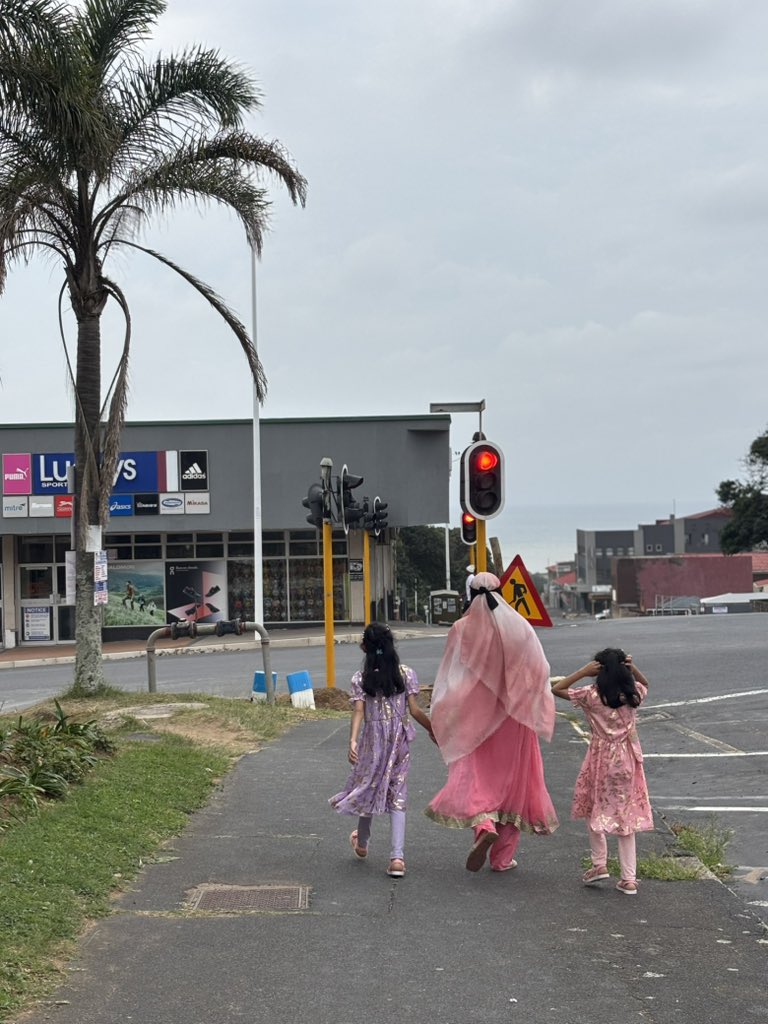
But perhaps it is better to end not with power, but with absence—the absence of access. I take long walks, and on one of them I met a woman who said she was seventy-two, carrying nearly eight kilograms on her head, with two worn plastic bags at her sides. I offered to help her with the load above her head; she laughed, then agreed, and said, “You are too kind—that is the heavier one. Never try to lift someone else’s burdens, especially those of the mind, because they are the hardest to carry.” I asked if she had children to help her. She replied, “That is the problem with you young boys—we send you to fetch something, and you never return the change.”
There is a lesson there, not only about responsibility, but about systems that fail quietly. The unbanked do not merely lack accounts; they lack instruments of memory and trust. Their value is carried physically, exposed to friction, loss, and time. Decentralised finance, if approached with discipline rather than ideology, offers a different architecture: one where access is not granted, but assumed. Its applications can be made simple enough for anyone to use, removing unnecessary complexity, and for those who earn very little, it introduces the possibility of participating in a financial system without the burden of banking fees eroding what little they have.
And that, perhaps, is the more honest ambition: not to make money beautiful, but to make it useful to those who have carried its weight the longest without ever being allowed to hold it.

English
Part 6
“finance is the final frontier.” ~ unknown
There are those that negotiate value through identity, and those that allow value to emerge through action. The latter, though imperfect, carries a certain honesty, because it does not ask who you are before it measures what you can do. If capital from abroad arrives dressed in conscience or opportunity, it need not be interrogated for motive alone; it must be tested for usefulness. Wealth, when directed correctly, is less about where it comes from and more about what it builds—and, of course, who controls what has been built and how its return is secured, for we must always respect the bees.
Even in the image before us—unexpected, almost absurd—you see something deeper at play: a proximity between worlds that were once rigidly separated. Figures like Donald Trump built part of their legacy not only on domestic policy, but on moments of disruptive diplomacy, as seen in engagements with North Korea and South Korea. Whatever one thinks of the man, he demonstrated that long-standing divisions can be approached differently—not always resolved, but at least reframed. And there is a lesson there for South Africa: that histories of separation do not have to dictate the limits of cooperation.
So the question becomes not which group to favour, but which system to trust. If it is a free and functional market, then selection happens through performance, not proclamation. Not everyone will rise, but those who do will have done so through an alignment of skill, timing, and discipline. That is not exclusion—it is filtration. And perhaps that is the harder truth: not all outcomes are equal, even if opportunity is expanded. What matters, then, is building a system where the pathway is open, the rules are clear, and the results—whatever they may be—are earned.

English
Part 5
There was a season in my life when I worked at a company called Trailord—a name that, the founder said meant "follow God." It felt less like a job and more like being admitted into a place of pure creation. They were not building ordinary trailers; they were designing something unique within South Africa, utilizing materials and concepts sourced from America to produce structures that were lighter, stronger, and more refined. The designs possessed a distinct beauty—machines shaped with intention, appearing almost like art in motion.
What stayed with me most was the access. I was permitted to move through the entire process: handling parts, fetching components, and standing close as laser cutting transformed raw material into form. In that environment, competence had immediate consequence. If you understood a mechanism, you could apply it, and the result would speak for itself. I existed in a state of constant awe.
When the branch in KZN closed, I was offered a position at the main office in Bloemfontein. I turned it down because I was burning to be a preacher. The man who led our office laughed when I told him, saying that I would have to go through much before people would truly listen to me. At the time, it was difficult to hear. I came from a world where talent and ability were enough to earn recognition.
However, I eventually understood the truth he was pointing toward: in one world, your work proves you; in the other, your life must shape you before your words can carry weight.
It is for this reason that I find myself less resistant to systems shaped by American-style technology and economic philosophy. I study the founders and their words intently. While these systems may struggle to serve the minority in the West, here in Africa, we should not fear the competition. Indeed, one might find that BEE (Black Economic Empowerment) is not even an African philosophy in its truest sense.
I have seen a world where value is not argued but demonstrated—where understanding, skill, and execution produce outcomes that speak without bias. In such systems, as in that workshop, the tools respond to competence, not identity, and the pathway from effort to result is made visible.
It reminds me of that original place of creation, where access and ability aligned. In the workshop of life, what a man can build will always matter more than what he claims.

English
Part 4
If you could stand above the Sun and observe the Earth’s path, you would see its orbit resolve into four governing points, each separated by roughly ninety degrees. These are the solstices and equinoxes—not random dates, but structural moments where the relationship between Earth and light shifts decisively. At the solstices, light reaches its extremes, either at its fullest or its weakest. At the equinoxes, balance is restored, and day and night stand in equal measure. Together, these four points form the true divisions of the year, the underlying geometry by which time expresses itself through motion.
In that sense, the Earth does not possess corners in a physical way, but it generates them through its movement. Each quarter of the orbit marks a transition—growth, culmination, decline, and rest—giving rhythm to life on the planet. What appears continuous is in fact structured, and what feels like time passing is actually position changing. The “four corners of the Earth” are therefore not edges of land, but anchors of cycle, defined by the Sun and revealed through the turning of the world.
These turning points—these seasons—are beyond negotiation. No authority can delay them, no system can redistribute their force. Heat does not ask permission before it warms the earth, and cold does not discriminate before it settles in. What you feel as winter, I feel as winter; what you experience as summer, I experience as summer. In this, there is a kind of equality more fundamental than any constructed order—a shared exposure to reality itself, where the conditions of existence are not assigned, but given.
Religion, money, politics—help organise and guide life. At their best, they give meaning, structure, and direction. But in matters of power and money, they can sometimes drift, adding layers that separate where there is already shared ground.
That doesn’t make them lesser—it simply means they are lived through people, and can be shaped over time. Beneath it all, the basics remain. Everyone understands work, family, struggle, hope. These are not owned by any system—they are shared. Even the seasons reflect it: a rhythm to life that sits underneath everything. You plant, you wait, you harvest. So the question isn’t which belief is right—it’s whether, in how we live them, we are still building something that holds people together.
Which is why I think The American Dream is useful to us not as something to import wholesale, but as a principle to adapt—reward capability, expand access while aligning incentives so that effort compounds into outcome.

English
Part 3
As Luck would have it…
Civilizations don’t move in one direction. For some, the task is to recover—to slow down, to rebuild what was broken, to reclaim dignity. For others, the task is expansion—to push forward, to refine, to invent. Neither is superior; they are responses to different starting points.
Money sits quietly underneath both. It shapes what a culture rewards, what it teaches, what it celebrates. Follow incentives long enough and you’ll understand behaviour without needing to reduce people to categories.
The mistake is to turn this into “us versus them,” or to assign qualities like heart or intelligence to race. That thinking collapses under scrutiny. What actually matters is competence—who can do what, under what conditions, with what discipline. When barriers to education and opportunity fall, performance stops tracking with identity and starts tracking with effort, structure, and alignment—and the skills that have been built are used as insight against the foreseeable future.
If intelligence is widely accessible—and increasingly it is—then the old colour lines lose their functional justification. Especially in spaces like the church, which are meant to be organised around shared belief and moral vision, not inherited divisions. The test becomes coherence: do people live what they profess, and can they build something stable together?
People will still protect identity—culture, language, memory—because those are anchors. That’s not about superiority; it’s about continuity. But protection doesn’t require separation, and cooperation doesn’t require erasure. A shared prosperity is still possible.
English
Part 2
What were you meant to be?
The gates of Eden are not guarded by stone and iron, but by the very architecture of your own being. Look within and you will find the Tree of Life manifest in the crimson branches of the heart, a fractal system designed to circulate the spirit through the flesh. Beside it stands the Tree of Knowledge, mirrored in the intricate, cold-fire circuitry of the human brain—the seat of technology and dualistic thought.
The flaming sword is the sentinel of your own vibration. It is a barrier that no reprobate, mechanical mind can cross, for the warmth of the Garden is inaccessible to those who live only in the logic of the skull. To find the Christ born within, the "Technology" of the mind must finally bow to the "Life" of the heart. Only when these two systems harmonize does the sword lower, revealing that you have been walking in the Garden all along. You are God's temple.
This fire is not an assumption of perfection, for perfection is impossible in the flesh. Instead, the sword is the burning of what you choose to pursue. It is a furnace that consumes the dross of your ego so that you finally learn how to treat the person next to you. By refining your aim, you realize the sanctuary is not for the flawless, but for those willing to be transformed by the heat of their own humanity.
For our God is a consuming fire to those who have no honor, but a bush can live inside Him without being consumed forever, because it only exists for the One who placed it there. In this divine light, the surface of the man is stripped away; no one skin tone can usurp God, for the fire recognizes only the spirit that burns within.

English
Part 1
A nation does not fall behind because its people cannot think. It falls behind because thought moves too slowly.
And if the game is speed of learning—then something changes. For the first time, people are no longer bound by where they started. They can move toward what they were always meant to become.
There was a time when knowledge was scarce. Then came the press—it multiplied it. Then the Internet—it removed distance. Now AI removes the final barrier: creation itself.
So if you are behind, understand this clearly—
you do not need to catch up. You need to skip.
Do not rebuild broken schools. Build fast minds. Put AI in every hand. Teach how to think, not what to remember.
Because when learning accelerates, destiny is no longer delayed. It becomes accessible. And the nations that realise this first—
won’t just catch up. They will become what they were always meant to be.

English
A king asking about global systems is not madness, it is responsibility.
King Misuzulu kaZwelithini does not rule in isolation; his people live inside a world shaped by economics, politics, and shifting power structures. Any serious leader must try to understand the forces that influence his nation, whether they are called globalization, financial systems, or even what some refer to as a “new world order.”
Curiosity at that level is not conspiracy, it is governance. A ruler who does not ask questions about the direction of the world is a ruler who risks being unprepared for it.
English