James Pollard

5 posts

James Pollard banner
James Pollard

James Pollard

@theadvisorcoach

Host of "Financial Advisor Marketing" podcast. 🎙️ Founder of https://t.co/7SrmpiJ0Yh. 📈 I've helped 50,000+ financial advisors with their marketing.

Delaware Katılım Ocak 2017
43 Takip Edilen2.2K Takipçiler
Sabitlenmiş Tweet
James Pollard
James Pollard@theadvisorcoach·
I just released a 54-page PDF download about how financial advisors can get clients with content marketing. 😁 You can download it here: theadvisorcoach.com/content.html Not only have I been helping financial advisors get more clients since 2015, but I also know a thing or two about content marketing, having published... - 3,000+ emails. - Nearly 100 monthly print newsletter issues. - 100+ blog posts. - 370+ podcast episodes. - 20+ products about financial advisor marketing. So yeah, I'm a bit of a content marketer myself. Lol. The reason I’m telling you this is because the guide you are about to read is not theoretical. I have personally tested every principle on my own content, with my own money on the line. This PDF download will show you how to figure out the exact content your potential clients want to see... How to design your content so prospects start repeating your philosophy back to you during the first meeting, already convinced you are the right fit... How to embed authority into your content without listing credentials, dropping names, or sounding like you are trying to impress anyone... And much, much more. Again, it's 54 pages, so it's not some skimpy little checklist or "five quick tips" document designed to make you feel productive for eleven minutes and then forgotten by next week. Alright, enough clacking. If you're a financial advisor and you want to get better at content marketing, this is my gift to you: theadvisorcoach.com/content.html Enjoy! 😎
English
0
0
2
183
James Pollard
James Pollard@theadvisorcoach·
To whom much is given, much is required. What about the converse? If you require much of yourself, you will be given much. Discipline comes before abundance, faithfulness before promotion, and stewardship before increase. Many people wait to be given something before they take things seriously. But you must take things seriously first to be entrusted with more. Require more of yourself than anyone else ever would, and watch what you're trusted with.
English
0
0
1
50
James Pollard
James Pollard@theadvisorcoach·
Financial advisors: *posts ChatGPT screenshot of wrong financial advice* “Ha, ha… look how dumb ChatGPT is… you’re dumb if you ask it for money advice…” Also financial advisors: “Dear ChatGPT, please build a marketing plan for my business…”
English
1
0
2
97
James Pollard
James Pollard@theadvisorcoach·
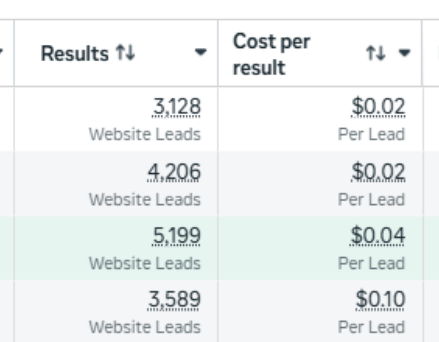
This financial advisor generated 16,122 leads in the past few days?? 🤯 My jaw dropped when I saw this... I got an interesting email from an Inner Circle member. A few weeks ago, he emailed me and asked me to look at his landing page. Long story short, his landing page wasn’t receiving any opt-ins despite getting a ton of traffic. He implemented the changes and got 20 opt-ins while spending only $20 per day. That is INCREDIBLE, and I’m always happy to help. Yesterday, he emailed me with a screenshot of his Facebook Ads Manager. The screenshot showed that he generated an absolutely incomprehensible… 16,122 website leads in the past few days. 🤯 My jaw practically hit the floor when I saw that. But then I realized what was happening… He was accidentally counting website visitors as “website leads,” which is an easy mistake to make. His Facebook Pixel was firing whenever anyone visited his landing page, even though it SHOULD have fired only once someone opted in (on the confirmation page). To make matters worse, financial advisors now have to select the “Special Ads Category” when running Facebook ads, which severely limits their targeting. And by “severely limit,” I mean there’s practically no targeting options available to advisors anymore outside of custom audiences. Which means your creative (your headlines, images, body copy, etc.) is largely responsible for the traffic you receive. In his case, Facebook was sending thousands and thousands of random people to his landing page. Since he was ACTUALLY optimizing for landing page visitors, Facebook was identifying the people most likely to visit the landing page. And it was working extremely well, at rates of 2, 4, and 10 cents per landing page visitor. Side note: This is why Facebook ad results are almost always terrible in the beginning. The algorithm will show you ads to a large number of people to better understand who is likely to take the desired action. Fortunately, the fix is easy. I told him to make sure his ‘website leads” Pixel only fired on his opt-in confirmation page. That way, ONLY people who opt in to his email list are counted as leads. Once he gets that squared away, this will happen… 1. Facebook will be able to tell who is likely to opt-in vs. who isn’t. 2. Facebook will find more of the people who are likely to opt in. 3. His cost per website visitor will go up, but his cost per opt-in will decrease as everything becomes more efficient. The good news is that this Inner Circle absolutely does NOT have an advertising problem. Any advertisement that’s able to get thousands of visitors in a few days for only 2 cents each is a winner in my book. His REAL problem is that Facebook thinks it's doing a great job. And honestly? It IS doing a great job… at the wrong thing. Since his Pixel was firing on the landing page rather than the confirmation page, Facebook received a simple instruction: "Find me people who will visit this page." And Facebook said, "You got it, boss." So it went out and found the absolute cheapest clickers on the internet. People who click on everything. People who bounce in two seconds. People who just click stuff. That's why his traffic exploded to thousands of visitors practically overnight while his opt-ins dropped to zero. Facebook got BETTER at doing the WRONG thing. Meanwhile, his landing page is perfectly fine. We know this because it already converted 20 leads in just three days when he was getting the right traffic. That's a proven landing page. The distinction matters more than you might think. Because if you don't understand WHERE the breakdown is happening, you'll "fix" the wrong thing. I've seen financial advisors scrap perfectly good landing pages because they thought the page was broken when it was really a tracking issue. I've also seen advisors pour money into beautiful new landing pages when the real problem was their ad creative. This is actually one of the biggest mistakes I see financial advisors make with online advertising. They look at one number, usually cost per lead, and make a judgment call on whether their ads are "working" or not. But online advertising is a CHAIN, not a single link. You've got the ad → the landing page → the confirmation page → the email follow-up sequence → the appointment → the client. If any one of those links is broken, the whole chain fails. And the tricky part is that you might THINK the problem is your landing page when it's really your tracking. Or you might think it's your ad creative when it's really your follow-up sequence.
James Pollard tweet media
English
0
0
1
86
James Pollard
James Pollard@theadvisorcoach·
One of the biggest "aha" moments I ever had came from an economics book. 💰 I was reading about a concept called “mental accounting.” It was coined by behavioral economist Richard Thaler, who later won the Nobel Prize in Economics for his work on how people make irrational financial decisions. And when I understood what he was saying, it changed the entire trajectory of my business. Here's what mental accounting is, in plain English… It's the tendency for people to treat money differently depending on which mental "bucket" they assign it to. For example, people will blow through a $500 tax refund on something frivolous, but they'd never pull $500 out of their savings account to buy the same thing. Why? Because the tax refund sits in a different “bucket.” And our brains treat them as if they’re two entirely different currencies… even though they’re not. A dollar is a dollar. Money is fungible. And yet, almost nobody actually behaves that way. I certainly didn’t. For years, I had a very clear mental separation between "investment money" and "business expense money." Investment money was sacred. It went into index funds, ETFs, and the occasional individual stock. I checked my portfolio. I watched it grow. I felt responsible and smart. Business expense money, on the other hand, felt like it was leaving me. It was money going out the door. Even when I was spending it on things that could grow my business, it didn't feel like investing. It felt like spending. And that subtle emotional difference kept me from making some very smart decisions for a very long time. Here's what finally broke the spell… I sat down one day and did some simple math. At the time, I was perfectly happy putting money into an index fund and expecting roughly 8% per year on average. That was the plan. That was "smart." That was what "responsible" people did. But then I asked myself a question that, in hindsight, was embarrassingly obvious… "What if I took $10,000 and invested it in a business strategy instead?" And here's where it got interesting. If I invested $10,000 into the stock market and got my expected 8% return, I'd have $10,800 at the end of the year. So... all I had to do was find a business strategy that could turn $10,000 into $10,801, and it would BEAT my expected market return. That's it. $10,801. That was the hurdle. And when I framed it that way, I almost laughed out loud. Because $800 in additional business revenue from a $10,000 investment is NOTHING. That's one client. That's one good marketing campaign. Honestly, that's one decent email sequence. The bar was on the floor, and I had been stepping over it for years because I had my money sorted into the wrong mental buckets. Once I realized this, I started looking at every dollar through a completely different lens. Instead of asking, "Should I invest this or spend this?" (which is a false dichotomy) I started asking, "Where will this dollar generate the highest return?" Sometimes the answer was still the index fund. But more often than not, the answer was my business. I've spent money on courses, coaching, direct mail campaigns, online ads, software, freelancers, and a hundred other things. And while not every single one of them has been a home run, the overall return on capital I've put into my business has absolutely demolished anything the stock market has ever done for me. It's not even in the same universe. I'm not saying you should pull all your money out of the stock market and dump it into your business. That would be reckless, and I'd be a hypocrite, because I still invest in the market. I still believe in diversification and long-term wealth building through traditional investments. What I AM saying is that most people (and I'd argue most financial advisors, ironically) have a blind spot when it comes to this. They treat "investing" and "business expenses" as two completely different categories when, in reality, they should be evaluated using the same criteria: expected return on capital. If you can invest $500 in a marketing strategy and reasonably expect it to bring in $1,000 or more in revenue... that's a 100% return. You would throw a party if your stock portfolio did that. If you can invest $2,000 in a skill and that skill helps you close two additional clients over the next year... you've generated a return that would make any hedge fund manager jealous. But because that $2,000 doesn't sit in a brokerage account, there's no ticker symbol attached to it, and it doesn't show up on a portfolio statement... people don't think of it as an investment. They think of it as an expense. And that one misplaced label costs them a fortune over the course of their career.
English
0
1
3
229