
The Science Post
458 posts

The Science Post
@thescienceepost
Science isn’t boring—it’s mind-blowing. Discover it here.🔭
New York, NY Katılım Ağustos 2023
6.6K Takip Edilen1.6K Takipçiler
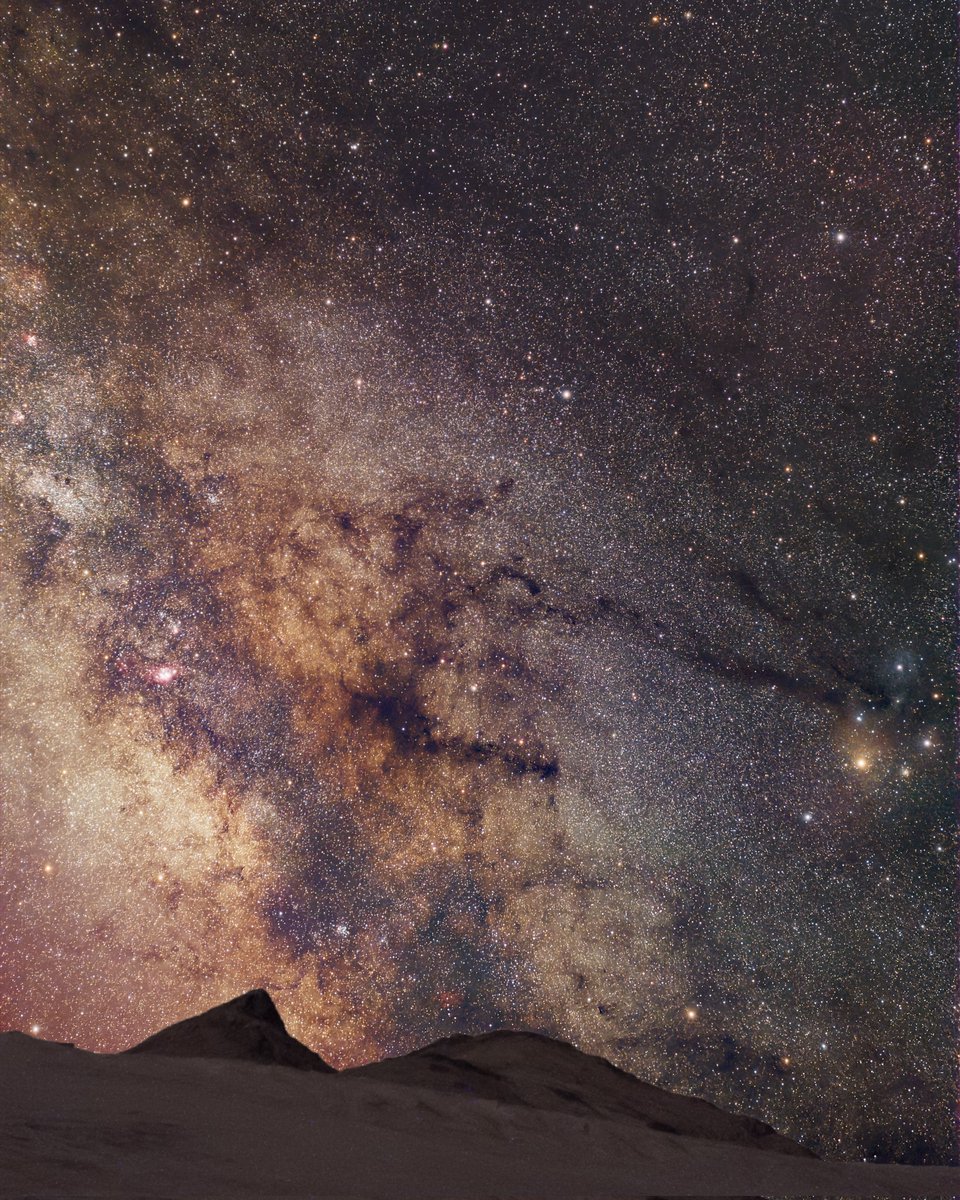
The unseen may be the heaviest.😮
Credit: ESO
What appears as empty darkness in the sky often carries the universe’s greatest weight. It blocks the light, not because it is void, but because it is filled—with gas, dust, and time itself. This darkness is not absence; it is matter in deep silence.
Within molecular clouds, temperatures fall close to absolute zero. Atoms slow, gravity tightens, and the unseen mass begins to collapse inward.
English
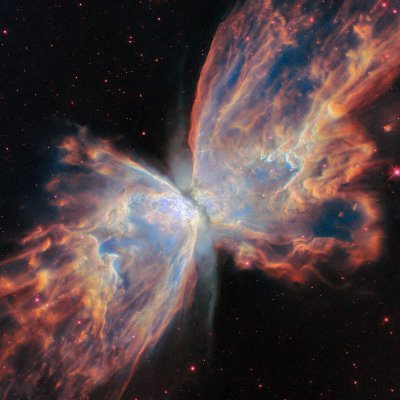
The universe's most majestic death: The Butterfly Nebula spreads its wings... 🦋💫
3,400–3,800 light-years away in the heart of Scorpius, a star meets its dramatic end—and births one of the cosmos's most breathtaking spectacles: NGC 6302, the Butterfly Nebula.
These elegant wings are no gentle flutter. They're raging clouds of gas blasted outward at over 600,000 miles per hour (1 million km/h), heated to more than 36,000 °F (20,000 °C).
At the core hides one of the hottest known stars: a white dwarf with a surface temperature exceeding 250,000 °C (up to ~400,000 °F in recent estimates)—hot enough to make the expelled gas glow fiercely in ultraviolet light.
A dense, doughnut-shaped torus of dust (viewed edge-on) conceals the dying star while channeling the outflows into this iconic bipolar shape.
The "wings" span over 3 light-years—half the distance to our nearest stellar neighbor. Even in death, stars create art.
This is the universe's most violent yet delicate dance: beauty forged from cosmic fury, eternity captured in a final breath.
Credit: NASA, ESA, and the Hubble SM4 ERO Team
English
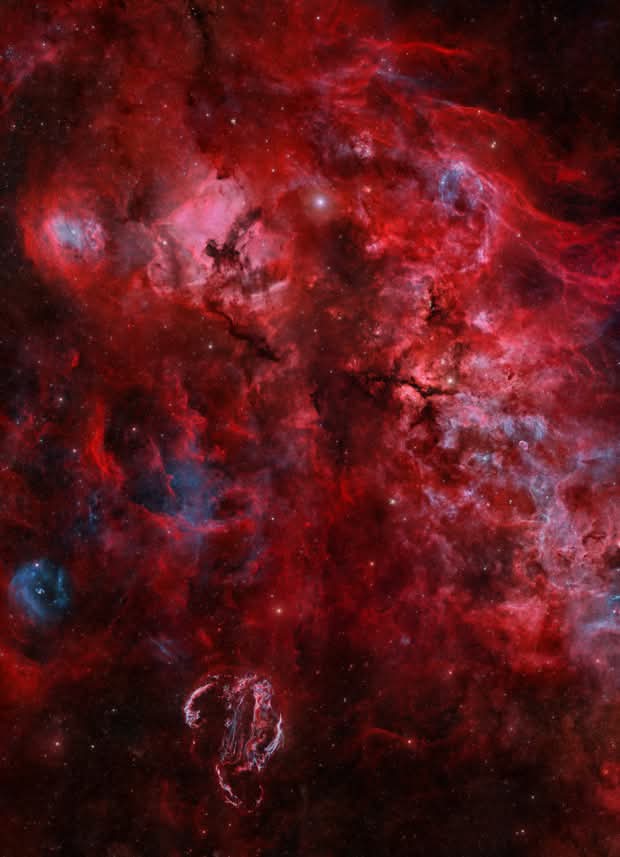
Ten Years of Shooting the Stars — and Then This Happened 🌠✨
English
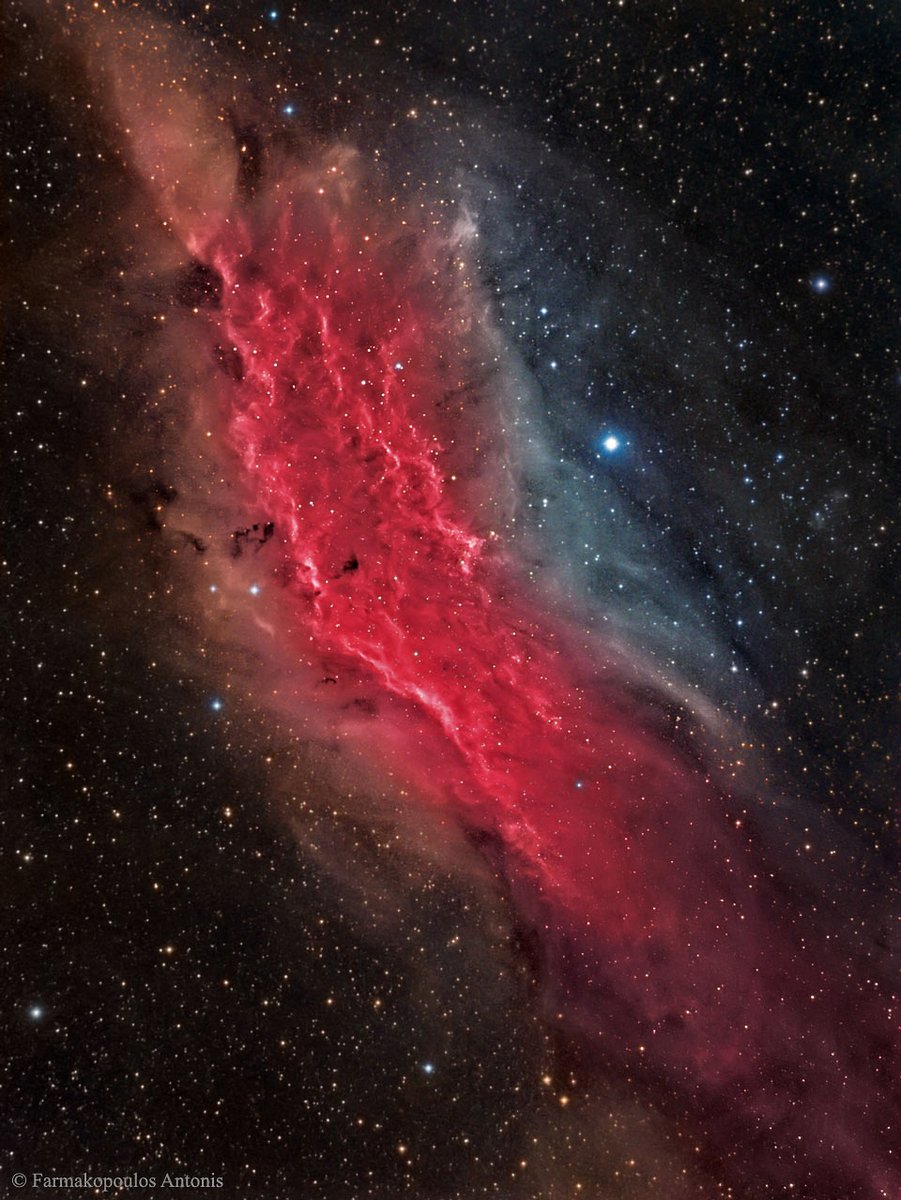
The California Nebula NGC 1499, A classic emission nebula around 100 light-years long.
English

"The Eye of the World"😮
In the golden gaze of the universe, life, perception and creation are one. We see not only the enormity beyond that, but the power to be exactly who we are.

English

This is the Saturn's north pole, a perfect hexagonal storm!
Earth is about 12,700 km wide. This hexagon is over 30,000 km across. You could drop two whole Earths inside this storm and they still wouldn't touch the sides. A geometric masterpiece raging at the top of the world.
NASA

English

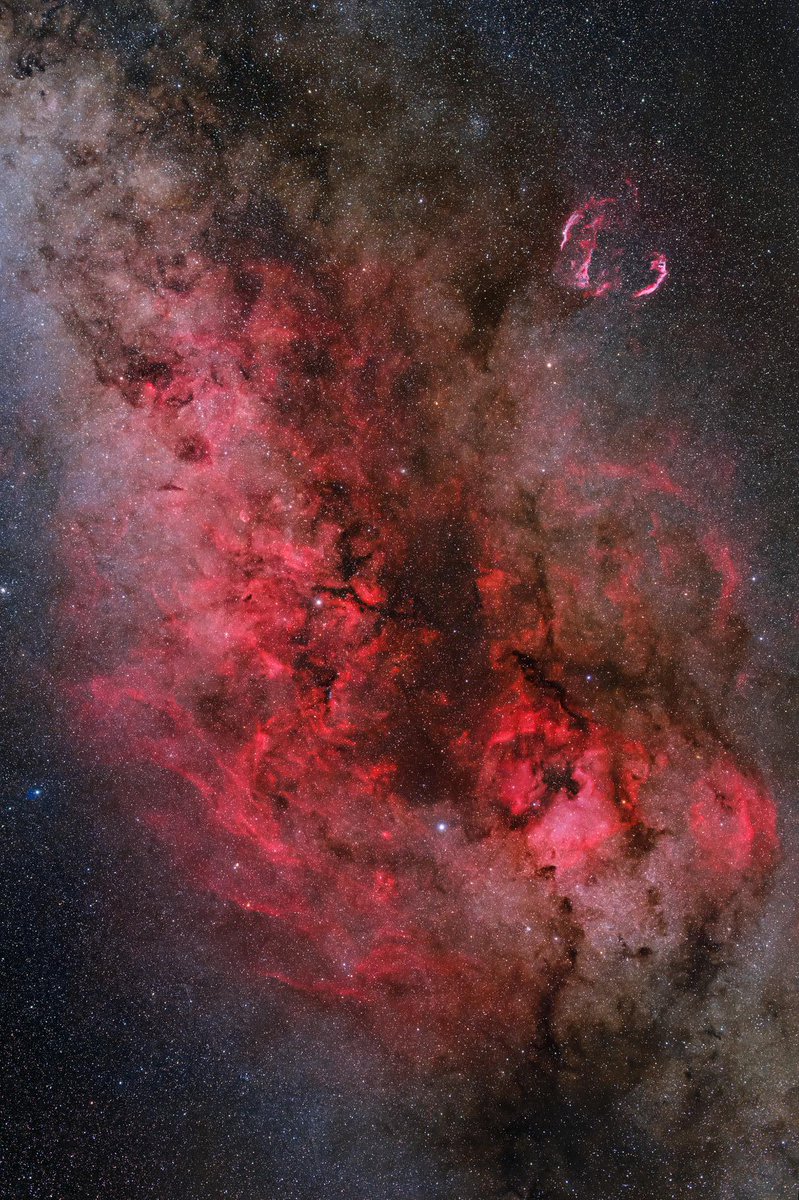


Oxígeno Beneath The Seagull 's Wins's (IC2177) by Jordy Jfre (Astrobin)


