Tom Trowbridge

2K posts

Tom Trowbridge banner
Tom Trowbridge

Tom Trowbridge

@TheTomTrow

Co-Founder of @fluence_project and @hedera founding President | https://t.co/Jvce8TOOvW podcast | Writing on https://t.co/bBtg21CV4k

Amsterdam, The Netherlands Katılım Şubat 2012
804 Takip Edilen5K Takipçiler
Tom Trowbridge
Tom Trowbridge@TheTomTrow·
This has been true since the state existed
SightBringer@_The_Prophet__

⚡️Marc Andreessen is right and the mechanism he’s describing is one of the most underappreciated forces in modern political economy. The Economist excerpt is saying the quiet part out loud. EU regulation was sold to voters as a constraint on American tech dominance. It accomplished the opposite. GDPR, the AI Act, the Digital Services Act. Every one of these was framed as standing up to Silicon Valley. Every one of them made it structurally harder for European competitors to exist because the compliance burden is a fixed cost that only giants can absorb. A three-person AI startup in Berlin cannot afford what Google can absorb as a rounding error. So the regulation designed to limit American tech dominance ended up locking it in permanently. This is the same pattern that governs every heavily regulated industry. Dodd-Frank didn’t weaken JP Morgan, it destroyed community banks and made the too-big-to-fail institutions bigger. Pharmaceutical regulation doesn’t constrain Pfizer, it makes starting a new pharmaceutical company nearly impossible. Every layer of compliance is a moat around whoever was big enough to survive its introduction. The deeper thing Andreessen is pointing at: regulation is almost never actually designed to limit the biggest players because the biggest players help write it. The revolving door between regulatory agencies and the companies they regulate is not a bug. It is the mechanism. Staff leave the FTC for Meta and back. Staff leave Goldman for Treasury and back. The regulations that emerge from this process reflect the interests of the people who wrote them, which are the interests of the incumbents they’ll return to. The public-facing narrative is consumer protection or competition. The actual function is barrier erection. The uncomfortable truth underneath all of this: the modern administrative state has evolved into an entity whose primary function is the preservation of incumbent power structures, dressed in the rhetoric of consumer protection, environmental responsibility, competition policy, or social welfare. The rhetoric isn’t always cynical. Many of the people implementing it genuinely believe they’re doing good. But the net structural effect is consistent across domains. The big get bigger. The new is prevented from emerging. The existing order is protected from disruption. Andreessen sees this clearly because he operates in a sector where new entrants are the entire value proposition of venture capital. When regulation kills new entrants, it kills his business model. So he’s financially incentivized to notice something most commentators won’t. But being incentivized to notice something doesn’t make it wrong. It makes it visible. The real conclusion: most political conflict in developed democracies is not left versus right. It’s incumbents versus entrants, dressed up in ideological language. The coalitions look different depending on what’s being protected, but the structural dynamic is the same. Watch what regulations do rather than what they claim to do. The gap between those two things is where the real signal lives.

English
0
0
0
168
Tom Trowbridge retweetledi
Gummi
Gummi@gummibear737·
Iran was trying to use the North Korean model to get a nuke: create sufficient conventional deterrence so you won’t be challenged in acquiring one (it’s called the Seoul Hostage Problem). This has been explained over and over since day one. Everyone claiming shifting goalposts or no imminent threat has been lying. The reason North Korea was allowed to get nukes is because Seoul (and its 10 million inhabitants) is within artillery and rocket range of North Korea. During the 1994 nuclear crisis, the Clinton administration seriously considered airstrikes on North Korea’s Yongbyon reactor but backed off precisely because of the artillery threat to Seoul. Iran was trying to accomplish the same by stockpiling missiles and drones which would have had the same deterrent effect. The proof is what Iran has been doing in the past month: attacking all its neighbors in order to pressure the US to stop attacking it Beyond this, they were building medium-range ballistic missiles that could reach Paris and London, meaning all of Europe could be held hostage as they built a nuclear bomb. The reason Iran has not built a nuclear weapon until now is not because it couldn’t, but because it knew it would be attacked and denied this capability. So by allowing them to continue developing this conventional deterrence, you would be allowing Iran to get a nuclear weapon. And unlike North Korea, Iran is led by an eschatological death cult Reagan saw nuclear mutually assured destruction (MAD) as both morally bankrupt (because of the innocent-body-count problem) and dangerously fragile because it assumed flawless rationality between adversaries…this means it only takes one irrational actor to destroy the world. Working backwards from the conclusion that Iran’s Islamist regime must never have a nuclear weapon, it was necessary for the US to attack Iran to deny it the conventional capacity to hold the entire eastern hemisphere hostage. Every European leader knows this and behind the scenes praises the US for this action. But they are cowards, held hostage by their own internal Muslim populations, and so adopt these ridiculous public positions. This was never about Israel. And if your argument is that Iran should be allowed to get a nuclear weapon then you are a fool and a traitor to western civilization…you’re a useful idiot
Ryan Saavedra@RyanSaavedra

Secretary of State Marco Rubio gives an excellent explanation on why the U.S. needed to strike Iran It's less than 2 minutes and is worth the watch

English
996
7.3K
30.4K
3.9M
Tom Trowbridge retweetledi
Adam Mossoff
Adam Mossoff@AdamMossoff·
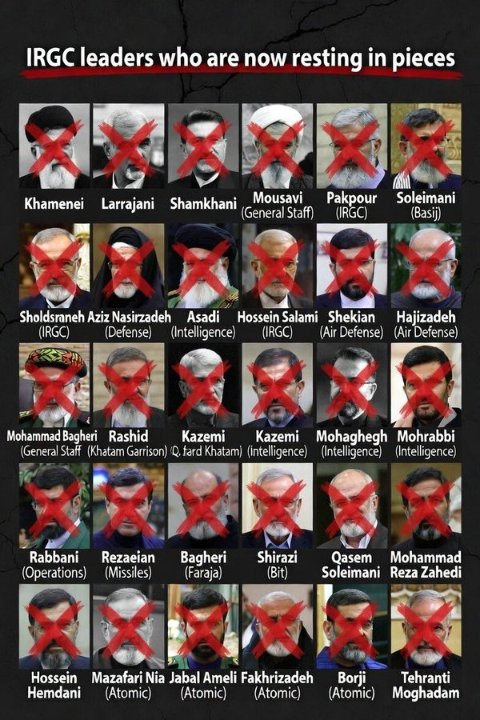
The NY Times, Washington Post, CNN, BBC, CBS 60 Minutes, etc. all make it sound like the war against the Islamic regime of Iran is floundering, at best, or is a failure, at worst. This is so wrong that I'm gobsmacked that the media has misled so many people. Here's the facts: As of this morning, U.S. and Israel have completely decapitated the Islamic regime (see image below). Its navy sits on the bottom of the sea with over a 100 ships sunk. It is no longer able to fire more than 1-2 ballistic missiles per day, and soon it will be zero. The Basijii thugs who slaughtered 1000s of innocent Iranians two months ago are themselves being wiped out and are running away at the faintest sound of a drone (these are hilarious videos). Islamic regime foreign diplomats are requesting asylum in mutiple countries. There are reports of regime troops refusing to show up for duty in Iran. The war is succeeding in the goals of its phases. It will ultimately remove the greatest source of global terrorism and an imminent nuclear threat to all Western countries, including the U.S. and Israel. What comes next? Hopefully something better. The future is never 100% certain. But the Allies had no idea in WW2 what would come next after the surrender of the Nazis and Imperial Japan, and today these countries are some of the closest allies of the U.S. There are significant signs from the Shah and Iranians themselves that they could do the same. Let us hope, but whatever happens, the elimination of the 47-year holy war against the West is a good thing. And just about anything is better than a nuclear-armed religious regime that explicitly seeks an apocalypse with the U.S. and Israel.
Adam Mossoff tweet media
English
740
2.6K
8.6K
1.1M
Tom Trowbridge retweetledi
Milei in English - Official Account
The empirical evidence is overwhelming: the left NEVER worked anywhere.
English
104
1.1K
5.9K
110.7K
Tom Trowbridge retweetledi
Brandon Straka #WalkAway
Brandon Straka #WalkAway@BrandonStraka·
Javier Milei’s movement explodes in Argentina—lower house seats jump 172% (37 to 101) and senators soar 233% (6 to 20). A landslide that crushed media forecasts. Massive win for Milei.
English
417
4.6K
30.3K
1.5M
Tom Trowbridge retweetledi
Bob Lonsberry
Bob Lonsberry@BobLonsberry·
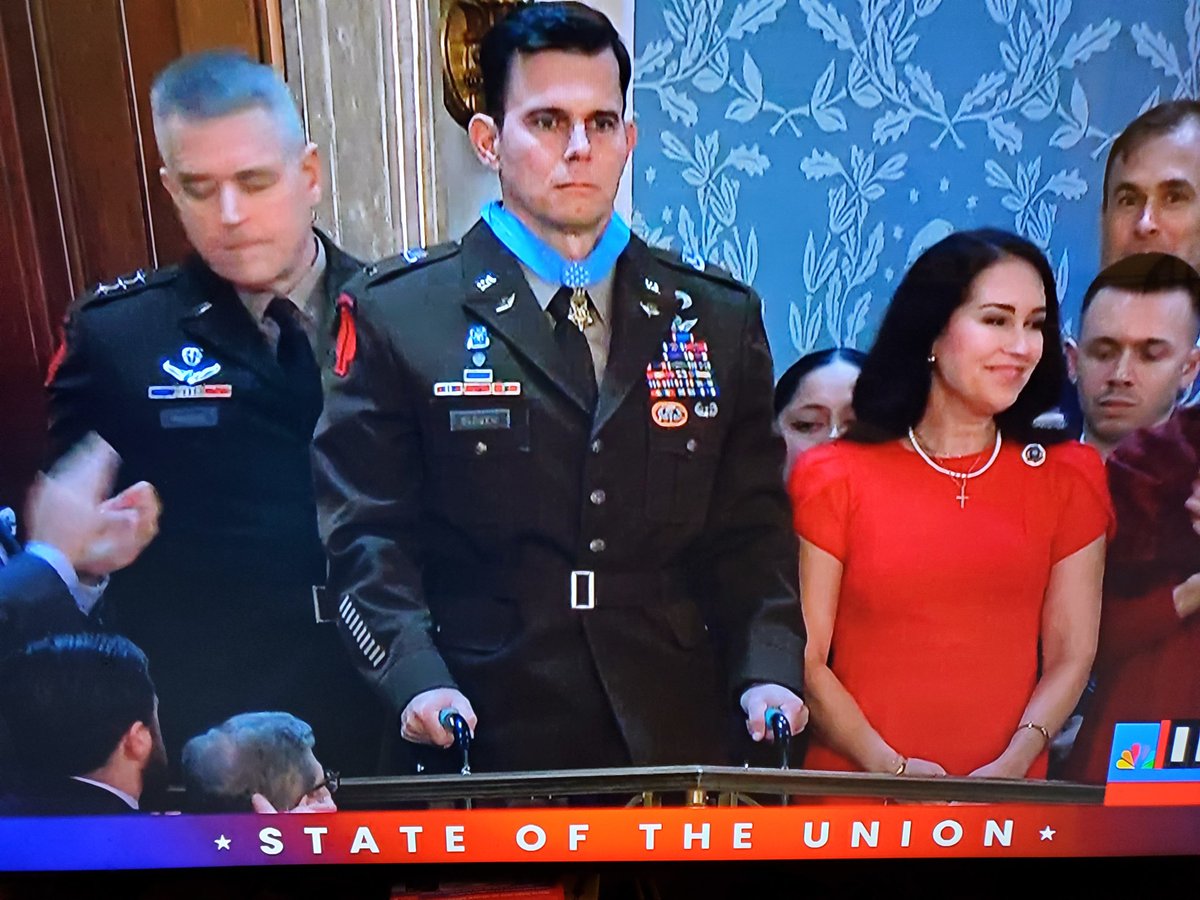
America. Each one of those hash marks on his right sleeve is a combat deployment.
Bob Lonsberry tweet media
English
588
1.6K
20.6K
928.8K
Tom Trowbridge
Tom Trowbridge@TheTomTrow·
Great conversation. @USDai_Official lending protocol is key in unlocking yield in the fastest growing infra market in the world.
Conor Moore@_ConorMoore

Most podcast conversations on GPU lending stay surface level. This one didn't. @TheTomTrow has spent decades in structured finance and capital markets, then built Hedera and Fluence from scratch - so he actually understands both sides of what we're building at @USDai_Official. The result is probably the deepest conversation I've had publicly on this topic.


English
1
0
2
1.1K
Tom Trowbridge retweetledi
pixel hulk
pixel hulk@PxlHulk·
> be Dutch anon > buy 100 shares of a tech company with my life savings > stock goes up because the CEO tweeted a frog meme > haven't sold a single share, still eating mayo on bread for dinner > government appears out of the canals like a swamp monster > "GEKOLONISEERD. THAT'S 36% OF YOUR IMAGINARY PROFIT, MENEER." > explain that I literally don't have the cash because I haven't sold anything > "SELL THE STOCK TO PAY THE TAX ON THE STOCK YOU'RE HOLDING" > forced to sell 40% of my position just to pay for the privilege of owning the other 60% > stock crashes 50% the next morning > I now owe the tax office more than my entire portfolio is worth > have to sell my bicycle and my wooden shoes to cover the debt > government uses the money to build a slightly taller levee to protect a pile of dirt > cycle to work in a rainstorm while a tax collector checks the appreciation value of my raincoat > "unrealized gains" more like "realized poverty" > mfw I’m being taxed on the vibes of future wealth
pixel hulk tweet media
The Kobeissi Letter@KobeissiLetter

BREAKING: Netherlands’ House of Representatives has approved a 36% tax on unrealized capital gains.

English
354
2.7K
38.9K
1.7M
Tom Trowbridge retweetledi
Jelle
Jelle@CryptoJelleNL·
Sad day in NL, the Dutch government is expected to pass a bill introducing a 36% tax on unrealized capital gains. This will destroy long-term strategies, kill compounding effects & trigger a wealth exodus of biblical proportions. But they'll pass it anyway. Can't fix stupid.
English
1.1K
1.2K
14.2K
3.4M
Tom Trowbridge retweetledi
Bitcoin for Freedom
Bitcoin for Freedom@BTC_for_Freedom·
If your wife isn't freaking out right now, you haven't stacked enough Bitcoin.
English
79
70
1.4K
68.1K
Tom Trowbridge
Tom Trowbridge@TheTomTrow·
@0xZergs This misses the relentless decline in hardware pricing that reduces cost and improves quality every year. But token economics matter and for specifics on the largest DePIN projects check out. depinspace.co/analytics/depi…
English
0
0
2
135
David | www.usd.ai
David | www.usd.ai@0xZergs·
on depin's future: we did an analysis of depin products in 2024, and came to a few realizations as we were underwriting from the credit position, which is the most conservative of all for reference, we've underwrote pretty much >20 different collateral types, from tesla battery chargers, to wifi, to antennas, to weather nodes, to gpus to understand whats happening, there was excellent research from @KoschigRobert from 1kx (see the chart on CAC of hardware, the more expensive the harder to scale) and @dylangbane and @DAnconia_Crypto on their state of depin report (see the chart on cost per hardware, the lower the cost, the shittier the data) if you had to summarize the entire issue with depin, it would be a conversion rate from cost-of-financing-per-node. this is a cost of equity (depin) or a cost of debt (infrafi) aka DePIN weighted average cost of capital as the more expensive a hardware got, you needed to have a higher pay out to justify a higher cost threshold. this encouraged projects to go for lower quality hardware to improve their metrics, since they needed to develop a capital markets to justify expansion unfortunately, lower quality hardware produces lower quality data fidelity, without unique data, you cant really produce superior networks. theres some exceptions like maybe the sub $500 networks, but generally the $10 per hardware ecosystem are generally unproductive my favorite crypto word.. trilemma? carl brings up a good point, depin is probably great for lower hardware cost assets (cost of distribution) like wifi, etc, where its a CAC game infrafi is made for (cost of ownership) for gpus, our specialization, the original sin starts with 1) the interest rate, since the interest rate affects and prices the GPU itself 2) this affects the rental rates since rent needs to cover the debt. also known as debt cost service ratio (DSCR). without cash flow to cover the itnerest, you cant own the gpu 3) then the rental affects the subscription ^ive just described the entire ai economy here btw, data center to your openai instance we are not evolving for otherways to subsidize the cost interest rate, starting with our @PayPal pyusd integration controlling the interest rate of artificial intelligence is our goal. lowering the cost of capital is part of that this is why openai wanted a guarantee on gpu financing, to lower that cost. ofc us gov said nah
Crypto Carl@CarlKVogel

Sentiment != Reality 1/ It's easy to say 'Depin is dying' (aforementioned rage bate) while many networks posting all-time-high metrics 2/ I'm sure @melt_dem and I would agree that DePIN token prices are down in-part due to poor revenue and tokenomics decisions by Founders. If these networks don't change they **will** die (I sold most of my DePIN tokens) 3/ DePIN models are for 'Networks' - the token & economic structure to bootstrap a centralized datacenter SHOULD be different and behave closer to debt than equity. Most DePINs don't require large CAPEX outlays, and operators seek network ownership vs financing. This ofc evolves as they become serial operators of multiple nodes If you are building DePIN or onchain debt financing let's chat. Here's how I think about DePIN (from 2024) 6thman.ventures/writing/depin-…

English
14
6
74
39.3K
Crypto Carl
Crypto Carl@CarlKVogel·
Sentiment != Reality 1/ It's easy to say 'Depin is dying' (aforementioned rage bate) while many networks posting all-time-high metrics 2/ I'm sure @melt_dem and I would agree that DePIN token prices are down in-part due to poor revenue and tokenomics decisions by Founders. If these networks don't change they **will** die (I sold most of my DePIN tokens) 3/ DePIN models are for 'Networks' - the token & economic structure to bootstrap a centralized datacenter SHOULD be different and behave closer to debt than equity. Most DePINs don't require large CAPEX outlays, and operators seek network ownership vs financing. This ofc evolves as they become serial operators of multiple nodes If you are building DePIN or onchain debt financing let's chat. Here's how I think about DePIN (from 2024) 6thman.ventures/writing/depin-…
Meltem Demirors@Melt_Dem

1/ time for some rage bait DePIN is dying and i don't see it coming back the tokenomics of DePIN deny the physics of finance - these teams are trying to build perpetual motion machines (a violation of the laws of thermodynamics) onchain infrastructure finance is evolving...

English
17
2
43
15.8K
Meltem Demirors
Meltem Demirors@Melt_Dem·
1/ time for some rage bait DePIN is dying and i don't see it coming back the tokenomics of DePIN deny the physics of finance - these teams are trying to build perpetual motion machines (a violation of the laws of thermodynamics) onchain infrastructure finance is evolving...
English
84
12
304
79K