Sabitlenmiş Tweet

BMW 335i
Laptop
Phone
full setup system so help me God
Legbo 👑 💎@legbo_
quote tweet with what you want to buy next year, you can add a picture if you wish, do it with conviction.
English
theweb3nerd
31.4K posts

@theweb3nerd_
Building On-Chain || Researcher|| BMW fanboy @xyberinc
quote tweet with what you want to buy next year, you can add a picture if you wish, do it with conviction.


New Partnership Spotted 👀 @metyacom × @QwertiAI Metya is building what SocialFi always promised: not just engagement — real utility, powered by AI + PayFi. Qwerti is doing the same for DeFi: no tab-hopping, no “figure it out yourself” UX — just the best route, fast execution, self-custody by default. Different angles, same thesis: make Web3 feel simple for everyone. More to ship soon 😏




Digital ecosystem, decentralized technologies (Web3, blockchain apps, DeFi, DAOs) promise autonomy, transparency, and ownership. However, despite their revolutionary potential, one major barrier still prevents mainstream adoption: poor user experience (UX). This is where Dango’s core proposition becomes powerful simplifying UX by reducing steps so decentralized actions feel fast, intuitive, and accessible. Most decentralized platforms suffer from: Complex onboarding (wallet setup, seed phrases) Too many transaction confirmations Confusing interfaces (gas fees, slippage, bridging) Slow or unclear feedback loops For the average user, this creates friction, fear, and drop-off. Strategic Insight: UX not technology is now the biggest bottleneck in Web3 adoption. Dango positions itself not as another tool, but as a friction eliminator. Make decentralized actions feel as simple as Web2 interactions.” This means: Fewer clicks Clearer decisions Faster execution Minimal cognitive load Example Transformation: Traditional Web3 @dango UX Connect wallet → approve → sign → confirm One-tap action Multiple gas prompts Invisible or abstracted fees Manual bridging Auto-routing In today’s rapidly evolving digital ecosystem, the ability to process, adapt, and scale intelligently is no longer a luxury it is a necessity. Dgrid AI introduces a new paradigm: a system built on modular compute architecture and scalable resource orchestration, designed to keep infrastructure lightweight, responsive, and future-proof. Traditional systems are rigid. They rely on monolithic structures that demand full-system upgrades, heavy resource consumption, and costly maintenance cycles. Dgrid AI changes this by embracing modular compute, where: Components operate independently but cohesively Workloads are distributed dynamically Systems evolve without full redeployment Strategic Advantage: Faster iteration cycles Reduced operational cost Plug-and-play innovation Heavy systems slow innovation. They consume excessive compute, delay responses, and limit user experience. Dgrid AI prioritizes lightweight architecture, ensuring: Minimal resource overhead Faster processing speeds Efficient energy and cost usage Strategy: Use microservices and containerized workloads Optimize for edge + cloud hybrid deployment Enable real-time responsiveness across environments Scalability in @dgrid_ai is not reactive it is predictive and adaptive. Instead of scaling after demand spikes, Dgrid AI: Anticipates workload patterns Allocates resources dynamically Balances performance across nodes Strategy: Implement auto-scaling pipelines driven by AI insights Integrate load balancing across distributed nodes Enable multi-region deployment for resilience Most platforms today (TikTok, Instagram Stories, Snapchat) reward: Frequency over depth Virality over value Trends over expertise PermacastApp flips this by enabling creators to: Build evergreen knowledge assets Maintain persistent discoverability Accumulate long-term audience trust PermacastApp represents a strategic shift away from the dominance of ephemeral content (stories, disappearing posts, algorithm-chasing clips) toward durable, compounding content ecosystems. While most platforms optimize for immediacy, Permacast is positioning itself around longevity, ownership, and knowledge permanence and that opens powerful opportunities for creators and builders. This is similar to how: YouTube rewards searchable content over time Blogs rank on Google for years Podcasts build libraries, not moments Permacast can unify all three into a structured, permanent content graph. A powerful concept @permacastapp can leverage is: Creator Knowledge Graphs Instead of isolated posts, content becomes: Interconnected Referencable Expandable over time Example: A creator in crypto or AI doesn’t just post random updates they build: A “DeFi fundamentals” series Linked deep dives Updated versions over time.


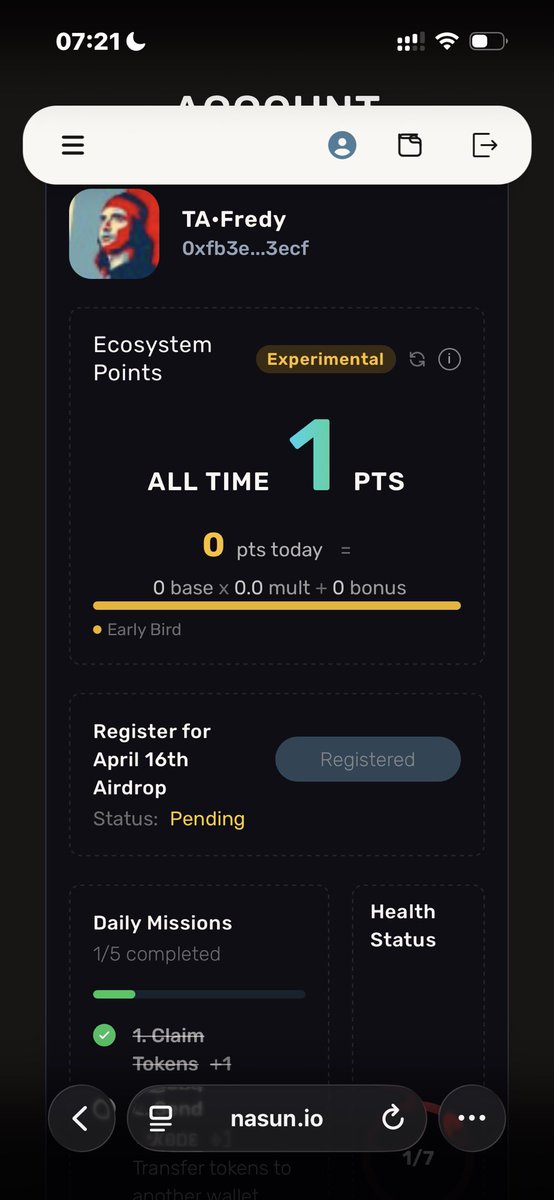
With Baram pushing AI execution inside @Nasun_io Network, value doesn’t just sit at the application level it starts forming at the infrastructure level. And that’s exactly where the Genesis Pass positions you. Not just as a user of AI tools, but as someone already orbiting the layer where those tools are powered, refined, and scaled. There’s also an exposure advantage here. As more developers, builders, and users plug into Baram, attention naturally concentrates around it. Systems like this tend to become hubs and Genesis holders are already within that environment before it peaks. You’re not discovering it late. You’re watching it form. When you’ve seen the infrastructure evolve, your decisions get sharper. You know which products matter, which narratives are real, and where the actual traction is building. That kind of awareness is hard to replicate from the outside. So over time, it’s not just about access or usage. It’s about being positioned where understanding, activity, and growth intersect while everything is still taking shape.