Thomas Wong retweetledi
Thomas Wong
400 posts

Thomas Wong
@thfwong
Academic nomad. Drifting in Chemical Space
Katılım Eylül 2018
593 Takip Edilen94 Takipçiler
Thomas Wong retweetledi

Evolution of a Synthetic Strategy for Complex Diterpenes from Euphorbiaceae and Thymelaeaceae | Journal of the American Chemical Society pubs.acs.org/doi/10.1021/ja…
English
Thomas Wong retweetledi

Another great work from @ParasramLab !
Nitro groups do not look so scary anymore :)
chemrxiv.org/doi/full/10.26…
English
Thomas Wong retweetledi

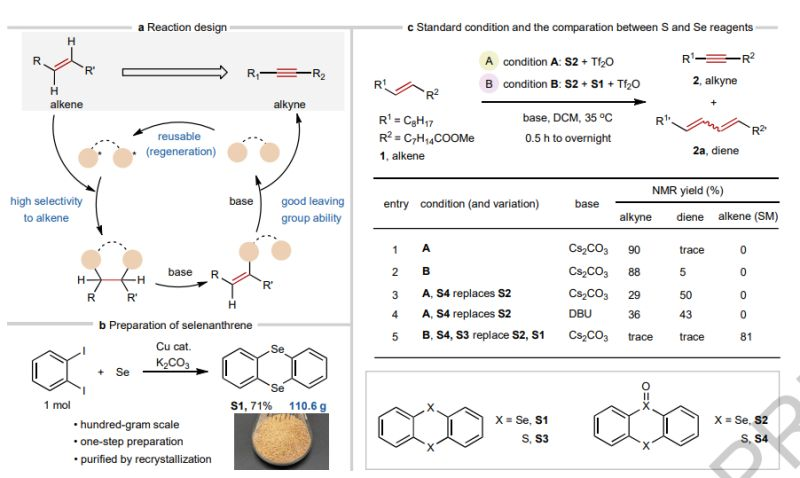
The long-standing challenge of converting alkenes directly to alkynes—classically a harsh two-step halogenation/elimination—is solved by Ning Jiao & team! 🔗nature.com/articles/s4158… #OrganicChemistry #OrganicSynthesis #Alkyne #Nature #Chemistry

English
Thomas Wong retweetledi

A new mechanism for “RNA memory”! 😱
Thrilled to share another crazy paper from the lab (can’t believe we posted 2 in 2 days!), summarizing >10 years of research:
Work on transgenerational inheritance of small RNAs in the powerful model organism C. elegans changed how we think about what’s possible in inheritance and evolution, because it allows the most heretical thing: inheritance of parental responses to the environment! However, it’s still unclear whether RNAs are inherited across generations in other animals, largely because the RNA-dependent RNA polymerases that amplify heritable small RNAs and prevent their dilution in C. elegans are not conserved in mammals.
In this new work, an amazing collaboration with the Rink and Wurtzel labs, we show that planarians establish long-lasting and heritable small RNA–based gene regulatory states despite lacking canonical RNA-dependent RNA polymerases and nuclear RNAi machinery (that are required in C. elegans).
You might say “they are both worms…” BUT planarians are evolutionarily very distant from C. elegans (flatworms vs. roundworms, diverged more than 500 million years ago), making this particularly surprising. These are totally different animals.
We find that ingestion of double-stranded RNA induces sequence-specific silencing that persists for months and survives repeated cycles of whole-body regeneration. Even more strikingly, RNAi can be transferred between animals, echoing James V. McConnell’s controversial “RNA memory” experiments from the 1970s (his lab was targeted by the Unabomber terrorist Ted Kaczynski, who sent McConnell a bomb. This and other controversies ended this line of experiments…)
Mechanistically, we find that the response transitions from a transient systemic dsRNA-triggered phase to a stable, cell-autonomous post-transcriptional “memory phase” maintained by antisense small RNAs. Using a new luminescence reporter (transgenesis is currently impossible in planarians), we show that silencing spreads along the targeted gene and identify a weird type of planarian small RNAs with untemplated polyA tails.
RNAi inheritance without canonical RdRPs establishes planarians as a powerful system for studying RNA-based regulatory inheritance beyond C. elegans and raises the possibility that RNA-mediated inheritance may be more broadly conserved in animals, potentially even in mammals.
Here’s a video of a planarian that is treated by RNAi against β-catenin and develops multiple heads instead of just one. This is one of the phenotypes that is inherited. Another phenotype is “loss of eyes” (which we show is not only inherited across multiple regeneration cycles, but can also be transmitted between animals in transplantation experiments).
Amazing work led by first authors Prakash Cherian and Idit Aviram (co-supervised by Omri and me).
Please read the preprint, the link is in the next tweet, and share!
English
Thomas Wong retweetledi

We are excited to share our newest work out now in @J_A_C_S on a new class of peptidic catalysts for fluoride binding and delivery. Congratulations to Gabi and all authors! 👩🔬🧪
pubs.acs.org/doi/10.1021/ja…
English
Thomas Wong retweetledi

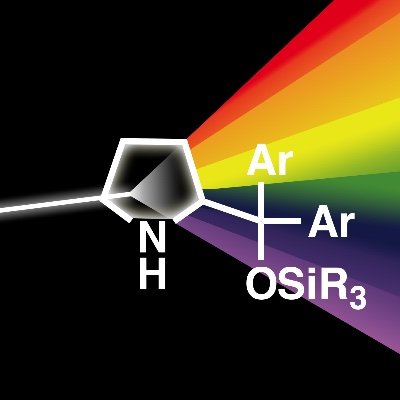
Here we are, once again: After 20 years still opening new doors! 🚀Check out our latest review on diarylprolinol silyl ethers in asymmetric catalysis in @angew_chem✨ #organocatalysis #AUChemistry @e_marcantonio95
onlinelibrary.wiley.com/doi/10.1002/an…
English
Thomas Wong retweetledi

Too much data, too little thinking.
A important essay from Ruslan Medzhitov on the importance of understanding data, not just generating it. A must read.
@RMedzhitov @YaleIBIO
nature.com/articles/s4157…
English
Thomas Wong retweetledi

Excited to share I’ve been awarded a Junior Leader “la Caixa” grant and I am returning to @ICIQchem to start my independent research journey🎉
Grateful to Fundación “la Caixa” (@BecariosFLC), my mentors, and collaborators for the trust and support. Looking forward to what’s next!
ICIQ@ICIQchem
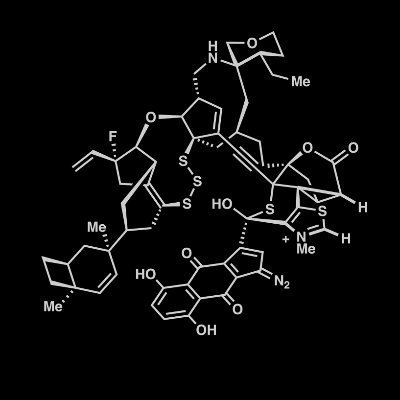
#ICIQNews 👏Dr. Jesús San José Orduna joins ICIQ as a Junior Leader “La Caixa” 🚰With the project “GreenFluorine: AI-Accelerated Photochemical Upgrading of Pollutants in Flow”, Dr. San José Orduna returns to ICIQ Read more 🔗 iciq.org/new/dr-jesus-s… @BecarisFLC
English
Thomas Wong retweetledi

Short, Enantioselective Total Synthesis of (+)-Ineleganolide | Journal of the American Chemical Society @UCB_Chemistry @UCBerkeley pubs.acs.org/doi/10.1021/ja…
English
Thomas Wong retweetledi

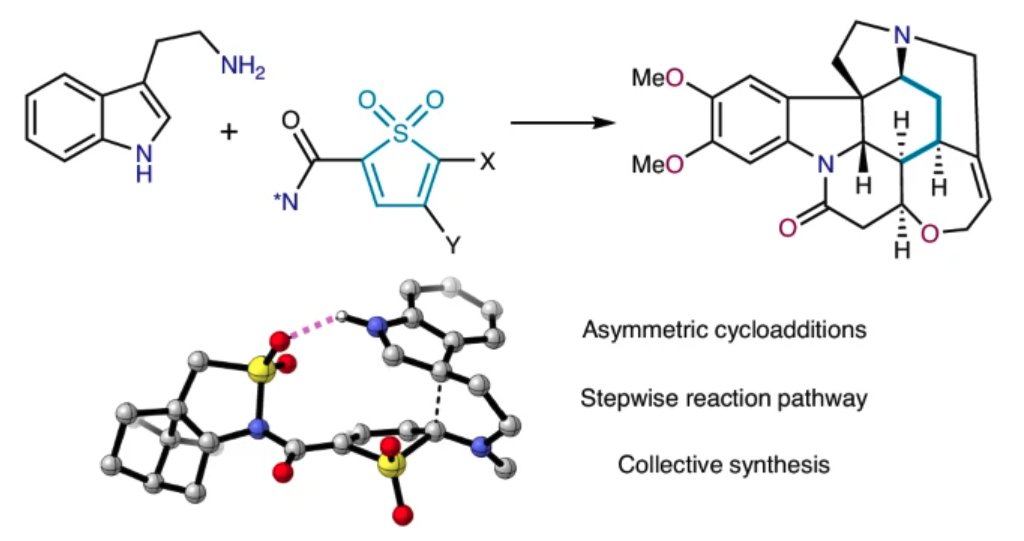
Collective #asymmetricsynthesis of the Strychnos alkaloids via thiophene S,S-dioxide cycloadditions by Kun Ho ‘Kenny’ Park, Jisook Park, Nils Frank, Hanwen Zhang, Peilin Tian, Yasmine Biddick, Fernanda Duarte @fjduarteg and Edward A. Anderson @EdAndersonGroup at @OxfordChemistry in @NatureChemistry nature.com/articles/s4155…

English
Thomas Wong retweetledi

What else is possible besides oxidation and reduction of biobased furans? Just redox-neutrally hydrolyse them! We hope to add with this work another cool reaction to the arsenal of biobased chemistries. science.org/doi/10.1126/sc…
English
Thomas Wong retweetledi

Chemists have been trying to synthesise natural products in the lab for around two centuries. Nina Notman looks at what the future holds – and what the field is up against in terms of a variety of obstacles.
chemistryworld.com/features/the-f…
English
Thomas Wong retweetledi

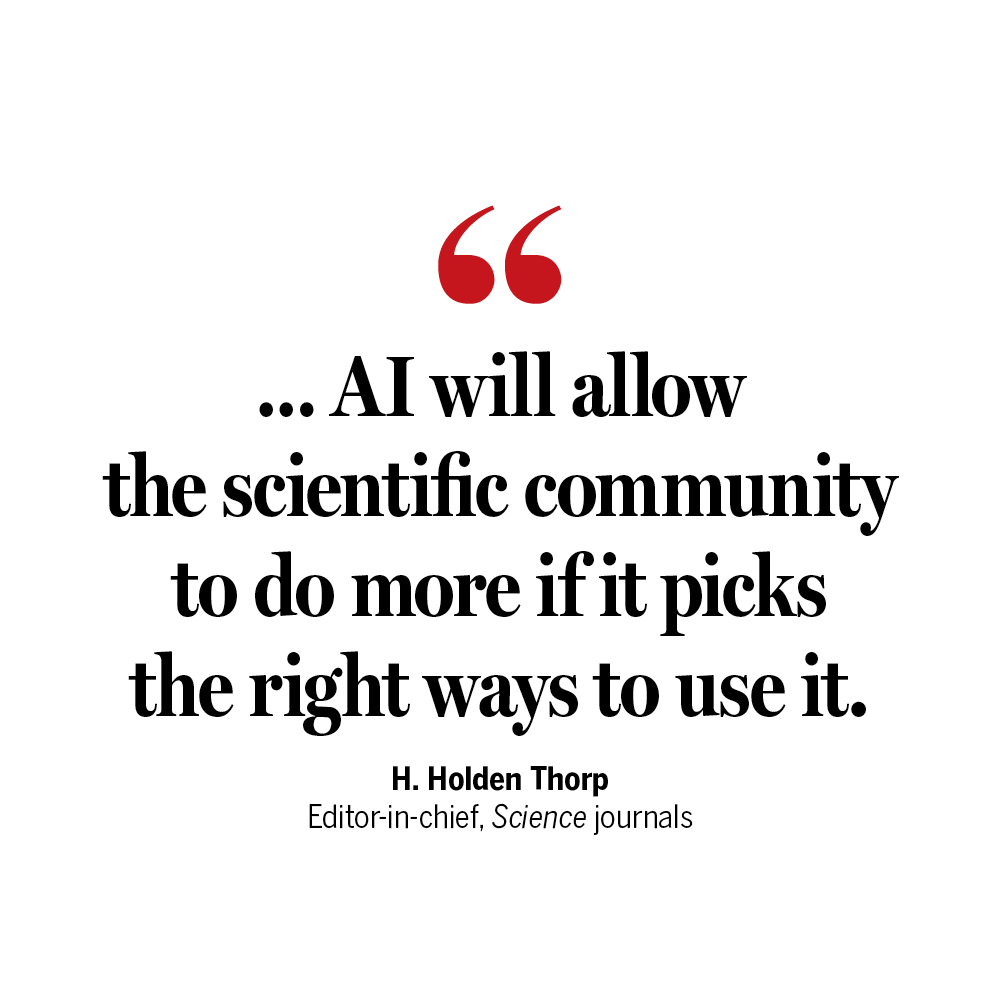
In the first #ScienceEditorial of 2026, H. Holden Thorp focuses on #AI, discussing how it “will allow the scientific community to do more if it picks the right ways to use it.” He revisits the journals’ policies and approaches related to AI.
Read more: scim.ag/48YI2rs

English
Thomas Wong retweetledi

Visible-Light-Induced Nitrogen-Atom Deletion of Unactivated Secondary Amines | Journal of the American Chemical Society pubs.acs.org/doi/10.1021/ja…
English
Thomas Wong retweetledi

A Concise Total Synthesis of (+)-Pedrolide | Journal of the American Chemical Society pubs.acs.org/doi/10.1021/ja…
English
Thomas Wong retweetledi

Thrilled to share our recent work on aliphatic radiotrifluoromethylation @ScienceMagazine. Huge kudos to my dedicated graduate student Chao Wang @VTChemDept @UcChem , and our fantastic collaborators @NIH @NIMHgov Dr. Pike, Paul, Susovan and Jinsoo. #PET science.org/doi/10.1126/sc…
English
Thomas Wong retweetledi

To foster disruptive innovation with the potential to change medical paradigms, NIH policies should channel more funding to unconventional ideas and the early-career investigators pursuing them -- a theme I take up in my forthcoming book, Miracle Century
statnews.com/2025/12/18/nih…

English