

Thibault Quillard
1.2K posts


Thibault Quillard retweetledi

Today, we share a breakthrough on the planar unit distance problem, a famous open question first posed by Paul Erdős in 1946.
For nearly 80 years, mathematicians believed the best possible solutions looked roughly like square grids.
An OpenAI model has now disproved that belief, discovering an entirely new family of constructions that performs better.
This marks the first time AI has autonomously solved a prominent open problem central to a field of mathematics.
English
Thibault Quillard retweetledi


Makes me even more bullish about neoclouds
Zephyr@zephyr_z9
Bruh, even the shitco is getting the Jensen stamp
English
@zephyr_z9 Expect Meta to go there soon w/ their new app strategy
English
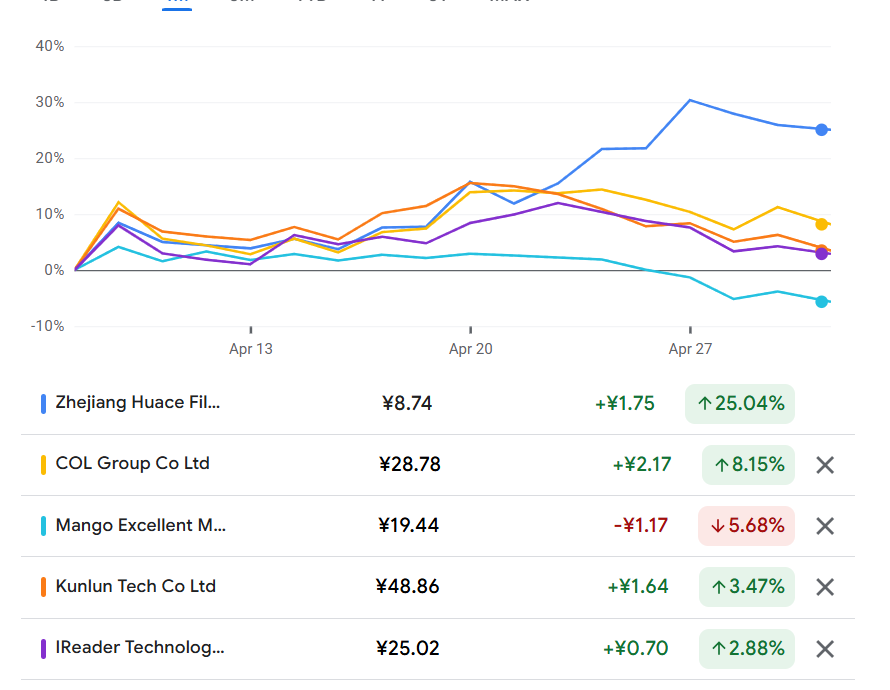
Are Chinese microdramas the next big consumer play 🤔🤔🤔
Zephyr@zephyr_z9
Micro Dramas are super popular now
English
Thibault Quillard retweetledi

former 20 millions d'actifs à l'IA en 5 ans est exactement le genre d'annonce qui sonne brillant en commission parlementaire et qui produit 0 effet réel je dis bien 0 effet sur le terrain parce qu'on a oublié quelque chose de fondamental qui est que:
l'IA n'est pas une compétence en soi c'est un amplificateur des compétences cognitives qui préexistent dans votre cerveau, savoir lire profondément, savoir raisonner par premiers principes savoir formuler une intention claire ou même savoir reconnaître un raisonnement bancal
autant de muscles intellectuels qui se construisent uniquement par 20 ans de friction réelle avec des livres, ddes problèmes mathématiques exigeants et des projets concrets sur lesquels on échoue / itére avant de réussir
je crois que le drame de cette annonce c'est qu'elle traite l'IA comme un nouveau excel qu'il faudrait apprendre à manipuler en 6 modules de formation alors alors que le vrai sujet c'est de reconstruire dans le système éducatif français les fondations cognitives qui permettent ensuite à un adulte d'utiliser l'IA comme un véritable allie démultiplicateur
ce n’est que mon avis MAIS sachez que sans ces fondations vous obtenez exactement le contraire de l'effet recherché, des millions d'actifs qui délèguent leur pensée à la machine et perdent en 18 mois ce qu'il restait de leur autonomie cognitive, c'est l'inverse exact d'une politique souveraine c'est une politique de zombification industrielle financée par les impôts des contribuables
et ce que cette annonce va concrètement produire dans les 24 mois est facile à prévoir, l'apparition massive d'une nouvelle génération de Brivael, ces opportunistes qui ne tweetent plus eux mêmes mais qui font tweeter leurs agents IA pendant qu'ils encaissent en vendant des formations et des calls à 999 dollars de l'heure parce que chaque fois que l'etat français sort une enveloppe budgétaire avec le mot innovation dedans c'est exactement le profil qui se rue dessus pour la capter
on aura donc dépensé plusieurs milliards d'euros publics pour enrichir des grifteurs qui n'ont eux mêmes jamais rien construit dans leur vie pendant que les vrais bâtisseurs deeptech par ex continueront de galerer pour financer leur première levée
je suis persuadé que ce dont la France a vraiment besoin n'est pas une formation IA pour 20 millions d'actifs, c'est une refonte profonde de l'école primaire et du collège pour reconstruire les capacités d'attention de lecture de raisonnement et de créativité de la jeunesse française
c'est aussi un investissement massif dans la recherche fondamentale en mathématiques, en physique et en biologie, c'est un soutien acharné aux bâtisseurs qui font de la deeptech et du hardware en France plutôt qu'aux vendeurs de formation digitale
mettez vous vous en tête que qu'à la fin des fins ce qui déterminera la position de la France en 2050 ce n'est pas le nombre d'adultes qui savent prompter ChatGPT, c'est plutôt le nombre de cerveaux capables de produire la pensée originale que la machine ne pourra jamais générer toute seule
Gabriel Attal@GabrielAttal
La révolution de l'IA ne doit pas être subie, elle doit être maîtrisée. Mon ambition pour 2027 : former 20 millions d'actifs à l'Intelligence Artificielle en 5 ans.
Français
Thibault Quillard retweetledi


Thibault Quillard retweetledi



Thibault Quillard retweetledi

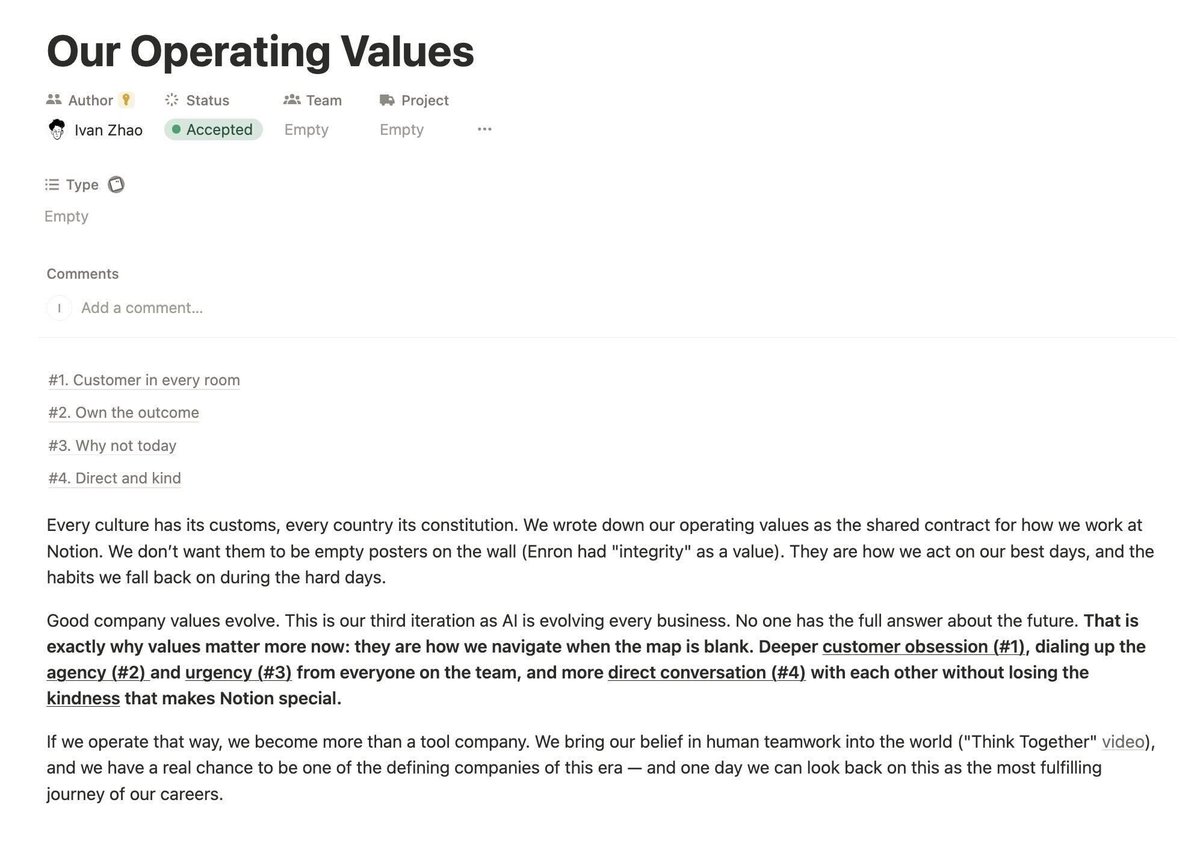
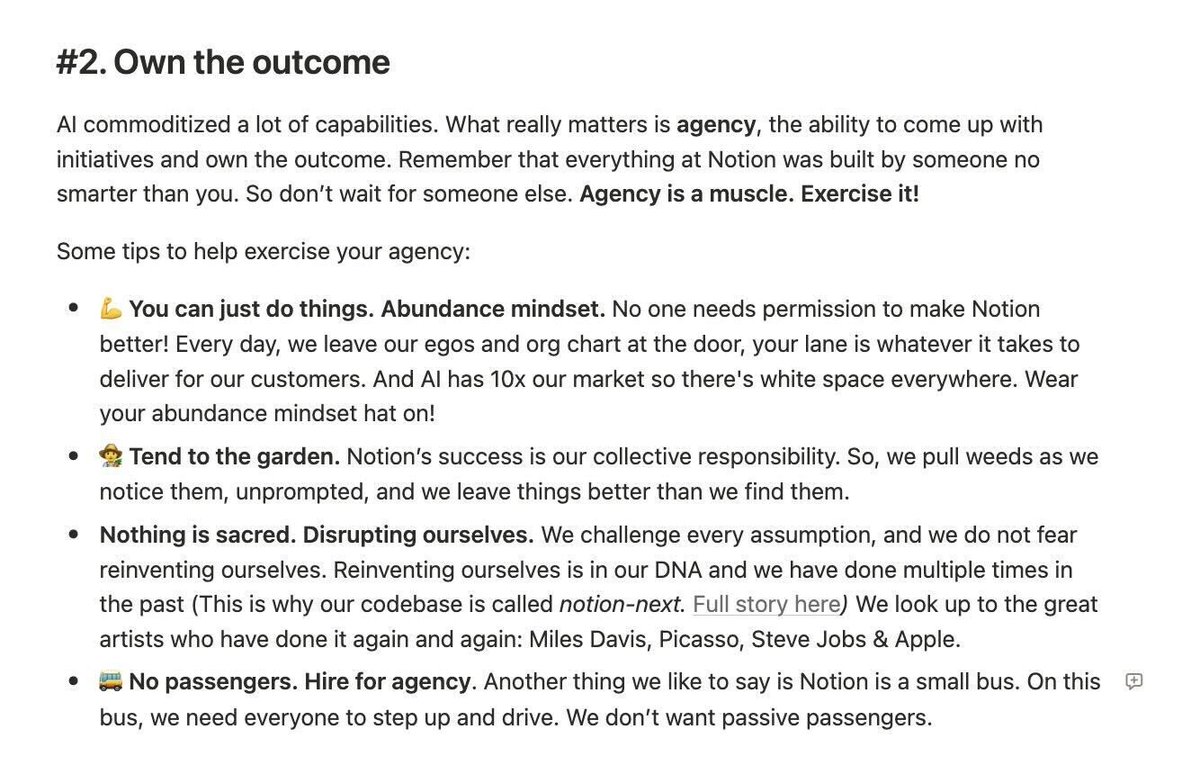
There is nothing about this that is amazing. It was predicted endlessly, and those predictions were dismissed by people citing the fact that big companies opposed these measures. They opposed them because while their relative position is stronger, the pie is now smaller.
Adam Thierer@AdamThierer
truly one of the most amazing developments in trans-Atlantic tech policy over the past 20 years is the way that Europe set out to regulate US tech giants into the ground, but only made them more dominant as a result. This Economist headline really says it.
English
Thibault Quillard retweetledi

España tiene claro el camino: electrificación, energías renovables y autonomía energética. Desengancharnos de los combustibles fósiles no es solo una apuesta climática: también es una apuesta por nuestra soberanía y nuestra competitividad.
Y esa transformación necesita de más inversión en interconexiones y en descarbonización.
Español
Thibault Quillard retweetledi

I'm a manager at @OpenAI, but with GPT-5.5 I'm a more effective IC than I've ever been. I can now write CUDA kernels like a pro. I can rely on it to run my research experiments. And we know how to make it much more powerful from here.

English
Thibault Quillard retweetledi

Les choses avancent, mais pas assez vite. Jamais assez vite.
J’ai donc pris un engagement clair : accélérer, une bonne fois pour toutes, la réalisation de nos projets industriels sur l’ensemble du territoire.
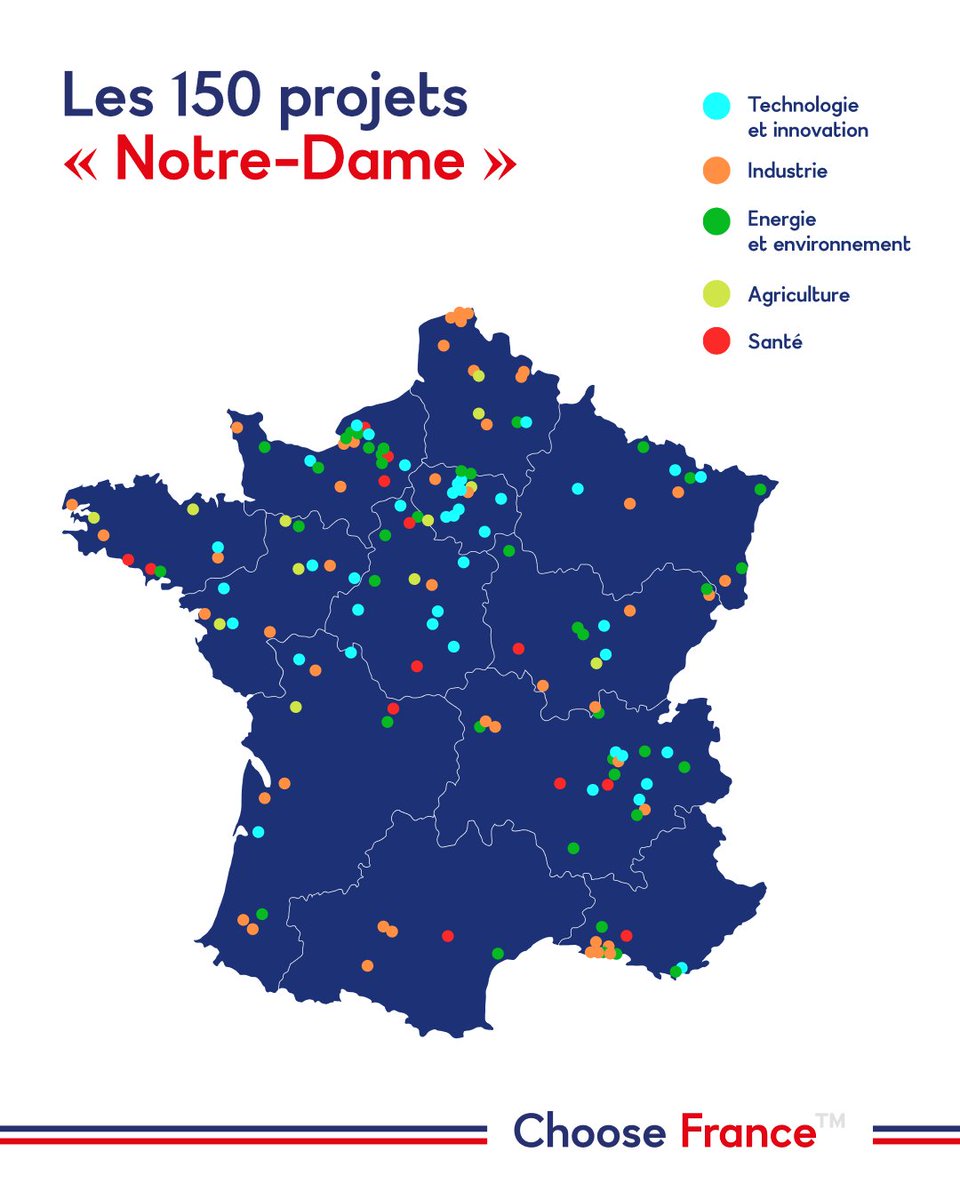
Nous avons montré au monde que nous étions capables de rebâtir Notre-Dame en cinq ans. C’est cet esprit que je veux retrouver aujourd’hui.
Aujourd’hui, nous identifions 150 grands projets, 150 cathédrales industrielles, partout en France que nous allons faire avancer beaucoup plus rapidement.
Cela représente 71 milliards d’euros d’investissement et plus de 32 000 emplois, au service de notre souveraineté.
Et cela s’accompagne de très nombreuses simplifications pour faire mieux et plus vite.
Nous accélérons.
Français

I am all for doing all the work to sequence your genome at home but my company The ODIN is now offering to sequence any animal genome(including humans) at 30x
We give you basic data analysis and complete control of your data, nothing fancy for a good price.

English
Thibault Quillard retweetledi

Hard to unsee the future from demos like this
Zain Shah@zan2434
Imagine every pixel on your screen, streamed live directly from a model. No HTML, no layout engine, no code. Just exactly what you want to see. @eddiejiao_obj, @drewocarr and I built a prototype to see how this could actually work, and set out to make it real. We're calling it Flipbook. (1/5)
English
@ashebytes thanks for sharing !
Could you add swipe to change slide for Mobile use ? :D
English

for anyone interested, these are the slides I put together & livestream chat
ashe.ai/slides/april-a…
x.com/ashebytes/stat…
ashe@ashebytes
AI Office Hours Pt 2 x.com/i/broadcasts/1…
English
Thibault Quillard retweetledi

When I saw our team's evals of Kimi 2.6, I thought "ok, things are gonna get interesting now".
This is the first open-weight model that plays like a top-class agentic model. Watching it go through ambiguous and meticulous chained tool work successfully puts it squarely in the wheelhouse of Opus 4.6. We're looking at an open weight model, but with much cheaper direct inference provider pricing. For a subclass of our eval set, it's outperforming GPT 5.2. We're about to undergo a gigantic industry shift.
Open weight is no longer for those who fine tune, those who want on-prem. It's an actual, reliable option for it's quality/price/latency profile for difficult agentic work.
It's not perfect. It's token hungry, relatively slow, and can get stuck in “thinking loops". But those are things we can engineer around. For value it is, and how it positions itself against major labs, this is a dramatic day for open weight models.
We sprinted as a team and worked closely with @FireworksAI_HQ to get this to our customers on day 0. No one should wait to try out a change like this. Try it yourself and tell me where it's working for you.
Akshay Kothari@akothari
Kimi K2.6 just landed in @NotionHQ. Open‑weight, but absolutely a heavyweight. Take it for a drive! 🏎️
English
Thibault Quillard retweetledi
I just finished reading palantir’s manifesto & I need you to understand what you’re actually looking at because this is the MOST important document the tech world has produced this year
most people came away thinking «wow what a thoughtful essay about patriotism and technology »…I came away thinking this is the most elegant justification for corporate capture of the state apparatus ever written & I want to walk you through why
krp opens with «silicon valley owes a moral debt to the country that made its rise possible » & frames the entire document as a call to civic duty, but read between the lines and what he’s actually saying is that the engineering elite should be embedded inside the defense and intelligence apparatus of the nation, he’s describing exactly what palantir has already done and dressing it up as patriotism
«the question is not whether AI weapons will be built, it is who will build them and for what purpose »sounds like a warning but it’s actually a sales pitch, he’s telling every gov on earth that the choice is binary either you buy from us or your adversaries will build it without you, this is the oldest arms dealer rhetoric in history wrapped in SV vocabulary
« hard power in this century will be built on software »is the key sentence of the entire manifesto because this is where karp reveals the real thesis, he’s saying whoever controls the software layer of national defense controls the nation itself & if you’ve been following my threads you know that palantir’s gotham and foundry platforms are already plugged into the intelligence feeds the satellite data, financial transactions & communications of dozens of govts worldwide through a single ontological knowledge graph that creates a technological dependency so deep that migrating away would mean rebuilding the entire institutional memory of the organization from scratch
this is vendor lockin at the scale of nation states and I’m personally convinced it was designed this way from the beginning
«we should applaud those who attempt to build where the market has failed to act » is karp defending palantir’s expansion into every domain the gov used to handle itself, policing immigration, military targeting intelligence analysis public health, everywhere the state retreats palantir advances and what was once a government function becomes a private service that the government can no longer perform without plantir’s permission
and here’s what I think makes it even more concerning, these systems are increasingly autonomous meaning the AI layer is making targeting recommendations threat assessments & resource allocation decisions that humans inside gov are rubber stamping without fully understanding the underlying logic
a bureaucrat inside the pentagon / DGSI sees a recommendation from the system & approves it because the system has been right 97% of the time and questioning it would require technical expertise that no one in the room has, this is algorithmic governance wearing the mask of human decision making
«the atomic age is ending, a new era of deterrence built on ai is set to begin »is the MOST chilling sentence in the document because karp is explicitly saying that ai based deterrence will replace nuclear deterrence as the organizing principle of global power, and whoever builds that ai deterrence layer owns the 21st century the same way whoever built the bomb owned the 20th & he’s telling you plainly that palantir intends to be that builder
«national service should be a universal duty » & « we should only fight the next war if everyone shares in the risk »sounds noble until you realize that he is proposing a system where citizens serve the state & the state is operationally dependent on palantir, the public bears the risk and palantir captures the value, soldiers fight wars planned by algorithms they can’t audit built by a company they can’t vote out
Palantir@PalantirTech
Because we get asked a lot. The Technological Republic, in brief. 1. Silicon Valley owes a moral debt to the country that made its rise possible. The engineering elite of Silicon Valley has an affirmative obligation to participate in the defense of the nation. 2. We must rebel against the tyranny of the apps. Is the iPhone our greatest creative if not crowning achievement as a civilization? The object has changed our lives, but it may also now be limiting and constraining our sense of the possible. 3. Free email is not enough. The decadence of a culture or civilization, and indeed its ruling class, will be forgiven only if that culture is capable of delivering economic growth and security for the public. 4. The limits of soft power, of soaring rhetoric alone, have been exposed. The ability of free and democratic societies to prevail requires something more than moral appeal. It requires hard power, and hard power in this century will be built on software. 5. The question is not whether A.I. weapons will be built; it is who will build them and for what purpose. Our adversaries will not pause to indulge in theatrical debates about the merits of developing technologies with critical military and national security applications. They will proceed. 6. National service should be a universal duty. We should, as a society, seriously consider moving away from an all-volunteer force and only fight the next war if everyone shares in the risk and the cost. 7. If a U.S. Marine asks for a better rifle, we should build it; and the same goes for software. We should as a country be capable of continuing a debate about the appropriateness of military action abroad while remaining unflinching in our commitment to those we have asked to step into harm’s way. 8. Public servants need not be our priests. Any business that compensated its employees in the way that the federal government compensates public servants would struggle to survive. 9. We should show far more grace towards those who have subjected themselves to public life. The eradication of any space for forgiveness—a jettisoning of any tolerance for the complexities and contradictions of the human psyche—may leave us with a cast of characters at the helm we will grow to regret. 10. The psychologization of modern politics is leading us astray. Those who look to the political arena to nourish their soul and sense of self, who rely too heavily on their internal life finding expression in people they may never meet, will be left disappointed. 11. Our society has grown too eager to hasten, and is often gleeful at, the demise of its enemies. The vanquishing of an opponent is a moment to pause, not rejoice. 12. The atomic age is ending. One age of deterrence, the atomic age, is ending, and a new era of deterrence built on A.I. is set to begin. 13. No other country in the history of the world has advanced progressive values more than this one. The United States is far from perfect. But it is easy to forget how much more opportunity exists in this country for those who are not hereditary elites than in any other nation on the planet. 14. American power has made possible an extraordinarily long peace. Too many have forgotten or perhaps take for granted that nearly a century of some version of peace has prevailed in the world without a great power military conflict. At least three generations — billions of people and their children and now grandchildren — have never known a world war. 15. The postwar neutering of Germany and Japan must be undone. The defanging of Germany was an overcorrection for which Europe is now paying a heavy price. A similar and highly theatrical commitment to Japanese pacifism will, if maintained, also threaten to shift the balance of power in Asia. 16. We should applaud those who attempt to build where the market has failed to act. The culture almost snickers at Musk’s interest in grand narrative, as if billionaires ought to simply stay in their lane of enriching themselves . . . . Any curiosity or genuine interest in the value of what he has created is essentially dismissed, or perhaps lurks from beneath a thinly veiled scorn. 17. Silicon Valley must play a role in addressing violent crime. Many politicians across the United States have essentially shrugged when it comes to violent crime, abandoning any serious efforts to address the problem or take on any risk with their constituencies or donors in coming up with solutions and experiments in what should be a desperate bid to save lives. 18. The ruthless exposure of the private lives of public figures drives far too much talent away from government service. The public arena—and the shallow and petty assaults against those who dare to do something other than enrich themselves—has become so unforgiving that the republic is left with a significant roster of ineffectual, empty vessels whose ambition one would forgive if there were any genuine belief structure lurking within. 19. The caution in public life that we unwittingly encourage is corrosive. Those who say nothing wrong often say nothing much at all. 20. The pervasive intolerance of religious belief in certain circles must be resisted. The elite’s intolerance of religious belief is perhaps one of the most telling signs that its political project constitutes a less open intellectual movement than many within it would claim. 21. Some cultures have produced vital advances; others remain dysfunctional and regressive. All cultures are now equal. Criticism and value judgments are forbidden. Yet this new dogma glosses over the fact that certain cultures and indeed subcultures . . . have produced wonders. Others have proven middling, and worse, regressive and harmful. 22. We must resist the shallow temptation of a vacant and hollow pluralism. We, in America and more broadly the West, have for the past half century resisted defining national cultures in the name of inclusivity. But inclusion into what? Excerpts from the #1 New York Times Bestseller The Technological Republic: Hard Power, Soft Belief, and the Future of the West, by Alexander C. Karp & Nicholas W. Zamiska techrepublicbook.com
English
@ashebytes @menhguin Love it ! Did you try @bumpbyamo by @amoamoamo ? They have the same video avatar style 🔥
English
Thibault Quillard retweetledi

@jasonrgriffin Context at 1M is big enough to be usable IMO
It's just you want the code to do what deterministic code does well, and you want the skill to do what LLMs do well
English
@simonlast Great trackrecord 🙏💪 do you have a projection for 2026?
Tks for the notion push with ai agent making it accessible to a broad range of users
English

Some AI predictions for 2025:
Coding agents that can do end-to-end software tasks become actually useful, reliably doing tasks that would take an engineer at least one hour. Adoption is slower than many expect because it requires a significant change in behavior (much more so than autocomplete).
Models will become strongly superhuman at math, but it won’t have much of a direct effect.
We’ll see extremely cheap and reliable small reasoning models. They’ll be very good at coding. This will unlock use-cases that involve a lot of fan-out.
The next large scale-up in model size will succeed in all the labs, but it’s unclear to me whether they will actually be released. I think probably yes just because it would make the lab look like they are ahead, even if the cost tradeoff doesn’t make sense and the main trend is inference compute.
The gap between top labs narrows further, with OpenAI, Anthropic, and Google very competitive. Google in particular seems to be catching up and I expect more convergence.
Meta successfully replicates the reasoning paradigm, but remains behind the top labs and isn’t the best cost/performance tradeoff.
Always-on ambient AI hardware devices hit the market, but are not widely adopted yet.
English