@ThetanutsIntern @ThetanutsFi You're going to get that on L2 ?
English
justjack3
321 posts











The @avax rally will be one of the most hated ones this year. 🔺 Yet so obvious, in retrospect. While gaming is expected to be one of the most exciting sectors in the market, there is also a thriving DeFi ecosystem and a growing NFT culture hub on Avalanche. DeFi - @TraderJoe_xyz $JOE: The largest DEX on Avalanche. - @dexalot $ALOT: CLOB DEX crossed $545M in volume. - @steakhut_fi $STEAK: Building Automated Liquidity Management. - @vector_fi $VTX: Yield Booster - @StructFinance: Liquidity Vaults leveraging blue-chip assets. - @DeltaPrimeDefi: Native Money Markets. - @HubbleExchange: Native Perps currently in Testnet. - @AvalaunchApp: Avalanche Premier Launchpad. - @Colonylab: Early-stage project incubator. LSD - @GoGoPool_ $GGP: Liquid staking/ Validator infra - @BenqiFinance $QI: Native lending. NFTs - @HyperspaceAvax: Newest NFT Marketplace. - @dokyoworld: Largest Avalanche NFT project by volume. - @DokkaebiNetwork: Korean-themed art, fastest mint out. - @steadyworldwide: Good vibes. - @joepegsnft: Trader Joe native NFT project. - @wolfilandnfts: NFT project based on the Avalanche Mascot Wolfie. - @ferdyfishh: Revenue sharing NFT from the Ferdi Flip Casino. Many of these projects still have no tokens, which means they'll probably be airdropping to early participants. There are many more amazing project buildings that are not included in this list, so if I missed any, feel free to drop them below. 👇


You should pay attention to @StructFinance on @avax. • $1m in incentives - Avax has just awarded them $1m as part of their rush program. DeFi yields are boosted. • Airdrop Potential - They’ve recently introduced a points program. This is a high signal for a potential airdrop. Let’s dive into the protocol and the opportunities. What’s Struct Finance? Struct Finance is a DeFi protocol for structured financial products built on Avalanche. Structured products are financial instruments that cater to specific risk-return objectives and investment strategies. They're crucial investment tools in TradFi. Struct Finance provides a proto-version of that in DeFi. They create structured products for different risk profiles and market conditions in Crypto. You should have access to different strategies based on your risk tolerance and goals. For example: • Do you want predictable income? Choose fixed yield vaults. • What if you want more upside? Choose variable yield. • What to do during volatile times? Use their GMX-based vaults. • How about prices ranging? Autopool Vaults will be the right fit for you. In the past two days, Struct’s Total Value Locked has gone from $25k to over $2m after autopool vaults were introduced. What are auto pools? TraderJoe’s the leading DEX on Avalanche. They use "Liquidity Books" for facilitating swaps. While it has many features that make it awesome, there’s one downside: only experts can profit from it. Why? Because it requires in-depth knowledge and active management. Autopools are a solution to this problem. You can deposit tokens into an auto pool, and it’ll actively manage your position. It’s kinda like a fund manager, but for providing on-chain liquidity. These autopool deposits are yield-bearing assets. You can earn fees from traders if you deposit liquidity. Struct Protocol will convert that yield-bearing asset to structured financial products suitable for investors with different risk profiles. Currently, users can invest in markets for AVAX-USDC, BTC.B-AVAX, and wETH-AVAX autopool pairs. What's their sauce for converting them to structured products? Interest Rate Tranches. What are tranches? Tranches are like slices or parts of something, especially regarding financial investments. It's like dividing a big cake into smaller pieces. In finance, they are used to separate different parts of an investment that might have different risks or returns. With Tranching, investors will be divided into different groups with different risk profiles. In the case of Struct, they have divided investors into fixed-income category and variable-income categories. The yield from the underlying assets will be distributed according to the risk profiles of different investor groups. It will follow a waterfall structure. At the end of the investment period, the fixed-income tranche will be paid out first. The variable income category will be paid out only after that. If the underlying yield is less, they might get paid less. But if there's a good yield, they'll get paid more than the fixed-income group. So that’s the behind-the-scenes stuff. For users, here’s what it’ll look like: They can invest a single asset in one of the autopool markets. Currently, you can invest in USDC, BTCB, or wETH, depending on the autopool. You’ll also have to choose between fixed or variable income. Once the investment period is over, depending on your tranche, you’ll receive your principal and reward. If you’re in the fixed-income tranche, you’ll be paid first. All of the remaining assets will go to the variable income tranche. This remainder can be really high as well as low. It’ll depend on the market conditions. Struct Finance also has similar products built on top of GMX. They use tranching on top of GLP, GMX’s yield-bearing asset. Their goal is to apply tranching on all sorts of yield-bearing assets. LSTs, LRTs, RWAs, and more. There’s a ton of growth potential. These products can take various assets and convert them to assets with different risk profiles. And that'll in turn attract different kinds of investors. For example, institutions may not like the constantly changing nature of DeFi. They might prefer a fixed 7% yield. And Struct will be able to provide that. Incentives The incentive program will boost the APRs on Struct markets. Even now, the variable rate on BTC.B-AVAX market is >103%. Airdrop Potential: They don't have a token now and have just introduced a points program. An airdrop’s not guaranteed but from my experience, these are some key conditions for one. AVAX is primarily known for its GameFi RWA initiatives lately. Struct and TraderJoe are showing that AVAX has power in the DeFi sector. Risks: There are the standard risks, including smart contracts and protocol risks. Security firms Dedaub, Zokyo, Dingbats, and Slowmist have audited Struct Finance. This is a sponsored post. I’ve partnered with @TailoredWeb3 to write educational content about the Avalanche ecosystem. We wrote the content ourselves, and it reflects my honest analysis.

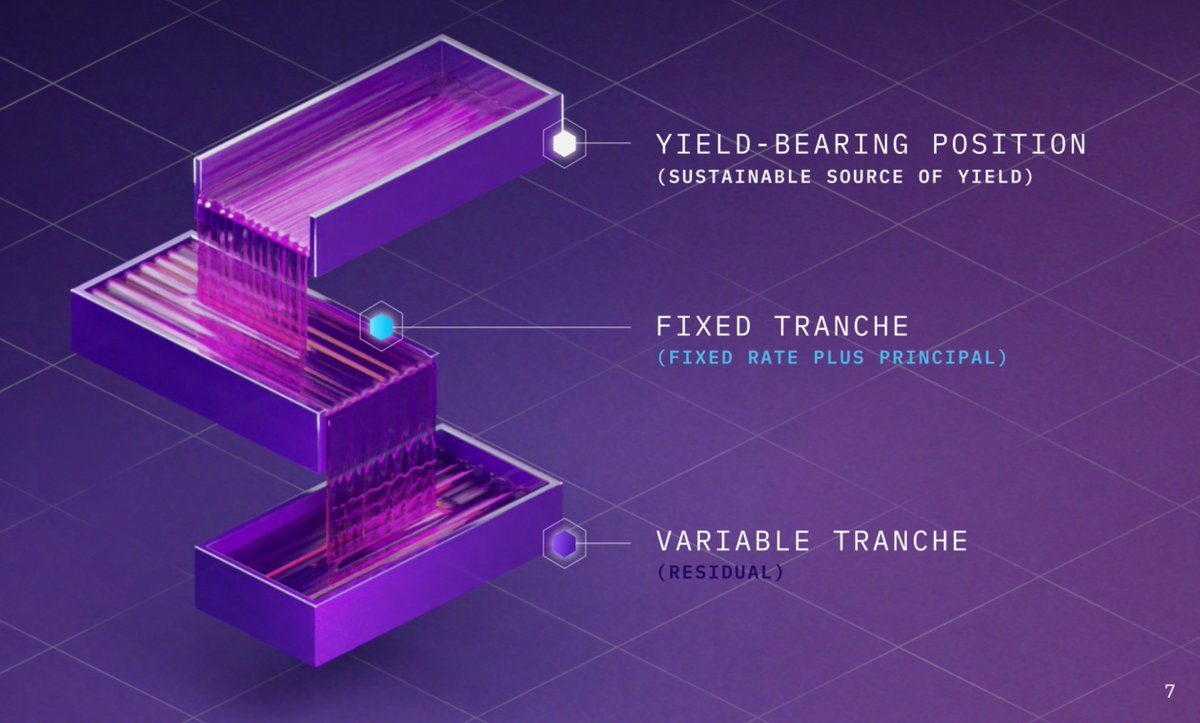
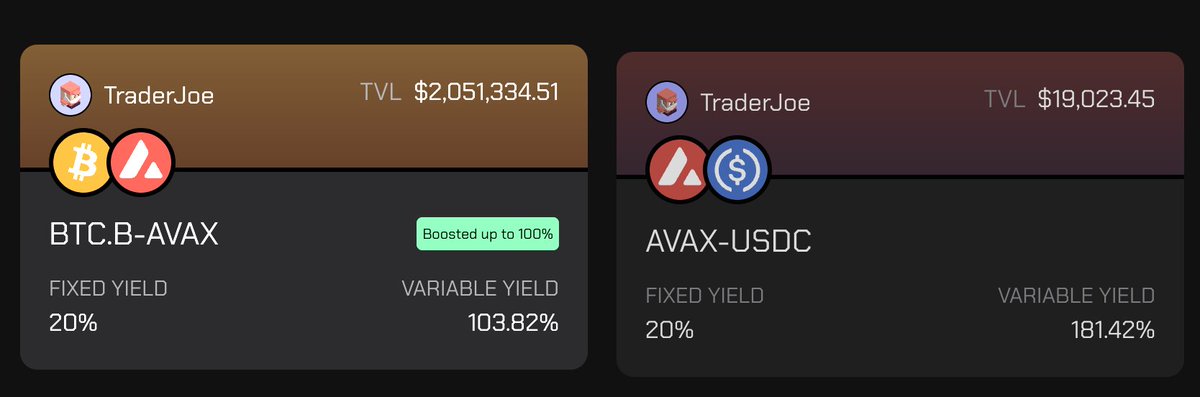
The Structured Flywheel Begins @StructFinance Vaults have hit $2m in TVL This represents fresh liquidity that will start flowing into Trader Joe Auto-Pools, further deepening liquidity and, in turn, improving swap rates and increasing volume and fees earned. The Struct flywheel is in full force, with depositors accruing $STRUCT leaderboard points while also accessing up to $1m worth of $AVAX rush incentives. 🔺 ________________ 📖 Refresher on @StructFinance Struct has introduced structured products through 'yield tranching.' This mechanism alters the risk profile of deposits by prioritizing how yield flows from the assets gathered in the underlying vehicle, in this case, Auto-Pools. In simple terms, it allows you to choose between a fixed or variable yield return when depositing a single asset in the fixed-term and locked vault. ________________ Trader Joe 🤝 Struct Finance