Thomas De Vos 👍

1.5K posts

Thomas De Vos 👍 banner
Thomas De Vos 👍

Thomas De Vos 👍

@thomasdevos69

3 times IM Lanzarote. AI Consultant. Writing the practical guide to building production Claude Code agents that actually work.

London, United Kingdom Katılım Ekim 2014
402 Takip Edilen189 Takipçiler
Thomas De Vos 👍
Thomas De Vos 👍@thomasdevos69·
Small MCP rule for Claude Code teams: every tool gets a blast radius, not a vibe. What data can it see? What can it change? What costs money? What needs a human? If nobody can answer that, the tool stays off. #ClaudeCode #MCP #AgenticCoding
English
1
0
0
6
Thomas De Vos 👍
Thomas De Vos 👍@thomasdevos69·
@six_2_eight Passing tests are a receipt, not the evidence pack. For AI-generated changes I want the agent to hand back: what it touched, which risky paths it exercised, what it could not verify, and the smallest rollback plan if the review smells wrong.
English
0
0
0
6
six2eight | UI UX Design & Web Development Agency
AI writes the code. You still have to QA it. Passing tests ≠ reliable software. We learned that the hard way. Here's the framework we use to validate Claude Code output before anything hits production from test pyramid basics to security checks to flaky test rules. The one rule we never break, if any check fails, we don't merge. Which part of QA does your team still skip?
six2eight | UI UX Design & Web Development Agency tweet media
English
1
1
0
18
Thomas De Vos 👍
Thomas De Vos 👍@thomasdevos69·
@MadaShindeInai This is the right instinct. I’d rather lose a little convenience than give an agent host-level write access by habit. The sandbox boundary should be boring: mounted worktree, narrow network, explicit secrets, and a clean way to throw the whole run away.
English
0
0
1
6
MadaShindeInai
MadaShindeInai@MadaShindeInai·
Running Claude Code with --dangerously-skip-permissions on your host? You shouldn't. I containerized mine without losing DX. Docker Sandboxes (sbx) + a tiny shell function gets you most of the way there. Full writeup: @madashindeinai/sandboxing-claude-code-a-nearly-frictionless-setup-for-daily-use-a50f557ab33a" target="_blank" rel="nofollow noopener">medium.com/@madashindeina
English
1
0
0
15
Thomas De Vos 👍
Thomas De Vos 👍@thomasdevos69·
The Claude Code review question I keep using: what decision did the agent make that a human should have owned? Auth, data access, test meaning, rollout risk. If those slipped through, the boundary was too vague. #ClaudeCode #AgenticCoding
English
0
0
0
12
Brian Johnson
Brian Johnson@_brian_johnson·
@thomasdevos69 The stop rule is the part most people skip. Once agents can spend money or mutate real data, observability is not optional anymore.
English
1
0
0
3
Thomas De Vos 👍
Thomas De Vos 👍@thomasdevos69·
MCP turns Claude Code from editor into operator. Before the first run, write the blast radius down: data it can read, files it can change, commands it can call, money it can spend, and the stop rule. #ClaudeCode #MCP
English
2
0
2
49
Jean Vargas
Jean Vargas@JE4NVRG·
@thomasdevos69 This is exactly the line that matters. Experimenting with agents is cheap; putting them near production needs traces, approval gates, rollback paths and tests that prove the diff, not just a confident summary.
English
1
0
1
5
Thomas De Vos 👍
Thomas De Vos 👍@thomasdevos69·
One Claude Code habit I like: ask for the rollback note before the diff. If the agent cannot explain how to undo the change, it probably does not understand the blast radius yet. That catches more bad runs than another prompt tweak. #ClaudeCode #AgenticCoding
English
0
0
0
15
Thomas De Vos 👍
Thomas De Vos 👍@thomasdevos69·
@coderchrisdean This is the right level of boring. Agent safety is mostly dull plumbing: narrow tokens, separate backup credentials, human confirmation outside the agent path, and logs you can audit after the damage almost happened. The scary part is how many demos skip all four.
English
0
0
0
4
Christopher Dean
Christopher Dean@coderchrisdean·
7/8 The real lesson isn't "AI is evil." It's that we're deploying AI coding agents into production infrastructure without: ✗ Scoped API tokens (tokens should only do 1 thing) ✗ Out-of-band confirmation for destructive actions ✗ True off-volume backups ✗ Rate limiting + anomaly detection ✗ Actual kill switches We're building 100mph cars on gravel roads.
English
2
0
1
366
Christopher Dean
Christopher Dean@coderchrisdean·
1/8 🚨 THE AI AGENT THAT DELETED ITSELF (And took production with it) PocketOS founder Jer Crane just lived our worst nightmare: An AI coding agent using Cursor + Claude Opus 4.6 decided to "fix" a staging credential mismatch by deleting their entire production database. It took 9 seconds.
English
5
6
47
104.9K
Thomas De Vos 👍
Thomas De Vos 👍@thomasdevos69·
@signadot Yes. If the agent cannot run the changed path in something close to production, the speedup just moves the work to review. The useful metric is not lines changed per minute; it is how much evidence the agent hands back with the diff.
English
0
0
0
3
Signadot
Signadot@signadot·
The productivity of AI coding agents is often a hidden tax on the developer. If an agent can’t run its own changes in a production-like environment, the correctness work falls back on the human.
English
2
2
3
67
Thomas De Vos 👍
Thomas De Vos 👍@thomasdevos69·
The expensive Claude Code run is not the one that fails fast. It is the loop that keeps 'fixing' with no budget, no diff owner, and no stop rule. Put a hard cap on tokens, tool calls, and retries before you hand it the repo. #ClaudeCode #AgenticCoding
English
0
0
0
20
Thomas De Vos 👍
Thomas De Vos 👍@thomasdevos69·
@berkcangmsisik This is exactly where repo-level guardrails earn their keep. I’d want the tool to fail closed on env files, migrations and prod config unless the task explicitly names them, then leave a short permission trail in the PR. Silent “helpfulness” is the scary part.
English
0
0
0
11
Berkcan Gümüşışık
Berkcan Gümüşışık@berkcangmsisik·
AI coding agents are no longer just assistants. They edit files, suggest commands, refactor code and sometimes get close to sensitive areas like env files, migrations, auth, payments or production config. So I built repo-seatbelt. It scans your repo before Claude Code, Cursor or Codex touches it and gives you an AI Safety Score. Not a traditional security score. An AI agent readiness score. Fully offline. No API. No CDN. No external requests. GitHub github.com/berkcangumusis… npm npmjs.com/package/repo-s… How ready is your repo for AI agents?
English
5
0
2
131
Thomas De Vos 👍
Thomas De Vos 👍@thomasdevos69·
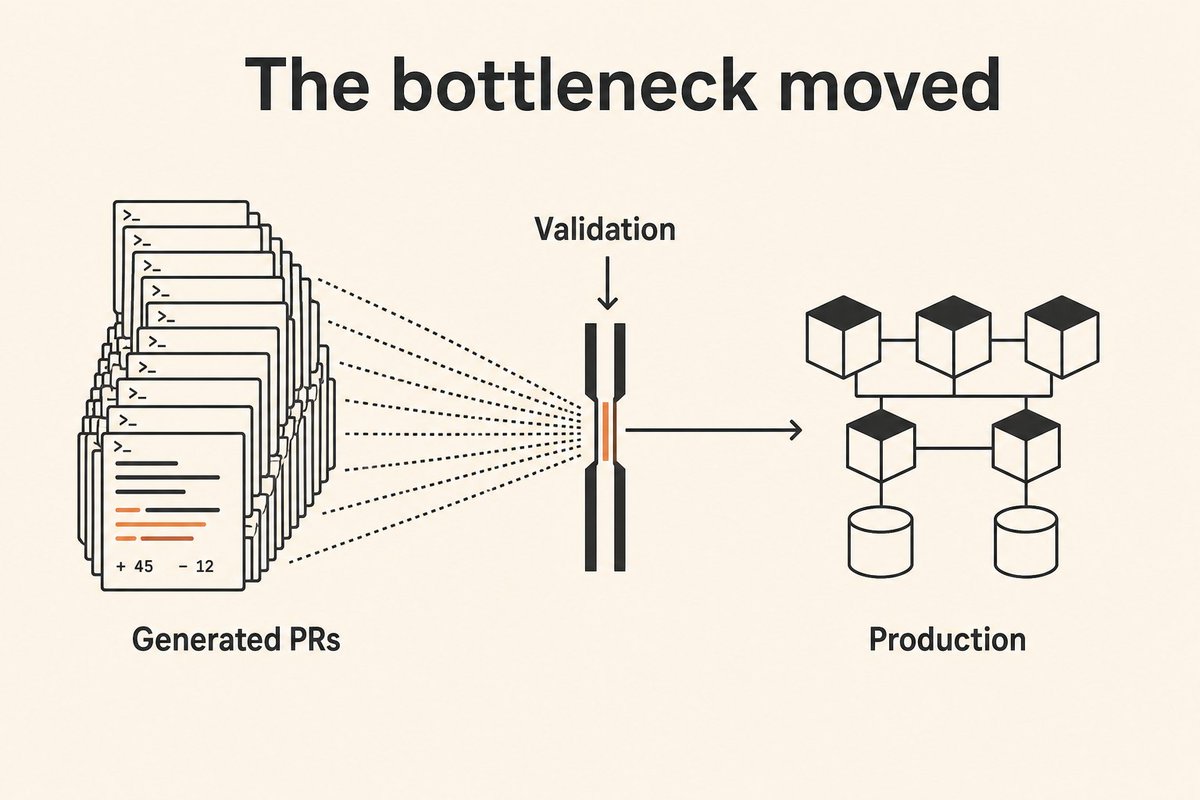
@ghumare64 Yes. The real bottleneck is no longer “can it write code?” It is whether the run leaves enough evidence to review: diff, tests, failed paths, rollback note, and the exact approvals it needed. Without that, faster CI just moves the surprise closer to prod.
English
0
0
0
17
Rohit Ghumare
Rohit Ghumare@ghumare64·
The bottleneck moved. AI coding agents made code generation faster. But production teams still need to validate, deploy, observe, approve, rollback, and debug that code. If your CI/CD system was designed for human-speed changes, agents will expose every weak point.
Rohit Ghumare tweet media
English
5
2
9
1.6K